Now expanded to cover the consequences of Russia's 1998 financial collapse, this book focuses on the social consequences of a modern-day great depression. The text examines the unequal distribution of the costs and benefits of Russia's leap into capitalism. The topics covered include: the emergence of the "new poor"; the recruitment of a business elite; the changing social and economic status of women; and the impact of marketization on employment. The study draws on a range of statistics and survey research data to present a portrait of the lives and circumstances of comtemporary Russians.
Now expanded to cover the consequences of Russia's 1998 financial collapse, this book focuses on the social consequences of a modern-day great depression. The text examines the unequal distribution of the costs and benefits of Russia's leap into capitalism. The topics covered include: the emergence of the "new poor"; the recruitment of a business elite; the changing social and economic status of women; and the impact of marketization on employment. The study draws on a range of statistics and survey research data to present a portrait of the lives and circumstances of comtemporary Russians.
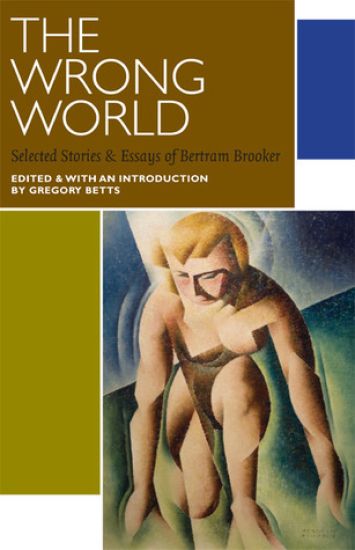
Bertram Brooker won the country's first Governor General's Award for literature in 1936 for his novel "Think of the Earth", and his explosive, experimental paintings hang in every major gallery in the country. He was Canada's first multidisciplinary avantgardist, successfully experimenting in literature, visual arts, film, and theatre. Brooker brought all of his experimental ambitions to his short fiction and prose. "The Wrong World" presents a rich sampling of his prose work, much of it previously unpublished, which adds new insight into his aesthetic ambitions. Working during an incredible period of transition in Canadian society, Brooker's stories document Canada's evolution from a provincial colony into a modern, urban country. His essays participated in that evolution by advocating a passionate awakening of the arts, the end of prudish sentiment and censorship, and a radical rethinking of the nature of war. They capture the limitations and hypocrisies of the Canadian social contract and argue for a more just and spiritual society. His stories humanize his social vision by dramatizing the psychological and emotional cost of Canada's transition into a modern civilization. In turn devastating, penetrating and poignant, Brooker's prose works offer a sharply focussed window into the turbulent interwar years in Canada.
This volume centers on the words and experiences of teachers and students who used QUILL -- a software package developed by the authors to aid in writing instruction. It looks in detail at the stories of these early users and considers questions relevant for other teachers, students, researchers, and developers of educational innovations. Questions posed include: * What does it mean to develop an environment for literacy in an actual classroom? * How can a teacher create an environment in which students work together toward meaningful goals? * How can a teacher promote the rich communication so necessary for developing language? * What is the role of technology in the practice and development of literacy? The examination of the QUILL experiences provides a fuller and more revealing account of what it meant to use QUILL than would have been possible through standard evaluation techniques. At the same time, the focus on the particulars also finds analogues in analyses of similar pieces of open-ended software or educational innovations in general.
This volume centers on the words and experiences of teachers and students who used QUILL -- a software package developed by the authors to aid in writing instruction. It looks in detail at the stories of these early users and considers questions relevant for other teachers, students, researchers, and developers of educational innovations. Questions posed include: * What does it mean to develop an environment for literacy in an actual classroom? * How can a teacher create an environment in which students work together toward meaningful goals? * How can a teacher promote the rich communication so necessary for developing language? * What is the role of technology in the practice and development of literacy? The examination of the QUILL experiences provides a fuller and more revealing account of what it meant to use QUILL than would have been possible through standard evaluation techniques. At the same time, the focus on the particulars also finds analogues in analyses of similar pieces of open-ended software or educational innovations in general.
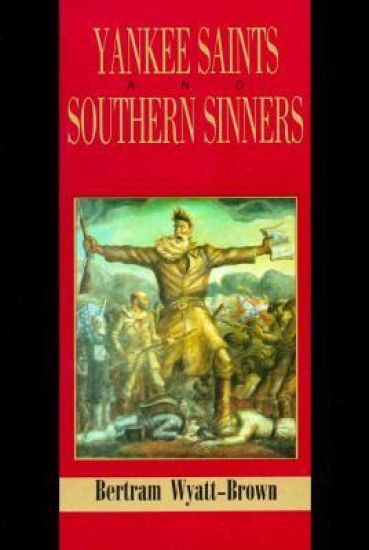
Many scholars, according to Bertram Wyatt-Brown, have mistakenly attributed the coming of the Civil War solely to the slaveholding South's determination to retain black bondage as a means of economic and political advantage. That view, he maintains, too readily diminishes the ethical dynamics involved in the chasm between antebellum North and South. In Yankee Saints and Southern Sinners, Wyatt-Brown explores in a series of wide-ranging essays the ethical differences, epically with regard to honor, liberty, and slavery, that divided the two regions of the country.Slavery was, of course, the crucial issue in the conflict, but such moral concerns as honor and shame, conscience and guilt were inextricably a part of the dispute as well. Northerners, under abolitionist and antislavery guidance, came to regard slavery as a violation of American conscience and understandings of individuality, personal liberty and civic responsibility, whereas soothers adhered to an ethical scheme based on traditional concepts of honor. Wyatt-Brown suggests that to most southern whites the rubric of honor was much more than a matter of duels and political posturing. It was instead an integral part of the moral and cultural heritage of the region, affecting a variety of social relationships. Sometimes the dictates of honor were even more powerful than the Christian morality that nearly all Americans espoused.Using Stanley Elkins' antislavery interpretation as a point of departure, Wyatt-Brown devotes the first part of the book to the abolitionists' dynamic relationship to evangelical culture in which conscience, implanted in childhood, became the primary ethical code guiding reformers. In the most dramatic and probing chapter in this section, he shows how the violent ""antinomian"" John Brown capitalized on the tensions between Christian conscience and primal manhood to gratify his own and his fellow countrymen's desire for righteous glory, albeit for noble ends.The second half of the book reveals the contrasting ethical spirit of the South, as explained in W.J. Cash's Mind of the South. After placing the proslavery argument in the context of evangelical and, later, secular ""modernity,"" Wyatt-Brown analyses the ethical texture of secessionism in one of the book's most original and intriguing arguments. Differences over the meaning and applicability of honor and shame, he contends, played a major part in the South's struggle in 1860 and 1861 over secession and the North's response to it.Making abundant use of anthropological, sociological, and psychological insights, Bertram Wyatt-Brown offers here an interpretation of the causes of the Civil war that is both provocative and persuasive.
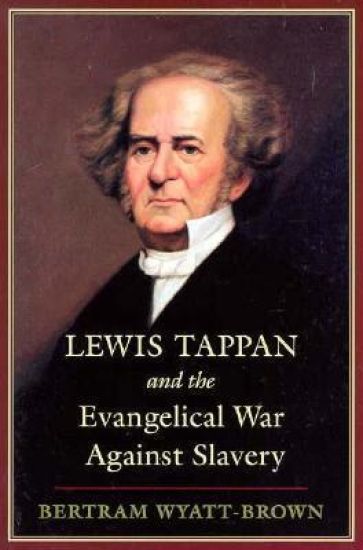
Lewis Tappan (1788-1873), founder of the Journal of Commerce and the nation's first credit rating firm, is probably best known for his business accomplishments. His greatest achievement, however, was not finance but freedom. In the 1830s, he and his wealthy brother Arthur underwrote and inspired the Manhattan headquarters of the American Anti-Slavery Society and founded many other organisations to promote freedom, faith, and racial tolerance. As prominent historian Bertram Wyatt-Brown demonstrates in this fascinating portrait, Tappan contributed much more to the cause of liberty and equality than has yet been acknowledged.
From Edgar Allan Poe's ""dark forebodings"" to Kate Chopin's lifelong struggle with sorrow and loss, depression has shadowed southern letters. This beautifully realised study explores the defining role of melancholy in southern literature from the early nineteenth century to the early twentieth, when it evolved into modernist alienation.While creativity and depression have been linked throughout Western history, Bertram Wyatt-Brown argues that nineteenth-century southern culture was hospitable to a distinctive melancholy that impelled literary production. Deeply marked by high death rates, social dread, and bitter defeat, white southerners imposed a climate of parochial pride, stifling conventions of masculinity, social condescension, and mistrust of intellectualism. Many writers experienced a conscious or unconscious alienation from the prevailing social currents. And they expressed emotional turmoil in and through their writing.Hearts of Darkness develops original insights into the lives and creative impulses of both major and more obscure writers. Discussing individuals as diverse as William Gilmore Simms, Mark Twain, Constance Fenimore Woolson, Sidney Lanier, and Ellen Glasgow, Wyatt-Brown identifies a close association between creativity and psychological distress. This connection helps to explain southern literary engrossment with defeat and violence, together with a disposition for the romantic, gothic, and grotesque styles, well before William Faulkner and the male Southern Renaissance. Wyatt-Brown also finds that the first authors to break away from the sentimental modes to explore new psychological terrain were women whose depression ironically furnished them with critical dispassion. Imaginative detachment in writers such as Willa Cather enabled them to create luminous characters and settings while heralding literary modernism.A major reinterpretation of the South's fertile literary culture, Hearts of Darkness intensifies our regard for both southern writers and the fruits of pen and paper.
In this final work of a long and distinguished career, historian Bertram Wyatt-Brown looks at the theme of honour--a subject on which he was an acknowledged expert--and places it in a broader historical and cultural context than ever before. Wyatt-Brown begins with the contention that honour cannot be understood without considering the role of humiliation, which not only sets victor apart from vanquished but drives the search for vindication that is integral to notions of honour. The American conception of honour is further deepened by issues of race. The author turns to the slave South to show how white and black concepts of honour differed from and contradicted each other, illuminating honour’s elusive but powerful role in our society. He then goes on to explore these themes within a wide range of military and political contexts, from the Revolutionary War to Desert Storm, providing new insights on how honour drove decision making during many defining events in our history and how the consequences continue to reverberate in the American mind.
Professor Bandman presents a philosophical argument in answer to the question, How do we justifiably bring up our children? Bandman suggests that the status of children's rights in collusion with the method by which children are raised result in the strength and breadth of our rights as adults. This is an eminently worthwhile study, involving the interests of younger and older people alike, engaging us all in reflective examination of issues right at our doorsteps.
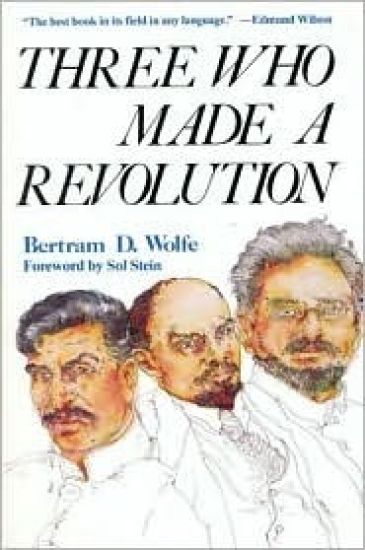
The lives of three men who made the Russian Revolution possible—Lenin, Trotsky, and Stalin—are the focus of this biographical account of the rise of socialism in the late 19th and early 20th centuries. Bertram Wolfe, a political scientist and historian of Russia, knew Trotsky and Stalin personally, and here brings his profound insider's knowledge to bear on his subjects. Three Who Made a Revolution recounts the early lives and influences of the three leaders, and shows the development of their diverging ideologies as decades gave strength to their cause and brought Russia closer to its turning point, a revolution that would alter the course of the twentieth century.
The problem of the portrayal of the disciples of Jesus has been the focus of much scholarly investigation. Discussion has been pursued primarily from the Marcan perspective in keeping with its assumed priority. Consequently, Mark is seen as creating the disciples' incomprehension to serve his theological intent. The correctness of this notion is questioned in this study which seeks to determine whether incomprehension was an authentic experience of Jesus' original disciples, and whether slowness of understanding was to be expected in teaching and learning contexts. Recent scholarship on the disciples is surveyed to identify the main issues, approaches, trends, and the scope of the ongoing debate. Contents: include: Review of the Literature; How Marcan is the Synoptic Portrait of the Disciples?; An Examination of Concepts and Words of Comprehension in Jewish and Greek Literature; The Disciples in Synoptic Perspective.
The problem of the portrayal of the disciples of Jesus has been the focus of much scholarly investigation. Discussion has been pursued primarily from the Marcan perspective in keeping with its assumed priority. Consequently, Mark is seen as creating the disciples' incomprehension to serve his theological intent. The correctness of this notion is questioned in this study which seeks to determine whether incomprehension was an authentic experience of Jesus' original disciples, and whether slowness of understanding was to be expected in teaching and learning contexts. Recent scholarship on the disciples is surveyed to identify the main issues, approaches, trends, and the scope of the ongoing debate. Contents: include: Review of the Literature; How Marcan is the Synoptic Portrait of the Disciples?; An Examination of Concepts and Words of Comprehension in Jewish and Greek Literature; The Disciples in Synoptic Perspective.
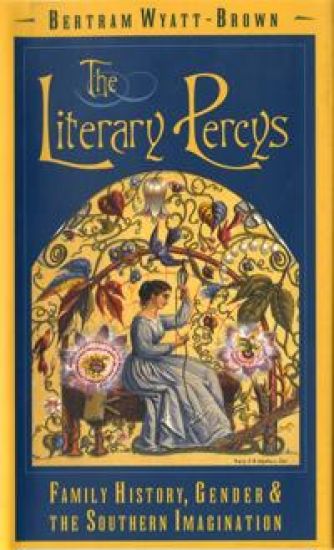
The Percys, one the most distinguished families in the South, are notable not only for their prominence in the political and economic development of the Mississippi Delta but also for their literary creativity. In The Literary Percys, noted historian Bertram Wyatt-Brown examines the role of gender and family history in the writings of this exceptional lineage.Few families in American can claim so many gifted writers as the Percys. The best-known among them are novelist Walker Percy, who died in 1990, and his cousin and guardian, William Alexander Percy, poet and author of the classic memoir Lanterns on the Levee. In researching the family's history, however, Wyatt-Brown discovered that Walker and Will were not the first in the family to take up the pen. In the nineteenth century, four Percy-related women--Eleanor Percy Ware Lee, Catherine Ann Ware Warfield, Sarah Anne Ellis Dorsey, and Kate Ferguson--published a total of eighteen works, chiefly novels, but also books of poetry and a biography. Wyatt-Brown examines these achievements in the context of contemporary Delta society and in light of these writers' lives within a family of powerful planters and lawyers. Through these four women he also draws connections between the Percys' literary inclinations and the family's tendency toward melancholy--a disorder with which Walker Percy was burdened throughout his life.In the twentieth century, Wyatt-Brown observes, the male authors--Will and Walker Percy--reflected on the ravages of modern life using a wider range of forms, from philosophical essay to memoir to science fiction. Curiously, in composing Lancelot (1977) Walker Percy chose the gothic form that his collateral ancestors had sometimes adopted, and fashioned a plot and villainous hero bearing uncanny resemblances to those of a bestseller by Catherine Warfield, published more than one hundred years earlier. Finally, Wyatt-Brown explores Walker Percy's use of a purely male genre--namely, the mock-heroic--and how it reflected his personal and familial concerns.The Literary Percys uncovers an impressive family history and offers fascinating details about southern literary life.
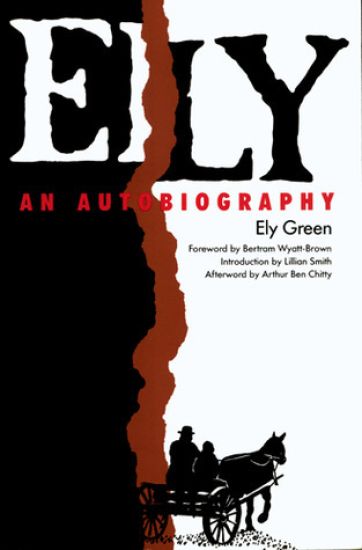
Ely Green was born in Sewanee, Tennessee, in 1893. His father was a member of the white gentry, the son of a former Confederate officer. His mother was a housemaid, the daughter of a former slave. In this small Episcopal community—home to the University of the South—Ely lived his early childhood oblivious to the implications of his illegitimacy and his parentage. He was nearly nine years old before he realized that being different from his white playmates was of any real significance.An incident at a local drugstore marked the beginning of what would be a painful rite of passage from an idyllic childhood through a tormented adolescence as Ely struggled to understand why he could not wholly belong to either his father's world or his mother's. "I was having a struggle within," he writes, ". . . learning to hate white people after I had been taught that they were all God's children and we are to love everybody." At age eighteen, still warring to reconcile one part of himself with the other, he fled the mountains of Tennessee—and a brewing lynch mob—for the plains of Texas and a new beginning.Straightforwardly recounting his early life, rising above bitterness and pain, Ely Green gives his readers an astoundingly honest and poignant portrait of a young man trying to come to terms with race relations in the early twentieth-century South.
First published in 1944, this is a detailed survey of twenty-four distinguished periodicals published in antebellum Georgia. Flanders shows that literary activity was generally confined to middle Georgia and often concentrated on themes of religion and morality, early American life, and European adventures. An extensive bibliography and three appendices give a comprehensive list of magazines published during the time, including dates, places of publication, and names of editors and publishers. More than nine hundred footnotes further elaborate on the analysis of backgrounds, local historical events, and information on contributors.