

Kirjahaku
Etsi kirjoja tekijän nimen, kirjan nimen tai ISBN:n perusteella.
1000 tulosta hakusanalla Brian H Appleton

Eighty Thousand Adolescents, originally published in 1950, illustrated by maps, photographs and diagrams, describes and interprets the results of a study of the young people of Birmingham. This study was made by the staff and students of Westhill Training College, under the direction of Bryan Reed, Youth Tutor. Visits were paid to some hundreds of youth organizations, and answers to a series of questions were given by over a thousand young people, both ‘attached’ and ‘unattached’.Some of the questions to which the investigators set out to find answers were: In what kind of homes are young people growing up? How do they earn their living? How many take advantage of opportunities for further education? How do they spend their leisure? – and their pocket money? What do they read? What are their emotional, intellectual, spiritual and social needs? and how far do Education Authorities, Clubs, Churches, etc. meets these needs?In his summing-up Mr. Reed calls attention to the need for imaginative and instructed leadership, for a sense of purpose in the Youth Service, and for the integration of this Service in the wider life of the community. Today it is a fascinating look back at adolescent life in post-war Britain.

Eighty Thousand Adolescents, originally published in 1950, illustrated by maps, photographs and diagrams, describes and interprets the results of a study of the young people of Birmingham. This study was made by the staff and students of Westhill Training College, under the direction of Bryan Reed, Youth Tutor. Visits were paid to some hundreds of youth organizations, and answers to a series of questions were given by over a thousand young people, both ‘attached’ and ‘unattached’.Some of the questions to which the investigators set out to find answers were: In what kind of homes are young people growing up? How do they earn their living? How many take advantage of opportunities for further education? How do they spend their leisure? – and their pocket money? What do they read? What are their emotional, intellectual, spiritual and social needs? and how far do Education Authorities, Clubs, Churches, etc. meets these needs?In his summing-up Mr. Reed calls attention to the need for imaginative and instructed leadership, for a sense of purpose in the Youth Service, and for the integration of this Service in the wider life of the community. Today it is a fascinating look back at adolescent life in post-war Britain.
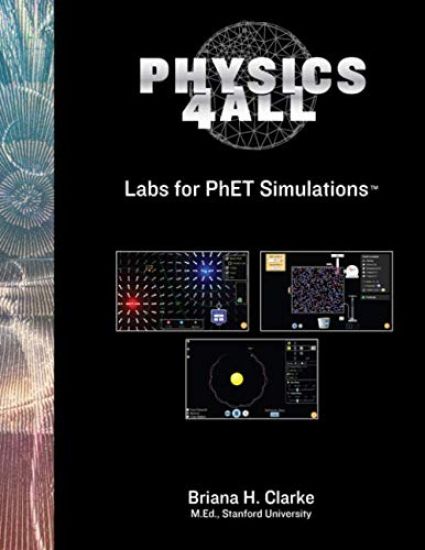
Physics For All Labs: No Set Up, No Worries, Inquiry Driven Labs for PhET Simulations
Briana H. Clarke
Independently Published
2019
nidottu
How do you observe electricity? How do you show light as a wave? PhET simulations are used across the country to engage students and make physics fun. However, it has been nearly impossible to find consistent curriculum that allows students to engage on their own..until now. Physics For All labs have been made to align with PhET's HTML labs in order to be accessible by all forms of technology including smartphones and chromebooks. These labs were made by teachers for teachers--print ready, same structured, inquiry based, and "sub proof." These labs were designed with 5E's structure to increase student engagement, prime students for abstract concepts and introduce mathematical relationships at their own pace.

Investigating William Branham: The Unfolding Story of Plagiarisms and Errors
Bryan H. Smalls
Independently Published
2019
nidottu
Who was William Branham (1909-1965) and what were his claims? He was an American pastor and evangelist credited for spearheading the post World War II healing revivals of the 1940s and 50s. In the 1960s, he began to view himself as Elijah the prophet of Malachi 4:5-6, who restores the elect to the word of God as a forerunner of Christ's return; the seventh angel messenger of Revelation 3:14 and 10:7, who reveals every hidden mystery of the Bible in the end time; and the fulfillment of the Son of man ministry of Luke 17:30, who reveals Christ to the last generation as a prophet. He also believed his message was the "shout" of Christ's second coming in 1 Thessalonians 4:16.Currently, an estimated two million people believe Branham's claims. Nonetheless, this full-sized book of 17 chapters and 320 pages challenges his claims and teachings from an insider's perspective through an eight months investigative research. In doing so, the author provides a convincing compilation of more than 3,000 excerpts, credible references, official documents, archived newspaper articles, historical facts, and insightful scriptures. This compilation uncovers wide-ranging plagiarisms, disproven and embellished supernatural vindications, failed visions, failed prophecies, failed "Thus saith the Lord," failed predictions, and vast unscriptural doctrinal errors. Among Branham's most celebrated claims, the revealing of the seven seals in the book of Revelation are considered the pinnacle of his teachings. He supposedly did what the Old Testament prophets, New Testament apostles, church reformers, or any other clergy throughout history had never achieved. He claimed that seven angels revealed these hidden mysteries.However, this timely book examines, diligently compares, and provides nearly 100 pages of evidences that suggest Branham almost certainly got his understanding of the seven seals and 20 other significant revelatory teachings-supposedly revealed by God-from several well-known biblical writers of the past. These teachings include the seven church ages and messengers, seventh angel of Revelation 3:14 and 10:7, two comings of Elijah, the beast of Revelation 13, Mystery Babylon and daughters; the image, mark, and number of the beast; United States in prophecy, Daniel's seventy weeks, historical applications of four beasts, Godhead doctrines, serpent seed, water baptism, and several more.The authors of these commentaries and books are mostly Clarence Larkin (1850-1924), a very distinguished and knowledgeable Bible teacher; Uriah Smith (1832-1903), an educator and theologian of the Seventh Day Adventist; Charles Taze Russell (1852-1916), a restorationist and founder of a movement that later became the Jehovah's Witnesses organization; John Gill (1697-1771), a noted biblical scholar and theologian; and Albert Barnes (1798-1870), a noted theologian. We shall also consider other noted biblical scholars of the same eras (e.g. Cyrus Scofield and Henry Halley).Moreover, this research provides extensive scriptural evidences uncovering vast errors in Branham's teachings, including a false gospel of salvation. How? During the latter years, Branham believed his message was necessary or the evidence for salvation, the Holy Spirit baptism, the new birth, and rapture to heaven; rather than the gospel of Christ preached by the apostles.This book also examines the inaccuracies and repeated revisions in Branham's visions of 1933, whereby God allegedly revealed seven major events that would transpire before Christ's return in 1977. This research pinpoints developing historical trends and occurrences between the 1920s and 1960s that possibly influenced those seven prophecies and revisions. The final updated version of these visions appears in his 1965 book on the seven church ages, where the obvious errors from earlier sermons had been cleverly removed. Thus, when facts are weighed, Branham's teachings and claims are conclusively proven wrong.

This engaging undergraduate text uses the performance, recording, and enjoyment of music to present basic principles of physics. The narrative lays out specific results from physics, as well as some of the methodology, thought processes, and 'interconnectedness' of physics concepts, results, and ideas. Short chapters start with basic definitions and everyday observations and ultimately work through standard topics, including vibrations, waves, acoustics, and electronics applications. Each chapter includes problems, some of which are suited for longer-term projects, and suggestions for extra reading that guide students toward a deeper understanding of the physics behind music applications. To aid teaching, additional review questions, audio and video clips, and suggestions for class activities are provided online for instructors.

This engaging undergraduate text uses the performance, recording, and enjoyment of music to present basic principles of physics. The narrative lays out specific results from physics, as well as some of the methodology, thought processes, and 'interconnectedness' of physics concepts, results, and ideas. Short chapters start with basic definitions and everyday observations and ultimately work through standard topics, including vibrations, waves, acoustics, and electronics applications. Each chapter includes problems, some of which are suited for longer-term projects, and suggestions for extra reading that guide students toward a deeper understanding of the physics behind music applications. To aid teaching, additional review questions, audio and video clips, and suggestions for class activities are provided online for instructors.

Human Physiology, International Adaptation
Bryan H. (Valencia Community College Derrickson
John WileySons Inc
2024
pokkari


Commercial Air Carrier Vulnerabilities to Information Operations
Bryan H Shelburn
Biblioscholar
2012
pokkari

THIS BOOK HAS THE PURPOSE OF HELPING CHRISTIANS TO GROW INTO A SPIRITUAL KNOWLEDGE OF GOD. ALSO TO SHOW THE BIBLICAL WAY OF HOW TO HAVE A CLOSER RELATIONSHIP WITH GOD.

FUTURE OF MANKIND, CHRISTIAN, CHRISTIAN CHURCH, MILLENNIUM, JESUS, CHRIST, LETTERS, WITNESS, JUDGEMENT, BEAST, LAMB, HEAVEN, SATAN.

Signs of the Times: The False Messages, Half-Truths, and Poor Theology of Church Marquees
Bryan H. Rhoden
Createspace Independent Publishing Platform
2010
nidottu
Acceptable and Accessible: Volume III Expositional Sermons from Hebrews 7-9
Bryan H. Rhoden
Createspace Independent Publishing Platform
2011
nidottu
Acceptable and Accessible: Volume II Expositional Sermons from Hebrews 4-6
Bryan H. Rhoden
Createspace Independent Publishing Platform
2011
nidottu

ROADS The Non-Profit's Quick Guide to Gaining the Committment
Bryan H. Nelson
Createspace Independent Publishing Platform
2010
nidottu


Stories Your Mother Won't Tell You
Bryan H. Frenk
Createspace Independent Publishing Platform
2015
nidottu
These stories contain the universal theme "What would you do?" Starting with a man given the chance to rescue his son who has been dead for seven years in "'93". "The Catch" follows a seemingly normal man as he suddenly inherits something beyond belief and very evil. The last story "Fine Print" deals with a lonely man meeting the love of his life while faced with certain death. I truly hope you enjoy these stories as I enjoyed writing them. There is a bit in this book for everybody from fans of Horror, Science Fiction and Romance.

A survey of Native American tribal law and its place within the framework of the U.S. Constitution from colonial times to today's headlines. Using five major court cases, Native American Sovereignty on Trial examines American Indian tribal governments and how they relate to federal and state governments under the U.S. Constitution. From the foundational U.S. Supreme Court opinions of the 1830s, to the California State Gaming Propositions of 1998 and 2000, the impact and legacy of these court cases are fully explored. The actual text of key treaties, court decisions, and other legal documents pertaining to the five tribal controversies are featured and analyzed. Clearly presented, this in depth review of essential legal issues makes even the most difficult and complex judicial doctrines easy to understand by students and nonlawyers. This concise volume tracing the evolution of Native American sovereignty will supplement coursework in law, political science, U.S. history, and American Indian studies.
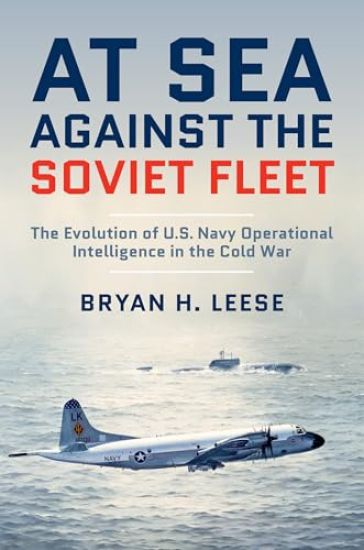
At Sea Against the Soviet Fleet is a historyof the evolution of the United States Navy's Operational Intelligence culture that informs great power competition with China today.At Sea Against the Soviet Fleet examines the critical transformation of naval intelligence during a pivotal era marked by the Cold War and the Vietnam conflict. Bryan Leese meticulously details how U.S. Navy operational intelligence evolved to meet the complexities of modern naval warfare, particularly in response to the increasing threats posed by the Soviet Navy. Structured into four main parts, this book begins by examining the Vietnam War and the institutionalization of shipboard operational intelligence, or what Navy intelligence calls Opintel. The book highlights the establishment of Integrated Operational Intelligence Centers as part of the RA-5C Vigilante program and the innovative strategies that emerged in air combat and targeting. Leese goes on to underscore the necessity of Opintel to the U.S. Navy’s close and distant blockade strategy in the 1960s and 1970s. He delves into the decentralization of intelligence processes, emphasizing the importance of adaptability and the need to prevent surprise attacks. This evolution is framed within the transition to the Navy’s Ocean Surveillance Information System, a decentralized and responsive operational intelligence system. The ongoing developments of shipboard intelligence capabilities are explored, demonstrating how these advancements empowered naval commanders. In the 1970s, the organizations evolved as the revolutionary Opintel adaptations of the 1960s that leveraged cooperation without hierarchy became formalized. Leese highlights the revolution to evolution process by introducing Opintel support to shipboard tactical decisions to integrate operational intelligence into comprehensive naval strategies. Capturing the essence of this transformative period, the author discusses the cultural dynamics within the Navy that fostered innovation and interdepartmental collaboration. These developments not only contributed to maintaining a strategic edge over the Soviet Union, but also laid the groundwork for future naval operations in the digital age. Leese’s work reveals the intricate interplay between technology, strategy, and personnel in creating an effective intelligence framework that allows the U.S. Navy to assert influence at sea, setting conditions for sea control in conflict. By blending rich archival research with firsthand accounts, this book offers a nuanced understanding of how the Navy adapted to an ever-changing operational landscape, ultimately preserving peace while navigating the complexities of high-stakes maritime conflict.