Kirjojen hintavertailu. Mukana 12 016 292 kirjaa ja 12 kauppaa.

Kirjahaku

Etsi kirjoja tekijän nimen, kirjan nimen tai ISBN:n perusteella.

1000 tulosta hakusanalla C G Addison

The Gnostic Jung

The Gnostic Jung

C.G. Jung

Routledge
1992
nidottu
Gnosticism was for C.G. jung the chief prefiguration of his analytical psychology. In this volume Robert Segal, an authority on theories of myth and Gnosticism, has searched the Jungian corpus for Jung's main discussions of this ancient form of spirituality. The progression in Gnosticism from sheer bodily existence to the release of the immaterial spark imprisoned in the body - and the reunion of that spark with the godhead - represents for Jung the psychological progression from ego consciousness to the ego's rediscovery of the unconscious, and the ego's integration with the unconscious to forge the self. Included in this volume are both Jung's sole work devoted entirely to Gnosticism, "Gnostic Symbols of the Self," and his own Gnostic myth, "Seven Sermons to the Dead." The book also contains key essays by Father Victor White and Gilles Quispel, whose "C.G. Jung und die Gnosis" is here translated for the first time. In his extensive introduction Segal discusses the parallel for Jung between ancient Gnostic and contemporary Jungian patients, the Jungian meaning of Gnostic myths and of the Seven Sermons, Jung's possible misinterpretation of Gnosticism, and the common characterization of Jung himself as a Gnostic.
Jung on Alchemy

Jung on Alchemy

C.G. Jung

Routledge
1994
nidottu
Jung realized that the fantastic images of alchemy - fire-breathing dragons, hermaphrodites, lions giving birth to the sun - are not so far from our daily lives. He made sense of such seemingly incomprehensible symbols and showed how, in fact, such images represent a usually unseen level that has immense power over how we feel, think and imagine our existence. Nathan Schwartz-Salant, a leading Jungian analyst with a special interest in alchemy, has brought together a key selection of Jung's writings on alchemy. His lucid introduction provides a clear account of the basics of alchemy and explains to the reader Jung's ideas on alchemical studies.Jung on Alchemy provides an excellent introduction to one of Jung's most exciting, yet most challenging, fields of study.
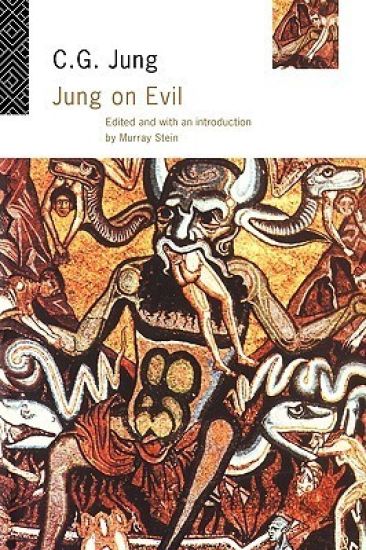
Jung on Evil

Jung on Evil

C.G Jung

Routledge
1995
nidottu
Evil became a central issue for Jung as he grew older. His early investigations of the place of evil in the mental processes of the severely disturbed led him to consider the concept of evil in greater depth when exploring the role of analysis in ethical and cultural transformation.Jung on Evil brings together his important writings on good and evil. It includes his attempts to comprehend the worst excesses of the Second World War, as well as discussions about moral choices, conscience and the continual ethical reflection that is necessary for all of us.Leading analyst Murray Stein provides a clear and concise introduction that gives an accessible account of Jung's ideas about evil. It will be invaluable to all those interested in the problems of ethics, religion and psychology in the modern world.
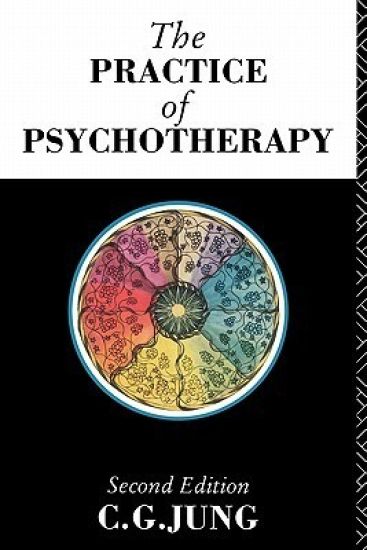
The Practice of Psychotherapy
The Practice of Psychotherapy brings together Jung's essays on general questions of analytic therapy and dream analysis. It also contains his profoundly interesting parallel between the transference phenomena and alchemical processes.The transference is illustrated and interpreted by means of a set of symbolic pictures, and the bond between psychotherapist and patient is shown to be a function of the kinship libido. Far from being pathological in its effects, kinship libido has an essential role to play in the work of individuation and in establishing an organic society based on the psychic connection of its members with one another and with their own roots.
A Geography of the Third World

A Geography of the Third World

C.G Clarke; J P Dickenson; J.P Dickenson; W.T.S Gould; S Mather; Sandra Mather; Prof R Mansell Prothero; R.M Prothero; D.J Siddle; C.T Smith; C T Smith; E. Thomas-Hope

Routledge
1996
sidottu
The label of "Third World" covers half the land surface and three quarters of the population of the planet. The problems and potential of this region and its peoples are attracting increasing concern and interest. Fully revised and updated this edition includes: * a wealth of photographic and line illustrations * boxed case studies * chapter summaries * guides to further reading Issues of increasing concern at the end of the twentieth century are fully addressed - for example, the widening gap in economic performance between countries in the Third world and the assertion of national cultures in the face of globalisation. New material on gender issues and the environmental impact of development has been included.
General Index

General Index

C.G. Jung

Routledge
1979
sidottu
This volume is the general index to the eighteen published textual volumes in the Collected Works of C.G. Jung. The comprehensive indexing goes beyond the volume indexes, and includes sub-indexes to important general topics, such as Alchemical Collections, Codices and Manuscripts, Feud and Numbers, the sub-indexing for the Bible arranged by book, chapter and verse.The General Index, with the General Bibliography of C.G. Jung's Writings (Volume 19 of the Collected Works), together complete the publication of the Collected Works of C.G. Jung in English.
The Development of Personality
Though Jung's main researches have centred on the subject of individuation as an adult ideal he has a unique contribution to make to the psychology of childhood.Jung repeatedly underlined the importance of the psychology of parents and teachers in a child's development and he emphasized that an unsatisfactory psychological relationship between parents may be an important cause of disorders in childhood. He maintained that all real education of children needs teachers who not only know how to learn but who can also develop their own personalities. Jung devotes a large part of the book to expounding his views on these important subjects. There is also an outline of the theory of child development, a delightful snapshot from the life of a girl called Anna and her parents, and a stimulating discussion of marriage as a psychological relationship. Finally there is a chapter on child development and individuation.
Jung on the East

Jung on the East

C.G. Jung

Routledge
1994
nidottu
Jung's interest in the East was deep-rooted and life-long, and the traditional teachings of China and India played an important role in his personal and intellectual development, as well as in the formations of the ideas and practices that are central to Jungian psychology.Jung on the East brings together key selections from his work on Buddhism, yoga and Taoism, and on such classic texts as the I Ching and The Tibetan Book of the Dead. It also includes accounts on his own journey to India.The clear and perceptive introduction sets the context for Jung's encounter with the East, and provides an excellent framework that will enable the reader to get the most out of Jung's writings in this area. The book will be of interest to everyone seeking to further their understanding both of Jung, and of Eastern thought and spirituality.
Jung on Active Imagination

Jung on Active Imagination

C.G. Jung

Routledge
1997
nidottu
Jung's discovery of active imagination is one of the most important milestones in his personal and professional life. Prompted by the trauma of his break up with Freud, he developed a method of self healing which later formed the basis of his analytic practice and is now regarded as the origin of non-directive psychotherapy and creative arts therapies. Jungian analyst, Joan Chodorow brings together a key selection of Jung's writings. In her introduction to this selection of his writings Joan Chodorow explains clearly Jung's method of focusing the conscious mind on unconscious processes as a means of achieving self-knowledge and individuation.
The Psychology of Kundalini Yoga

The Psychology of Kundalini Yoga

C.G. Jung

TAYLOR FRANCIS LTD
1996
sidottu
Jung's Seminar of Kundalini Yoga, presented to the Psychology Club in Zurich in 1932, has been widely regarded as a milestone in the psychological understanding of Eastern thought and the symbolic transformations of inner experience. With sensitivity towards a new generation's interest in alternative religion and psychological exploration, Sonu Shamdasani has brought together the lectures and discussions from this seminar. In this volume, he re-creates for today's reader the fascination with which many intellectuals of pre-war Europe regarded Eastern spirituality as they discovered more and more of its resources, from yoga to tantric texts.
Jung on Synchronicity and the Paranormal
Jung's lifelong interest in the paranormal contributed significantly to the development of his influential but controversial theory of synchronicity. In this volume Roderick Main brings together a selection of Jung's writings on topics from well-known and less accessible sources to explore the close relationship between them.In a searching introduction he addresses all the main aspects of synchronicity and clarifies the confusions and difficulties commonly experienced by readers interested in achieving a real understanding of what Jung had to say.This book provides an excellent companion to Jung's Synchronicity: An Acausal Connecting Principle (Routledge) and reveals the full extent and range of Jung's researches into a range of psychic phenomena which are still not yet adequately explained.
Jung on Synchronicity and the Paranormal
Jung's lifelong interest in the paranormal contributed significantly to the development of his influential but controversial theory of synchronicity. In this volume Roderick Main brings together a selection of Jung's writings on topics from well-known and less accessible sources to explore the close relationship between them.In a searching introduction he addresses all the main aspects of synchronicity and clarifies the confusions and difficulties commonly experienced by readers interested in achieving a real understanding of what Jung had to say.This book provides an excellent companion to Jung's Synchronicity: An Acausal Connecting Principle (Routledge) and reveals the full extent and range of Jung's researches into a range of psychic phenomena which are still not yet adequately explained.
The History of Medicine

The History of Medicine

C.G. Cumston

Routledge
1997
sidottu
Originally published between 1920-70,The History of Civilization was a landmark in early twentieth century publishing. It was published at a formative time within the social sciences, and during a period of decisive historical discovery. The aim of the general editor, C.K. Ogden, was to summarize the most up-to-date findings and theories of historians, anthropologists, archaeologists and sociologists. This reprinted material is available as a set or in the following groupings, or as individual volumes: * Prehistory and Historical Ethnography Set of 12: 0-415-15611-4: £800.00 * Greek Civilization Set of 7: 0-415-15612-2: £450.00 * Roman Civilization Set of 6: 0-415-15613-0: £400.00 * Eastern Civilizations Set of 10: 0-415-15614-9: £650.00 * Judaeo-Christian Civilization Set of 4: 0-415-15615-7: £250.00 * European Civilization Set of 11: 0-415-15616-5: £700.00
Visions

Visions

C.G. Jung

Routledge
1998
muu
For Jung, the beautiful and brilliantly creative 28-year old Christiana Morgan was an inspired force whose path in self-analysis paralleled his own quest for personal knowledge. By teaching Morgan the trance-like technique of active imagination, Jung helped her embark on a series of archetypal adventures which she depicted in paintings of great virtuosity and he candidly recounted at a seminar given to some of his closest followers. Through his eloquent description of the fiery, mythic visions of a woman discovering her repressed sexuality and feminine power, Jung reveals how deeply this encounter challenged his understanding of feminine psychology. These two volumes bring together for the first time colour reproductions of Morgan's paintings with a complete transcript of the seminar.
The Zofingia Lectures

The Zofingia Lectures

C.G. Jung

Routledge
1984
sidottu
The Zofingia Club was a discussion group to which C.G. Jung belonged as a medical student: in 1897 he became Chairman, and gave five lectures. These have survived and are published here in a supplementary volume to the Collected Works.The lectures are of great interest to anyone concerned with Jung's early ideas, as a young medical student from a strongly Swiss Protestant background. The Lectures are: The Border Zones of Exact Science (November 1896); Some Thoughts on Psychology (May 1897); An Inaugural Address on Becoming Chairman of the Zofingia Club; Thoughts on the Nature and Value of Speculative Inquiry (Summer 1898); and Thoughts on the Interpretation of Christianity with Reference to the Theory of Albrecht Ritschl (January 1899).
Modern Man in Search of a Soul
Modern Man in Search of a Soul is the perfect introduction to the theories and concepts of one of the most original and influential religious thinkers of the twentieth century. Lively and insightful, it covers all of his most significant themes, including man's need for a God and the mechanics of dream analysis. One of his most famous books, it perfectly captures the feelings of confusion that many sense today. Generation X might be a recent concept, but Jung spotted its forerunner over half a century ago. For anyone seeking meaning in today's world, Modern Man in Search of a Soul is a must.
On the Nature of the Psyche

On the Nature of the Psyche

C.G. Jung

Routledge
2001
nidottu
Jung's discovery of the 'collective unconscious', a psychic inheritance common to all humankind, transformed the understanding of the self and the way we interpret the world. In On the Nature of the Psyche Jung describes this remarkable theory in his own words, and presents a masterly overview of his theories of the unconscious, and its relation to the conscious mind. Also contained in this collection is On Psychic Energy, where Jung defends his interpretation of the libido, a key factor in the breakdown of his relations with Freud. For anyone seeking to understand Jung's insights into the human mind, this volume is essential reading.