

Kirjahaku
Etsi kirjoja tekijän nimen, kirjan nimen tai ISBN:n perusteella.
1000 tulosta hakusanalla Carlo Gozzi
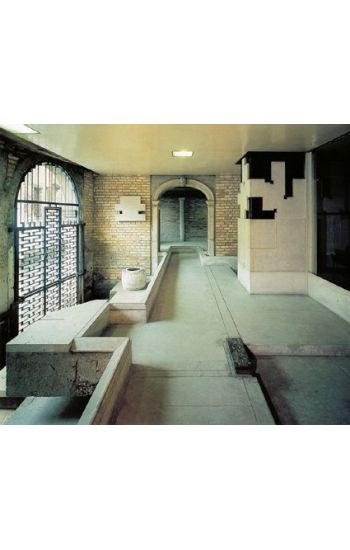
In recent decades, Carlo Scarpa's relevance has been steadily on the rise. At a time when architects have to use existing city and building structures as a point of departure for their work, his oeuvre remains a source of inspiration. Buildings such as the Castelvecchio in Verona show us that architecture is capable of communicating its own history, has meaning, and develops a contemporary dynamic of its own. Scarpa's layered architecture makes visible the process of becoming and the time-related sedimentation of material and meanings. It is especially at points of transition and interface that layering becomes a narrative element that elucidates the tectonic qualities of the building. Overlaying includes leaving a record of how an object came into being -- either by means of the sediments of its history or through the intervention of the architect. In this book Anne-Catrin Schultz presents her research about the phenomenon of layering in Carlo Scarpa's architecture. Layering describes the physical composition of layers defining space as well as the parallel presence of cultural referrals and formal associations imbedded in the physical layers. Scarpa's work is an embodiment of multidimensional layering and, at the same time, a focal point for architectural movements of his time that have stratification as their theme. In most buildings, the principle of layering may be regarded as something that is part of the nature of building. Functional conditions call for planes, elements, or "layers" to provide the supporting structure, and others to protect from rain, cold or the heat of the sun. However, architectonic layering goes beyond merely fulfilling technical requirements -- the principle of layering may be used as a formative method that allows elements of different origins to be combined into a non-hierarchical whole. Layering exists in a realm of complexity and implies a capacity of being interpreted that goes beyond itself and creates references to the world at large. The first part of the book examines Scarpa's fields of influence and intellectual roots and puts them in perspective with former theories and their interpretation of architecture as layered, for example Gottfried Semper's theory of clothing. The second part displays an analysis of three major projects, Castelvecchio and Banca Popolare in Verona and the Querini Foundation in Venice.
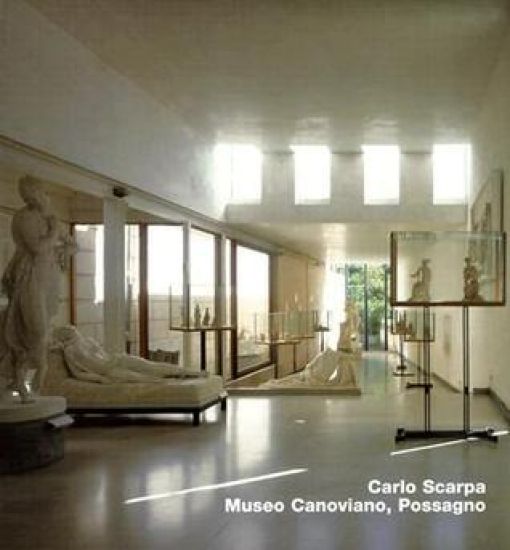
Carlo Scarpa. Museo Canoviano, Possagno
Stefan Buzas; Judith Arthur
Edition Axel Menges
2003
sidottu
Text in English and Italian. In a letter from London, dated 9 November 1815, Antonio Canova wrote: "...Here I am in London, dear and best friend, a wonderful city...I have seen the marbles arriving from Greece. Of the basreliefs we had some ideas from engravings, but of the full colossal figures, in which an artist can display his whole power and science, we have known nothing...The figures of Phidias are all real and living flesh, that is to say are beautiful nature itself." With his admiring words for the famous Elgin Marbles Canova, one of the last great artists embodying the grandiose heritage of the classical world, gave at the same time an appropriate description of his own artistic aims. It was his half-brother who decided to assemble most of Canova's plaster originals and to place them in a museum he had built in the garden of his brother's home in Possagno, a small village north of Venice, where the artist saw the light of day on 1 November 1757. This basilica-like building erected in 1836 now holds the great majority of Canova's compositions.To commemorate the bicentenary of his birth, the Venetian authorities decided to have an extension added to the overcrowded basilica, and they commissioned the Venetian architect Carlo Scarpa for this delicate task. Scarpa composed a small, but highly articulated building that is in a strong contrast to the Neo-Classical, monumental basilica. The subtly designed sequence of spaces is unique even among Scarpa's so many extraordinary museum interiors as the architect was here in the rare position to compose the spaces as well as the placings of the exhibits. The placing of the sources of natural light which infuses the plaster surfaces with the softness of real life is in itself a rare achievement and it took an equally rare photographer to record such symphonies in white in all their magic.
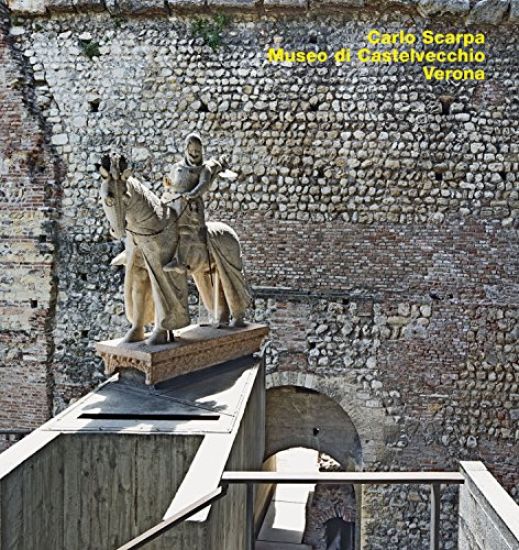
Carlo Scarpa, Castelvecchio, Verona
Edition Axel Menges
2016
sidottu
During the 1960s Italy's museum sector witnessed a fertile period of renewal. A generation of architects, working in partnership with the directors of museums, set about transforming into exhibition spaces a number of ancient monumental complexes located in the historic centres of some of the most important Italian cities. Among these was the brilliant and solitary Venetian architect Carlo Scarpa (19061978) who revitalised the discipline of museography by sagaciously combining it with restoration. His lucid intervention at Verona's Museo di Castelvecchio is emblematic of this approach: the medieval castle, the museum of ancient art, and modern architecture all harmoniously coexisting in a monument located at the heart of a city designated a UNESCO World Heritage Site. The far-sighted choice of Scarpa was owed to the then director of the museum, Licisco Magagnato, who tenaciously argued the case for the appointment of an architect specialising in this field to work on the city's principal museum of ancient art. The renovation work, which continued for more than a decade, took place in various phases (19581964, 1967 and 19681974) but in accordance with a remarkably consistent and coherent plan. In his work on Castelvecchio, carried out at a significant point in his career, Scarpa attained a remarkable balance between different aesthetic elements that is particularly evident in the sculpture gallery, where the renovations harmonise with the power of the 14th-century Veronese sculptures exhibited in this section of the museum. One of the most striking details is the location of the equestrian statue of Cangrande I della Scala. For the presentation of this work the architect conceived a backdrop of great poetry, drawing the visitor's attention to its historical stratifications and simultaneously creating an exemplary essay in modern architecture. This museum is the most perfectly resolved of Scarpa's works in terms of the complexity and coherence of its design, and today remains "outrageously" well preserved. It is therefore unsurprising that a photographer-artist such as Richard Bryant should have been attracted by the extraordinary compositional, spatial and luminous harmony of Castelvecchio. The book is introduced by an essay by Alba Di Lieto, the architect appointed to Verona City Council's Direzione Musei d'Arte e Monumenti, a scholar of Scarpa's drawings, and the author of monographs on his work. She describes the architect's renovation and locates it in the context of Italy's architectural panorama. She also offers insights into the cataloguing of Scarpa's graphic output in the context of the overall conservation of his work. The essay is followed by a brief history of the castle by Paola Marini, who was the director of Verona's civic museum network for 22 years. The essay is followed by a brief history of the castle by Paola Marini, who was the director of Verona's civic museum network for 22 years. In December 2015 she has taken on a new role as director of the Gallerie dell'Accademia in Venice the first of Scarpa's museum projects in 1949. Valeria Carullo writes in her postscript about her experience by assisting Richard Bryant in photographing the castle. She is curator of The Robert Elwall Photographs Collection in the RIBA British Architectural Library. Richard Bryant is one of the best-known architectural photographers, working all over the world. He and Hélène Binet are the only photographers with an honorary fellowship of the Royal Institute of British Architects.
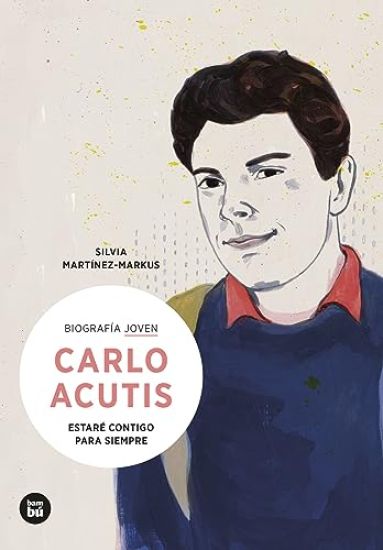
Hay j venes que pasan por la vida dejando huella, que no se contentan con ser fotocopias y quieren vivir como originales. Entre ellos se encuentra Carlo Acutis un joven que amaba la naturaleza y los animales, practicaba deportes con sus amigos y al que le apasionaba la inform tica y las nuevas tecnolog as.Desde peque o se sinti atra do por Jes s en la eucarist a y descubri , como dec a san Juan Pablo II, que se puede ser moderno y profundamente fiel a Jesucristo. Fue ejemplo de solidaridad con sus compa eros, a los que proteg a y ayudaba, y tambi n entre los sintecho y necesitados de su barrio.Carlo Acutis, el ciberap stol de la eucarist a, un influencer de Dios. There are young people who go through life leaving their mark, who are not content with being photocopies and want to live as originals. Among them is Carlo Acutis, a young man who loved nature and animals, practiced sports with his friends and who was passionate about computers and new technologies. From childhood he was attracted to Jesus in the Eucharist and discovered, as Saint John said Paul II, who can be modern and deeply faithful to Jesus Christ. He was an example of solidarity with his companions, whom he protected and helped, and also among the homeless and needy in his neighborhood. Carlos Acutis, the cyber-apostle of the Eucharist, an influencer of God.
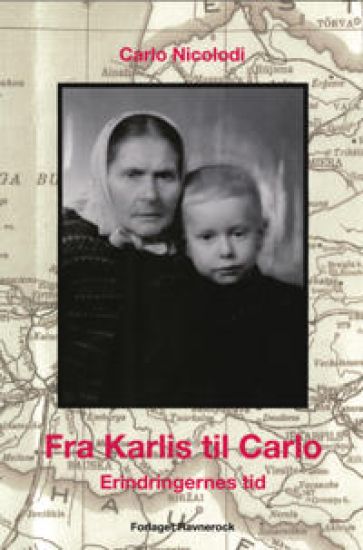
I en periode har Nathalia og Per Nielsens oversættelse af Carlo Nicolodis erinderinger fra sin barndom i Letland, været udsolgt, men nu er der et nyt oplag. Da bogen udkom første gang i 2011 skrev Kristeligt Dagblads boganmelder Mads Rosendahl Thomsen følgende under overskriften Italien-Letland tur-retur. Fine erindringer om en barndom i Letland under Anden Verdenskrig: ”Bogen gengiver på fin vis barnets nogle gange troskyldige blik på de dramatiske begivenheder, krigen førte med sig, men som også sætter mørke spor i personligheden. Fly, der bomber, tyskere, der truer, og folk, der dør ved miner efter krigen: "Man kan sige, at døden var blevet en naturlig del af dagligdagen, nærmest ligesom gøgens kukken i skoven. Der skulle gå mange år, før folk igen vænnede sig til freden og en tilværelse, hvor en mere human opfattelse af livet var normen."
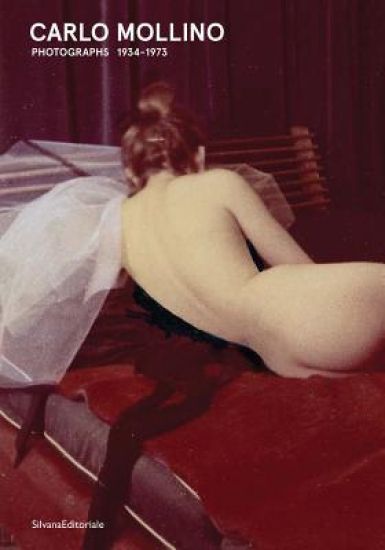
Architect, designer, writer, skier, racing driver and stunt pilot, Carlo Mollino placed photography in a wholly privileged role in the pantheon of his languages and interests. Carlo Mollino used photography at a means of expression, producing works that were both classical and experimental, and as a fundamental instrument for the documentation of his work and his daily life. From a theoretical point of view, he provided an important impulse to the historic and aesthetic study of this means, contributing to its transition into the system of art. With over 450 illustrations, this book fully investigates the relationship between Mollino and photography, from his first architectural shots to the Polaroids of his later years, placing him within the history of the discipline. Text in English and Italian.
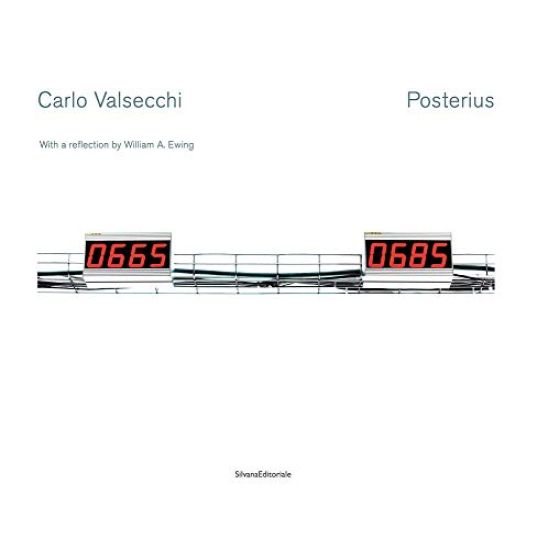
A construction site offered the scenario for a big photographic project created by Carlo Valsecchi, the fruit of which is presented in the pages of this volume. The gaze of Carlo Valsecchi (Brescia, 1965) is educated by a solid artistic preparation: over the course of many years he’s been using photography to investigate architecture and, in a wider sense, the landscape, both natural and artificial. Valsecchi interprets these places by offering us a vision that transcends the space and the contingent moment: his images invite us to discover a timeless reality, which perhaps will eventually come: posterius. As William Ewing points out in his long afterword, Valsecchi gives us images of ethereal, abstract spaces that border on the surreal, managing to bring out the mystery inherent in them. Text in English and Italian.
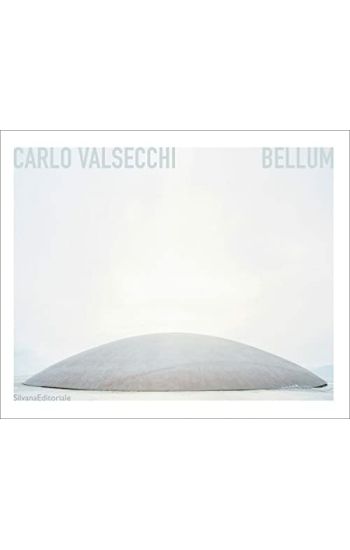
Carlo Valsecchi
SILVANA
2022
sidottu
The volume documents Bellum, the new artistic project by Carlo Valsecchi (Brescia, 1965). The 44 large-scale photographs in this series tell the story of the ancestral conflict between man and nature and man and man; nature used as a defence from others, and nature as something to defend ourselves from. The Alps are a symbol of all this, as nature at its most extreme, yet also the site of the last war of position. The project therefore explores the territories and fortifications of northeast Italy connected to World War I, one of the last times when human fate and experience were directly linked to the laws, conditions and control of nature. In three years of work, Valsecchi roamed these mountains with his view camera from winter until spring, and captured its harsh reality, in a form that is often abstract, intimately aesthetic, and absolute. The images in Bellum are sudden glimpses, portals of light and composition that hover in an endless time between loneliness, isolation and waiting. The catalogue features essays by Florian Ebner, chief curator of the Cabinet of Photography at the Centre Pompidou in Paris, and Yehuda Emmanuel Safran, art and architecture critic and professor at the Pratt Institute in New York. Text in English, German and Italian.
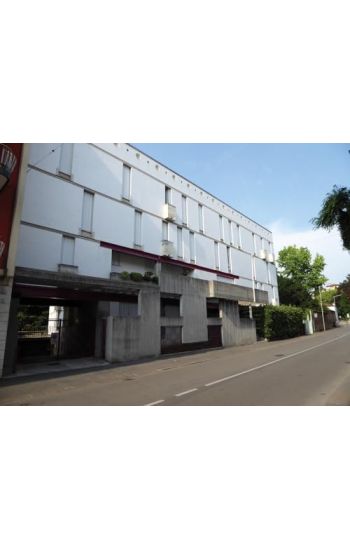
In Carlo Scarpa’s work (Venice, Italy, 1906 - Sendai, Japan, 1978), architectural design is primarily based on the structural constraints he sets himself. The structure is the object of the design, and it takes on a singular expressiveness. The structure is very present, in subtle and sometimes unusual ways. Numerous studies have been produced on the works of Carlo Scarpa, but none has focused specifically and in depth on the structural design of his projects. Yet, the definition of the structure is specific to each of his projects and to each situation within the project. For Scarpa, each structural decision is a subtle and very precise story that defines the project and gives it its identity. In the course of this study, structure will be examined in several of Carlo Scarpa’s works in order to highlight the significant use he made of it in each project and to demonstrate the poetic element contained within.
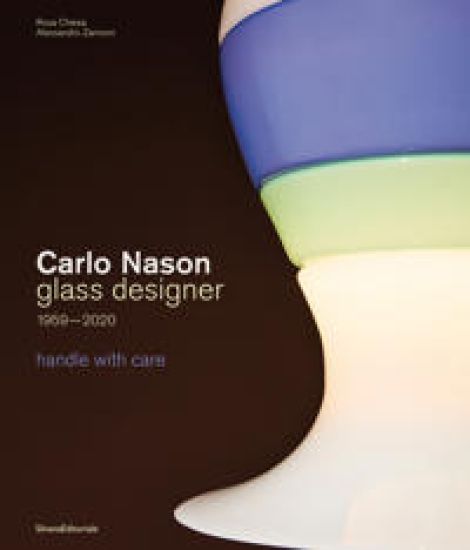
Carlo Nason, Glass Designer, 1959-2020
SILVANA
2025
sidottu
One of Italy’s most prolific designers of glass lamps, Carlo Nason, who grew up within the traditional culture of Murano, has been able to direct his research and vast production toward design, skillfully combining a mastery of traditional techniques and workmanship with an aptitude for innovative experimentation. His creations are exhibited at Moma, The Museum of Modern Art and The Corning Museum of Glass in New York, and at Mava, Museo de Arte en Vidrio de Alcorcón, in Madrid. This volume, born from the initiative of Fragile by Alessandro Padoan and Alessandro Palmaghini, and inaugurating a series dedicated to Italian design, investigates the rich production of designer Carlo Nason, known mainly as a designer of glass lamps, and offers the first organised account of his activity. Text in English and Italian.
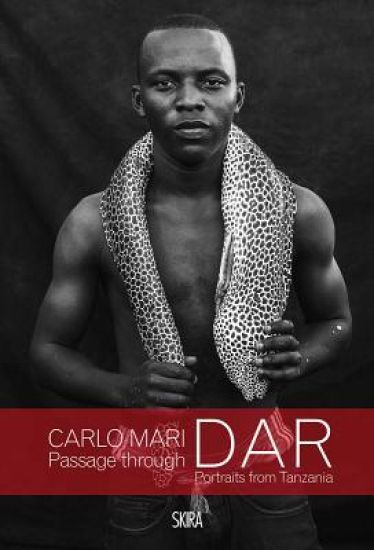
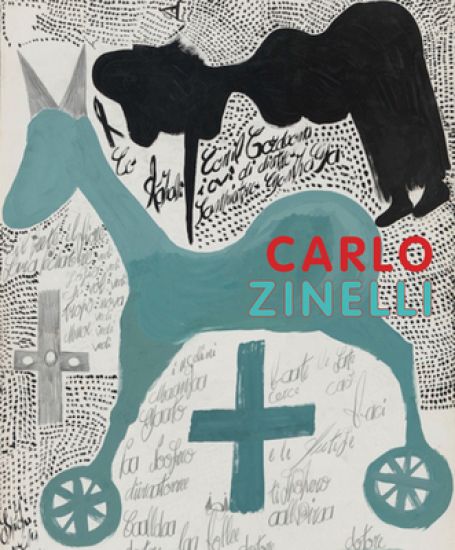
Carlo Zinelli, called Carlo (1916-1974), is one of the leading figures in Art Brut, along with Aloïse Corbaz and Adolf Wölfli. The book devoted to him by Collection de l'Art Brut, in Lausanne - the public institution that possesses the largest body of work by the Italian artist - gathers together a series of articles on Zinelli by experts in different disciplines. This makes it possible to give due weight to relatively neglected aspects of a rich and diverse opus, such as Carlo's writings, which mingle with his graphic compositions, well known for their characteristic accumulation of motifs, especially stylised human beings and animals, as well as vehicles. This bilingual book is lavishly illustrated throughout with reproductions of Zinelli's paintings and many photographs, several of which are by John Phillips, as well as previously unpublished archive material. Published to accompany an exhibition at Art Brut Collection, Lausanne, 7 June - 2 December 2019. Text in English and French.
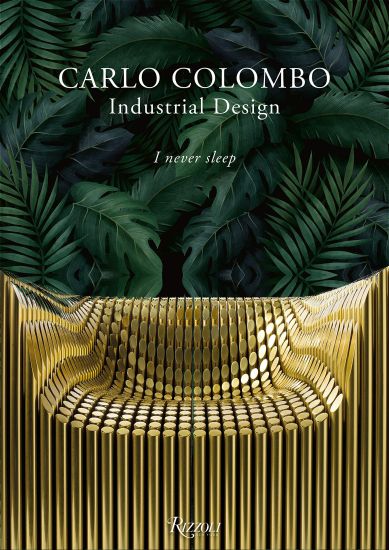
Carlo Colombo was born in Brianza, the land of the greatest Italian furniture companies and home to several key figures of contemporary design. Having graduated with a degree in architecture from the Politecnico di Milano, his career has grown with great intensity and success, including his iconic pieces such as the Minerva chairs or the Bali armchairs, the award-winning Albume washbasins, and the Sveva sofa. This book recounts the multifaceted universe of a designer poised between passion and rationality. It draws on a selection of his most significant design products, his methodology, creative inputs and collaborations with protagonists from the business and finance worlds, as well as enlightened clients and artists.
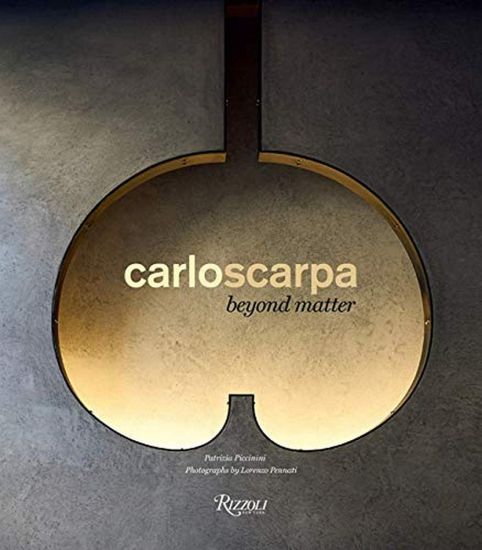
Carlo Scarpa was one of the great masters of postwar Italian architecture. This book proposes a photographic itinerary that unfurls through Venice, Treviso, Verona and Bologna, before reaching the Dolomites. His most significant projects have been photographed specifically for the book, including constructions and installations in public spaces, such as museums, shops and offices. Each example illustrates Scarpa s ability to approach the architectural volume as a whole while at the same time tending to its interior layout down to the smallest details, exploring the potential of the material, giving rhythm to the volumes through light, and expressing the poetics of the shape, even in its simplest lines. The projects featured in the book alternate between overviews and close-ups, with a very high photographic quality. They are all briefly introduced by a text that describes their genesis, explains the context in which they were made and focuses on the details that best represent Scarpa s style, with a summary and clear key to understanding the architect s work. The volume ends with a postscript by his son, Tobia Scarpa, who is currently designing the forthcoming Scarpa Museum in Treviso.
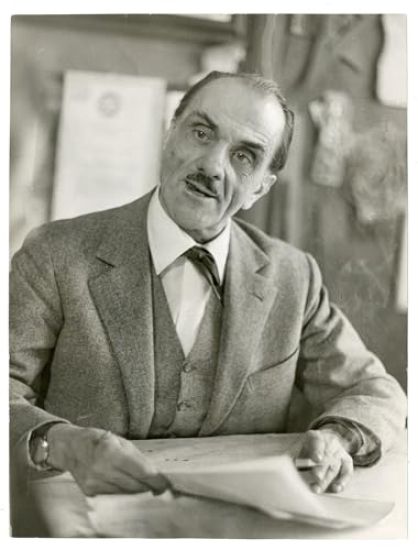
In 1981, two young gallery owners Paola and Rossella Colombari happened upon the furniture of Carlo Mollino (1905 1973), an enigmatic, unclassifiable, and then-unknown figure in Italian design. When they organized the first Mollino furniture auction in Venice in 1985, they never imagined the sale would trigger a massive international collectors market for Mollino s pioneering works. The designer s sought-after objects would soon sell for millions. This volume presents a wealth of iconographic material vintage photos, drawings, sketches, and photomontages drawn from Mollino s archives at the Turin Politecnico and some previously unpublished documents and images. The book includes a contribution by the architect Mario Cucinella, and a photographic portfolio by Uli Weber. It is not an exhaustive critical monograph, but instead bears witness with novelistic sweep. The Colombari sisters write about Mollino s creative mindset, his architecture and design, his photography, his lifelong passion for speed, his eroticism, and the overlap of his personal and professional life from a childhood in Turin through his death in 1973. No one could portray Mollino, the man and the artist, more convincingly than the two women who brought his legacy to light.
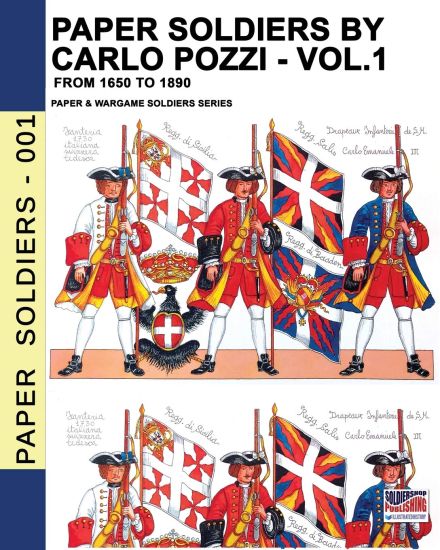
The paper soldiers printings in this first volume cover the years from 1650 to the end of the XIX century. In the second volume we will complete with tables from the XX century. The first infantries series from '600 and '700 is based on French and Italian subjects, but also English and Irish. You will also find an interesting and curious series regarding the French navy soldiers. Next are some sheets of North America Indians, followed by other uniforms and the Napoleonic era. The book concludes with Italian uniformologic subjects from the XIX century.