

Kirjahaku
Etsi kirjoja tekijän nimen, kirjan nimen tai ISBN:n perusteella.
1000 tulosta hakusanalla Carter
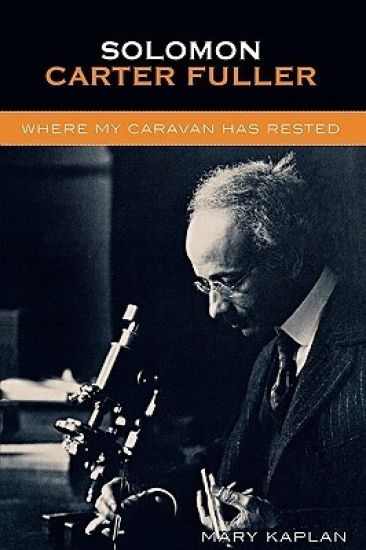
Solomon Carter Fuller: Where My Caravan Has Rested is the documentation of the life and accomplishments of an African American who would not allow racism to quench resolve and commitment to a productive life in medicine and scientific research. Dr. Fuller was born in Africa in 1872, the grandson of American slaves. He was America's first black psychiatrist and one of the first black physicians to hold faculty rank at an American medical school. He was a widely published neuropathologist and a pioneer in Alzheimer's disease research. To provide the reader with some insight into the life experiences that influenced and motivated Dr. Fuller, the book traces his family history from the days of slavery to the 1950s, crossing the North American, African, and European continents. Information obtained from his personal notes and interviews with his family provide a glimpse of the racial oppression that Fuller sought to overcome in both his personal and professional lives. This classic "Horatio Alger" strive and succeed story has important implications for our understanding of American, African, and European culture. Fuller's biography is an important addition to black history and to the history of medicine, not only for its account of a man whose achievements were many, but also for its portrait of what it was like to be black in the days of slavery, during the colonization of Liberia, and as a husband, father, and physician in early 20th century white America.

The classic Edgar Rice Burroughs tale comes to graphic life After ten long years, John Carter finally returns to Barsoom - but fi nds himself in the Land of the Dead He's faced Martian beasts, but can he handle Martian gods? And as the goddess Issus is finally revealed, will Carter be able to reach his long-lost love Dejah Thoris ... before she is sacrificed? Plus, who is Cathoris, the Red Martian who mysteriously looks like Carter? Join rising sensations Sam Humphries and Ramon Perez on an incredible journey though the unforgettable worlds of Mars COLLECTING JOHN CARTER: THE GODS OF MARS 1-5

"This analysis of President Carter's foreign policy in the Horn of Africa demonstrates Carter's consistent approach to foreign affairs throughout his administration. It discusses the ways in which this policy dealt with such issues as human rights abuses, Cold War concerns including a strong Communist bloc presence, and the violation of international law"--Provided by publisher.
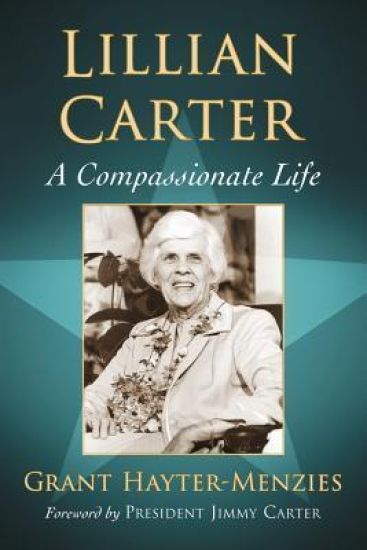
Written with the cooperation of President Jimmy Carter and his family, this book provides an intimate glimpse inside the life of the woman who--as nurse, mother and social justice activist in segregated southwest Georgia--made a lifelong habit of breaking the rules defining a woman's place in and out of the home and the status of blacks in society. As the only white nurse in her rural community who cared for black families, as a 68-year-old Peace Corps Volunteer in 1960s India, as a fearless supporter of civil rights and as a First Mother unlike any other, Lillian Carter showed how individual courage, conviction and compassion can make a difference. Drawing on interviews with friends and colleagues, members of the Plains, Georgia, black community, Peace Corps Volunteers who trained with her, White House insiders and key players in the civil rights movement, as well as letters, documents and photographs never before made public, this book captures the essence of the woman the press dubbed "Rose Kennedy without the hair dye" and "First Mother of the world."
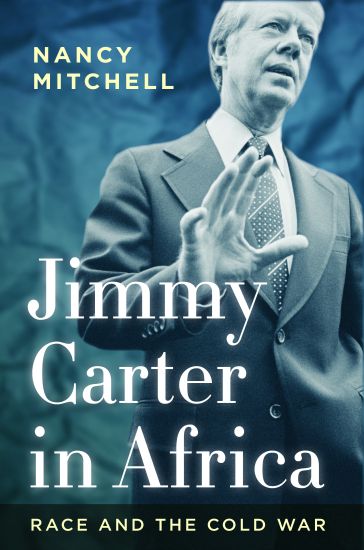
In the mid-1970s, the Cold War had frozen into a nuclear stalemate in Europe and retreated from the headlines in Asia. As Gerald Ford and Jimmy Carter fought for the presidency in late 1976, the superpower struggle overseas seemed to take a backseat to more contentious domestic issues of race relations and rising unemployment. There was one continent, however, where the Cold War was on the point of flaring hot: Africa. Jimmy Carter in Africa opens just after Henry Kissinger's failed 1975 plot in Angola, as Carter launches his presidential campaign. The Civil Rights Act was only a decade old, and issues of racial justice remained contentious. Racism at home undermined Americans' efforts to "win hearts and minds" abroad and provided potent propaganda to the Kremlin. As President Carter confronted Africa, the essence of American foreign policy—stopping Soviet expansion—slammed up against the most explosive and raw aspect of American domestic politics—racism. Drawing on candid interviews with Carter, as well as key U.S. and foreign diplomats, and on a dazzling array of international archival sources, Nancy Mitchell offers a timely reevaluation of the Carter administration and of the man himself. In the face of two major tests, in Rhodesia and the Horn of Africa, Carter grappled with questions of Cold War competition, domestic politics, personal loyalty, and decision-making style. Mitchell reveals an administration not beset by weakness and indecision, as is too commonly assumed, but rather constrained by Cold War dynamics and by the president's own temperament as he wrestled with a divided public and his own human failings. Jimmy Carter in Africa presents a stark portrait of how deeply Cold War politics and racial justice were intertwined.
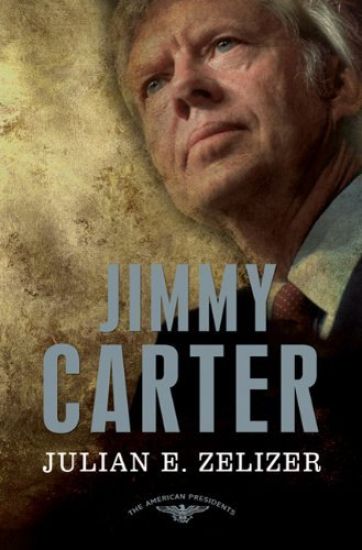
A peanut farmer from Georgia, Jimmy Carter rose to national power through mastering the strategy of the maverick politician. As the face of the 'New South', Carter's strongest support emanated from his ability to communicate directly to voters who were disaffected by corruption in politics. But running as an outsider was easier than governing as one, as Princeton historian Julian E. Zelizer shows in this examination of Carter's presidency. Once in power, Carter faced challenges sustaining a strong political coalition, as he focused on policies that often antagonized key Democrats, whose support he desperately needed. By 1980, Carter stood alone in the Oval Office as he confronted a battered economy, soaring oil prices, American hostages in Iran, and the Soviet invasion of Afghanistan. Carter's unpopularity enabled Ronald Reagan to achieve a landslide victory, ushering in a conservative revolution. But during Carter's post-presidential career, he has emerged as an important voice for international diplomacy and negotiation, remaking his image as a statesman for our time.
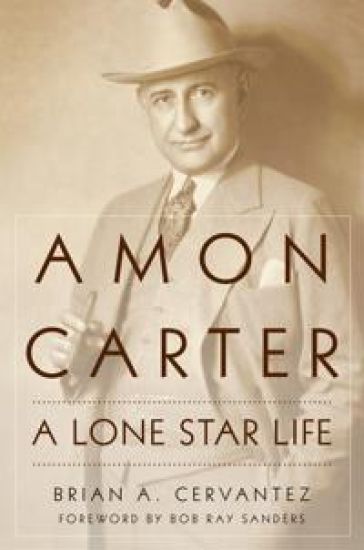
Raised in a one-room log cabin in a small North Texas town, Amon G. Carter (1879–1955) rose to become the founder and publisher of the Fort Worth Star-Telegram, a seat of power from which he relentlessly promoted the city of Fort Worth, amassed a fortune, and established himself as the quintessential Texan of his era. The first in-depth, scholarly biography of this outsize character and civic booster, Amon Carter: A Lone Star Life chronicles a remarkable life and places it in the larger context of state and nation. Though best known for the Star-Telegram, Carter also established WBAP, Fort Worth’s first radio station, which in 1948 became the first television station in the Southwest. He was responsible for bringing the headquarters of what would become American Airlines to Fort Worth and for securing government funding for a local aircraft factory that evolved into Lockheed Martin. Historian Brian A. Cervantez has drawn on Texas Christian University’s rich collection of Carter papers to chart Carter’s quest to bring business and government projects to his adopted hometown, enterprises that led to friendships with prominent national figures such as Franklin D. Roosevelt, Dwight D. Eisenhower, Will Rogers, H. L. Mencken, and John Nance Garner. After making millions of dollars in the oil business, Carter used his wealth to fund schools, hospitals, museums, churches, parks, and camps. His numerous philanthropic efforts culminated in the Amon G. Carter Foundation, which still supports cultural and educational endeavors throughout Texas. He was a driving force behind the establishment of Texas Tech University, a major contributor to Texas Christian University, a key figure in the creation of Big Bend National Park, and an art lover whose collection of the works of Frederic Remington and Charles M. Russell served as the foundation of the Amon Carter Museum of American Art.Amon Carter: A Lone Star Life testifies to the singular character and career of one man whose influence can be seen throughout the cultural and civic life of Fort Worth, Texas, and the American Southwest to this day.
Jimmy Carter as President
Erwin C. Hargrove; James Sterling Young
Louisiana State University Press
1999
nidottu
Jimmy Carter was, according to Erwin Hargrove, the first modern Democratic president to be substantially ahead of the party coalition. Concerned with issues of the future - inflation, the need for tax reform, energy shortages - Carter anticipated many questions that are only now being addressed, nearly a decade after his troubled tenure in office. The years 1976 to 1980 were difficult years for a Democrat to be president - especially difficult for a southern moderate who viewed the world in Wilsonian terms and who was politically unaligned, essentially an outsider in his party and in Washington. But Carter's inability to read or manipulate the political scene was not the only problem to beleaguer his presidency. Events such as the Soviet invasion of Afghanistan and the capture of American hostages in Iran also worked against Carter, creating situations in which no amount of political acumen could have salvaged his presidency. Hargrove places Carter in historical perspective. Examining his frequently overlooked successes, as well as his failures, Hargrove analyses both the content and the methods of Carter's policy leadership. His style of leadership is studied in the light of his beliefs and values, and of his problem-solving skills and experience. This profile draws heavily upon interviews with members of Carter's White House staff. In a consideration for Carter's domestic, economic, and foreign policies, Hargrove shows the congruence of purpose, politics, and process as a president shapes decision making. Because Carter was skilled at solving specific problems, he achieved notable successes - the Panama Canal Treaty, the Camp David Accord, and the SALT II talks - when he could keep matters in his own hands. Yet, despite such policy successes, his inability to build strong coalitions and delegate authority, exacerbated by uncontrollable world events, doomed Carter to political defeat. Throughout Jimmy Carter as President, Hargrove emphasises that in our assessment of presidents, we should evaluate skill within the historical context and thereby better understanding the ingredients of presidential success. Hargrove's effective and extensive use of interviews proves the advantages of integrating oral history into scholarly research and writing.
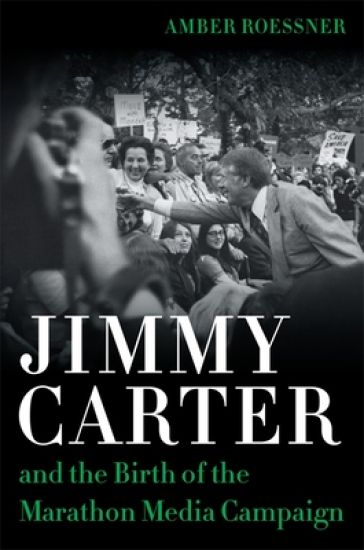
Jimmy Carter and the Birth of the Marathon Media Campaign
Amber Roessner
Louisiana State University Press
2020
sidottu
With the rise of Jimmy Carter, a former Georgia governor and a relative newcomer to national politics, the 1976 presidential election proved a transformative moment in U.S. history, heralding a change in terms of how candidates run for public office and how the news media cover their campaigns. Amber Roessner's Jimmy Carter and the Birth of the Marathon Media Campaign chronicles a change in the negotiation of political image-craft and the role it played in Carter's meteoric rise to the presidency. She contends that Carter's underdog victory signaled a transition from an older form of party politics focused on issues and platforms to a newer brand of personality politics driven by the manufacture of a political image. Roessner offers a new perspective on the production and consumption of media images of the peanut farmer from Plains who became the thirty-ninth president of the United States. Carter's miraculous win transpired in part because of carefully cultivated publicity and advertising strategies that informed his official political persona as it evolved throughout the Democratic primary and general-election campaigns. To understand how media relations helped shape the first post-Watergate presidential election, Roessner examines the practices and working conditions of the community of political reporters, public relations agents, and advertising specialists associated with the Carter bid. She draws on materials from campaign files and strategic memoranda; radio and TV advertisements; news and entertainment broadcasts; newspaper and magazine coverage; and recent interviews with Carter, prominent members of his campaign staff, and over a dozen journalists who reported on the 1976 election and his presidency. With its focus on the inner workings of the bicentennial election, Jimmy Carter and the Birth of the Marathon Media Campaign offers an incisive view of the transition from the yearlong to the permanent campaign, from New Deal progressivism to New Right conservatism, from issues to soundbites, and from objective news analysis to partisan commentary.
Intended as a plausible psychological and intellectual portrait of Landon Carter, thi study attempts to delineate his central character traits and personal values. It calls attention to what motivated him, to the major problems he encountered, how he sought to solve them, and how well he succeeded. His world is viewed in much the way he must have seen it. The book is also an inquiry into the personal values and social imperatives of the eighteenth-century Virginia gentry, for Carter exemplifies the ideas and assumptions that gave structure and coherence to the private and public worlds of that extraordinary group.

Angela Carter and the Fairy Tale
Wayne State University Press
2001
nidottu
Angela Carter (1940-92) is widely known for her literary fairy tales, particularly those appearing in ""The Bloody Chamber"". Her stylishly creative appropriation and adaptation of fairy-tale patterns, motifs and content are evident not only in her individual tales written for adults but throughout her novels and other fiction. Editors Danielle M. Roemer and Cristina Bacchilega together with the contributors to this volume investigate Carter's approaches to the fairy-tale genre. They explore various facets of Carter's work and life and open new avenues for further research. The book is a collection of scholarly essays, fiction, personal reminiscence and interviews from an international group of scholars, artists and novelists.
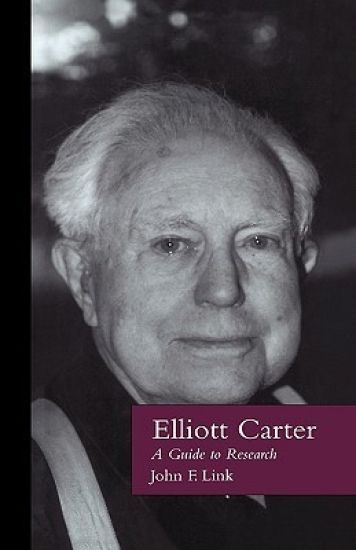
This is a comprehensive guide to research on the American composer Elliott Carter (b. 1908), widely acknowledged as one of the greatest composers of the twentieth century. It contains a chronology, complete list of works, detailed discography, and fully annotated bibliography of over 1,000 books, articles, interviews, video recordings, and Carter's own writings. This essential reference book covers the most significant works in English, French, German, and Italian, from the 1940s-when Carter's music first began to attract attention-to the 1990s.

What sets the Carter Presidential Portrait volume apart from other volumes in this series is its concentration on the President and First Lady, Cabinet level officials, certain intangibles such as the nature of the times, accidents and unforeseen events and presidential style and politics. Significantly, this volume is the first in which the President and the First Lady graciously joined in its preparation. Includes essays by Judge Shirley Hufstedler, Secretary of Labor Ray Marshall, Attorney General Griffin Bell, Secretary of Commerce Juanita Kreps, Secretary of Commerce Philip M. Klutznick, Secretary of Agriculture Bob S. Bergland, Secretary of State Cyrus Vance, Director of the Policy Planning Staff Anthony Lake, Ambassador Donald McHenry, Secretary of State Edmund Muskie, Yale Professor of History Gaddis Smith, and Vice President Walter F. Mondale. Co-published with the Miller Center of Public Affairs.
What sets the Carter Presidential Portrait volume apart from other volumes in this series is its concentration on the President and First Lady, Cabinet level officials, certain intangibles such as the nature of the times, accidents and unforeseen events and presidential style and politics. Significantly, this volume is the first in which the President and the First Lady graciously joined in its preparation. Includes essays by Judge Shirley Hufstedler, Secretary of Labor Ray Marshall, Attorney General Griffin Bell, Secretary of Commerce Juanita Kreps, Secretary of Commerce Philip M. Klutznick, Secretary of Agriculture Bob S. Bergland, Secretary of State Cyrus Vance, Director of the Policy Planning Staff Anthony Lake, Ambassador Donald McHenry, Secretary of State Edmund Muskie, Yale Professor of History Gaddis Smith, and Vice President Walter F. Mondale. Co-published with the Miller Center of Public Affairs.
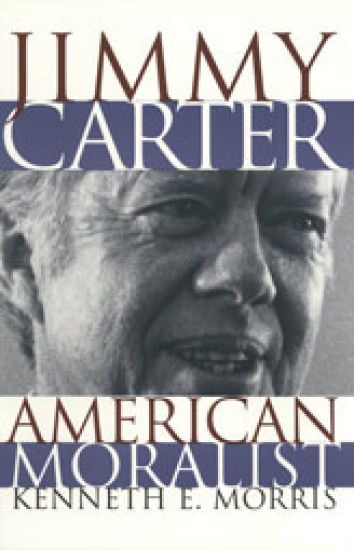
Jimmy Carter has baffled the public from his first bid for elective office in racially divided rural Georgia through his postpresidential career as a global peacemaker and human rights activist. Is he a moral visionary or a well-meaning but sometimes misguided moralizer? More important, what might America learn about itself by examining the life and legacy of this enigmatic leader?In Jimmy Carter, American Moralist, the first full-scale biography of Carter since 1980, Kenneth E. Morris shows us that any conclusions about Carter's leadership and its adequacy to his challenges as president cannot ignore the moral quandary that vexed the nation not only under Carter but ever since. Through film and popular music, personality profiles and campaign summaries, poll findings and landmark court decisions, Morris sheds light on the cultural forces that shaped Carter and produced the troubled society that made him president.Carter's story is the moral story of our times, and in asking not whether Carter is "good" but whether he has been good for America, we see the promises and pitfalls of our common values.
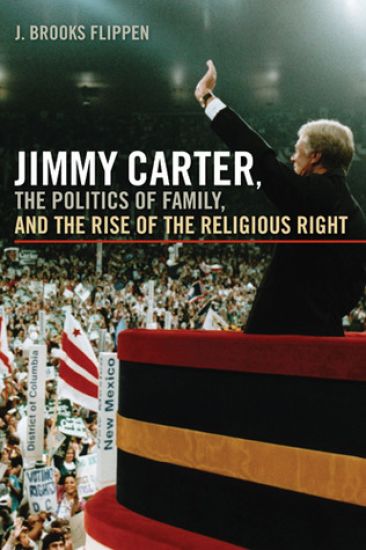
Jimmy Carter, the Politics of Family, and the Rise of the Religious Right
J. Brooks Flippen
University of Georgia Press
2011
sidottu
As Jimmy Carter ascended to the presidency the heir apparent to Democratic liberalism, he touted his background as a born-again evangelical. Once in office, his faith indeed helped form policy on a number of controversial moral issues. By acknowledging certain behaviors as sinful while insisting that they were private matters beyond government interference, J. Brooks Flippen argues, Carter unintentionally alienated both social liberals and conservative Christians, thus ensuring that the debate over these moral “family issues” acquired a new prominence in public and political life.The Carter era, according to Flippen, stood at a fault line in American culture, religion, and politics. In the wake of the 1960s, some Americans worried that the traditional family faced a grave crisis. This newly politicized constituency viewed secular humanism in education, the recognition of reproductive rights established by Roe v. Wade, feminism, and the struggle for homosexual rights as evidence of cultural decay and as a challenge to religious orthodoxy. Social liberals viewed Carter’s faith with skepticism and took issue with his seeming unwillingness to build on recent progressive victories. Ultimately, Flippen argues, conservative Christians emerged as the Religious Right and were adopted into the Republican fold.Examining Carter’s struggle to placate competing interests against the backdrop of difficult foreign and domestic issues—a struggling economy, the stalled Strategic Arms Limitation Talks, disputes in the Middle East, handover of the Panama Canal, and the Iranian hostage crisis—Flippen shows how a political dynamic was formed that continues to this day.
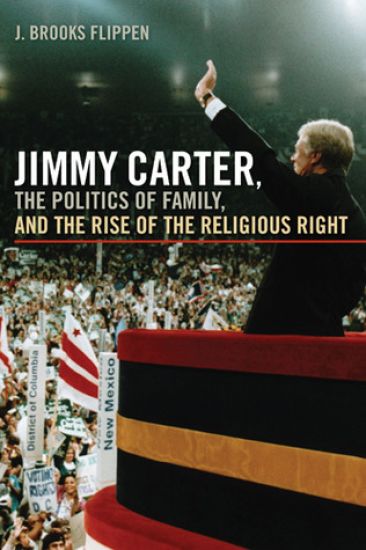
Jimmy Carter, the Politics of Family, and the Rise of the Religious Right
J. Brooks Flippen
University of Georgia Press
2011
pokkari
As Jimmy Carter ascended to the presidency the heir apparent to Democratic liberalism, he touted his background as a born-again evangelical. Once in office, his faith indeed helped form policy on a number of controversial moral issues. By acknowledging certain behaviors as sinful while insisting that they were private matters beyond government interference, J. Brooks Flippen argues, Carter unintentionally alienated both social liberals and conservative Christians, thus ensuring that the debate over these moral “family issues” acquired a new prominence in public and political life.The Carter era, according to Flippen, stood at a fault line in American culture, religion, and politics. In the wake of the 1960s, some Americans worried that the traditional family faced a grave crisis. This newly politicized constituency viewed secular humanism in education, the recognition of reproductive rights established by Roe v. Wade, feminism, and the struggle for homosexual rights as evidence of cultural decay and as a challenge to religious orthodoxy. Social liberals viewed Carter’s faith with skepticism and took issue with his seeming unwillingness to build on recent progressive victories. Ultimately, Flippen argues, conservative Christians emerged as the Religious Right and were adopted into the Republican fold.Examining Carter’s struggle to placate competing interests against the backdrop of difficult foreign and domestic issues—a struggling economy, the stalled Strategic Arms Limitation Talks, disputes in the Middle East, handover of the Panama Canal, and the Iranian hostage crisis—Flippen shows how a political dynamic was formed that continues to this day.
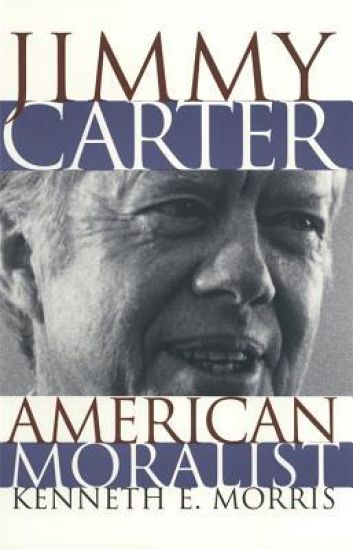
Jimmy Carter has baffled the public from his first bid for elective office in racially divided rural Georgia through his postpresidential career as a global peacemaker and human rights activist. Is he a moral visionary or a well-meaning but sometimes misguided moralizer? More important, what might America learn about itself by examining the life and legacy of this enigmatic leader?In Jimmy Carter, American Moralist, the first full-scale biography of Carter since 1980, Kenneth E. Morris shows us that any conclusions about Carter's leadership and its adequacy to his challenges as president cannot ignore the moral quandary that vexed the nation not only under Carter but ever since. Through film and popular music, personality profiles and campaign summaries, poll findings and landmark court decisions, Morris sheds light on the cultural forces that shaped Carter and produced the troubled society that made him president.Carter's story is the moral story of our times, and in asking not whether Carter is "good" but whether he has been good for America, we see the promises and pitfalls of our common values.

Jimmy Carter: Citizen of the South uses oral histories and more than 215 photographs to look at the life of the former president and how the South nurtured him, provided a launching pad for his political career, and supported the various activities of his post-presidency. Even people very familiar with Carter will gain a greater appreciation for the breadth of civic, religious, and charitable ventures the president has engaged in since leaving office. Georgia and the South have shaped much of his life and beliefs. Jimmy Carter and his wife, Rosalynn, grew up in Plains. Although military service led him to leave the area for eleven years, upon returning, he farmed and ran a peanut warehouse while he and Rosalynn raised their family. In 1962, he won election to the Georgia Senate and became governor eight years later. With the assistance of many Georgians, he became president of the United States in 1977.After losing his bid for reelection, Carter returned home to Plains, where southerners welcomed him and his wife back and supported their new endeavors. Carter established the Carter Presidential Library and the Carter Center in Atlanta and became a professor at Emory University. He has occasionally commented about world events and periodically meets with fellow presidents and governors. He taught Sunday school at the Maranatha Baptist Church in Plains for four decades and has engaged in humanitarian programs such as Habitat for Humanity around the country and the world, continuing to educate and inspire generations of philanthropic activists. With this informative history, Kaye Lanning Minchew illuminates Carter’s past, present, and his enduring legacy, adding to our understanding of his impact on both national and international concerns.