Simple text and repetition of the letter blend 'ch' help readers learn how to use this sound. Additional features to aid comprehension include a word list for review, a note to parents and educators, and an introduction to the author.
On several counts, one particular collection of French lyrics made in France in the late fourteenth century, University of Pennsylvania MS 15, is the most likely repository of Chaucer's French poems. It is the largest manuscript anthology extant of fourteenth-century French lyrics in the formes fixes (balade, rondeaux, virelay, lay, and five-stanza chanson) with by far the largest number of works of unknown authorship.
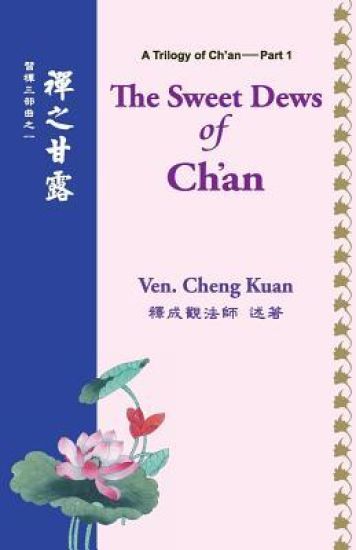
A Summary of The Sweet Dews of Ch'an This is a book about Meditation in various aspects, including fundamental principles, techniques, applications, and stages of advanced practice. First of all, it enunciates the Essentials of Ch'an Buddhist meditation in Chapter 1, followed by explicating some basic concepts and terms about meditation (Chapter 2). And then in Chapter 3 it goes on to delineate the Advanced Meditations, including 1. The Four Contemplations (i.e. the Contemplations on the Body, Sensations, Mind, and Dharma). 2. The Contemplation on the Four Elements (Earth, Water, Fire, and Air)3. The Contemplation on the Mind. 4. The Contemplation on Buddha Nature.Chapter 4 presents the Five Flavors of Ch'an (i.e. the Five genres of meditation): e.g. (1) the Worldly Meditation, (2) Other Religion's Meditation, (3) Hinayana Ch'an, (4) Bodhisattva Ch'an, and (5) Tathagata Ch'an. In Chapter 5 it treats the Five Contemplations for Ceasing the Perturbed Mind: 1. Anapanasmrti (the Breath Contemplation) 2. The Contemplation on Uncleanliness 3. The Contemplation on the Twelve Causality Links 4. The Contemplation on Compassion 5. The Contemplation on Buddha's Merits. The above are the most important techniques in Buddhist Meditation. Then the following three chapters are the development of the 2nd item above; they are the Three Visualizations: 1. the Contemplation on Defilement (Chapter 6) 2. the Nine Visualizations on a Corpse (Chapter 7) 3. the White-Bone Visualization And then in Chapters 9 and 10, the Five Stages in Realizing Dhyana are depicted at length. These further include 3 steps: Step 1: to denounce the Five Desires Step 2: to renounce to Five Shrouds Step 3: to execute the Five Cultivations Finally, in the last chapter, it relates the legend of Running Meditation and the Incense Board. In fine, this book, though not really big in bulk, it virtually treats almost all the significant aspects that a serious practitioner needs to know concerning Buddhist meditation, both theoretically and practically, and it should be very helpful and informative as a personal practice guide book, or as a textbook or reference book for group practice.