This volume, presents the succession of treaties between 1785 and 1868 that reduced the holdings of the Cherokee Nation east of the Mississippi and culminated in their removal to Indian territory. Each document is accompanied by a detailed description of its antecedent conditions, the negotiations that led up to it, and its consequences. The events described here ended more than a century ago, but the motives and actions of the participants and the effects of the compromises and decisions they made are sadly familiar. The story presented here needs to be understood by everyone concerned with the survival of diverse ways of life and the quality of the relationships among peoples.The impersonal style of Royce's presentation enhances the poignancy of the Cherokee experience. Repeated declarations of peace and perpetual friendship contrast with repeated violations of treaties approved by Congress and the impotence of a people to defend their ancestral lands. The Cherokee "trail of broken treaties" has left us with a heritage of guilt and frustration that we have yet to overcome.The Native American Library, in which this volume appears, has been initiated by the National Anthropological Archives of the National Museum of Natural History, Smithsonian Institution, to publish original works by Indians and reprints selected by the tribes involved. Royce's work, which was included in the Fifth Annual Report of the Bureau of American Ethnology, is republished at the request of the Governing Body of the Cherokee Nation. The original text is prefaced by an evaluation of Royce and his work by Richard Mack Bettis and contains several illustrations not included in the earlier edition.
This book describes the heritage and development of the entire Piper Cherokee family; its safety and ownership characteristics; internal and external details; and a range of special variants from STOL modifications and new engines to seaplanes and tailwheel conversions. The hugely successful Piper PA-28 was produced and sold as a direct competitor to the Cessna 172. Initially produced with a rectangular wing planform and fixed undercarriage, it was available with installed powers ranging from 140 to 235 hp. A retractable undercarriage resulted in the Arrow series. The closely related PA-32 Cherokee Six, Saratoga and Six X are larger high performance aircraft. Versions of the PA-32 fitted with retractable undercarriages are the Lance and the sophisticated Saratoga II series.
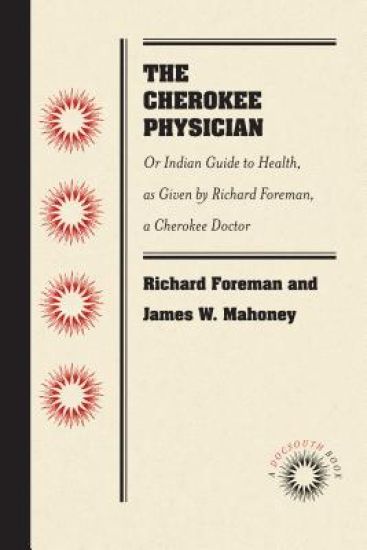
The Cherokee Physician, or Indian Guide to Health, as Given by Richard Foreman, a Cherokee Doctor; Comprising a Brief View of Anatomy, With General Rules for Preserving Health without the Use of Medicines. The Diseases of the U. States, with Their Symptoms, Causes, and Means of Prevention, are Treated on in a Satisfactory Manner. It Also Contains a Description of a Variety of Herbs and Roots, Many of which are not Explained in Any Other Book, and their Medical Virtues have Hitherto been Unknown to the Whites; To which is Added a Short Dispensatory
In 1973, Cherokee students at the Qualla Boundary started a student organization with the intention of improving the educational prospects among Native Americans attending non-Indian colleges and universities. Under the direction of Laurence French and Charles Jim Hornbuckle, the students interviewed Cherokee elders and received help from the American Indian Historical Society in order to gain an accurate history and assessment of the tribe, which has a long misunderstood history. In order to gain more traction and involvement in the project, special college courses were offered at the Cherokee High School under the supervision of French and Hornbuckle. Published in 1981, The Cherokee Perspective is a compilation of the articles written in these courses.
The extended title of The Cherokee Physician serves as an apt summary of its contents. The book was the result of a remarkable collaboration between James Mahoney, an Irish American and native Tennesseean, and Richard Foreman, whose parental ancestry was probably Scottish and Cherokee. Typical of its time, the book dispenses moral advice as cheerfully as medical advice. Needless to say, much of its advice flies in the face of modern medical practice and should not be applied. Foreman and Mahoney warn against sitting by an open window and offer conjecture, now disproven, about the pathologies of illnesses such as yellow fever and undulant fever (""milk sickness""). On the other hand, some of its cures have come into vogue or else find modern scientific endorsement, with examples from the text including the anti-inflammatory properties of red pepper and the usefulness of the European plantain.The volume has intrigued homeopathic practitioners through the years, and attracted the interest of contemporaneous practitioners, including, for instance, one doctor who wrote to the Therapeutic Gazette (September 1881) to enthusiastically endorse its cure for ""gravel"" through Gravel Weed (Actinomeris Helianthoides). ""Gravel"" translates to kidney stones in contemporary parlance; modern homeopathic sources say little about the common flower's use as a diuretic, furnishing one example of knowledge in The Cherokee Physician that has escaped modern evaluation. The book offers, by slant, interesting ethnographic observations, equally unproven.
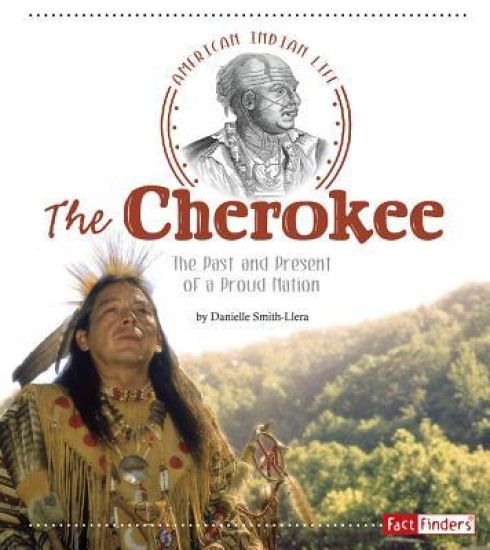
The Trail of Tears marked the low point in Cherokee history. The survivors of that deadly event set a new course, rebuilding their lives in an unfamiliar land. Their descendants have prospered in modern America but always remember their culture and past.


![The Cherokee Physician Or Indian Guide to Health: As Given by Richard Foreman a Cherokee Doctor; Comprising a Brief View of Anatomy.: With General Rules for Preserving Health Without the Use of Medicine [Special Illustrated Edition]](/covers/9781105262937.jpg)