Kirjojen hintavertailu. Mukana 12 016 292 kirjaa ja 12 kauppaa.

Kirjahaku

Etsi kirjoja tekijän nimen, kirjan nimen tai ISBN:n perusteella.

765 tulosta hakusanalla Cherokee Randolph

Toward Cherokee Removal

Toward Cherokee Removal

Adam J. Pratt

University of Georgia Press
2020
sidottu
Cherokee Removal excited the passions of Americans across the country. Nowhere did those passions have more violent expressions than in Georgia, where white intruders sought to acquire Native land through intimidation and state policies that supported their disorderly conduct. Cherokee Removal and the Trail of Tears, although the direct results of federal policy articulated by Andrew Jackson, were hastened by the state of Georgia. Starting in the 1820s, Georgians flocked onto Cherokee land, stole or destroyed Cherokee property, and generally caused havoc. Although these individuals did not have official license to act in such ways, their behavior proved useful to the state. The state also dispatched paramilitary groups into the Cherokee Nation, whose function was to intimidate Native inhabitants and undermine resistance to the state’s policies. The lengthy campaign of violence and intimidation white Georgians engaged in splintered Cherokee political opposition to Removal and convinced many Cherokees that remaining in Georgia was a recipe for annihilation. Although the use of force proved politically controversial, the method worked. By expelling Cherokees, state politicians could declare that they had made the disputed territory safe for settlement and the enjoyment of the white man’s chance.Adam J. Pratt examines how the process of one state’s expansion fit into a larger, troubling pattern of behavior. Settler societies across the globe relied on legal maneuvers to deprive Native peoples of their land and violent actions that solidified their claims. At stake for Georgia’s leaders was the realization of an idealized society that rested on social order and landownership. To achieve those goals, the state accepted violence and chaos in the short term as a way of ensuring the permanence of a social and political regime that benefitted settlers through the expansion of political rights and the opportunity to own land. To uphold the promise of giving land and opportunity to its own citizens—maintaining what was called the white man’s chance—politics within the state shifted to a more democratic form that used the expansion of land and rights to secure power while taking those same things away from others.
Toward Cherokee Removal

Toward Cherokee Removal

Adam J. Pratt

UNIVERSITY OF GEORGIA PRESS
2022
pokkari
Cherokee Removal excited the passions of Americans across the country. Nowhere did those passions have more violent expressions than in Georgia, where white intruders sought to acquire Native land through intimidation and state policies that supported their disorderly conduct. Cherokee Removal and the Trail of Tears, although the direct results of federal policy articulated by Andrew Jackson, were hastened by the state of Georgia. Starting in the 1820s, Georgians flocked onto Cherokee land, stole or destroyed Cherokee property, and generally caused havoc. Although these individuals did not have official license to act in such ways, their behavior proved useful to the state. The state also dispatched paramilitary groups into the Cherokee Nation, whose function was to intimidate Native inhabitants and undermine resistance to the state’s policies. The lengthy campaign of violence and intimidation white Georgians engaged in splintered Cherokee political opposition to Removal and convinced many Cherokees that remaining in Georgia was a recipe for annihilation. Although the use of force proved politically controversial, the method worked. By expelling Cherokees, state politicians could declare that they had made the disputed territory safe for settlement and the enjoyment of the white man’s chance.Adam J. Pratt examines how the process of one state’s expansion fit into a larger, troubling pattern of behavior. Settler societies across the globe relied on legal maneuvers to deprive Native peoples of their land and violent actions that solidified their claims. At stake for Georgia’s leaders was the realization of an idealized society that rested on social order and landownership. To achieve those goals, the state accepted violence and chaos in the short term as a way of ensuring the permanence of a social and political regime that benefitted settlers through the expansion of political rights and the opportunity to own land. To uphold the promise of giving land and opportunity to its own citizens—maintaining what was called the white man’s chance—politics within the state shifted to a more democratic form that used the expansion of land and rights to secure power while taking those same things away from others.
The Cherokee Nation

The Cherokee Nation

University of New Mexico Press
2008
nidottu
The Cherokee Nation is one of the largest and most important of all the American Indian tribes. The first history of the Cherokees to appear in over four decades, this is also the first to be endorsed by the tribe and the first to be written by a Cherokee.Robert Conley begins his survey with Cherokee origin myths and legends. He then explores their relations with neighboring Indian groups and European missionaries and settlers. He traces their forced migrations west, relates their participations on both sides of the Civil War and the wars of the twentieth century, and concludes with an examination of Cherokee life today.Conley provides analyses for general readers of all ages to learn the significance of tribal lore and Cherokee tribal law. Following the history is a listing of the Principal Chiefs of the Cherokees with a brief biography of each and separate listings of the chiefs of the Eastern Cherokees and the Western Cherokees. For those who want to know more about Cherokee heritage and history, Conley offers additional reading lists at the end of each chapter.
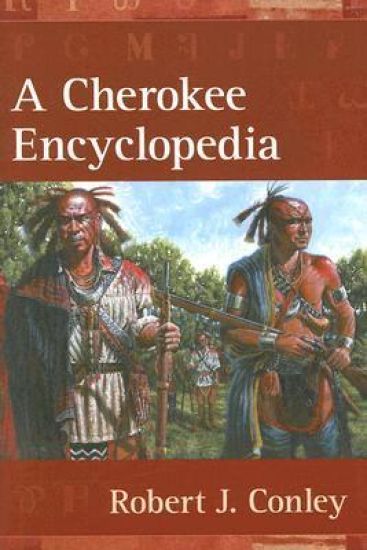
A Cherokee Encyclopedia

A Cherokee Encyclopedia

Robert J. Conley

University of New Mexico Press
2007
sidottu
A quick reference guide for many of the people, places, and things connected to the United Keetoowah Band of Cherokees, as well as for the other officially recognized Cherokee groups, the Cherokee Nation and the Eastern Band of Cherokees.
1832 Cherokee Land Lottery of Georgia

1832 Cherokee Land Lottery of Georgia

Southern Historical Press
2016
nidottu
By: James F. Smith, Pub. 1838, Reprinted 2016, 504 pages, maps, New Index, ISBN #0-89308-033-0.This is the sixth of the land lotteries held in Georgia. This land lottery divided up the land of the former Cherokee Indian Country in 1832. This land area was divided into the present counties of: Cass (renamed Bartow in 1861), Cherokee, Cobb, Floyd, Forsyth, Gilmer, Lumpkin, Murray, Paulding, and Union. This volume contains the names of over 27,000 fortunate drawers or persons who drew land in these counties, together with their county of residence at the time of said lottery. There are some 60 maps showing each county and district, helping a person to better locate the exact location of an ancestors land.
The Cherokee Bride

The Cherokee Bride

Stephen a Enna

IngramSpark
2022
pokkari
The Cherokee Bride takes place in the year 1850. It is the story of a 17-year-old woman whose name is Maggie Carter. Maggie is an out-of-control kid who is half Cherokee Indian and halfwhite.She grew up in Fayetteville Arkansas and was the child of a single parent Cherokee Indian whowas rarely around to give her guidance or support. Her mother died when she was 14 and fromthen on, she was on her own without support from anyone. In 1850 an article was posted intown that got her attention. A man named Major Peter Jenkins was organizing a wagon trainthat would leave Fayetteville heading for the California Gold Rush. With nothing to hold her inFayetteville Maggie signs up and is selected to be one of the scouts for the train. In 1850 earlypioneers faced multiple problems and challengers while on the trail but the most serious werethree diseases that were killing people right and left. They were Smallpox, Measles and Cholera.The train would face all three as they travelled west.When the wagon train arrives in Grand River Oklahoma Peter recruits five Cherokee Indiansto join the train as scouts. It would be their knowledge that he would rely on to lead the trainacross the long prairies, around the huge mountains in the path and across deserts with no wateravailable.The lead brave selected to serve as Chief Scout is a young man named Jimmy light featherChawkta. Jimmy is smart, speaks three different Indian languages and was practically born on ahorse.This story will keep you on edge as you follow Maggie, Jimmy, and Peter in their 2000-mile trekacross the United States Territories to the California Gold rush.
The Cherokee Nation

The Cherokee Nation

Charles Royce

Routledge
2017
sidottu
This volume, presents the succession of treaties between 1785 and 1868 that reduced the holdings of the Cherokee Nation east of the Mississippi and culminated in their removal to Indian territory. Each document is accompanied by a detailed description of its antecedent conditions, the negotiations that led up to it, and its consequences. The events described here ended more than a century ago, but the motives and actions of the participants and the effects of the compromises and decisions they made are sadly familiar. The story presented here needs to be understood by everyone concerned with the survival of diverse ways of life and the quality of the relationships among peoples.The impersonal style of Royce's presentation enhances the poignancy of the Cherokee experience. Repeated declarations of peace and perpetual friendship contrast with repeated violations of treaties approved by Congress and the impotence of a people to defend their ancestral lands. The Cherokee "trail of broken treaties" has left us with a heritage of guilt and frustration that we have yet to overcome.The Native American Library, in which this volume appears, has been initiated by the National Anthropological Archives of the National Museum of Natural History, Smithsonian Institution, to publish original works by Indians and reprints selected by the tribes involved. Royce's work, which was included in the Fifth Annual Report of the Bureau of American Ethnology, is republished at the request of the Governing Body of the Cherokee Nation. The original text is prefaced by an evaluation of Royce and his work by Richard Mack Bettis and contains several illustrations not included in the earlier edition.
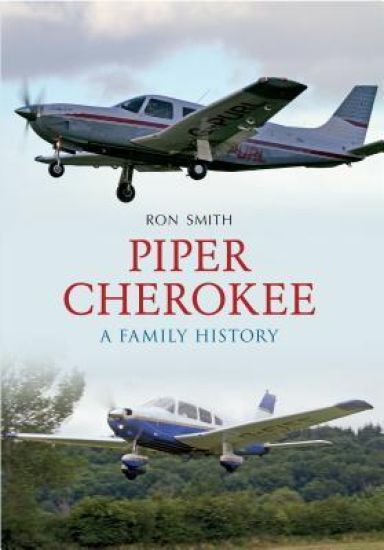
Piper Cherokee

Piper Cherokee

Ron Smith

Amberley Publishing
2012
nidottu
This book describes the heritage and development of the entire Piper Cherokee family; its safety and ownership characteristics; internal and external details; and a range of special variants from STOL modifications and new engines to seaplanes and tailwheel conversions. The hugely successful Piper PA-28 was produced and sold as a direct competitor to the Cessna 172. Initially produced with a rectangular wing planform and fixed undercarriage, it was available with installed powers ranging from 140 to 235 hp. A retractable undercarriage resulted in the Arrow series. The closely related PA-32 Cherokee Six, Saratoga and Six X are larger high performance aircraft. Versions of the PA-32 fitted with retractable undercarriages are the Lance and the sophisticated Saratoga II series.