Kirjojen hintavertailu. Mukana 11 342 296 kirjaa ja 12 kauppaa.

Kirjahaku

Etsi kirjoja tekijän nimen, kirjan nimen tai ISBN:n perusteella.

299 tulosta hakusanalla Colm Toibin

Ulysses and the Poetics of Cognition

Ulysses and the Poetics of Cognition

Patrick Colm Hogan

Routledge
2013
sidottu
Given Ulysses’ perhaps unparalleled attention to the operations of the human mind, it is unsurprising that critics have explored the work’s psychology. Nonetheless, there has been very little research that draws on recent cognitive science to examine thought and emotion in this novel. Hogan sets out to expand our understanding of Ulysses, as well as our theoretical comprehension of narrative—and even our views of human cognition. He revises the main narratological accounts of the novel, clarifying the complex nature of narration and style. He extends his cognitive study to encompass the anti-colonial and gender concerns that are so obviously important to Joyce’s work. Finally, through a combination of broad overviews and detailed textual analyses, Hogan seeks to make this notoriously difficult book more accessible to non-specialists.
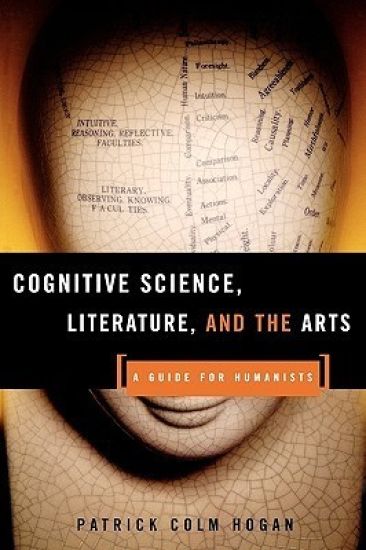
Cognitive Science, Literature, and the Arts
The rise cognitive science has been one of the most important intellectual developments of recent years, stimulating new approaches to everything from philosophy to film studies. This is an introduction to what cognitive science has to offer the humanities and particularly the study of literature. Hogan suggests how the human brain works and makes us feel in response to literature. He walks the reader through all of the major theories of cognitive science that are important for the humanities in order to understand the production and reception of literature.
Cognitive Science, Literature, and the Arts
The rise cognitive science has been one of the most important intellectual developments of recent years, stimulating new approaches to everything from philosophy to film studies. This is an introduction to what cognitive science has to offer the humanities and particularly the study of literature. Hogan suggests how the human brain works and makes us feel in response to literature. He walks the reader through all of the major theories of cognitive science that are important for the humanities in order to understand the production and reception of literature.
The Mind and its Stories

The Mind and its Stories

Patrick Colm Hogan

Cambridge University Press
2009
pokkari
There are profound, extensive, and surprising universals in literature, which are bound up with universals in emotion. Hogan maintains that debates over the cultural specificity of emotion are misdirected because they have ignored a vast body of data that bear directly on the way different cultures imagine and experience emotion - literature. This is the first empirically and cognitively based discussion of narrative universals. Professor Hogan argues that, to a remarkable degree, the stories people admire in different cultures follow a limited number of patterns and that these patterns are determined by cross-culturally constant ideas about emotion. In formulating his argument, Professor Hogan draws on his extensive reading in world literature, experimental research treating emotion and emotion concepts, and methodological principles from the contemporary linguistics and the philosophy of science. He concludes with a discussion of the relations among narrative, emotion concepts, and the biological and social components of emotion.
Cambridge English for Job-hunting Student's Book with Audio CDs (2)
Cambridge English for Job-hunting is designed to develop the specialist English language knowledge and communication skills that job-seekers need to apply for and secure jobs. Ideal for both working professionals and those new to the world of employment, the course comprises six standalone units covering core areas such as CV preparation, cover letter writing, and answering interview questions. Authentic materials such as genuine CVs and cover letters give learners practical experience in understanding and preparing vital documents. The course also offers valuable advice to help improve job-hunters' confidence, including help with difficult interview questions and how to present yourself effectively.
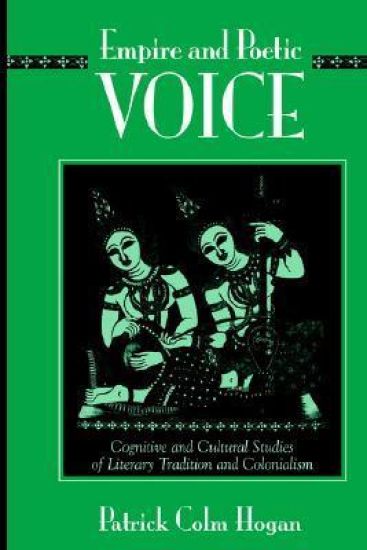
Empire and Poetic Voice

Empire and Poetic Voice

Patrick Colm Hogan

State University of New York Press
2006
pokkari
Explores the relation of post-colonization authors to literary traditions.In Empire and Poetic Voice Patrick Colm Hogan draws on a broad and detailed knowledge of Indian, African, and European literary cultures to explore the way colonized writers respond to the subtle and contradictory pressures of both metropolitan and indigenous traditions. He examines the work of two influential theorists of identity, Judith Butler and Homi Bhabha, and presents a revised evaluation of the important Nigerian critics, Chinweizu, Jemie, and Madubuike. In the process, he presents a novel theory of literary identity based equally on recent work in cognitive science and culture studies. This theory argues that literary and cultural traditions, like languages, are entirely personal and only appear to be a matter of groups due to our assertions of categorical identity, which are ultimately both false and dangerous.
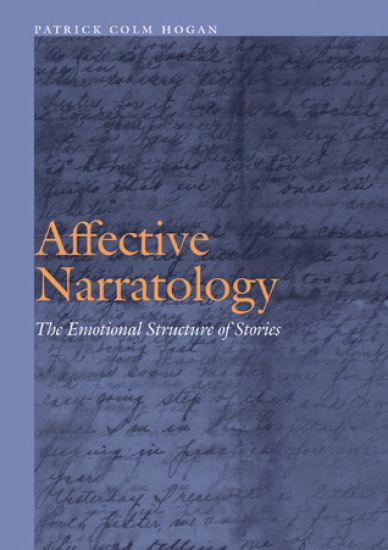
Affective Narratology

Affective Narratology

Patrick Colm Hogan

University of Nebraska Press
2011
sidottu
Stories engage our emotions. We've known this at least since the days of Plato and Aristotle. What this book helps us to understand now is how our own emotions fundamentally organize and orient stories. In light of recent cognitive research and wide reading in different narrative traditions, Patrick Colm Hogan argues that the structure of stories is a systematic product of human emotion systems. Examining the ways in which incidents, events, episodes, plots, and genres are a function of emotional processes, he demonstrates that emotion systems are absolutely crucial for understanding stories. Hogan also makes a case for the potentially integral role that stories play in the development of our emotional lives. He provides an in-depth account of the function of emotion within story—in widespread genres with romantic, heroic, and sacrificial structures, and more limited genres treating parent/child separation, sexual pursuit, criminality, and revenge—as these appear in a variety of cross-cultural traditions. In the course of the book Hogan develops interpretations of works ranging from Tolstoy's Anna Karenina to African oral epics, from Sanskrit comedy to Shakespearean tragedy. Integrating the latest research in affective science with narratology, this book provides a powerful explanatory account of narrative organization.
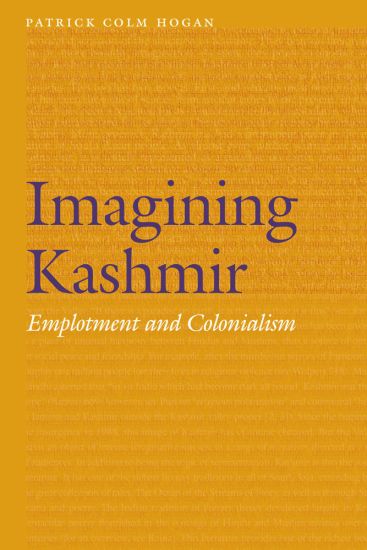
Imagining Kashmir

Imagining Kashmir

Patrick Colm Hogan

University of Nebraska Press
2016
sidottu
During the 1947 partition of the Indian subcontinent, Kashmir-a Muslim-majority area ruled by a Hindu maharaja-became a hotly disputed territory. Divided between India and Pakistan, the region has been the focus of international wars and the theater of political and military struggles for self-determination. The result has been great human suffering within the state, with political implications extending globally.Imagining Kashmir examines cinematic and literary imaginings of the Kashmir region’s conflicts and diverse citizenship, analyzing a wide range of narratives from writers and directors such as Salman Rushdie, Bharat Wakhlu, Mani Ratnam, and Mirza Waheed in conjunction with research in psychology, cognitive science, and social neuroscience. In this innovative study, Patrick Colm Hogan’s historical and cultural analysis of Kashmir advances theories of narrative, colonialism, and their corresponding ideologies in relation to the cognitive and affective operations of identity. Hogan considers how narrative organizes people’s understanding of, and emotions about, real political situations and the ways in which such situations in turn influence cultural narratives, not only in Kashmir but around the world.
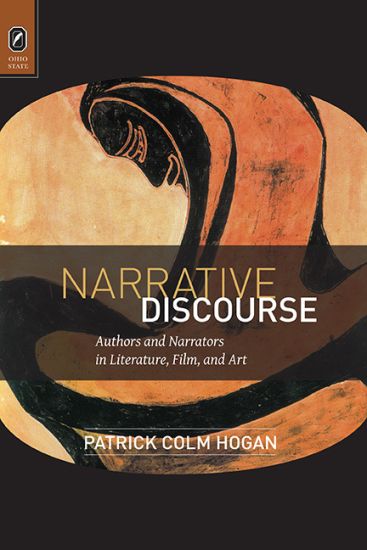
Narrative Discourse

Narrative Discourse

Patrick Colm Hogan

Ohio State University Press
2018
pokkari
In Narrative Discourse: Authors and Narrators in Literature, Film, and Art, Patrick Colm Hogan reconsiders fundamental issues of authorship and narration in light of recent research in cognitive and affective science. He begins with a detailed overview of the components of narrative discourse, both introducing and reworking key principles. Based on recent studies treating the complexity of human cognition, Hogan presents a new account of implied authorship that solves some notorious problems with that concept. In subsequent chapters Hogan takes the view that implied authorship is both less unified and more unified than is widely recognized. In connection with this notion, he examines how we can make interpretive sense of the inconsistencies of implied authors within works and the continuities of implied authors across works. Turning to narrators, he considers some general principles of readers' judgments about reliability, emphasizing the emotional element of trust. Following chapters take up the operation of complex forms of narration, including parallel narration, embedded narration, and collective voicing ("we" narration). In the afterword, Hogan sketches some subtleties at the other end of narrative communication, considering implied readers and narratees. In order to give greater scope to the analyses, Hogan develops case studies from painting and film as well as literature, treating art by Rabindranath Tagore; films by David Lynch, Bimal Roy, and Kabir Khan; and literary works by Mirabai, Harriet Beecher Stowe, Ernest Hemingway, William Faulkner, Margaret Atwood, Ngugi wa Thiong'o, and Joseph Diescho.
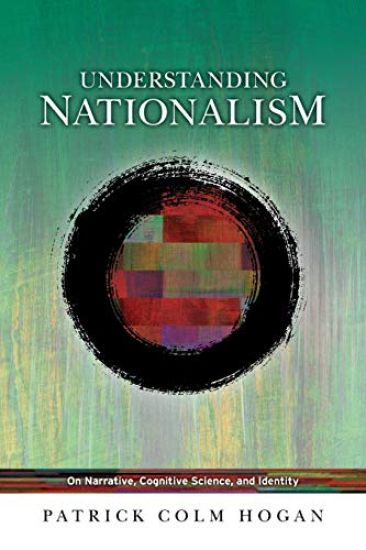
Understanding Nationalism

Understanding Nationalism

Patrick Colm Hogan

Ohio State University Press
2018
pokkari
From the rise of Nazism to the conflict in Kashmir in 2008, nationalism has been one of the most potent forces in modern history. Yet the motivational power of nationalism is still not well understood. In Understanding Nationalism: On Narrative, Cognitive Science, and Identity, Patrick Colm Hogan begins with empirical research on the cognitive psychology of group relations to isolate varieties of identification, arguing that other treatments of nationalism confuse distinct types of identity formation. Synthesizing different strands of this research, Hogan articulates a motivational groundwork for nationalist thought and action. Understanding Nationalism goes on to elaborate a cognitive poetics of national imagination, most importantly, narrative structure. Hogan focuses particularly on three complex narrative prototypes that are prominent in human thought and action cross-culturally and trans-historically. He argues that our ideas and feelings about what nations are and what they should be are fundamentally organized and oriented by these prototypes. He develops this hypothesis through detailed analyses of national writings from Whitman to George W. Bush, from Hitler to Gandhi. Hogan's book alters and expands our comprehension of nationalism generally-its cognitive structures, its emotional operations. It deepens our understanding of the particular, important works he analyzes. Finally, it extends our conception of the cognitive scope and political consequence of narrative.
On Interpretation

On Interpretation

Patrick Colm Hogan

University of Georgia Press
2008
pokkari
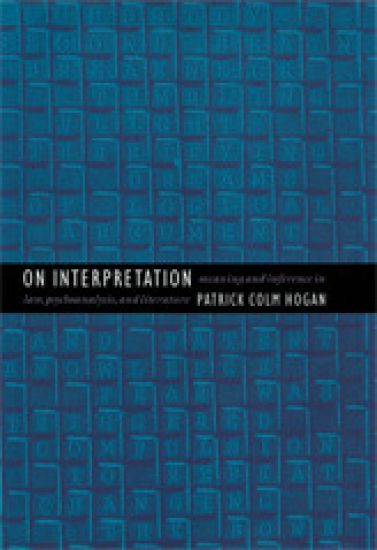
On Interpretation challenges a number of entrenched assumptions about being and knowing that have long kept theorists debating at cross purposes. Patrick Colm Hogan first sets forth a theory of meaning and interpretation and then develops it in the context of the practices and goals of law, psychoanalysis, and literary criticism. In his preface, Hogan discusses developments in semantics and related fields that have occurred over the decade since the book first appeared.
The Culture of Conformism

The Culture of Conformism

Patrick Colm Hogan

Duke University Press
2001
sidottu
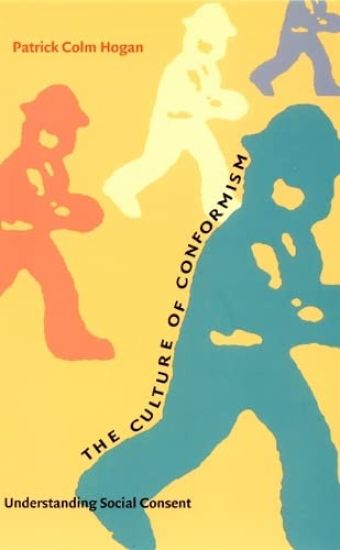
“[Hogan’s] goal is not merely to explain but to provide tools of understanding that will be of practical value to those who struggle for justice and freedom. Drawing from an impressive array of sources, his valuable study advances both ends considerably, no mean accomplishment.”-Noam ChomskyIn this wide-ranging and informative work, Patrick Colm Hogan draws on cognitive science, psychoanalysis, and social psychology to explore the cultural and psychological components of social consent. Focusing in particular on Americans’ acquiescence to a system that underpays and underrepresents the vast majority of the population, Hogan moves beyond typical studies of this phenomenon by stressing more than its political and economic dimensions.With new insights into particularly insideous forms of consent such as those manifest in racism, sexism, and homophobia, The Culture of Conformism considers the role of emotion as it works in conjunction with belief and with the formation of group identity. Arguing that coercion is far more pervasive in democratic societies than is commonly recognized, Hogan discusses the subtle ways in which economic and social pressures operate to complement the more obviously violent forces of the police and military. Addressing issues of narcissism, self-esteem, and empathy, he also explains the concept of “rational” conformity-that is, the degree to which our social consent is based on self-interest-and explores the cognitive factors that produce and sustain social ideology.Social activists, economic theorists, social psychologists, and political scientists will be intrigued and informed by this book.
The Culture of Conformism

The Culture of Conformism

Patrick Colm Hogan

Duke University Press
2001
pokkari
“[Hogan’s] goal is not merely to explain but to provide tools of understanding that will be of practical value to those who struggle for justice and freedom. Drawing from an impressive array of sources, his valuable study advances both ends considerably, no mean accomplishment.”-Noam ChomskyIn this wide-ranging and informative work, Patrick Colm Hogan draws on cognitive science, psychoanalysis, and social psychology to explore the cultural and psychological components of social consent. Focusing in particular on Americans’ acquiescence to a system that underpays and underrepresents the vast majority of the population, Hogan moves beyond typical studies of this phenomenon by stressing more than its political and economic dimensions.With new insights into particularly insideous forms of consent such as those manifest in racism, sexism, and homophobia, The Culture of Conformism considers the role of emotion as it works in conjunction with belief and with the formation of group identity. Arguing that coercion is far more pervasive in democratic societies than is commonly recognized, Hogan discusses the subtle ways in which economic and social pressures operate to complement the more obviously violent forces of the police and military. Addressing issues of narcissism, self-esteem, and empathy, he also explains the concept of “rational” conformity-that is, the degree to which our social consent is based on self-interest-and explores the cognitive factors that produce and sustain social ideology.Social activists, economic theorists, social psychologists, and political scientists will be intrigued and informed by this book.
Literature and Moral Feeling

Literature and Moral Feeling

Patrick Colm Hogan

Cambridge University Press
2023
pokkari
An influential body of recent work on moral psychology has stressed the interconnections among ethics, narrative, and empathy. Yet as Patrick Colm Hogan argues, this work is so vague in its use of the term 'narrative' as to be almost substanceless, and this vagueness is in large part due to the neglect of literary study. Extending his previous work on universal story structures, Hogan argues that we can transform ill-defined intuitions about narrative and ethics into explicit and systematic accounts of the deep connections between moral attitudes and narratives. These connections are, in turn, inseparable from empathy, a concept that Hogan proceeds to clarify and defend against a number of widely read critiques. In the course of the book, Hogan develops and illustrates his arguments through analyses of global narratives, constructing illuminating ethical interpretations of literary works ranging from Shakespeare to Chinese drama and the Bhagavad Gita.
Literature and Moral Feeling

Literature and Moral Feeling

Patrick Colm Hogan

Cambridge University Press
2022
sidottu
An influential body of recent work on moral psychology has stressed the interconnections among ethics, narrative, and empathy. Yet as Patrick Colm Hogan argues, this work is so vague in its use of the term 'narrative' as to be almost substanceless, and this vagueness is in large part due to the neglect of literary study. Extending his previous work on universal story structures, Hogan argues that we can transform ill-defined intuitions about narrative and ethics into explicit and systematic accounts of the deep connections between moral attitudes and narratives. These connections are, in turn, inseparable from empathy, a concept that Hogan proceeds to clarify and defend against a number of widely read critiques. In the course of the book, Hogan develops and illustrates his arguments through analyses of global narratives, constructing illuminating ethical interpretations of literary works ranging from Shakespeare to Chinese drama and the Bhagavad Gita.
American Literature and American Identity

American Literature and American Identity

Patrick Colm Hogan

Taylor Francis Ltd
2021
sidottu
In recent years, cognitive and affective science have become increasingly important for interpretation and explanation in the social sciences and humanities. However, little of this work has addressed American literature, and virtually none has treated national identity formation in influential works since the Civil War. In this book, Hogan develops his earlier cognitive and affective analyses of national identity, further exploring the ways in which such identity is integrated with cross-culturally recurring patterns in story structure. Hogan examines how authors imagined American identity—understood as universal, democratic egalitarianism—in the face of the nation’s clear and often brutal inequalities of race, sex, and sexuality, exploring the complex and often ambivalent treatment of American identity in works by Charlotte Perkins Gilman, Eugene O’Neill, Lillian Hellman, Djuna Barnes, Amiri Baraka, Margaret Atwood, N. Scott Momaday, Spike Lee, Leslie Marmon Silko, Tony Kushner, and Heidi Schreck.
American Literature and American Identity

American Literature and American Identity

Patrick Colm Hogan

TAYLOR FRANCIS LTD
2023
nidottu
In recent years, cognitive and affective science have become increasingly important for interpretation and explanation in the social sciences and humanities. However, little of this work has addressed American literature, and virtually none has treated national identity formation in influential works since the Civil War. In this book, Hogan develops his earlier cognitive and affective analyses of national identity, further exploring the ways in which such identity is integrated with cross-culturally recurring patterns in story structure. Hogan examines how authors imagined American identity—understood as universal, democratic egalitarianism—in the face of the nation’s clear and often brutal inequalities of race, sex, and sexuality, exploring the complex and often ambivalent treatment of American identity in works by Charlotte Perkins Gilman, Eugene O’Neill, Lillian Hellman, Djuna Barnes, Amiri Baraka, Margaret Atwood, N. Scott Momaday, Spike Lee, Leslie Marmon Silko, Tony Kushner, and Heidi Schreck.
What is Colonialism?

What is Colonialism?

Patrick Colm Hogan

TAYLOR FRANCIS LTD
2023
sidottu
What is Colonialism? develops a clear and rigorous account of what colonialism is and how it works. It draws on and synthesizes recent work in cognitive science, affective science, and social psychology, along with Marxism and related forms of analysis.Hogan begins with some fundamental conceptual distinctions, such as the degree to which a group shares beliefs, dispositions, and skills versus the degree to which they share identification with a category. Building on these distinctions, he defines colonialism in terms of political, economic, and cultural autonomy, clarifying the nature of culture and autonomy particularly. He goes on to articulate an invaluable systematic account of the varieties of colonialism. The final chapters outline the motives of imperialists, differentiating these from their ideological rationalizations, and sketching the harms caused by colonialism. The book concludes by considering when, or if, one can achieve a genuinely postcolonial condition. Hogan illustrates these analyses by examining influential literary works—by European writers (such as Joseph Conrad) and by non-Europeans (such as Athol Fugard, Kamala Markandaya, and Wole Soyinka).This accessible and informative volume is the ideal resource for students and scholars interested in colonialism and empire.
What is Colonialism?

What is Colonialism?

Patrick Colm Hogan

TAYLOR FRANCIS LTD
2023
nidottu
What is Colonialism? develops a clear and rigorous account of what colonialism is and how it works. It draws on and synthesizes recent work in cognitive science, affective science, and social psychology, along with Marxism and related forms of analysis.Hogan begins with some fundamental conceptual distinctions, such as the degree to which a group shares beliefs, dispositions, and skills versus the degree to which they share identification with a category. Building on these distinctions, he defines colonialism in terms of political, economic, and cultural autonomy, clarifying the nature of culture and autonomy particularly. He goes on to articulate an invaluable systematic account of the varieties of colonialism. The final chapters outline the motives of imperialists, differentiating these from their ideological rationalizations, and sketching the harms caused by colonialism. The book concludes by considering when, or if, one can achieve a genuinely postcolonial condition. Hogan illustrates these analyses by examining influential literary works—by European writers (such as Joseph Conrad) and by non-Europeans (such as Athol Fugard, Kamala Markandaya, and Wole Soyinka).This accessible and informative volume is the ideal resource for students and scholars interested in colonialism and empire.