M s Cuentos del Anton Chico II follows the earlier Cuentos del Anton Chico and M s Cuentos del Anton Chico. All three Cuentos help tell the story of Anton Chico, a history that began early in the 19th century and has continued to the present, a history that is very rich and colorful and deserves to be preserved for posterity. M s Cuentos del Anton Chico II is being written as a follow up to Cuentos del Anton Chico and M s Cuentos del Anton Chico. It includes more cuentos, stories or vignettes, about the rich and colorful past of the Anton Chico area. Many of the vignettes include old articles taken from early New Mexico newspapers. At one time there were many Spanish language newspapers in the Las Vegas and Santa Fe areas. The style and they used were a lot different, certainly more colorful and descriptive than the language used today. Many of the words and idiomatic expressions used have long since fallen out of use in everyday Spanish. The Spanish language articles have all been translated into English. During the 19th century and early part of the 20th century the name used for Anton Chico was Antonchico, a one word name. Some articles during that period also used the current name, Anton Chico.
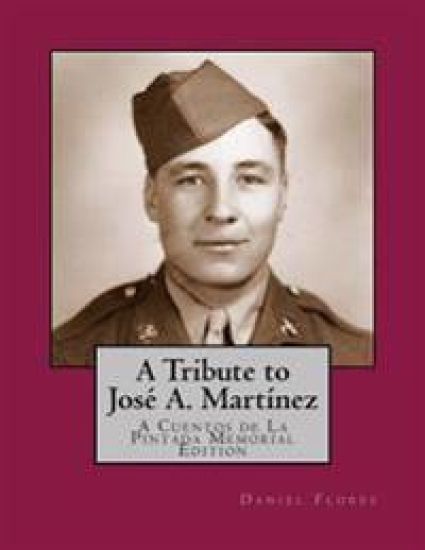
A Tribute to Jos A. Mart nez is written in honor of the life of a good and true friend, Joe A. Mart nez who passed away on December 17 after a having lived a very full and productive life. During his life he was a very active man, a Santa Rosa Lion, a World War II veteran, a New Mexico State Aggie, an educator, a community leader, a good Catholic, a compadre, a padrino, an uncle, and a husband. Most importantly he was a friend to everyone he ever met. When he entered eternal life he left behind many relatives and a multitude of friends to mourn his passing and to celebrate having known the man whom everyone lovingly referred to as "Alcario." Everyone was left with a void in their hearts. He also left his friends with the knowledge that they are better for having known him and have precious memories of his life. He had a special love for the community where he was born and in which he spent his elementary school year, a community which he always fondly referred to as "La Pintada." He had been born into the pioneer Martinez family, a family that had strong roots in La Pintada. His grandfather was one of the New Mexicans who drafted a Constitution for the Territory of New Mexico that led to statehood being granted in 1912. His family was a firm believer in the value of a good education. One of his older sisters became a school teacher in the Guadalupe county schools. Alcario followed in her footsteps by becoming a teacher and later a school administrator. Several of his nieces are also teachers. He was also a rancher and had extensive land holding in La Pintada. He continued being actively involved in the operation of his ranch into his early nineties. La Pintada and his ranch were always very special to him.
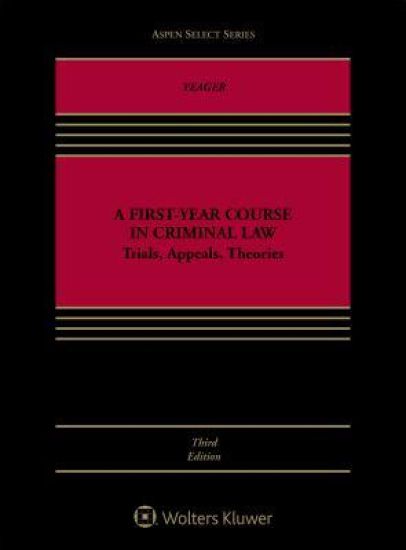
The approach of A First-Year Course in Criminal Law: Trials, Appeals, Theories, Third Edition focuses students on preparing to discuss a single case per lecture. The author's philosophy is "Teach one case a day and do it well." To help students understand the big picture as well as the details, the organization strives for unification rather than departmentalization. Rather than treat crimes and defenses as "tubs on their own bottoms," the defenses within the crimes are presented. In other words, the book brings out that crime occurs only in the absence of fully or partially successful exculpatory pleas. Although homicide is the crime that organizes the book, the elements and scope of other crimes are presented within the context of the law of homicide. Comprehension of assault, burglary, kidnapping, mayhem, robbery, and rape is crucial to the cases used to present the law of felony murder. Those crimes are analyzed in the cases, questions, and notes sufficiently to provide students with competency in the grammar of those crimes. New to the Third Edition: More patient explication of chapter introductions and sub-sections Reorganization of questions and notes to improve flow and avoid unintended redundancies Improved internal cross-references Increased emphasis on the function of mental illness in the role of fear in homicide cases Enhanced searchable citations Elaborated index Accounts for intervening changes in the law
Santa Rosa, the Early Days is the fifth book in a series about Santa Rosa, the railroad community located in Guadalupe county, written by the author. Present day Santa Rosa owes its existence to the coming of the Rock Island & Chicago railroad into the area in 1901. The new town of Santa Rosa came into existence with the construction of the new railroad north of old Santa Rosa, the community founded by Don Celso Baca in the last quarter of the 1800s. Santa Rosa consists of a series of short vignettes taken from early newspapers articles, mostly from old New Mexico newspapers, though there are also vignettes based on articles from out of state newspapers. Most of the vignettes cover the time frame from 1900 to 1920, though there are several that extend into the 1930s. The newspaper articles are valuable in providing a window into the rich and colorful past of today's Santa Rosa. Santa Rosa also has one lengthier section consisting of general information columns derived from the old newspapers. The columns contain information about the people who called Santa Rosa home and their everyday life, including their work, religious and social activities. There are also many period photographs that help illustrate many of the vignettes. The photographs provide excellent documentation of the Santa Rosa that existed during that period. They also show that one picture is indeed worth a thousand words.
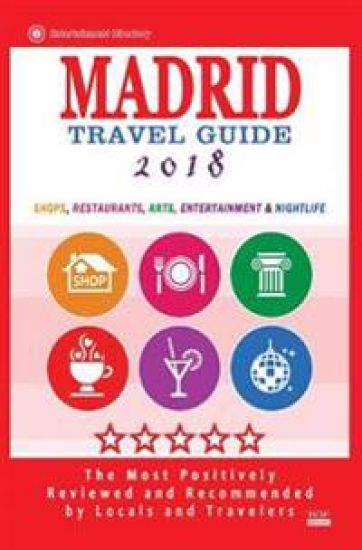
The places found in this book are the most positively reviewed and recommended by locals and travelers. 2,000 places listed and organized in four groups. "TOP 500 SHOPS" 81 Store Categories. "TOP 500 RESTAURANTS" 83 Cuisine Types. "TOP 500 ARTS & ENTERTAINMENT" Landmarks, Historical Buildings, Museums, Art Galleries, Stadiums, Cinemas, Performing Arts, Music Venues, Arcades. "TOP 500 NIGHTLIFE SPOTS" Lounges, Bars, Pubs, Gay Bars, Latin Bars, Sports Bars, Karaoke, Comedy Clubs, Jazz & Blues, Nightclubs, Adult Entertainment and many more options to visit, relax and enjoy your stay.
This book will comprise a comprehensive and multidisciplinary treatment of current research on mathematical learning disabilities. Empirical, theoretical, methodological, and pedagogical perspectives on this rapidly evolving area will be discussed, drawing on a wide range of fields including cognitive and developmental psychology, educational psychology, neuropsychology, cognitive neuroscience, behavior genetics, and special education. Topics to be discussed include: issues of clarification and definition; the prevalence of mathematical learning disabilities; the role of language in mathematical learning; math anxiety; motivation; gender; cultural influences; effective instructional interventions; and much more.
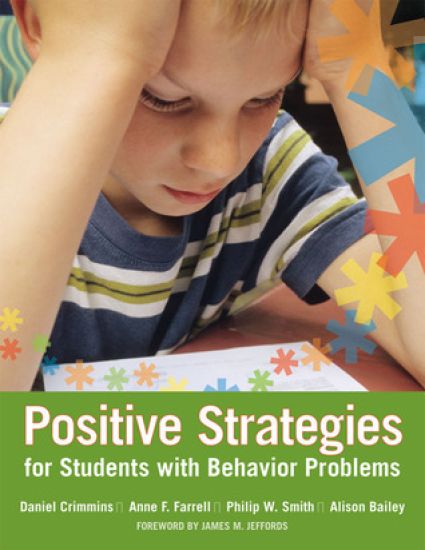
This book is a guide to behavior management for students (both typically developing and special needs) with behavior problems that cannot be resolved through usual methods or are not affected by school-wide Positive Behavior Support (PBS). This manual helps school teams develop appropriate and effective individualized solutions for students with persistent behavior problems. It presents a systematic method called Positive Strategies, which centers on two major activities, conducting Functional Behavioral Assessments (FBAs) and developing Behavior Intervention Plans (BIPs). ""Positive Strategies"" is grounded in the literature on PBS, central to which is the notion than understanding the function of problem behavior (i.e., how it meets a child's needs in some way) is fundamental to successfully addressing it.
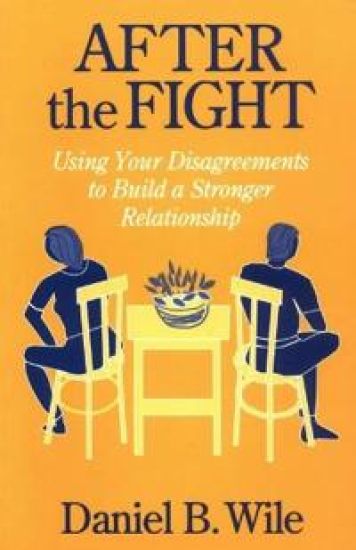
What do partners do after a fight? If they're like most people, they apologize: I'm sorry. I had a bad day and I took it out on you. Or, they wake up the next morning and pretend that nothing happened, hoping their partner will do the same. In neither case do they talk about the fight. They're too afraid that doing so will simply rekindle it--and they're right; it probably would. But since they don't talk about the fight, nothing ever really gets resolved.Daniel B. Wile, author of Couples Therapy and After the Honeymoon, devotes this entire book to an analysis of a single night in the life of a couple, Marie and Paul. By tapping into their self-talk (their ongoing conversations with themselves), he discovers what starts, escalates, and rekindles fights--and also, what potentially allows for a useful conversation about a fight. Wile reveals the half-thoughts and half-feelings that generally go unnoticed: the anxious flashes; depressive waves; two-second, self-directed diatribes; and two-second mental divorces.
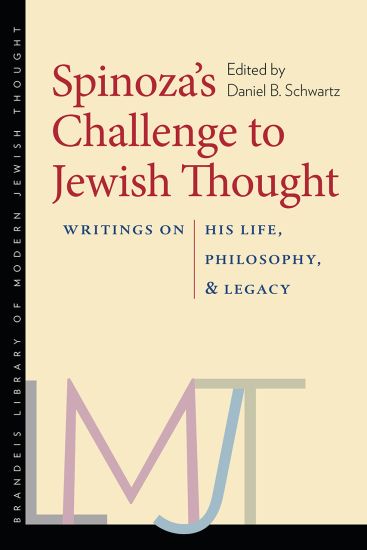
Arguably, no historical thinker has had as varied and fractious a reception within modern Judaism as Baruch (Benedict) Spinoza (1632–77), the seventeenth-century philosopher, pioneering biblical critic, and Jewish heretic from Amsterdam. Revered in many circles as the patron saint of secular Jewishness, he has also been branded as the worst traitor to the Jewish people in modern times. Jewish philosophy has cast Spinoza as marking a turning point between the old and the new, as a radicalizer of the medieval tradition and table setter for the modern. He has served as a perennial landmark and point of reference in the construction of modern Jewish identity. This volume brings together excerpts from central works in the Jewish response to Spinoza. True to the diversity of Spinoza's Jewish reception, it features a mix of genres, from philosophical criticism to historical fiction, from tributes to diary entries, providing the reader with a sense of the overall historical development of Spinoza's posthumous legacy.
Arguably, no historical thinker has had as varied and fractious a reception within modern Judaism as Baruch (Benedict) Spinoza (1632–77), the seventeenth-century philosopher, pioneering biblical critic, and Jewish heretic from Amsterdam. Revered in many circles as the patron saint of secular Jewishness, he has also been branded as the worst traitor to the Jewish people in modern times. Jewish philosophy has cast Spinoza as marking a turning point between the old and the new, as a radicalizer of the medieval tradition and table setter for the modern. He has served as a perennial landmark and point of reference in the construction of modern Jewish identity. This volume brings together excerpts from central works in the Jewish response to Spinoza. True to the diversity of Spinoza's Jewish reception, it features a mix of genres, from philosophical criticism to historical fiction, from tributes to diary entries, providing the reader with a sense of the overall historical development of Spinoza's posthumous legacy.
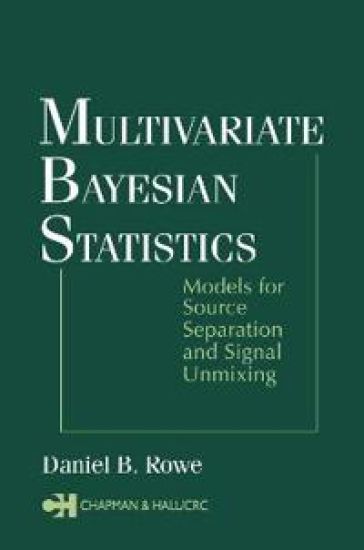
Of the two primary approaches to the classic source separation problem, only one does not impose potentially unreasonable model and likelihood constraints: the Bayesian statistical approach. Bayesian methods incorporate the available information regarding the model parameters and not only allow estimation of the sources and mixing coefficients, but also allow inferences to be drawn from them. Multivariate Bayesian Statistics: Models for Source Separation and Signal Unmixing offers a thorough, self-contained treatment of the source separation problem. After an introduction to the problem using the "cocktail-party" analogy, Part I provides the statistical background needed for the Bayesian source separation model. Part II considers the instantaneous constant mixing models, where the observed vectors and unobserved sources are independent over time but allowed to be dependent within each vector. Part III details more general models in which sources can be delayed, mixing coefficients can change over time, and observation and source vectors can be correlated over time. For each model discussed, the author gives two distinct ways to estimate the parameters. Real-world source separation problems, encountered in disciplines from engineering and computer science to economics and image processing, are more difficult than they appear. This book furnishes the fundamental statistical material and up-to-date research results that enable readers to understand and apply Bayesian methods to help solve the many "cocktail party" problems they may confront in practice.
Recent surveys have found that the vast majority of the public believes that mental illness is real and treatable. And yet, fewer than half of people with diagnosable mental illnesses get treatment in any given year, and of those who do, only half adhere to it. What accounts for the disconnect? According to Daniel Morehead, M.D., unchecked critiques of psychiatry—that it is impossible to define mental illness, that the neurobiology of major mental illnesses is unknown, that patients are overdiagnosed and overmedicated—has led to a public perception that mental health treatment is profoundly flawed. In Science Over Stigma, Dr. Morehead argues that it is time for a full-throated defense of mental health treatment, and that it falls to everyone, from medical and mental health professionals to the general public, to advocate on its behalf. In accessible terms this book sets forth a definition of mental illness, candidly discussing what is known and what remains unknown, and then describes its prevalence, social and physical consequences, and a range of treatments. Each chapter includes advocacy tips that help readers translate the information they've learned into the means for constructive dialogue. By clearly laying out the science behind mental illness and its treatment and vividly illustrating how common it is—affecting patients, their friends and family, and mental health professionals themselves—this volume seeks to turn the recognition of psychiatric illness into practical behavior, destigmatizing both the illness itself and the search for treatment.
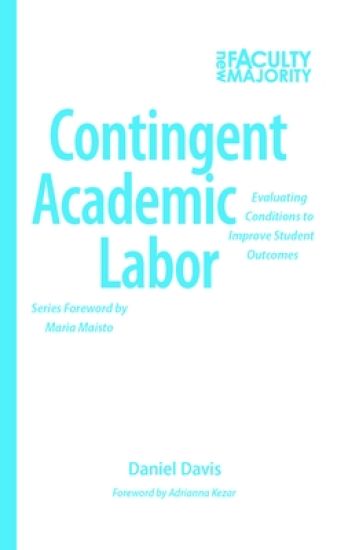
Contingent Academic Labor is a concise guide that offers higher education professionals a way to measure the degree of equality taking place in work environments for non-tenure track faculty across institutional settings. It frames the relevant issues and examines the nationwide situation facing contingent faculty across the professional landscape. The goal is to review contingent faculty treatment, and offer a standardized way to identify both equitable and unjust practices that impact adjunct faculty and their students by extension.The main feature of this guide is The Contingent Labor Conditions Score, a tool to help evaluate current labor practices that impact adjuncts in both positive and negative ways. The report card measures 3 areas of labor conditions:*Material Equity: Pay, job security and benefits*Professional Equity: Opportunities for advancement, professional development, academic freedom, sense of professional inclusion, and job satisfaction*Social Equity: Gender and race parity between contingent and non-contingent faculty in proportion to the population servedThis book will be useful for administrators and labor organizers alike in assessing the degree of exploitation, or empowerment, in their own institution. The Contingent Labor Conditions Score, as a standardized tool, will serve audiences on both sides of the discussion in creating positive steps forward, improving not only contingent faculty working conditions, but ultimately improving student outcomes.
Contingent Academic Labor is a concise guide that offers higher education professionals a way to measure the degree of equality taking place in work environments for non-tenure track faculty across institutional settings. It frames the relevant issues and examines the nationwide situation facing contingent faculty across the professional landscape. The goal is to review contingent faculty treatment, and offer a standardized way to identify both equitable and unjust practices that impact adjunct faculty and their students by extension.The main feature of this guide is The Contingent Labor Conditions Score, a tool to help evaluate current labor practices that impact adjuncts in both positive and negative ways. The report card measures 3 areas of labor conditions:*Material Equity: Pay, job security and benefits*Professional Equity: Opportunities for advancement, professional development, academic freedom, sense of professional inclusion, and job satisfaction*Social Equity: Gender and race parity between contingent and non-contingent faculty in proportion to the population servedThis book will be useful for administrators and labor organizers alike in assessing the degree of exploitation, or empowerment, in their own institution. The Contingent Labor Conditions Score, as a standardized tool, will serve audiences on both sides of the discussion in creating positive steps forward, improving not only contingent faculty working conditions, but ultimately improving student outcomes.