Chronicles the experiences of the gay community as seen through the eyes of B.J. Rosenthal, whose life and world change drastically as AIDS has its impact on gays and nongays alike. Reprint.
The Knowledge Contract intervenes in the ongoing debates about the changing conditions of higher education in America, with a special focus on English studies and the humanities. This highly original study integrates three crucial concerns: the economic restructuring of higher education, the transformation of disciplinary models of teaching and research, and the rise of the academic labor movement. Whereas most contemporary critiques of higher education have focused on the impact of global economic forces, The Knowledge Contract adds a new dimension to the discussion by addressing the tensions between disciplinary and nondisciplinary forms of academic work. David B. Downing draws on several traditions of scholarship: histories of the university, sociological studies of education, critiques of disciplinary and interdisciplinary forms of work, histories of academic capitalism and the labor movement, and field-specific analyses of the history of English studies. Building on his analysis, Downing develops alternative possibilities to the dominance of disciplinary forms of labor and offers scenarios for creating more equitable working and learning conditions for faculty and students.
The Knowledge Contract intervenes in the ongoing debates about the changing conditions of higher education in America, with a special focus on English studies and the humanities. This highly original study integrates three crucial concerns: the economic restructuring of higher education, the transformation of disciplinary models of teaching and research, and the rise of the academic labor movement. Whereas most contemporary critiques of higher education have focused on the impact of global economic forces, The Knowledge Contract adds a new dimension to the discussion by addressing the tensions between disciplinary and nondisciplinary forms of academic work. David B. Downing draws on several traditions of scholarship: histories of the university, sociological studies of education, critiques of disciplinary and interdisciplinary forms of work, histories of academic capitalism and the labor movement, and field-specific analyses of the history of English studies. Building on his analysis, Downing develops alternative possibilities to the dominance of disciplinary forms of labor and offers scenarios for creating more equitable working and learning conditions for faculty and students.
Psychology and philosophy have long studied the nature and role of explanation. More recently, artificial intelligence research has developed promising theories of how explanation facilitates learning and generalization. By using explanations to guide learning, explanation-based methods allow reliable learning of new concepts in complex situations, often from observing a single example. The author of this volume, however, argues that explanation-based learning research has neglected key issues in explanation construction and evaluation. By examining the issues in the context of a story understanding system that explains novel events in news stories, the author shows that the standard assumptions do not apply to complex real-world domains. An alternative theory is presented, one that demonstrates that context -- involving both explainer beliefs and goals -- is crucial in deciding an explanation's goodness and that a theory of the possible contexts can be used to determine which explanations are appropriate. This important view is demonstrated with examples of the performance of ACCEPTER, a computer system for story understanding, anomaly detection, and explanation evaluation.
This is the first full biography of George Washington Littlefield, the Texas and New Mexico rancher, Austin banker and businessman, University of Texas regent, and philanthropist. In just two decades, Littlefield's business acumen vaulted him from debt to inclusion in 1892 on the first list of American millionaires. A Man Absolutely Sure of Himself is a grand retelling of the life of a highly successful entrepreneur and Austin civic leader whose work affected spheres from ranching and banking to civic development and academia. Littlefield's cattle operations during the open range and early ranching periods spanned a domain in New Mexico and Texas larger than the states of Delaware and Connecticut combined. In a unique contribution to ranching art, Littlefield commissioned murals and bronze doors depicting scenes from his ranches to decorate Austin's American National Bank, which he led for its first twenty-eight years. Gracy provides new information about Littlefield's term as University of Texas regent and the necessity of choosing between friendship and duty during the university's confrontation with Gov. James E. Ferguson. Proud of his Civil War service in Terry's Texas Rangers, Littlefield funded one of the nation's first centers for Southern history. He also underwrote the school's purchase of its first rare book library and its training programs preparing troops for World War I's new combat roles. Littlefield played a central role in advancing Austin from a cattleman's town into the business center it wanted to become. His Littlefield Building, the tallest office building between New Orleans and San Francisco when it was built, served for a generation as the prime location of the town's business community. Author David B. Gracy II, a relative of Littlefield, grounds his vivid prose in a lifetime of research into archival and family sources. His comprehensive biography illuminates an exceptional figure, whose life singularly illustrates the evolution of Texas from Southern to Western to American.
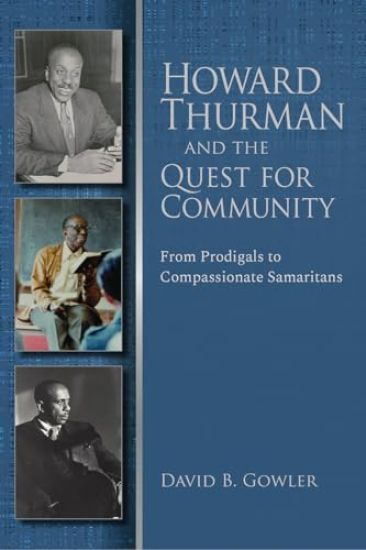
David Gowler integrates parable scholarship with extensive research on Howard Thurman's life and writings to explore how Thurman's insights about the Prodigal Son and Good Samaritan parables provide a way forward in our quest for community. An online teacher's guide further explores how parables and visual art can heighten spiritual consciousness, demand an ethical response, and create and deepen community. Endorsements "Gowler's scholarship prepares us to enter Jesus's parables with greater vision and understanding. Accompanied by Thurman's insights and identification with Jesus as one of the disinherited, the parables' transformative significance confronts every reader." —Luther E. Smith, Jr., PhD, author, Howard Thurman: The Mystic as Prophet "David Gowler's beautiful book Howard Thurman and the Quest for Community offers helpful insights into Thurman's wisdom and how we can apply it to our own broken lives and world. A book well worth studying." —Rev. John Dear, author of The Gospel of Peace: A Commentary on Matthew, Mark, and Luke from the Perspective of Nonviolence, and director of BeatitudesCenter.org "David B. Gowler, one of our finest students of the parables, uses Thurman's sermons on the parables as portals to the understanding of communal and collective interaction and the deep-lying layers of personal spiritual truths." —Peter Eisenstadt, author of Against the Hounds of Hell: A Life of Howard Thurman, and affiliate professor of history, Clemson University David B. Gowler is Pierce Chair of Religion at Oxford College of Emory University and senior faculty fellow at the Center for Ethics, Emory University. A prolific author of both academic and public scholarship, his books on the parables include What Are They Saying about the Parables?, Second Edition and The Parables after Jesus. He is also coeditor, with Kipton E. Jensen, of Howard Thurman: Sermons on the Parables. †
Because of their tremendous mass audience, Hollywood feature films help mold, shape, and direct popular beliefs and attitudes. They also serve as frozen pieces of time that preserve the concerns of the past. CELLULIOD IVY examines the portrayal of higher education in movies from 1960-1990, offering a fascinating view not only of how Americans gained their views of higher education and college life during this crucial period, but also of the fascinating tension between movie fantasy and the realities of life. From The Graduate to Revenge of the Nerds, from The Paper Chase to Educating Rita, the book delves into how movies treat the classroom, the extra-curricular, rites of passage, professors, romance, sports, alcohol and drugs, and sometimes, education itself. It offers some startling conclusions on how movies often reflect America's latent anti-intellectualism and how students can enter college with media-fed expectations for an experience different from what they encounter.
Now in Paper! The only single source collection of over 950 teams in 36 major professional leagues_baseball, football, soccer, basketball, and hockey_this book also contains the first genealogy ever compiled on all these leagues, giving each team franchise and its past and present names. Section 1 is an alphabetical listing by the designation (city, state, province, or region) used by the team. This main entry section explains how the team got its name. Section 2_the 'family tree'_contains a separate listing of the teams in each of the 36 leagues, who they were, and who they became. Section 3 is an alphabetical listing of all the team names in Sections 1 and 2. With bibliography and index.
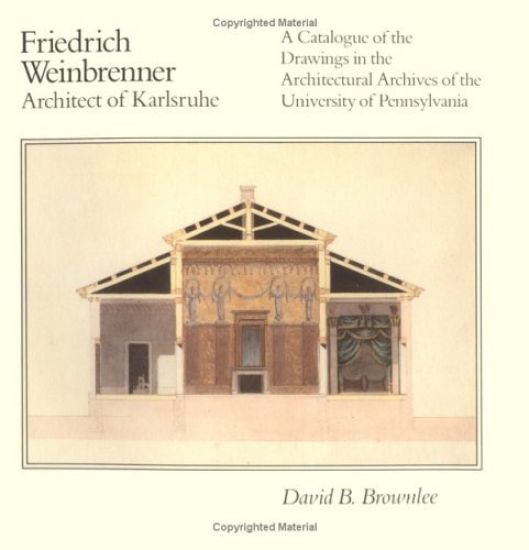
Friedrich Weinbrenner was the first internationally important German architect of the nineteenth century. His planning for the city of Karlsruhe-and his design of every imaginable type of structure, including palaces, churches, synagogue, government buildings, city gates, shops, fountains, theaters, armories, cemetery buildings and farms-is a remarkable achievement. This collection includes treatment of Weinbrenner's contributions to agricultural architecture. Based on new rationalist models that were greatly influenced by the scientific movement in the mideighteenth century.
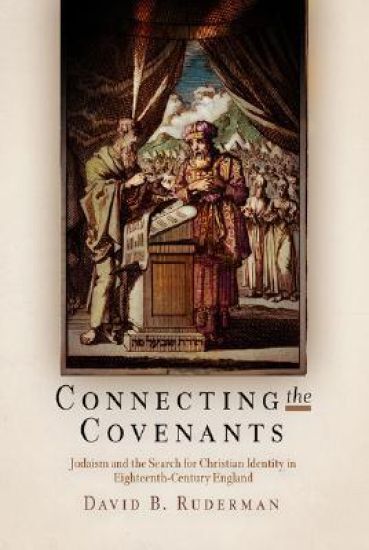
The first few decades of the eighteenth century witnessed an important moment in Jewish-Christian relations, as influential Christian scholars increasingly looked to Jewish texts to reveal the truths of their own faith. To what extent could postbiblical writings help them better understand the New Testament? And who would best be able to explicate these connections? Connecting the Covenants focuses on two separate but entwined stories, the first centering around the colorful character of Moses Marcus. The English-born son of wealthy parents and the grandson of the famous autobiographical author Glikl of Hameln, Marcus was a prominent Jew educated in the Ashkenazic yeshivah at Hamburg. On New Year's Day, 1723, Marcus was baptized as a Christian, later publishing a justification of his conversion and a vindication of his newly discovered faith in a small book in London. A trophy convert, he was promoted by figures at the highest levels of the Anglican Church as a cultural mediator between Judaism and Christianity. His modest successes in the world of the elite clerical establishment were followed, however, by conspicuous failures, both intellectual and material. The second story that David Ruderman tells emerges against the background of Marcus's professional decline. In the end, the prize convert proved to be a theologian of limited ability, far outstripped in sophistication and openness to rabbinic learning by a circle of Enlightenment Protestant scholars. It was not the Jew who had abjured Judaism who was willing or able to apply the Mishnah and Talmud to Christian exegesis, but figures such as William Whiston, Anthony Collins, William Wotton, and the Dutch scholar William Surenhusius who seized upon the ways to connect the covenants.
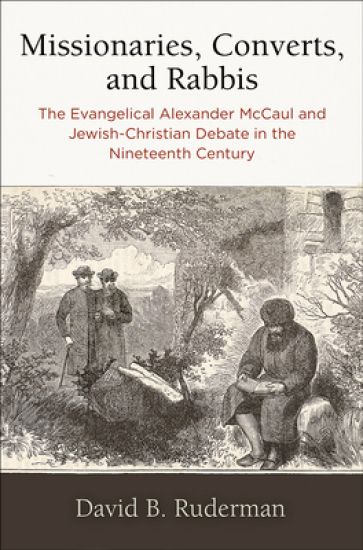
An examination of the life and work of Alexander McCaul and his impact on Jewish-Christian relations In Missionaries, Converts, and Rabbis, David B. Ruderman considers the life and works of prominent evangelical missionary Alexander McCaul (1799-1863), who was sent to Warsaw by the London Society for the Promotion of Christianity Amongst the Jews. He and his family resided there for nearly a decade, which afforded him the opportunity to become a scholar of Hebrew and rabbinic texts. Returning to England, he quickly rose up through the ranks of missionaries to become a leading figure and educator in the organization and eventually a professor of post-biblical studies at Kings College, London. In 1837, McCaul published The Old Paths, a powerful critique of rabbinic Judaism that, once translated into Hebrew and other languages, provoked controversy among Jews and Christians alike. Ruderman first examines McCaul in his complexity as a Hebraist affectionately supportive of Jews while opposing the rabbis. He then focuses his attention on a larger network of his associates, both allies and foes, who interacted with him and his ideas: two converts who came under his influence but eventually broke from him; two evangelical colleagues who challenged his aggressive proselytizing among the Jews; and, lastly, three Jewish thinkers-two well-known scholars from Eastern Europe and a rabbi from Syria-who refuted his charges against the rabbis and constructed their own justifications for Judaism in the mid-nineteenth century. Missionaries, Converts, and Rabbis reconstructs a broad transnational conversation between Christians, Jews, and those in between, opening a new vista for understanding Jewish and Christian thought and the entanglements between the two faith communities that persist in the modern era. Extending the geographical and chronological reach of his previous books, Ruderman continues his exploration of the impact of Jewish-Christian relations on Jewish self-reflection and the phenomenon of mingled identities in early modern and modern Europe.
A wonderfully engaging and accessible book, Who Cares? emphasizes finding humane responses to developmentally and physically disabled individuals that are community driven rather than solely reliant on problem-solution oriented social service organizations. David Schwartz examines the roles of both informal communities and sectarian communities for examples and practical techniques that can be applied to the reader's situation. The beautifully written, touching accounts of individual lives swept under the carpet of the social services system make it impossible to read this book without being affected by the stories?such as the boy who was afraid of white,Nancy who moved to an apartment after forty years in a nursing home, and everyday life in a small east coast town whose inhabitants help one another in times of need.Schwartz does not advocate the overthrow or dismantling of the social services, but instead proposes supplemental responses that will lead to richer, better lives for both the recipient and the caregiving individual and community. The practical, easily encouraged methods of building informal models suggested by the author grow out of both his own practice and his informed experiences as director of a state social services agency and are grounded in the basic desires for nurturing, belonging, and a sense of community. Who Cares? will appeal to those working in the field of social services as well as the general reader searching for ways to bring meaning into the modern, disconnected life.
The book covers the research on economic inequality, including the social construction of racial categories, the uneven and stalled gender revolution, and the role of new educational forms and institutions in generating both equality and inequality.
Juvenile courts were established in the early twentieth century with the ideal of saving young offenders from "delinquency." Many kids, however, never made it to juvenile court. Their cases were decided by a different agency-the police. Cops and Kids analyzes how police regulated juvenile behavior in turn-of-the-century America. Focusing on Los Angeles, Chicago, and Detroit, it examines how police saw their mission, how they dealt with public demands, and how they coped daily with kids. Whereas most scholarship in the field of delinquency has focused on progressive-era reformers who created a separate juvenile justice system, David B. Wolcott's study looks instead at the complicated, sometimes coercive, relationship between police officers and young offenders. Indeed, Wolcott argues, police officers used their authority in a variety of ways to influence boys' and girls' behavior. Prior to the creation of juvenile courts, police officers often disciplined kids by warning and releasing them, keeping them out of courts. Establishing separate juvenile courts, however, encouraged the police to cast a wider net, pulling more young offenders into the new system. While some departments embraced "child-friendly" approaches to policing, others clung to rough-and-tumble methods. By the 1920s and 1930s, many police departments developed new strategies that combined progressive initiatives with tougher law enforcement targeted specifically at growing minority populations. Cops and Kids illuminates conflicts between reformers and police over the practice of juvenile justice and sheds new light on the origins of lasting tensions between America's police and urban communities.
The three instruments employed by major industrialized countries for intervening into the market are typically some variant of antitrust or competition policy, direct regulation, and international trade policy, direct regulation, and international trade policy. But the approach and form vary considerably among the developed nations. The purpose of this book is to compare government policies towards business in Europe, Japan and the Us, to analyze their impact and effectivenes, and assess the policies and the specific circumstances under which government intervention is most successful. The first section of the book compares the antitrust approach in the Us, competition policy in Europe, and fair tarde in Japan. The second section considers the regulation and deregulation movements in the US, public control of business in Europe and industrial targeting in Japan. Finally the interaction between foreign trade policy and domestic business performance is examined in the third section, which considers the rise of protectionism in the US, the Community experiment in Europe and export policies in Japan.David Audretsch concludes that industrial policies have played a predominant role in shaping the industrial structures of each of these major economic regions in the post-war period. While each country has developed its own particular distinctive mix of industrial policies, market intervention by governments in all of these countries has been at least partially responsible for the patterns of industrial performance that emerged in the 1980s.
"The amount of money needed to run a competitive congressional campaign is staggering, with special interests playing a central role in raising these funds. Also of concern is the declining competitiveness of House elections. And while recognition of the need to reform campaign financing is widespread, partisan and House/Senate differences over what these changes should be have complicated legislative efforts.Almost $450 million was spent in both the 1986 and 1988 congressional campaigns, much of it coming from wealthy contributors and political action committees (PACs). Increasing criticism of the current system will undoubtedly force Congress to keep campaign finance reform on it's legislative agenda.Using public opinion, election and campaign spending data, extensive interviews, and a knowledge of practical politics, Magleby and Nelson examine the central issues in the campaign financing debate: the cost of congressional campaigns, financial participation by the political parties and PACs, existing and proposed limits on contributions and expenditures, public financing, and the role of the Federal Election Commission. They propose a comprehensive package of reforms that will undoubtedly serve as a guide for future legislation."
Presents a comparison of Marx's and Nietzsche's philosophies through innovative fictional dialogue. These fictional exchanges are prefaced by background commentary by the narrator, a 19th-century liberated female foreign correspondent for the New York Daily Tribune. Compares the philosophers' views on such topics as religion, the state, the ideal society, women's rights, equality, human nature, history, science, and the role of philosophy.
Introduces specific methods for parents and for therapists on how to teach parents to control difficult and oppositional adolescents. The oppositional/defiant adolescent engages in behavior that can be described as abusive to and inconsiderate of other family members. Such teenagers do not typically respond well to traditional methods of psychotherapy and often therapists commit these youngsters to psychiatric hospitals. The methods introduced in this book are based on years of research and can be effectively carried out in the home setting, removing the need for hospitalization. Simple rules of conduct and clear expectations for the teen's behavior are established at the beginning. Enforcement of these rules is carried out by systematically controlling the teen's economic resources (The Real Economy System for Teens.) Both parents and practicing therapists can benefit from the information contained in this book. Contents: How Did it Happen; Discipline and Punishment; How Control the Difficult Adolescent: The REST Program; Special ProblemsóLying and Aggression; Special ProblemóPoor School Performance; Special ProblemóCollege; Special ProblemóDrug and Alcohol Abuse-Hardcore Behaviors; Special ProblemsóActing Out Behaviors - Runaway Reaction, Suicide Attempts, and Delinquent Behaviors; Special ProblemsóDivorce; Communications; A Case Study; Not the Final Chapter.
Introduces specific methods for parents and for therapists on how to teach parents to control difficult and oppositional adolescents. The oppositional/defiant adolescent engages in behavior that can be described as abusive to and inconsiderate of other family members. Such teenagers do not typically respond well to traditional methods of psychotherapy and often therapists commit these youngsters to psychiatric hospitals. The methods introduced in this book are based on years of research and can be effectively carried out in the home setting, removing the need for hospitalization. Simple rules of conduct and clear expectations for the teen's behavior are established at the beginning. Enforcement of these rules is carried out by systematically controlling the teen's economic resources (The Real Economy System for Teens.) Both parents and practicing therapists can benefit from the information contained in this book. Contents: How Did it Happen; Discipline and Punishment; How Control the Difficult Adolescent: The REST Program; Special Problems-Lying and Aggression; Special Problem-Poor School Performance; Special Problem-College; Special Problem-Drug and Alcohol Abuse-Hardcore Behaviors; Special Problems-Acting Out Behaviors - Runaway Reaction, Suicide Attempts, and Delinquent Behaviors; Special Problems-Divorce; Communications; A Case Study; Not the Final Chapter.