Kirjojen hintavertailu. Mukana 12 459 402 kirjaa ja 12 kauppaa.

Kirjahaku

Etsi kirjoja tekijän nimen, kirjan nimen tai ISBN:n perusteella.

1000 tulosta hakusanalla David G. Croly

The Making of Christian Morality

The Making of Christian Morality

David G. Horrell; John M G Barclay

William B Eerdmans Publishing Co
2019
nidottu
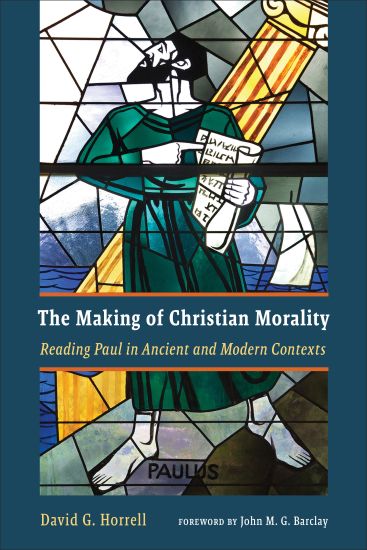
In this volume David Horrell focuses on themes of community, ethics, and ecology in Paul, moving from the concrete social circumstances in which the earliest Christian communities gathered to the appropriation of Paul's writings in relation to modern ethical challenges. Often questioning established consensus positions, Horrell opens up new perspectives and engages with ongoing debates both in Pauline studies and in contemporary ethics.After covering historical questions about the setting of the Paul-ine communities, The Making of Christian Morality analyzes Paul-ine ethics through a detailed study of particular passages. In the third and final section Horrell brings Pauline thought to bear on contemporary issues and challenges, using the environmen-tal crisis as a case study to demonstrate how Paul's ethics can be appropriated fruitfully in a world so different from Paul's own.
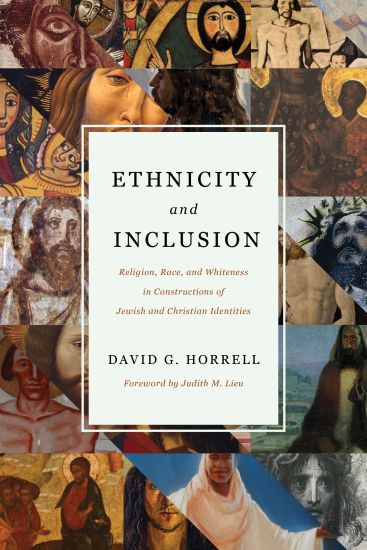
Ethnicity and Inclusion: Religion, Race, and Whiteness in Constructions of Jewish and Christian Identities
Some of today's problematic ideologies of racial and religious difference can be traced back to constructions of the relationship between Judaism and early Christianity. New Testament studies, which developed contemporaneously with Europe's colonial expansion and racial ideologies, is, David Horrell argues, therefore an important site at which to probe critically these ideological constructions and their contemporary implications. In Ethnicity and Inclusion, Horrell explores the ways in which "ethnic" (and "religious") characteristics feature in key Jewish and early Christian texts, challenging the widely accepted dichotomy between a Judaism that is ethnically defined and a Christianity that is open and inclusive. Then, through an engagement with whiteness studies, he offers a critique of the implicit whiteness and Christianness that continue to dominate New Testament studies today, arguing that a diversity of embodied perspectives is epistemologically necessary.
The Final Invasion

The Final Invasion

David G. Fitz-Enz

Bison Books
2009
pokkari
On September 1, 1814, under the command of Lt. Gen. Sir George Prevost, nearly 15,000 veteran British troops, fresh from victory over Napoleon, crossed the Canadian-American border—the largest foreign army ever to invade the United States. Opposing the British invasion were Gen. Alexander Macomb and his army of fewer than 5,000 men and the improvised fleet and brilliant strategy of thirty-year-old Lt. Thomas Macdonough. They were on the losing side of a devastating war. By the time the British and Americans clashed on the waters and surrounding shores of Lake Champlain on September 11, 1814, Macomb and Macdonough's government, pursued by British troops, had fled from a burning Washington. Yet despite the odds, the Americans managed to thwart the world's strongest naval power in one of the most decisive battles in American history. The source of the documentary film of the same name, The Final Invasion is based on primary research and original discoveries—including previously unknown private diaries and orders, missing since the war. Fair-minded, astute, and passionately engaged with his subject, Col. David G. Fitz-Enz brings to life the immediacy and immensity of the British threat, the bloody reality of naval warfare, and the far-reaching consequences of the American victory against tremendous odds.
Living with Strangers

Living with Strangers

David G. McCrady

University of Nebraska Press
2006
sidottu
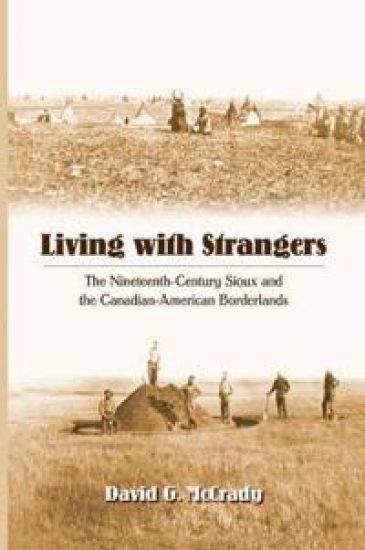
The story of the Sioux who moved into the Canadian-American borderlands in the later years of the nineteenth century is told in its entirety for the first time here. Previous histories have been divided by national boundaries and have focused on the famous personages involved, paying scant attention to how Native peoples on both sides of the border reacted to the arrival of the Sioux. Using material from archives across North America, Canadian and American government documents, Lakota winter counts, and oral history, Living with Strangers reveals how the nineteenth-century Sioux were a people of the borderlands. The Sioux made great tactical use of the Canada–United States boundary. They traded with the Métis of Canada—often in contraband goods such as arms and ammunition—and tried to get better prices from European traders by drawing the Hudson's Bay Company into competition with American traders. They opened negotiations with both Canadian and American officials to determine which government would accord them better treatment, and they used the boundary as a shield in times of warfare with the United States. Until now, the Canadian-American borderlands and the people who live there have remained a blind spot in Canadian and American nationalist historiographies. Living with Strangers takes readers beyond the traditional dichotomy of the Canadian and the American West and reveals significant and previously unknown strands in Sioux history.
From Silicon Valley to Singapore

From Silicon Valley to Singapore

David G. McKendrick; Richard F. Doner; Stephan Haggard

Stanford University Press
2000
sidottu
Momentous developments in the global economy over the last two decades have dramatically increased the availability of industrial investment sites and lowered the cost of relocating core activities to new countries. But how should these developments be exploited for competitive advantage? Firms face competing pressures: scale economies and the advantages of proximity push them to concentrate activities in one or only a few locations, while low wages and new markets invite dispersal across several countries. This book examines how location decisions have contributed to the global dominance of U.S. firms in the hard disk drive industry. In analyzing the industry since its beginnings some forty years ago, the book explains how American leadership in disk drives has rested on the formation of two complementary industrial clusters. Fundamental research and product development has been located almost entirely in the United States, principally California. Manufacturing has been concentrated in Southeast Asia (initially in Singapore and later in Thailand and Malaysia as well). This duality has proven key to the successful competitive position of the U.S. disk drive industry. Beyond the particulars of the disk drive industry, the authors present new perspectives on the sources of industrial leadership, the strategic behavior of multinational corporations, the geographic evolution of industry, and the creation and endurance of industrial clusters. Managers will gain insight into how location decisions can contribute to organizational effectiveness, and will learn that globalizing production, while keeping innovative activities at home, can contribute to their firms’ competitive advantage. Policy makers will find that first mover advantages may be as important for countries as for companies, since early and systematic efforts to attract a specific industry can generate a critical mass of investments that, over time, will make a location resistant to inducements offered by other countries.
From Silicon Valley to Singapore

From Silicon Valley to Singapore

David G. McKendrick; Richard F. Doner; Stephan Haggard

Stanford University Press
2000
pokkari
Momentous developments in the global economy over the last two decades have dramatically increased the availability of industrial investment sites and lowered the cost of relocating core activities to new countries. But how should these developments be exploited for competitive advantage? Firms face competing pressures: scale economies and the advantages of proximity push them to concentrate activities in one or only a few locations, while low wages and new markets invite dispersal across several countries. This book examines how location decisions have contributed to the global dominance of U.S. firms in the hard disk drive industry. In analyzing the industry since its beginnings some forty years ago, the book explains how American leadership in disk drives has rested on the formation of two complementary industrial clusters. Fundamental research and product development has been located almost entirely in the United States, principally California. Manufacturing has been concentrated in Southeast Asia (initially in Singapore and later in Thailand and Malaysia as well). This duality has proven key to the successful competitive position of the U.S. disk drive industry. Beyond the particulars of the disk drive industry, the authors present new perspectives on the sources of industrial leadership, the strategic behavior of multinational corporations, the geographic evolution of industry, and the creation and endurance of industrial clusters. Managers will gain insight into how location decisions can contribute to organizational effectiveness, and will learn that globalizing production, while keeping innovative activities at home, can contribute to their firms’ competitive advantage. Policy makers will find that first mover advantages may be as important for countries as for companies, since early and systematic efforts to attract a specific industry can generate a critical mass of investments that, over time, will make a location resistant to inducements offered by other countries.
The Chinese Sultanate

The Chinese Sultanate

David G. Atwill

Stanford University Press
2005
sidottu
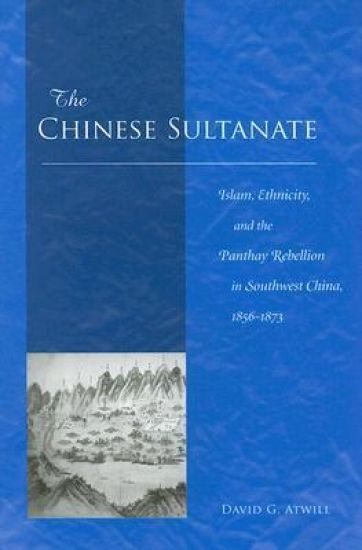
The Muslim-led Panthay Rebellion was one of five mid-nineteenth-century rebellions to threaten the Chinese imperial court. The Chinese Sultanate begins by contrasting the views of Yunnan held by the imperial center with local and indigenous perspectives, in particular looking at the strong ties the Muslim Yunnanese had with Southeast Asia and Tibet. Traditional interpretations of the rebellion there have emphasized the political threat posed by the Muslim Yunnanese, but no prior study has sought to understand the insurrection in its broader muti-ethnic borderland context. At its core, the book delineates the escalating government support of premeditated massacres of the Hui by Han Chinese and offers the first in-depth examination of the seventeen-year-long rule of the Dali Sultanate.
The Soul of a Small Texas Town

The Soul of a Small Texas Town

David G. Wharton

University of Oklahoma Press
2000
sidottu
Thirty-five miles east of Austin, McDade, Texas is quintessential small-town America. McDade's colorful history, from its founding in 1871 as a Wild West boomtown and continuing to the much quieter present day, comes to life in The Soul of a Small Texas Town. David Wharton's contemporary photographs of the community and its residents and his accompanying narrative reveal growth and decline, shared family histories, traditions, crises, and celebrations.The book explores the impact of local issues, discusses how regional, national, and international events affect the community, and speculates about the town's uncertain future. A fascinating story, it is also an important reflection of life in small rural towns throughout the nation.
The Soul of a Small Texas Town

The Soul of a Small Texas Town

David G. Wharton

UNIVERSITY OF OKLAHOMA PRESS
2022
nidottu
Thirty-five miles east of Austin, McDade, Texas is quintessential small-town America. McDade's colorful history, from its founding in 1871 as a Wild West boomtown and continuing to the much quieter present day, comes to life in The Soul of a Small Texas Town. David Wharton's contemporary photographs of the community and its residents and his accompanying narrative reveal growth and decline, shared family histories, traditions, crises, and celebrations.The book explores the impact of local issues, discusses how regional, national, and international events affect the community, and speculates about the town's uncertain future. A fascinating story, it is also an important reflection of life in small rural towns throughout the nation.
Tales of Mike the Tiger

Tales of Mike the Tiger

David G. Baker; Margaret Taylor Stewart

Louisiana State University Press
2006
sidottu
For the youngest fans of Louisiana State University sports, Mike the Tiger is the main attraction. Boys and girls visiting campus beg to stop by Mike's brand-new home situated near Tiger Stadium, Alex Box Stadium, and the Pete Maravich Assembly Center, hoping to hear the big cat roar and have their photo taken with him. Mike's veterinarian, David G. Baker, and reading specialist Margaret Taylor Stewart have combined their expertise in this fun, informative guidebook for the most devoted followers of the beloved Bengal mascot.With its question-and-answer format, this delightful book tells about Mike from whiskers to tail. Baker and Stewart offer lively responses to questions such as: Why does LSU have both a live tiger and a costumed mascot? What weighs as much as Mike the Tiger? Does Mike go to the dentist? What does Mike eat? They explore Mike's daily routine, playtime, health care, travel arrangements, and likes and dislikes.Readers can delve into the history of LSU's tiger tradition, meeting ""up close"" each of the five Mikes who have reigned since 1936. In More about Tigers, they can learn about Mike's place in the larger cat family, the various subspecies of tigers, their habitats around the world, and the tiger's distinct physical traits. Ten hands-on activities- including making a tiger face mask and cooking a delicious fudge-and-pecan treat shaped like Mike's paw print- will engage kids' creativity and skills. A special Notes to Parents and Teachers section offers suggestions for integrating the book into classroom studies.Lavishly illustrated with more than one hundred photographs capturing the many moods and adventures of Mike, Tales of Mike the Tiger will satisfy even the most inquisitive child on the subject of this favorite feline.
Mike the Tiger

Mike the Tiger

David G. Baker; W. Sheldon Bivin; C. C. Lockwood

Louisiana State University Press
2013
sidottu
Mike the Tiger has symbolized the spirit and resolve of Louisiana State University for over seventy-five years. Fiercely confident, keenly competitive, marvelously clever, and the only live tiger to reside on a college campus, Mike reigns nobly from his home just outside of Tiger Stadium in Baton Rouge. In this completely updated and visually stunning new edition of Mike the Tiger, David G. Baker and W. Sheldon Bivin tell the story of the famed mascot from the Civil War origins of LSU's fighting tiger tradition to the present age of social media. They debunk the myths, confirm the legends, and share priceless behind-the-scenes anecdotes as they chronicle the reign of each of the six Mikes. Included are 70 additional photos, for a total of 200 images, as well as new details about:The construction of a spacious natural enclosure for Mike in 2005, complete with waterfall, stream, pool, shrubs, rocks, and grassThe final years of Mike V, who was hand-raised at LSU, and the outpouring of condolences upon his deathThe exciting arrival and introduction of Mike VI and the establishment of his reputation as possibly the most affectionate and inquisitive personality of any LSU tiger to dateThe naming of a sixth subspecies of tiger, the Malayan, and the current status of global tiger preservation effortsFrequently asked questions and answers about Mike's care and lifestyleMike the Tiger provides a treat for all who ever said, ""Meet me at the tiger cage,"" for all who still marvel at his regal appearance, and for all who will forever bleed purple and gold.
Sister Republics

Sister Republics

David G. Haglund

LOUISIANA STATE UNIVERSITY PRESS
2023
sidottu
David G. Haglund's Sister Republics tells the story of the unique relationship between the United States and its first ally, France. Historians and political scientists have characterized interactions between the two countries in the spheres of security and defense policy in radically different ways: either the two comport themselves in a highly cooperative fashion, befitting their status as old allies and steadfast friends, or they act as bitter rivals, revealing their alliance to be at best dysfunctional and at worst destructive. Haglund uses a fresh approach to reconcile these divergent positions, examining the Franco-American bond through the prism of strategic culture. In doing so, he reveals the cultural factors that have contributed to the suboptimal relationship between the two nations.
Mike

Mike

David G. Baker

LOUISIANA STATE UNIVERSITY PRESS
2023
sidottu
Mike the Tiger-the only live tiger mascot in the United States-is an iconic presence on LSU's campus. From his tiger sanctuary next to Tiger Stadium, he draws a steady stream of fans, adults and children alike. In this new book about LSU's favorite tiger, Mike's former veterinarian David G. Baker reflects on his decades of caring for three of the live mascots, beginning with Mike V in 1996. Baker gives fascinating behind-the-scenes glimpses of the tigers as he recounts episodes such as Mike VI's cancer diagnosis, treatment, and death, and the search for Mike VII. He gives details about the tiger's daily care and routine, provides answers to commonly asked questions about the mascot program, and discusses Mike's popular social media presence. He also delves into new traditions, such as the creation of "meat art" for Mike to devour before home football games and the overnight holding of graduation rings in the night house with Mike. In addition to Baker's own text, Mike: The Tigers of LSU includes remembrances from many of the tiger's veterinary student caretakers over the years, who reveal how caring for Mike the Tiger impacted their lives. Loaded with more than one hundred new and historical photos, Mike is sure to please the most avid fans of LSU's mascot.
Revisiting Racialized Voice

Revisiting Racialized Voice

David G. Holmes

Southern Illinois University Press
2007
nidottu
Revisiting Racialized Voice: African American Ethos in Language and Literature argues that past misconceptions about black identity and voice, codified from the 1870s through the 1920s, inform contemporary assumptions about African American authorship. Tracing elements of racial consciousness in the works of Frederick Douglass, Charles Chesnutt, W. E. B. DuBois, Zora Neale Hurston, and others, David G. Holmes urges a revisiting of narratives from this period to strengthen and advance notions about racialized writing and to shape contemporary composition pedagogies. Pointing to the intersection of African American identity, literature, and rhetoric, ""Revisiting Racialized Voice"" begins to construct rhetorically workable yet ideologically flexible definitions of black voice. Holmes maintains that political pressure to embrace a ""color blindness"" endangers scholars' ability to uncover links between racialized discourses of the past and those of the present, and he calls instead for a reassessment of the material realities and theoretical assumptions race represents and with which it has been associated.
The Collapse Of The Democratic Presidential Majority

The Collapse Of The Democratic Presidential Majority

David G Lawrence

Westview Press Inc
1997
pokkari
American electoral politics since World War II stubbornly refuse to fit the theories of political scientists. The long collapse of the Democratic presidential majority does not look much like the classic realignments of the past: The Republicans made no corresponding gains in sub-presidential elections and never won the loyalty of a majority of the electorate in terms of party identification. And yet, the period shows a stability of Republican dominance quite at odds with the volatility and unpredictability central to the competing theory of dealignment. The Collapse of the Democratic Presidential Majority makes sense of the last half century of American presidential elections as part of a transition from a world in which realignment was still possible to a dealigned political universe. The book combines analysis of presidential elections in the postwar world with theories of electoral change,showing how Reagan bridged the eras of re- and dealignment and why Clinton was elected despite the postwar trend.
A Land of Ghosts

A Land of Ghosts

David G. Campbell

Rutgers University Press
2007
nidottu
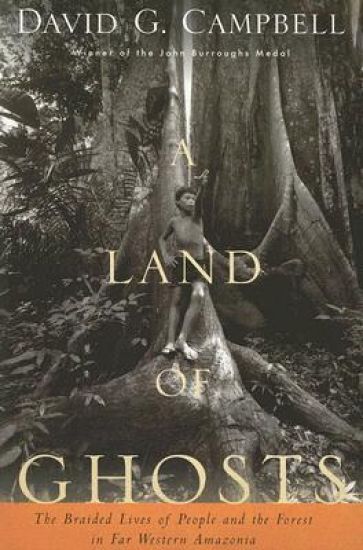
For thirty years, David G. Campbell has explored the Amazon, an enchanting terrain of forest and river that is home to the greatest diversity of plants and animals to have ever existed anywhere at any time in the four-billion-year history of life on Earth. With great artistic flair, Campbell describes a journey up the Rio Moa, a remote tributary of the Amazon River, 2,800 miles from its mouth. Here, he joins three old friends: Arito, a caiman hunter turned paleontologist; Tarzan, a street urchin brought up in a bordello; and Pimentel, a master canoe pilot. They travel together deep into the rainforest and set up camp in order to survey every woody plant on a two-hectare plot of land with about as many tree species as in all of North America. Campbell introduces us to two remarkable women, Dona Cabocla, a widow who raised six children on that lonely frontier, and Dona Ausira, a Nokini Native American who is the last speaker of her tribe's ages-old language. These pioneers live in a land whose original inhabitants were wiped out by centuries of disease, slavery, and genocide, taking their traditions and languages with them. He explores the intimate relationship between the extinction of native language and the extirpation of biological diversity. ""It's hard for a people to love a place that is not defined in words and thus cannot be understood. And it's easy to give away something for which there are no words, something you never knew existed."" In elegant prose that enchants and entrances, Campbell has written an elegy for the Amazon forest and its peoples - for what has become a land of ghosts.
Neurasthenic Nation

Neurasthenic Nation

David G Schuster

Rutgers University Press
2011
sidottu
As the United States rushed toward industrial and technological modernization in the late nineteenth century, people worried that the workplace had become too competitive, the economy too turbulent, domestic chores too taxing, while new machines had created a fast-paced environment that sickened the nation. Physicians testified that, without a doubt, modern civilization was causing a host of ills—everything from irritability to insomnia, lethargy to weight loss, anxiety to lack of ambition, and indigestion to impotence. They called this condition neurasthenia.Neurasthenic Nation investigates how the concept of neurasthenia helped doctors and patients, men and women, and advertisers and consumers negotiate changes commonly associated with “modernity.” Combining a survey of medical and popular literature on neurasthenia with original research into rare archives of personal letters, patient records, and corporate files, David Schuster charts the emergence of a “neurasthenic nation”—a place where people saw their personal health as inextricably tied to the pitfalls and possibilities of a changing world.
Matthew Arnold and the Betrayal of Language

Matthew Arnold and the Betrayal of Language

David G. Riede

University of Virginia Press
1987
sidottu
Matthew Arnold was one of the nineteenth century's greatest spokesmen for the saving power of culture, especially of poetry, to substitute for a vanishing religion. Yet he was persistently troubled throughout his career by the difficulty of finding adequate authority in language. Matthew Arnold and the Betrayal of Language explores Arnold's attempts to find an authoritative language, and argues that his occasional claims for such a language reveal more uneasiness than confidence in the value of ""letters."" It examines Arnold's poetry within this context and demonstrates that his various experiments - to speak in oracular voice, to use classic forms, to achieve a grand style - and their failures, reflect the inevitable difficulties facing any poet in an age of intellectual and cultural upheaval. Riede argues that Arnold's determined efforts to write with authority, combined with his deep-seated suspicion of his medium, result in an exciting if often agonized tension in his poetic language - a language that strains against its inevitable but generally unacknowledged limitations.
Matthew Arnold and the Betrayal of Language

Matthew Arnold and the Betrayal of Language

David G. Riede

University of Virginia Press
2015
nidottu
Matthew Arnold was one of the nineteenth century's greatest spokesmen for the saving power of culture, especially of poetry, to substitute for a vanishing religion. Yet he was persistently troubled throughout his career by the difficulty of finding adequate authority in language. Matthew Arnold and the Betrayal of Language explores Arnold's attempts to find an authoritative language, and argues that his occasional claims for such a language reveal more uneasiness than confidence in the value of ""letters."" It examines Arnold's poetry within this context and demonstrates that his various experiments - to speak in oracular voice, to use classic forms, to achieve a grand style - and their failures, reflect the inevitable difficulties facing any poet in an age of intellectual and cultural upheaval. Riede argues that Arnold's determined efforts to write with authority, combined with his deep-seated suspicion of his medium, result in an exciting if often agonized tension in his poetic language - a language that strains against its inevitable but generally unacknowledged limitations.