Kirjojen hintavertailu. Mukana 12 595 353 kirjaa ja 12 kauppaa.

Kirjahaku

Etsi kirjoja tekijän nimen, kirjan nimen tai ISBN:n perusteella.

1000 tulosta hakusanalla David Walker

Big Jim and the White Boy

Big Jim and the White Boy

David F. Walker; Marcus Kwame Anderson

RANDOM HOUSE USA INC
2024
nidottu
A thrilling graphic novel reimagining of Adventures of Huckleberry Finn that follows Jim, an enslaved man on a journey towards freedom, and his sidekick, Huck, in the antebellum South--from the team behind the Eisner Award-winning The Black Panther Party. Commonly regarded as one of the great American novels, Adventures of Huckleberry Finn has captured the hearts and imaginations of readers since 1885. But since its publication, critics have rightfully condemned Mark Twain's troubling portrayal of Black Americans as stereotypes and caricatures, with contemporary fans searching for a modern update to this iconic tale. Big Jim and the White Boy is a radical retelling of this American classic, centering the experiences of Jim, an enslaved Black man in search of his kidnapped wife and children, along with his cheeky sidekick, Huckleberry Finn. Jim and Huck's high-stakes adventures take them on an epic voyage across the antebellum South and Midwest, through Confederate war camps and runaway safe houses, into Old West standoffs, and on the road as covert Underground Railroad agents. Intertwined into the story of Jim and Huck are the stories of Jim's descendants in the 1930s, 1980s, and 2020s, making this a multigenerational family epic as well as an adventure story. Big Jim and the White Boy takes readers on a journey through Jim and Huck's past, present, and future, delving into their incredible friendship and years of adventures--a bond that transcends the gruesome racism of the Civil War era. With compelling artwork and riveting storytelling, David F. Walker and Marcus Kwame Anderson push the boundaries of The Adventures of Huckleberry Finn in this incredible graphic novel, exploring the triumphs and tribulations of Jim and his family, and finally giving his due as a hero of American literature.
Le Sourire d'Albert Camus

Le Sourire d'Albert Camus

David H. Walker

Createspace Independent Publishing Platform
2018
nidottu
En 1959, au cours d'un entretien, Jean-Claude Brisville demande Albert Camus: Y a-t-il dans votre oeuvre un th me, selon vous important, que vous estimez n glig par vos commentateurs? . quoi l'auteur r pond: l'humour . Avec ces paroles l' crivain ouvre une piste f conde aux chercheurs. Comment se fait-il qu'un auteur dont l'absurde sert de point de d part, ait d signaler que les critiques n'avaient pas estim sa juste valeur l'aspect comique de son oeuvre? Le colloque d'Aix en Provence s'est donn pour t che de rem dier cette carence en faisant ressortir et en r - valuant les aspects humoristiques de l' criture camusienne. Par quels moyens l'auteur fait-il pressentir le sourire dans ses textes? Comment s'y prend-il pour le provoquer chez le lecteur, devenu miroir du visage hilare ou ironique? L' criture recourt une panoplie de techniques stylistiques selon le genre et le contexte: on parle alors de com die, de satire ou de parodie, de plaisanterie, d' pigramme, de mot d'esprit... Le sourire peut-il tre tragique autant que comique ? L'auteur de romans, de pi ces de th tre, d'essais philosophiques et lyriques, de reportages, d' ditoriaux et de lettres tant ouvertes qu'intimes, sait l'art de doser l'humour et la dr lerie par l'interm diaire des mots, des gestes, des situations, de la perspective narrative. Le sourire s'av re fid le cet humour dont Camus souhaitait que la critique fasse la part en lisant son oeuvre.Ont contribu ce volume: Guy BASSET: : Fleurs de sourires dans la proximit de Camus; Marie BR JON: : Le sourire du journaliste: les proc d s de l'ironie dans ses articles d' 'Alger r publicain' et du 'Soir r publicain'; Arnaud DERCELLES et R mi BAUDOU Les crits politiques de Camus: quand le sourire s'estompe; In s de CASSAGNE: Le sourire d'accueil dans les lettres; Peter DUNWOODIE: Je(u) masqu Humour et auto-ironie chez Camus; Giovanni GAETANI: 'Se moquer de la philosophie, c'est vraiment philosopher': l'ironie philosophique d'Albert Camus; Samara GESKE: Le sourire sur les l vres d sesp r es: le rapport entre le comique et le tragique chez Albert Camus;Virginie LUPO: Le rire dans le th tre de Camus ou le rire en clair-obscur; Anissa MANAI-ZAYAR: Le 'rire/sourire' chez Albert Camus; Lamia OUCHERIF: 'L'Etranger' d'Albert Camus, le sourire sur le front... un effet du grotesque.; Linda RASOAMANANA: Un homme, a s'emp che de faire des mines mais a peut sourire: typologie des sourires masculins dans les r cits de Camus; Pierre-Louis REY: Le 'sourire franciscain' de Past que. Humour alg rois; Martin RODAN: La Tch coslovaquie, pays du rire mal-entendu; H l ne RUFAT: Avec 'L' tat de si ge', l'humour camusien dans tous ses tats; Agn s SPIQUEL: Le sourire du monde; Mustapha TRABELSI: Enjeux thique et esth tique du sourire ironique dans les textes brefs d'Albert Camus; David WALKER: Les sourires de Camus; Barbara ZAULI: Albert Camus et la v rit proteiforme du sourire
Consumer Chronicles

Consumer Chronicles

David H. Walker

Liverpool University Press
2011
sidottu
At a time when the world is contemplating the depletion of non-renewable natural resources, the consumer society is increasingly being called into question. This is nowhere more acutely evident than in France, where since its beginnings in the nineteenth century, the consumer revolution, extending market forces into every area of social and private life, has been perceived as a challenge to core elements in French culture, such as traditional artisan crafts and small businesses serving local communities. Cultural historians and sociologists have charted the increasing commercialisation of everyday life over the twentieth century, but few have paid systematic attention to the crucial testimony provided by the authors of narrative fiction. Consumer Chronicles rectifies this omission by means of close readings of a series of novels, selected for their authentic portrayal of consumer behaviour, and analysed in relation to their social, cultural and historical contexts. Walker's study, offering an imaginative interdisciplinary panorama covering the impact of affluence on French shoppers, shopkeepers and society, provides telling new insights into the history and characteristics of the consumer mentality.
Rethinking Community Research

Rethinking Community Research

David Studdert; Valerie Walkerdine

Palgrave Macmillan
2019
nidottu
This book sheds new light on the complex inter-relations that make up class, power, local history and space. It turns community thinking on its head by understanding community not as an object but as a relational process with sociality at its core. Based on fieldwork from one market town and the work of Hannah Arendt, it demonstrates how a new approach to social practices can illuminate our understanding of commonality and communal being. Whilst community has become both a much-derided and much-touted term, this thought-provoking work shows that it is at the heart of social process. It will appeal to researchers of sociology, social policy, politics, public health and geography, as well as those involved in public policy design and implementation.
Mormon History

Mormon History

Ronald W Walker; David B Whittaker; James B Allen

University of Illinois Press
2010
nidottu
A companion volume to their massive bibliography Studies in Mormon History, 1830–1997, this descriptive history by a team of top Mormon scholars provides a comprehensive view of how the writing of Mormon history has evolved since the establishment of the church. Mormon History offers an interpretive survey of Mormon historical writings, from the partisan and often ephemeral history of the nineteenth century through the shift in the twentieth toward a more balanced and professional approach and an emphasis on how the Mormons helped settle the American West. The authors examine Mormon biography and autobiography and discuss social science literature on the Mormons, including studies of social geography, rural sociology, and agricultural economics. Two valuable appendices round out this volume, one on the development and nature of Mormon imprints, the other on conducting historical research in Mormon sources.
Over at College

Over at College

James Knox Walker Jr; David Chapman

Texas A M University Press
2016
sidottu
In 1926 James Knox Walker, professor of civilengineering, and his new bride moved onto thecampus of what was then known as the Agriculturaland Mechanical College of Texas. The greatercommunity of which this small on-campusneighborhood was a part was known simply as“College.” There was no such place as CollegeStation, and the city of Bryan stood six miles away.James Knox Walker Jr., the couple’s oldest child,recollects the days when professors, staff members,and their children formed a small, closely knitsociety “over at College.” The campus served asthe children’s playground and the scene of theiradventures. It also served their educational needs atA&M Consolidated School, founded in 1920. Thiscommunity flourished from its beginnings in thelate 1890s until 1938, when the college informedresidents that it would no longer provide on-campushousing.Over at College is a charming stroll through the pastthat also captures fascinating glimpses of the socialstructures, institutions, mores, and daily lives on theA&M campus during the 1920s and 1930s.
Forward!

Forward!

Lynn Elizabeth Walker; David E Weekley

Resource Publications (CA)
2023
sidottu
While there are many books containing essays on "ordinary" life from a spiritual or religious perspective, there are only a few with a perspective grounded in the trans identity. Moreover, a number of books for or about trans people have to do with the "exceptional" aspects of life of individual trans folks. This book offers the perspective of a trans identified clergy member in gaining greater understanding of ordinary life, seen through the specific lens of her lived experience. Forward is a series of essays addressing issues that might arise for trans women during their transition journey. In general, the focus is on such aspects of day-to-day living as religion, philosophy, society, church, people, love, alienation, families, aging, and work.
Strategic Marketing Management for The Pacific Region

Strategic Marketing Management for The Pacific Region

David Cravens; Bill Merrilees; Rhett Walker

McGraw Hill Higher Education
1999
nidottu
Strategic Marketing Management for the Pacific Region by Cravens, Merrilees and Walker, is the first Australasian adaptation of the highly successful US Strategic Marketing text by acclaimed author David Cravens. The adaptation of Cravens will not only develop information already employed by the US version of the text, but will offer many unique features developed specifically for the Australian, New Zealand and South East Asian local markets. The adaptation by Merrilees and Walker will give students and lecturers a more comprehensive strategic approach to marketing management in the Pacific region. Using localised case material and research data, along with a redevelopment of the Cravens frame, the first Pacific Region edition will redefine a comprehensive notion of strategy for our market.
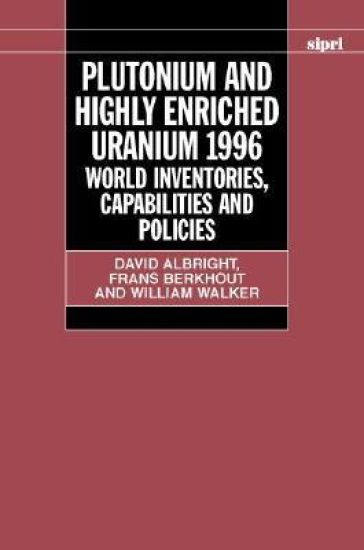
Plutonium and Highly Enriched Uranium 1996

Plutonium and Highly Enriched Uranium 1996

David Albright; Frans Berkhout; William Walker

Oxford University Press
1997
sidottu
Plutonium and highly enriched uranium (HEU) are the basic materials used in nuclear weapons. Plutonium also plays an important part in the generation of nuclear electricity. Knowing how much plutonium and HEU exist, where and in which form is vital for international security and nuclear commerce. Plutonium and Highly Enriched Uranium 1996 is a thorough revision of the World Inventory of Plutonium and Highly Enriched Uranium 1992. It provides a rigorous and comprehensive assessment of the amounts of plutonium and HEU in military and civilian programmes, in nuclear and non-nuclear weapon states, and in countries seeking to acquire nuclear weapons. The capabilities that exist for producing these materials around the world are examined in depth, as are the policy issues raised by them. Containing much new information, it is indispensable to all those concerned with the great contemporary issues in international nuclear relations: arms reductions in the nuclear weapon states, nuclear proliferation, nuclear smuggling, the roles of plutonium and enriched uranium in the nuclear fuel-cycle, and the disposition of surplus weapon material.
The Challenge Of New Technology

The Challenge Of New Technology

David Simpson; Jim Love; Jim Walker

Routledge
2019
sidottu
This book looks at what has actually happened when new technology has been deployed in an industrial and commercial environment. It considers the economic impact of new technology on three groups of organisations: firms, governments and trade unions.
The Challenge Of New Technology

The Challenge Of New Technology

David Simpson; Jim Love; Jim Walker

Routledge
2021
nidottu
This book looks at what has actually happened when new technology has been deployed in an industrial and commercial environment. It considers the economic impact of new technology on three groups of organisations: firms, governments and trade unions.
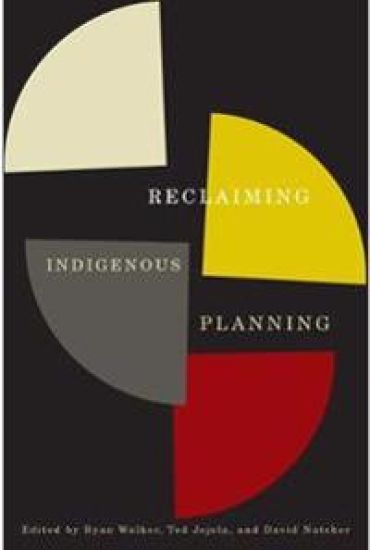
Reclaiming Indigenous Planning

Reclaiming Indigenous Planning

Ryan Walker; Ted Jojola; David Natcher

McGill-Queen's University Press
2013
sidottu
Centuries-old community planning practices in Indigenous communities in Canada, the United States, New Zealand, and Australia have, in modern times, been eclipsed by ill-suited western approaches, mostly derived from colonial and neo-colonial traditions. Since planning outcomes have failed to reflect the rights and interests of Indigenous people, attempts to reclaim planning have become a priority for many Indigenous nations throughout the world. In Reclaiming Indigenous Planning, scholars and practitioners connect the past and present to facilitate better planning for the future. With examples from the Canadian Arctic to the Australian desert, and the cities, towns, reserves and reservations in between, contributors engage topics including Indigenous mobilization and resistance, awareness-raising and seven-generations visioning, Indigenous participation in community planning processes, and forms of governance. Relying on case studies and personal narratives, these essays emphasize the critical need for Indigenous communities to reclaim control of the political, socio-cultural, and economic agendas that shape their lives. The first book to bring Indigenous and non-Indigenous authors together across continents, Reclaiming Indigenous Planning shows how urban and rural communities around the world are reformulating planning practices that incorporate traditional knowledge, cultural identity, and stewardship over land and resources. Contributors include Robert Adkins (Community and Economic Development Consultant, USA), Chris Andersen (Alberta), Giovanni Attili (La Sapienza), Aaron Aubin (Dillon Consulting), Shaun Awatere (Landcare Research, New Zealand), Yale Belanger (Lethbridge), Keith Chaulk (Memorial), Stephen Cornell (Arizona), Sherrie Cross (Macquarie), Kim Doohan (Native Title and Resource Claims Consultant, Australia), Kerri Jo Fortier (Simpcw First Nation), Bethany Haalboom (Victoria University, New Zealand), Lisa Hardess (Hardess Planning Inc.) , Garth Harmsworth (Landcare Research, New Zealand), Sharon Hausam (Pueblo of Laguna), Michael Hibbard (Oregon), Richard Howitt (Macquarie), Ted Jojola (New Mexico), Tanira Kingi (AgResearch, New Zealand), Marcus Lane (Griffith), Rebecca Lawrence (Umea), Gaim Lunkapis (Malaysia Sabah), Laura Mannell (Planning Consultant, Canada), Hirini Matunga (Lincoln University, New Zealand), Deborah McGregor (Toronto), Oscar Montes de Oca (AgResearch, New Zealand), Samantha Muller (Flinders), David Natcher (Saskatchewan), Frank Palermo (Dalhousie), Robert Patrick (Saskatchewan), Craig Pauling (Te Runanga o Ngai Tahu), Kurt Peters (Oregon State), Libby Porter (Monash), Andrea Procter (Memorial), Sarah Prout (Combined Universities Centre for Rural Health, Australia), Catherine Robinson (Commonwealth Scientific and Industrial Research Organization, Australia), Shadrach Rolleston (Planning Consultant, New Zealand), Leonie Sandercock (British Columbia), Crispin Smith (Planning Consultant, Canada), Sandie Suchet-Pearson (Macquarie), Siri Veland (Brown), Ryan Walker (Saskatchewan), Liz Wedderburn (AgResearch, New Zealand).
Reclaiming Indigenous Planning

Reclaiming Indigenous Planning

Ryan Walker; Ted Jojola; David Natcher

McGill-Queen's University Press
2013
nidottu
Centuries-old community planning practices in Indigenous communities in Canada, the United States, New Zealand, and Australia have, in modern times, been eclipsed by ill-suited western approaches, mostly derived from colonial and neo-colonial traditions. Since planning outcomes have failed to reflect the rights and interests of Indigenous people, attempts to reclaim planning have become a priority for many Indigenous nations throughout the world. In Reclaiming Indigenous Planning, scholars and practitioners connect the past and present to facilitate better planning for the future. With examples from the Canadian Arctic to the Australian desert, and the cities, towns, reserves and reservations in between, contributors engage topics including Indigenous mobilization and resistance, awareness-raising and seven-generations visioning, Indigenous participation in community planning processes, and forms of governance. Relying on case studies and personal narratives, these essays emphasize the critical need for Indigenous communities to reclaim control of the political, socio-cultural, and economic agendas that shape their lives. The first book to bring Indigenous and non-Indigenous authors together across continents, Reclaiming Indigenous Planning shows how urban and rural communities around the world are reformulating planning practices that incorporate traditional knowledge, cultural identity, and stewardship over land and resources. Contributors include Robert Adkins (Community and Economic Development Consultant, USA), Chris Andersen (Alberta), Giovanni Attili (La Sapienza), Aaron Aubin (Dillon Consulting), Shaun Awatere (Landcare Research, New Zealand), Yale Belanger (Lethbridge), Keith Chaulk (Memorial), Stephen Cornell (Arizona), Sherrie Cross (Macquarie), Kim Doohan (Native Title and Resource Claims Consultant, Australia), Kerri Jo Fortier (Simpcw First Nation), Bethany Haalboom (Victoria University, New Zealand), Lisa Hardess (Hardess Planning Inc.) , Garth Harmsworth (Landcare Research, New Zealand), Sharon Hausam (Pueblo of Laguna), Michael Hibbard (Oregon), Richard Howitt (Macquarie), Ted Jojola (New Mexico), Tanira Kingi (AgResearch, New Zealand), Marcus Lane (Griffith), Rebecca Lawrence (Umea), Gaim Lunkapis (Malaysia Sabah), Laura Mannell (Planning Consultant, Canada), Hirini Matunga (Lincoln University, New Zealand), Deborah McGregor (Toronto), Oscar Montes de Oca (AgResearch, New Zealand), Samantha Muller (Flinders), David Natcher (Saskatchewan), Frank Palermo (Dalhousie), Robert Patrick (Saskatchewan), Craig Pauling (Te Runanga o Ngai Tahu), Kurt Peters (Oregon State), Libby Porter (Monash), Andrea Procter (Memorial), Sarah Prout (Combined Universities Centre for Rural Health, Australia), Catherine Robinson (Commonwealth Scientific and Industrial Research Organization, Australia), Shadrach Rolleston (Planning Consultant, New Zealand), Leonie Sandercock (British Columbia), Crispin Smith (Planning Consultant, Canada), Sandie Suchet-Pearson (Macquarie), Siri Veland (Brown), Ryan Walker (Saskatchewan), Liz Wedderburn (AgResearch, New Zealand).
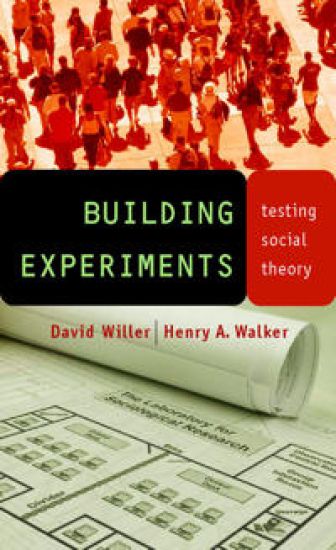
Building Experiments

Building Experiments

David Willer; Henry A. Walker

Stanford University Press
2007
sidottu
Building Experiments is the essential text for understanding experimental methods. In engaging style, the book shows how theory is employed in experimental design, how experiments test theory, and how proper design and use of experiments can advance the social sciences as explanatory sciences. The interactive nature of the text encourages students to hone their skills, building and running experiments while learning the underlying principles of theory and experimentation. The book addresses practical issues, ranging from the critical analysis of historically important experiments to understanding how to recruit subjects properly and protect their rights. Founding experiments in sociology are compared to founding experiments in physics to demonstrate fundamental cross-disciplinary similarities of theory, experiment, and scientific method. Finally, the book explains how experimental research and theory can be applied in historical and institutional studies. This book will be a key resource in social science methodology courses at all levels.
Building Experiments

Building Experiments

David Willer; Henry A. Walker

Stanford University Press
2007
pokkari
Building Experiments is the essential text for understanding experimental methods. In engaging style, the book shows how theory is employed in experimental design, how experiments test theory, and how proper design and use of experiments can advance the social sciences as explanatory sciences. The interactive nature of the text encourages students to hone their skills, building and running experiments while learning the underlying principles of theory and experimentation. The book addresses practical issues, ranging from the critical analysis of historically important experiments to understanding how to recruit subjects properly and protect their rights. Founding experiments in sociology are compared to founding experiments in physics to demonstrate fundamental cross-disciplinary similarities of theory, experiment, and scientific method. Finally, the book explains how experimental research and theory can be applied in historical and institutional studies. This book will be a key resource in social science methodology courses at all levels.