Kirjojen hintavertailu. Mukana 12 017 420 kirjaa ja 12 kauppaa.

Kirjahaku

Etsi kirjoja tekijän nimen, kirjan nimen tai ISBN:n perusteella.

1000 tulosta hakusanalla Dmitrii Emets

Autobiographie und Zoegraphie - Dmitrij A. Prigovs späte Romane
Ausgehend von Agambens Lebensbegriff der „zoe" entwickelt die Studie eine Theorie des Zoegraphischen. Mit ihr lässt sich nichtmenschliches Leben in autobiographischen Texten beschreiben. Im Zentrum der Analyse steht das Romanwerk des russischen Dichters, Bildenden Künstlers und Performers Dmitrij Aleksandrovic Prigov (1940–2007). Zoegraphisches Erzählen wird hier zur poetologischen Strategie zwischen Avantgarde, Totalitarismus und Posthumanismus.
Tipichnyj peterburgskij chinovnik graf Dmitrij Andreevich Tolstoj (1823-1889): Opyt biografii ministra
Graf Dmitrij Andreevich Tolstoj (1823 - 1889) voshel v istoriju kak gosudarstvennyj dejatel pervogo plana, nachavshij svoju kareru v tsarstvovanie Nikolaja I i neodnokratno zanimavshij ministerskie posty pri Aleksandre II i Aleksandre III. Rezultaty ego gosudarstvennoj dejatelnosti poluchili neodnoznachnye, zachastuju protivopolozhnye otsenki u sovremennikov i istorikov. S odnoj storony, on predstaet kak gonitel prosveschenija, s drugoj - kakpokrovitel nauchnykh issledovanij. Biografija etogo krupnogo chinovnikasluzhit jarkoj illjustratsiej mnogikh protivorechij XIX stoletija. V zhiznen-nom puti D. A. Tolstogo otchetlivo proslezhivajutsja dve sjuzhetnye linii: burnye kollizii chinovnichej zhizni i kabinetnoe zatishe nauchnykh shtudij.
Povesti o svjatykh: Dmitrij Donskoj. Aleksandr Nevskij. Aleksandr Svirskij
V nastojaschem izdanii Valerij Voskobojnikov rasskazyvaet o zhizni velikikh khristianskikh svjatykh, dukhovnye i voennye podvigi kotorykh izmenili khod rossijskoj istorii. Avtor vossozdaet zhiznennye puti knjazja Dmitrija Donskogo, chja pobeda v Kulikovskoj bitve stala odnoj iz naibolee znachimykh na puti k sverzheniju zolotoordynskogo iga, knjazja Aleksandra Nevskogo, oderzhavshego pobedu v Ledovom poboische i tem samym ostanovivshego nastuplenie rytsarej Livonskogo ordena, a takzhe prepodobnogo Aleksandra Svirskogo, monakha Valaamskogo monastyrja, osnovavshego vposledstvii Aleksandro-Svirskij monastyr. Kniga adresovana shirokomu krugu chitatelej - kak vzroslym, tak i detjam, interesujuschimsja istoriej rossijskogo gosudarstva.
Nekanonicheskij klassik: Dmitrij Aleksandrovich Prigov (+ DVD-ROM)
Noncanonical classic Dmitry Prigov (1940-2007) Sat. articles and DVD-ROMThis book - the first experience of an interdisciplinary study of the poet, writer, artist, actor and theorist of art D. .. The book also presents the records of several interviews and intelligent conversations with Prigov and most important, step for the comprehension of his work become a researcher of Moscow Conceptualism 1970-2000-ies.
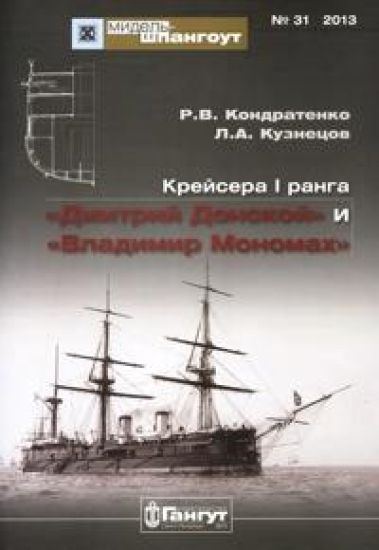
Krejsera I ranga "Dmitrij Donskoj" i "Vladimir Monomakh"

Krejsera I ranga "Dmitrij Donskoj" i "Vladimir Monomakh"

Leonid Kuznetsov; Robert Kondratenko

Gangut
2013
nidottu
"Dmitrij Donskoj" i "Vladimir Monomakh" - eti korabli stali prjamym prodolzheniem linii razvitija pervykh bronenosnykh krejserov Rossijskogo flota. Nachalo ej polozhili postroennye v nachale 1880-kh godov "General-Admiral" i "Gertsog Edinburgskij", za kotorymi posledoval perestroennyj "Minin", sobstvenno i stavshij ikh prototipom. V protsesse postrojki pervonachalno odnotipnye krejsera byli pereproektirovany, prichem "Vladimir Monomakh" stal pervym korablem etogo klassa, osnaschennym dvukhvalnoj glavnoj energeticheskoj ustanovkoj, a "Dmitrij Donskoj" poluchil zakrytuju batareju. Krome togo, "Dmitrij Donskoj" v sostave otrjada korablej Rossijskogo flota uchastvoval v seredine 1893 goda v torzhestvakh po sluchaju 400-letija otkrytija X.Kolumbom Ameriki, probyv v vodakh vostochnogo poberezhja SSHA bolee trekh mesjatsev. V khode svoej pochti dvadtsatiletnej sluzhby oba krejsera pobyvali vo mnogikh okeanakh i morjakh i pogibli v boju s prevoskhodjaschimi silami protivnika v Tsusimskom srazhenii 14-15 maja 1905 goda.Vypusk No31.
Legenda boksa - Dmitrij Bivol
Absoljutnyj chempion mira po boksu, 283 boja v ljubitelskom bokse, iz nikh 268 pobed Dvadtsat pjat bojov v professionalnom bokse, iz nikh dvadtsat chetyre pobedy Zasluzhennyj master sporta RossiiPervyj boksjor v "epokhu chetyrjokh pojasov" (WBA, WBC, IBF i WBO), pobedivshij dvukh absoljutnykh chempionov miraDima ros v malenkom gorodke sredi stepej, okruzhjonnykh gorami. Bylo slozhno predstavit, chto kogda-nibud etot malchishka budet vykhodit na samye znamenitye areny na svete, srazhatsja i pobezhdat. No imenno tak i proizoshlo! Segodnja Dmitrij Bivol - sovremennyj simvol otechestvennoj boksjorskoj shkoly. A ego stil stal primerom krasivogo i tekhnichnogo boksa dlja vsego mira.
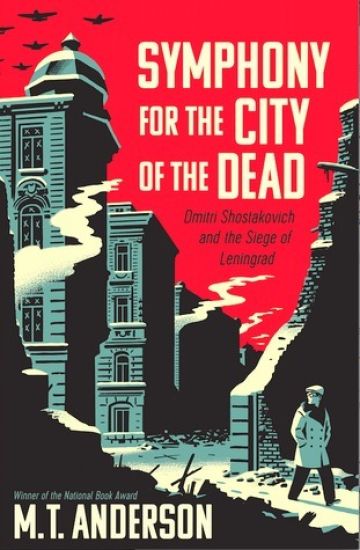
Symphony for the City of the Dead: Dmitri Shostakovich and the Siege of Leningrad
A Wall Street Journal 20 Best Children's Books of the Past 20 Years Selection A 2016 YALSA Award for Excellence in Nonfiction for Young Adults Finalist National Book Award winner M. T. Anderson delivers a brilliant and riveting account of the Siege of Leningrad and the role played by Russian composer Shostakovich and his Leningrad Symphony. In September 1941, Adolf Hitler's Wehrmacht surrounded Leningrad in what was to become one of the longest and most destructive sieges in Western history--almost three years of bombardment and starvation that culminated in the harsh winter of 1943-1944. More than a million citizens perished. Survivors recall corpses littering the frozen streets, their relatives having neither the means nor the strength to bury them. Residents burned books, furniture, and floorboards to keep warm; they ate family pets and--eventually--one another to stay alive. Trapped between the Nazi invading force and the Soviet government itself was composer Dmitri Shostakovich, who would write a symphony that roused, rallied, eulogized, and commemorated his fellow citizens--the Leningrad Symphony, which came to occupy a surprising place of prominence in the eventual Allied victory. This is the true story of a city under siege: the triumph of bravery and defiance in the face of terrifying odds. It is also a look at the power--and layered meaning--of music in beleaguered lives. Symphony for the City of the Dead is a masterwork thrillingly told and impeccably researched by National Book Award-winning author M. T. Anderson.
Bakhtin and the Music of Dmitri Shostakovich

Bakhtin and the Music of Dmitri Shostakovich

Miriam Webber

TAYLOR FRANCIS LTD
2026
sidottu
The present study examines various ways in which Bakhtin’s literary thought might be applied to Shostakovich’s music, addressing a range of established music-theoretical methodologies located within the broader context of Bakhtinian narrative theory. The analytical approach is consequently multifaceted and engages multiple musical parameters, including pitch organization, rhythm, form, topical content, and emotional valence. In particular, five key terms deriving from Bakhtin’s critical writings form the template in relation to which Shostakovich’s approach to the act of musical narration may be codified: carnival, chronotope, heteroglossia, polyphony, and novelization. Several songs are presented as preliminary case studies that together provide a framework for the interpretation of individual scenes from The Nose and Lady Macbeth of Mtsensk District, as well as aspects of the purely instrumental symphonic repertoire. Issues such as nonclosure are deemed neither to be problematic nor to require any extrinsic accounting for and are instead taken to be wholly Bakhtinian in both conception and practice. Nor does the methodology adopted here seek to disclose any kind of immanent narrative subtext; rather, it argues for modes of musical comprehension shaped in conjunction with Bakhtinian narratological thought. This book is written for music scholars, primarily in sub disciplines of Russian music and analysis.
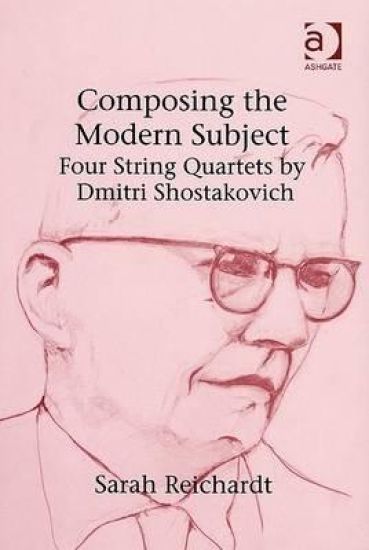
Composing the Modern Subject: Four String Quartets by Dmitri Shostakovich
Since the publication of Solomon Volkov's disputed memoirs of Dmitri Shostakovich, the composer and his music has been subject to heated debate concerning how the musical meaning of his works can be understood in relationship to the composer's life within the Soviet State. While much ink has been spilled, very little work has attempted to define how Shostakovich's music has remained so arresting not only to those within the Soviet culture, but also to Western audiences - even though such audiences are often largely ignorant of the compositional context or even the biography of the composer. This book offers a useful corrective: setting aside biographically grounded and traditional analytical modes of explication, Reichardt uncovers and explores the musical ambiguities of four of the composer’s middle string quartets, especially those ambiguities located in moments of rupture within the musical structure. The music is constantly collapsing, reversing, inverting and denying its own structural imperatives. Reichardt argues that such confrontation of the musical language with itself, though perhaps interpretable as Shostakovich's own unique version of double-speak, also poignantly articulates the fractured state of a more general form of modern subjectivity. Reichardt employs the framework of Lacanian psychoanalysis to offer a cogent explanation of this connection between disruptive musical process and modern subjectivity. The ruptures of Shostakovich's music become symptoms of the pathologies at the core of modern subjectivity. These symptoms, in turn, relate to the Lacanian concept of the real, which is the empty kernel around which the modern subject constructs reality. This framework proves invaluable in developing a powerful, original hermeneutic understanding of the music. Read through the lens of the real, the riddles written into the quartets reveal the arbitrary and contingent state of the musical subject's constructed reality, reflecting pathologies ende
Composing the Modern Subject: Four String Quartets by Dmitri Shostakovich
Since the publication of Solomon Volkov's disputed memoirs of Dmitri Shostakovich, the composer and his music has been subject to heated debate concerning how the musical meaning of his works can be understood in relationship to the composer's life within the Soviet State. While much ink has been spilled, very little work has attempted to define how Shostakovich's music has remained so arresting not only to those within the Soviet culture, but also to Western audiences - even though such audiences are often largely ignorant of the compositional context or even the biography of the composer. This book offers a useful corrective: setting aside biographically grounded and traditional analytical modes of explication, Reichardt uncovers and explores the musical ambiguities of four of the composer’s middle string quartets, especially those ambiguities located in moments of rupture within the musical structure. The music is constantly collapsing, reversing, inverting and denying its own structural imperatives. Reichardt argues that such confrontation of the musical language with itself, though perhaps interpretable as Shostakovich's own unique version of double-speak, also poignantly articulates the fractured state of a more general form of modern subjectivity. Reichardt employs the framework of Lacanian psychoanalysis to offer a cogent explanation of this connection between disruptive musical process and modern subjectivity. The ruptures of Shostakovich's music become symptoms of the pathologies at the core of modern subjectivity. These symptoms, in turn, relate to the Lacanian concept of the real, which is the empty kernel around which the modern subject constructs reality. This framework proves invaluable in developing a powerful, original hermeneutic understanding of the music. Read through the lens of the real, the riddles written into the quartets reveal the arbitrary and contingent state of the musical subject's constructed reality, reflecting pathologies ende

Dmtriy Kulish & Anna Karpova: lva-Interior: Private & Commercial Spaces / Dmitrij Kulish & Anna Karpova. Chastnye i kommercheskie interery
Proekty intererov Dmitrija Kulisha i Anny Karpovoj otnosjatsja v bolshej stepeni k kategorii premialnogo interera. Chto vo mnogom opredelilo uznavaemuju stilistiku etikh arkhitektorov. Odnako glavnoe, k chemu oni stremjatsja v svoikh rabotakh, - otvechat skorotechnomu i ubystrjajuschemusja vremeni. arkhitektura. V tom chisle i interernaja, ne mozhet pozvolit sebe byt modnoj, ved moda bystro menjaetsja; postaratsja predugadat. predvidet. predrasschitat aktualnost prostranstva na gody vperjod - vot ta ochen konkretnaja i ochen neprostaja zadacha, kotoruju oni pered soboj stavjat.
V dome muzyka zhila. Dmitrij Shostakovich. Sergej Prokofev. Svjatoslav Rikhter
Kniga filologa i perevodchitsy Valentiny Chemberdzhi, docheri kompozitorov Nikolaja Chemberdzhi i Zary Levinoj, predstavljaet soboj rasskazy o muzykantakh, sredi kotorykh ona vyrosla i provela bolshuju chast svoej zhizni.Zhanr rukopisi - ne memuary, a skoree nabroski k portretam muzykalnykh dejatelej v dramaticheskom kontekste istorii nashej strany.Na ee stranitsakh pojavljajutsja ne tolko velichajshie kompozitory, ispolniteli i muzykalnye kritiki - ot Shostakovicha, Prokofeva i Rikhtera, no i nezasluzhenno obrechennye na zabvenie dostojnye voskhischenija ljudi.Mnogo vnimanija avtor udeljaet opisaniju epokhi, v kotoruju oni zhili i tvorili. Chast knigi zanimajut rasskazy o roditeljakh avtora. Privedeny nasyschennye sobytijami nachala KHKh veka stranitsy dnevnikovykh zapisej i pisem Zary Levinoj.Redaktor: Bichanina Zinaida Ivanovna