Har du elever som behöver extramaterial? Då är Vardagsmatte ? Kompisarna något för dig! I läroplanen för grundskolan ? Lgr 11 ? betonas att eleverna ska arbeta med matematiska uppgifter som har sin grund i vardagliga situationer. Serien består av sex häften och i varje häfte får eleverna följa två kompisar. Texterna är elevnära och givetvis är det vardagsmatematik som är i fokus. Häftena är i stigande svårighetsgrad, där Ali och Alva är enklast och Freja och Felix svårast.
Doris kom till världen, nio månader efter det att hennes mamma blivit våldtagen och växte upp i Vällingby, den nya ABC staden. Efter en tuff barndom, med en mor som inte älskade henne, utvecklades hon till en hårdhudad, tuff tjej. Hon kom att tillhöra de absolut populäraste i skolan, där att mobba var en självklar del av vardagen. Tonårsperioden bestod av partyn, sex och hålligång. Doris utvecklades till en snygg, smart kvinna som utnyttjade männen och deras svagheter. Men alla gillade henne inte och maktens pris är högt. Följ hennes väg i livet, familjen och karriären mot den absoluta toppen där hon blir både älskad och hatad. Hur ska det gå för henne? Kommer hon att lyckas? Lotta (Liselotte) Holmgren är en författare från Stockholmstrakten. Detta är hennes andra roman. Debutromanen "Kommunalrådet som försvann" gavs ut våren 2017.
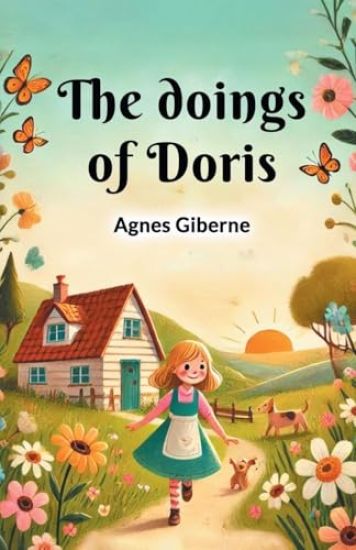
The Doings of Doris by Agnes Giberne is a novel that focuses on the adventures and moral growth of a young girl named Doris. Set in a typical Victorian social environment, the book follows Doris as she navigates her daily life, facing various challenges and learning important lessons along the way. The story highlights Doris's interactions with her family and friends, as well as the responsibilities she takes on in her everyday activities. The narrative emphasizes moral lessons, good behavior, and the importance of qualities like kindness, duty, and responsibility. Through Doris's experiences, the novel explores themes such as the value of selflessness, personal development, and the importance of building strong moral character. It reflects the ideals of Victorian society, where personal growth and virtuous conduct were highly emphasized. Agnes Giberne's writing is warm and gentle, characteristic of the era's literature, and The Doings of Doris serves both as an entertaining story and a means to instill positive values.
The poems included in this poetry collection are remarkable due to magnificent qualities of imagination, and compel our admiration. These ingenious, touching and eloquent poems are written in spontaneous style.
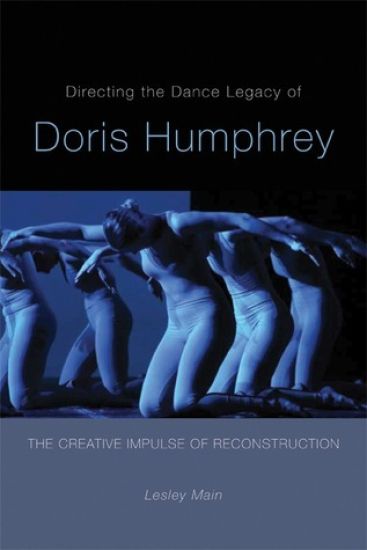
Directing the Dance Legacy of Doris Humphrey looks inside four of Doris Humphrey's major choreographic works - Water Study (1928), The Shakers (1931), With My Red Fires (1936), and Passacaglia (1938) - with an eye to how directorial strategies applied in recent contemporized stagings in the United States and Europe could work across the modern and contemporary dance genre. Author Lesley Main, a seasoned practitioner of Doris Humphrey choreography, stresses to the reader the need to balance respect for classical works from the modern dance repertory with the necessity for fresh directorial strategies, to balance between traditional practices and a creative role for the reconstructor. Drawing upon her own dance experience, Main's book addresses an area of dance research and practice that is becoming increasingly pertinent as the dancer-choreographers of the 20th century modern and contemporary dance are no longer alive to attend to the re-stagings of the body of their works. Insightful and thought-provoking, Directing the Dance Legacy of Doris Humphrey calls for the creation of new forms of directorial practice in dance beyond reconstruction. The radical new practices it proposes to replace the old are sure to spark debate and fresh thinking across the dance field.
Though Doris Lessing never explicitly refers to spirituality in her works, she nonetheless explores spiritual issues throughout her texts. This book examines the prominence of spirituality in her writings. The volume provides both close readings of individual works and sweeping surveys of her nearly fifty year career. The contributors employ a variety of theoretical perspectives such as systems theory, feminist studies of the body and of androgyny, postcolonial theories, mythic prophecy, and intersubjective psychology. The contributors reveal that Lessing's presentation of spirituality is neither rigid nor orthodox neither the product of the split between the body and the soul nor anchored in formal systems of the past or present.The volume is divided into three sections. The first, on spirituality manifested in everyday life, examines individual works in which ordinary experiences such as growing old or struggling to adopt to the difficulties of married life comment on spiritual concerns. Included are chapters on The Diaries of Jane Somers and The Marriages Between Zones Three, Four, and Five. The second section contains chapters on the formation and dissolution of individual identity for characters at different stages of the life cycle and the parallel changes within societies at different stages of cultural collapse. The third part presents chapters on the larger patterns that inform many of Lessing's works, with attention either to individual texts or to clusters of her writings.
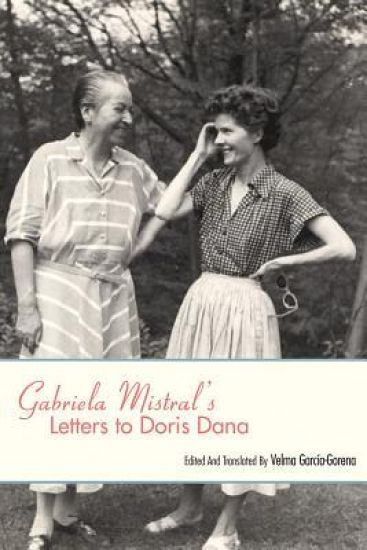
The Nobel Prize–winning poet Gabriela Mistral is celebrated by her native Chile as the “mother of the nation” even though she spent most of her life in Mexico, Europe, and the United States. Throughout the Spanish-speaking world and especially in Chile, Mistral was characterized as a sad, traditionally Catholic spinster. Yet her voluminous correspondence with Doris Dana, long believed to be her secretary, reveals that the two women were lovers from 1948 until Mistral’s death in 1957. These letters, published in Spanish in 2010 and now translated for the first time into English, provide insight into her work as a poet and illuminate her perspectives on politics, especially war and human rights. The correspondence also sheds light on the poet’s personal life and corrects the long-standing misperceptions of her as a lonely, single, heterosexual woman.
The ethical approaches to literature have come into prominence in the twentieth century, calling for a ‘turn to ethics’ in the studies of humanities, in general, and literary studies, in particular. By leading the ethical turn in literature, many theorists proposed a moral-oriented approach to literature, which is still a significant part of literary criticism. The ethical turn in literature has changed the spirit of literary criticism in the direction of virtue and value-based approaches. In this respect, this study scrutinises Doris Lessing’s novels in light of virtue ethics in general and ‘virtue politics,’ ‘care ethics,’ and ‘Sufi virtue ethics’ in particular. Lessing’s connection to virtue ethics, which is implicitly or explicitly reflected in her novels, is examined by giving the panorama of ethical movements whose common point is virtues. This study asserts that Lessing implements an ethical concern in her novels, which is based on her own understanding of virtue ethics.
*Includes pictures. *Includes Day's quotes about her life and career. *Includes a bibliography for further reading. "I've been through everything. I always said I was like those round-bottomed circus dolls - you know, those dolls you could push down and they'd come back up? I've always been like that. I've always said, 'No matter what happens, if I get pushed down, I'm going to come right back up.'" - Doris Day A lot of ink has been spilled covering the lives of history's most influential figures, but how much of the forest is lost for the trees? In Charles River Editors' American Legends series, readers can get caught up to speed on the lives of America's most important men and women in the time it takes to finish a commute, while learning interesting facts long forgotten or never known. It goes without saying that few people have a career spanning 8 decades, yet that claim to fame is occupied by the legendary Doris Day, who got her start in show business as a singer in a big band in 1939 and has not let up since. From there, Day went on to record dozens of albums and hundreds of songs, winning a countless number of awards on the way to being one of the 20th century's most popular singers. One of those recognitions came just a few years ago in 2011, when Day, by that time nearing 90 years old, released a new album that charted 9th in the UK Top 40 Albums, making her the oldest singer ever with that distinction. Her musical career would've been impressive enough, but Doris Day is just as well known today for her film career, which wasn't so bad itself. Though her time in Hollywood was much shorter in comparison to her music career, she nevertheless managed to reach the top in that industry as well. As one of the most popular actresses of the '60s, Day was the biggest box office draw in Hollywood in the early half of that decade, and the only woman among the Top 10. In the process of making nearly 40 movies, Day would eventually be recognized as the highest grossing actress in history, and at the same time she was good enough at her craft to be nominated for an Oscar for Best Actress. Amazingly, despite her incredible success in both music and film, Day eventually found herself bankrupt due to the mismanagement of her money by her husband, compelling her to reinvent herself as the host of a popular television sitcom. Perhaps not surprisingly, Day excelled in this field as well, making The Doris Day Show one of the most popular shows on television for several years at the end of the '60s. American Legends: The Life of Doris Day examines the life and career of one of the entertainment industry's biggest stars. Along with pictures of important people, places, and events, you will learn about Doris Day like never before, in no time at all.
*Includes pictures. *Includes Day's quotes about her life and career. *Includes a bibliography for further reading. "I've been through everything. I always said I was like those round-bottomed circus dolls - you know, those dolls you could push down and they'd come back up? I've always been like that. I've always said, 'No matter what happens, if I get pushed down, I'm going to come right back up.'" - Doris Day A lot of ink has been spilled covering the lives of history's most influential figures, but how much of the forest is lost for the trees? In Charles River Editors' American Legends series, readers can get caught up to speed on the lives of America's most important men and women in the time it takes to finish a commute, while learning interesting facts long forgotten or never known. It goes without saying that few people have a career spanning 8 decades, yet that claim to fame is occupied by the legendary Doris Day, who got her start in show business as a singer in a big band in 1939 and has not let up since. From there, Day went on to record dozens of albums and hundreds of songs, winning a countless number of awards on the way to being one of the 20th century's most popular singers. One of those recognitions came just a few years ago in 2011, when Day, by that time nearing 90 years old, released a new album that charted 9th in the UK Top 40 Albums, making her the oldest singer ever with that distinction. Her musical career would've been impressive enough, but Doris Day is just as well known today for her film career, which wasn't so bad itself. Though her time in Hollywood was much shorter in comparison to her music career, she nevertheless managed to reach the top in that industry as well. As one of the most popular actresses of the '60s, Day was the biggest box office draw in Hollywood in the early half of that decade, and the only woman among the Top 10. In the process of making nearly 40 movies, Day would eventually be recognized as the highest grossing actress in history, and at the same time she was good enough at her craft to be nominated for an Oscar for Best Actress. Amazingly, despite her incredible success in both music and film, Day eventually found herself bankrupt due to the mismanagement of her money by her husband, compelling her to reinvent herself as the host of a popular television sitcom. Perhaps not surprisingly, Day excelled in this field as well, making The Doris Day Show one of the most popular shows on television for several years at the end of the '60s. American Legends: The Life of Doris Day examines the life and career of one of the entertainment industry's biggest stars. Along with pictures of important people, places, and events, you will learn about Doris Day like never before, in no time at all.
A comprehensive study guide offering in-depth explanation, essay, and test prep for Doris Lessing's The Golden Notebook, regarded by The Oxford Companion to English Literature as one of the key texts of the women's movement of the 1960s. As a uniquely structured four-part novel published in 1962, The Golden Notebook focuses on the idea of fragmentation, both in the structure of the book and the content. Moreover, the novel discusses big picture topics such as mental health, communism, and women's sexuality. This Bright Notes Study Guide explores the context and history of Lessing's classic work, helping students to thoroughly explore the reasons it has stood the literary test of time. Each Bright Notes Study Guide contains: - Introductions to the Author and the Work - Character Summaries - Plot Guides - Section and Chapter Overviews - Test Essay and Study Q&As The Bright Notes Study Guide series offers an in-depth tour of more than 275 classic works of literature, exploring characters, critical commentary, historical background, plots, and themes. This set of study guides encourages readers to dig deeper in their understanding by including essay questions and answers as well as topics for further research.