
Kirjahaku
Etsi kirjoja tekijän nimen, kirjan nimen tai ISBN:n perusteella.
1000 tulosta hakusanalla Eleanor Coerr

Eleanor's Pocket Posh Journal, Chevron
Andrews McMeel Publishing
2016
pokkari

Eleanor's Pocket Posh Journal, Mum
Andrews McMeel Publishing
2016
pokkari
Eleanor's Pocket Posh Journal, Polka Dot
Andrews McMeel Publishing
2016
pokkari
Eleanor's Pocket Posh Journal, Tulip
Andrews McMeel Publishing
2016
pokkari
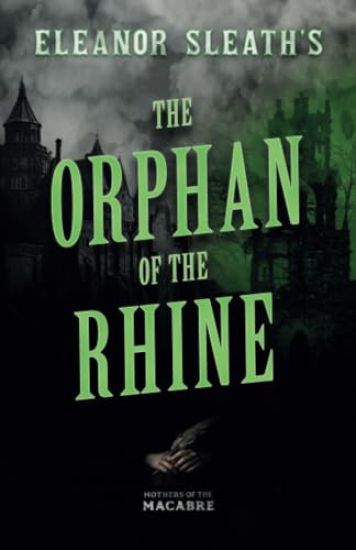
A gripping novel of romance, suspense, and the supernatural, The Orphan of the Rhine follows young Julie de Rubine as she unravels the haunting secrets of her past. Making a fateful promise to her dying mother, Julie resigns herself to marrying a Catholic man. Yet, as she enters the fashionable world of her aunt, her new guardian, she soon discovers that her life is not her own. Refusing multiple marriage proposals, Julie fights to control her own destiny and remain faithful to her mother's wishes. This volume is part of the Mothers of the Macabre series, celebrating the gothic horror masterpieces of pioneering women writers who played a pivotal role in shaping and advancing the genre. First published in 1798, The Orphan of the Rhine is referenced in Jane Austen's Northanger Abbey (1817) as an exemplary macabre novel. From gloomy castle chambers to picturesque ramparts, Eleanor Sleath weaves a tale of romance and sensibility in this classic gothic horror.

Just David (1916) children's NOVEL by Eleanor H. Porter (Children's Classics)
Eleanor H. Porter
Createspace Independent Publishing Platform
2016
nidottu
Dawn (1919) A NOVEL by Eleanor H. Porter (Original Version)
Eleanor H. Porter
Createspace Independent Publishing Platform
2016
nidottu

Oh Money! Money!.by Eleanor H. Porter (Classics)
Eleanor H. Porter
Createspace Independent Publishing Platform
2016
nidottu
Mary Marie.NOVEL by Eleanor H. Porter (Twentieth Century Classics)
Eleanor H. Porter
Createspace Independent Publishing Platform
2016
nidottu

Pollyanna. NOVEL ( a best-selling 1913 novel ) by Eleanor H. Porter.INCLUDE: Pollyanna Grows Up (1915) by Eleanor H. Porter ( children's literature )
Eleanor H. Porter
Createspace Independent Publishing Platform
2016
nidottu
Pollyanna is a best-selling 1913 novel by Eleanor H. Porter that is now considered a classic of children's literature, with the title character's name becoming a popular term for someone with the same very optimistic outlook. 1] Also, the subconscious bias towards the positive is often described as the Pollyanna principle. The book was such a success that Porter soon produced a sequel, Pollyanna Grows Up (1915). Eleven more Pollyanna sequels, known as "Glad Books", were later published, most of them written by Elizabeth Borton or Harriet Lummis Smith. Further sequels followed, including Pollyanna Plays the Game by Colleen L. Reece, published in 1997. Pollyanna has been adapted for film several times. Some of the best known are Disney's 1960 version starring child actress Hayley Mills, who won a special Oscar for the role, and the 1920 version starring Mary Pickford.

Pollyanna Grows Up (1915) by: Eleanor H. Porter ( children's NOVEL )
Eleanor H. Porter
Createspace Independent Publishing Platform
2017
nidottu

Pollyanna Grows Up (1915) by: Eleanor H. Porter ( children's NOVEL )
Eleanor H. Porter
Createspace Independent Publishing Platform
2017
nidottu
Pollyanna is a best-selling 1913 novel by Eleanor H. Porter that is now considered a classic of children's literature, with the title character's name becoming a popular term for someone with the same very optimistic outlook. Also, the subconscious bias towards the positive is often described as the Pollyanna principle. The book was such a success that Porter soon produced a sequel, Pollyanna Grows Up (1915). Eleven more Pollyanna sequels, known as "Glad Books", were later published, most of them written by Elizabeth Borton or Harriet Lummis Smith. Further sequels followed, including Pollyanna Plays the Game by Colleen L. Reece, published in 1997. Pollyanna has been adapted for film several times. Some of the best known are Disney's 1960 version starring child actress Hayley Mills, who won a special Oscar for the role, and the 1920 version starring Mary Pickford.
Eleanor, the Dragon Witch & the Time Twisting Mirror
Amanda Baker
Createspace Independent Publishing Platform
2017
pokkari


Eleanor's victory: a novel By: Mary Elizabeth Braddon: Mary Elizabeth Braddon was a British Victorian era popular novelist.
Mary Elizabeth Braddon
Createspace Independent Publishing Platform
2017
nidottu
Mary Elizabeth Braddon (4 October 1835 - 4 February 1915) was an English popular novelist of the Victorian era. She is best known for her 1862 sensation novel Lady Audley's Secret. Life and works: Born in London, Mary Elizabeth Braddon was privately educated. Her mother Fanny separated from her father Henry in 1840, when Mary was five. When Mary was ten years old, her brother Edward Braddon left for India and later Australia, where he became Premier of Tasmania. Mary worked as an actress for three years when she was befriended by Clara and Adelaide Biddle. They were only playing minor roles but Braddon was able to support herself and her mother. Adelaide noted that Braddon's interest in acting waned as she took an interest in writing novels. In 1860, Mary met John Maxwell (1824-1895), a publisher of periodicals. She started living with him in 1861. However, Maxwell was already married with five children, and his wife was living in an asylum in Ireland. Mary acted as stepmother to his children until 1874, when Maxwell's wife died and they were able to get married. She had six children by him, including the novelist William Babington Maxwell. Braddon was a prolific writer, producing more than 80 novels with inventive plots. The most famous is Lady Audley's Secret (1862), which won her recognition, and a fortune as a bestseller.It has remained in print since its publication and been dramatised and filmed several times. R. D. Blackmore's anonymous sensation novel Clara Vaughan (1864) was wrongly attributed to her by some critics. Braddon wrote several works of supernatural fiction, including the pact with the devil story Gerald, or the World, the Flesh and the Devil (1891), and the ghost stories "The Cold Embrace", "Eveline's Visitant" and "At Chrighton Abbey". From the 1930s onwards, these stories were often anthologised in collections such as Montague Summers's The Supernatural Omnibus (1931) and Fifty Years of Ghost Stories (1935). Braddon's legacy is tied to the sensation fiction of the 1860s. Braddon also founded Belgravia magazine (1866), which presented readers with serialised sensation novels, poems, travel narratives and biographies, as well as essays on fashion, history and science. The magazine was accompanied by lavish illustrations and offered readers a source of literature at an affordable cost. She also edited Temple Bar magazine. She died on 4 February 1915 in Richmond (at the time a borough in Surrey, but now part of Greater London), and is interred in Richmond Cemetery. Her home had been Lichfield House in the centre of the town, which was replaced by a block of flats in 1936, Lichfield Court, now listed. She has a plaque in Richmond parish church which calls her simply 'Miss Braddon'. A number of streets in the area are named after characters in her novels - her husband was a property developer in the area. There is a critical essay on Braddon's work in Michael Sadleir's book Things Past (1944). In 2014 the Mary Elizabeth Braddon Association was founded to pay tribute to Braddon's life and work.