Kirjojen hintavertailu. Mukana 11 627 220 kirjaa ja 12 kauppaa.

Kirjahaku

Etsi kirjoja tekijän nimen, kirjan nimen tai ISBN:n perusteella.

1000 tulosta hakusanalla Elizabeth F. Fideler

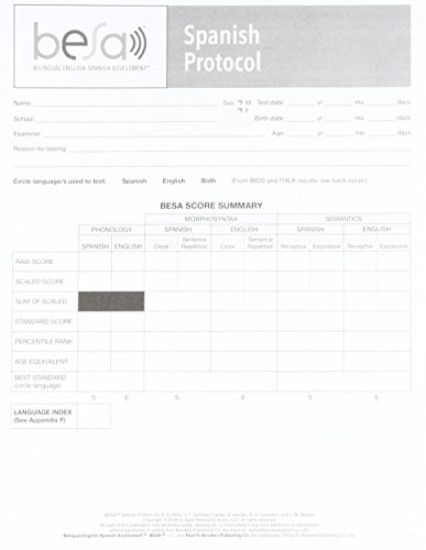
Bilingual English-Spanish Assessment™ (BESA™): Spanish Protocol

Bilingual English-Spanish Assessment™ (BESA™): Spanish Protocol

Elizabeth D. Peña; Vera F. Gutierrez-Clellen; Aquiles Iglesias; Brian A. Goldstein; Lisa Bedore

Brookes Publishing Co
2018
muu
The Bilingual English-Spanish Assessment (BESA) was developed in response to the need for valid, reliable instruments for assessment of speech and language ability, along a continuum, in English-Spanish bilingual children ages 4 through 6 years.The BESA is a comprehensive assessment of a child’s speech and language abilities in English and Spanish. Two ancillary questionnaires (BIOS and ITALK) can be used to document language exposure and use, allowing the examiner to develop a profile of any parent and teacher concerns. BESA subtests address the domains of phonology, morphosyntax, and semantics separately for both Spanish and English. There are three standardized and norm-referenced subtests addressing language ability, and one criterion-referenced activity allowing observation of pragmatic language. Administration time varies depending on whether or not both languages are tested and which subtests are included. Administration takes between one hour (for one language) and two hours (for both languages).The BIOS is typically completed as part of an interview by the examiner. In this survey, parents are asked about the language exposure history of the child. This information helps the examiner know when and in what context each of the child’s two languages were used on a year-to-year basis. In addition, parents and teachers are asked what language the child hears and uses during a typical school day, and during a typical weekend day on an hour-by-hour basis. This information provides clinicians with information about relative use and exposure to each language and can help guide whether to test children in Spanish, English, or both. The parent survey (BIOS-Home) takes 10 to 15 minutes to complete; the teacher survey (BIOS-School) can be completed in 5 to 10 minutes.The ITALK is completed by the examiner as a parent and teacher interview. The ITALK items address relative use of a child’s two languages and five areas of speech and language development in Spanish and English (vocabulary, grammar, sentence production, comprehension, and phonology). Parents and teachers are asked to identify the perceived level of the child's performance in each language. This inventory provides a brief indicator of relative language use. It also provides a description of parent and teacher concern and can be used to guide development of the assessment strategy. Results of the inventory can be used to interpret diagnostic results from BESA or other language tests. The ITALK can be completed in 10 minutes or less.The Pragmatics activity is based on Fey’s (1986) model of assertiveness and responsiveness. In an interactive format, children are asked to “help wrap a present” with the examiner. Through this realistic situation, obligatory contexts are set up to elicit different assertive and responsive acts. The Pragmatics activity utilizes English, Spanish, or both languages together (via code-switching) depending on the child’s preferred language of interaction. The activity should be used to identify children who may encounter difficulties in situations that require the children to be active participants (e.g., classroom). If administered at the beginning of a battery of tests, the Pragmatics activity provides an excellent opportunity to establish rapport with the child and will also provide clinicians with an indication of how collaborative and interactive the child will be during the rest of the assessment. This activity takes 5-10 minutes to complete.The Phonology subtest is a single-word phonological assessment designed primarily to differentially diagnose typical from atypical phonological skills in Spanish-English bilingual children. Analyses are also included that allow the examiner to profile the phonological skills in these children. The assessment includes two measures. The Spanish measure assesses phonological production using 28 Spanish words. The English measure assesses phonological production using 31 English words. The Phonology subtest takes 10 to 15 minutes to administer in each language, depending on the individual child (20 to 30 minutes total).The Morphosyntax subtest employs cloze and sentence repetition tasks to target grammatical morphemes and sentence structures that were predicted to be difficult for children with language impairment in English or Spanish. Forms tested in English include plural –s, possessive –s, past and present tense, third-person singular, progressives, copulas, auxiliary do negatives, and passives, as well as complex verb forms, conjunctions, and embedded prepositions and noun phrases. The English Morphosyntax Subtest has 24 cloze items and 9 sentence repetitions items.Forms tested in Spanish include articles, progressives, clitics, subjunctives, preterite, complex verb forms, and conjunctions. The Spanish Morphosyntax Subtest has 15 cloze items and 10 sentence repetitions items.For each language, a grammatical cloze subscore, a sentence repetition subscore, and a total score that is a composite of those two are derived. The morphosyntax test takes approximately 15 minutes to administer in each language (30 minutes total).The Semantics subtest targets six tasks: analogies, characteristic properties, categorization, functions, linguistic concepts, and similarities and differences. These six item types were based on the literature describing acquisition of semantic breadth and depth in order to tap into how children organize and access their lexical system (Peña, Bedore, & Rappazzo, 2003). The English Semantics subtest has a total of 25 items: 10 receptive and 15 expressive. The Spanish Semantics subtest also has 25 items, 12 receptive and 13 expressive. Scoring allows for code-mixing—giving children credit for a correct response in either language. Subscores are provided for semantics receptive and semantics expressive, as well as a total semantics score for each language. The Semantics subtest takes about 15 minutes to administer in each language (30 minutes total).The BESA is designed to be used with children who speak English, Spanish, or both languages. The BESA subtests are psychometrically sound and yield scaled and standard scores for each of the domain tests (phonology, morphosyntax, and semantics). The questionnaires provide criterion-based guidelines to determine language(s) of testing and to develop an assessment strategy. The tests can be used together for a complete speech and language battery or the examiner may select tests specific to the diagnostic question. Presently, the test is appropriate for children between the ages of 4;0 and 6;11. The BESA can be used (a) to identify language impairment in bilingual and monolingual Latino children, (b) to document progress in speech and language related to intervention, (c) to document the dominant language in each domain including morphosyntax, semantics, and phonology, and (d) in research studies of bilingual children with and without language impairment.The BESA is specifically designed to assess the speech and language of English-Spanish bilingual children’s two languages. The primary use of the BESA is to identify phonological and/or language impairment in bilingual and EL children via a standardized protocol. The objective scores obtained on the BESA across three domains can be used in combination with clinical observations, language samples, as well as with other standardized measures to identify children with speech and/or language impairment. Through use of a combination of BESA subtests, clinicians can document children’s speech and language strengths and needs.A second use of the BESA is to monitor children’s progress in speech and language. After initiation of a speech and language intervention program, children’s progress should be regularly documented. It is recommended that daily probes be used to monitor children’s session-to-session progress. This information should be used to make decisions about the direction of the intervention. The BESA is sensitive to year-to-year changes in children’s speech and language growth and the particular language in which progress is being made. Thus, in addition to the more sensitive measures of daily progress, the BESA can be administered at broader intervals (e.g., annually or semi-annually) to gauge progress in a specific program of intervention, to document continued need for intervention, and to document achievement of treatment goals for exiting services.Documentation of a bilingual’s dominant language is a challenge in school settings. Many children who have exposure to more than one language demonstrate mixed dominance, whereby they perform higher in one language in one domain, but higher in the other language in a different domain. It is therefore important to know what a child’s relative dominance is across different domains of speech and language. This information can be useful for planning intervention, as well as for planning educational programming for bilingual children. Together, the BIOS-Home and BIOS-School provide an objective measure of children’s input and output of Spanish and English. This information helps speech-language pathologists, parents, teachers, and administrators know how much the child hears and uses each language and in what contexts. This information is independent of performance, which can be affected by child characteristics such as language ability. In addition to the BIOS, the Spanish and English standardized test scores can be compared directly for phonology, morphosyntax, and semantics to determine a child’s best language for a particular domain. If children’s standard scores across domains are within 5 points of each other, we consider them to be balanced.There are a number of ways that the BESA subtests can be used in research. ITALK can be used to gain parent and teacher observations about the child’s performance across five domains of speech and language in Spanish and English as part of qualifying data for a study. BIOS can be used to document weekly input and output in Spanish and English as a way of grouping children by language experience and/or by year of first exposure. For bilingual children with language impairment, BIOS provides a measure that is independent of their test performance on speech and language tasks.The three domain subtests can be used together or independently to assess children’s speech and language. These can be used to qualify children for a study or to group children by ability. As of this writing, the authors have conducted and published several studies with the longer, experimental versions of BESA subtests. In addition, researchers across the country have used the experimental versions of BESA in studies of bilingual Spanish-English speakers. Researchers in Spanish-speaking countries are in the process of using the Spanish version of these measures in research studies.
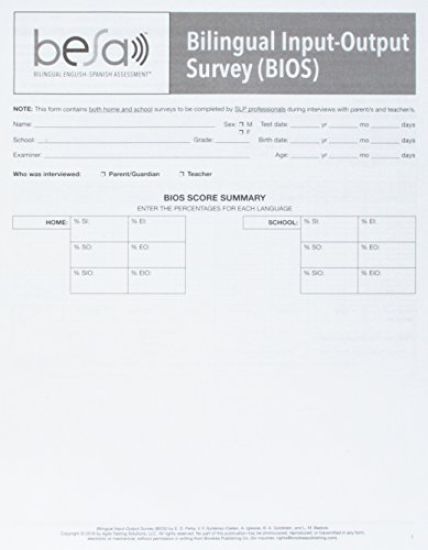
Bilingual English-Spanish Assessment™ (BESA™): Bilingual Input-Output Surveys (BIOS)

Bilingual English-Spanish Assessment™ (BESA™): Bilingual Input-Output Surveys (BIOS)

Elizabeth D. Peña; Vera F. Gutierrez-Clellen; Aquiles Iglesias; Brian A. Goldstein; Lisa Bedore

Brookes Publishing Co
2018
muu
The Bilingual English-Spanish Assessment (BESA) was developed in response to the need for valid, reliable instruments for assessment of speech and language ability, along a continuum, in English-Spanish bilingual children ages 4 through 6 years.The BESA is a comprehensive assessment of a child’s speech and language abilities in English and Spanish. Two ancillary questionnaires (BIOS and ITALK) can be used to document language exposure and use, allowing the examiner to develop a profile of any parent and teacher concerns. BESA subtests address the domains of phonology, morphosyntax, and semantics separately for both Spanish and English. There are three standardized and norm-referenced subtests addressing language ability, and one criterion-referenced activity allowing observation of pragmatic language. Administration time varies depending on whether or not both languages are tested and which subtests are included. Administration takes between one hour (for one language) and two hours (for both languages).The BIOS is typically completed as part of an interview by the examiner. In this survey, parents are asked about the language exposure history of the child. This information helps the examiner know when and in what context each of the child’s two languages were used on a year-to-year basis. In addition, parents and teachers are asked what language the child hears and uses during a typical school day, and during a typical weekend day on an hour-by-hour basis. This information provides clinicians with information about relative use and exposure to each language and can help guide whether to test children in Spanish, English, or both. The parent survey (BIOS-Home) takes 10 to 15 minutes to complete; the teacher survey (BIOS-School) can be completed in 5 to 10 minutes.The ITALK is completed by the examiner as a parent and teacher interview. The ITALK items address relative use of a child’s two languages and five areas of speech and language development in Spanish and English (vocabulary, grammar, sentence production, comprehension, and phonology). Parents and teachers are asked to identify the perceived level of the child's performance in each language. This inventory provides a brief indicator of relative language use. It also provides a description of parent and teacher concern and can be used to guide development of the assessment strategy. Results of the inventory can be used to interpret diagnostic results from BESA or other language tests. The ITALK can be completed in 10 minutes or less.The Pragmatics activity is based on Fey’s (1986) model of assertiveness and responsiveness. In an interactive format, children are asked to “help wrap a present” with the examiner. Through this realistic situation, obligatory contexts are set up to elicit different assertive and responsive acts. The Pragmatics activity utilizes English, Spanish, or both languages together (via code-switching) depending on the child’s preferred language of interaction. The activity should be used to identify children who may encounter difficulties in situations that require the children to be active participants (e.g., classroom). If administered at the beginning of a battery of tests, the Pragmatics activity provides an excellent opportunity to establish rapport with the child and will also provide clinicians with an indication of how collaborative and interactive the child will be during the rest of the assessment. This activity takes 5-10 minutes to complete.The Phonology subtest is a single-word phonological assessment designed primarily to differentially diagnose typical from atypical phonological skills in Spanish-English bilingual children. Analyses are also included that allow the examiner to profile the phonological skills in these children. The assessment includes two measures. The Spanish measure assesses phonological production using 28 Spanish words. The English measure assesses phonological production using 31 English words. The Phonology subtest takes 10 to 15 minutes to administer in each language, depending on the individual child (20 to 30 minutes total).The Morphosyntax subtest employs cloze and sentence repetition tasks to target grammatical morphemes and sentence structures that were predicted to be difficult for children with language impairment in English or Spanish. Forms tested in English include plural –s, possessive –s, past and present tense, third-person singular, progressives, copulas, auxiliary do negatives, and passives, as well as complex verb forms, conjunctions, and embedded prepositions and noun phrases. The English Morphosyntax Subtest has 24 cloze items and 9 sentence repetitions items.Forms tested in Spanish include articles, progressives, clitics, subjunctives, preterite, complex verb forms, and conjunctions. The Spanish Morphosyntax Subtest has 15 cloze items and 10 sentence repetitions items.For each language, a grammatical cloze subscore, a sentence repetition subscore, and a total score that is a composite of those two are derived. The morphosyntax test takes approximately 15 minutes to administer in each language (30 minutes total).The Semantics subtest targets six tasks: analogies, characteristic properties, categorization, functions, linguistic concepts, and similarities and differences. These six item types were based on the literature describing acquisition of semantic breadth and depth in order to tap into how children organize and access their lexical system (Peña, Bedore, & Rappazzo, 2003). The English Semantics subtest has a total of 25 items: 10 receptive and 15 expressive. The Spanish Semantics subtest also has 25 items, 12 receptive and 13 expressive. Scoring allows for code-mixing—giving children credit for a correct response in either language. Subscores are provided for semantics receptive and semantics expressive, as well as a total semantics score for each language. The Semantics subtest takes about 15 minutes to administer in each language (30 minutes total).The BESA is designed to be used with children who speak English, Spanish, or both languages. The BESA subtests are psychometrically sound and yield scaled and standard scores for each of the domain tests (phonology, morphosyntax, and semantics). The questionnaires provide criterion-based guidelines to determine language(s) of testing and to develop an assessment strategy. The tests can be used together for a complete speech and language battery or the examiner may select tests specific to the diagnostic question. Presently, the test is appropriate for children between the ages of 4;0 and 6;11. The BESA can be used (a) to identify language impairment in bilingual and monolingual Latino children, (b) to document progress in speech and language related to intervention, (c) to document the dominant language in each domain including morphosyntax, semantics, and phonology, and (d) in research studies of bilingual children with and without language impairment.The BESA is specifically designed to assess the speech and language of English-Spanish bilingual children’s two languages. The primary use of the BESA is to identify phonological and/or language impairment in bilingual and EL children via a standardized protocol. The objective scores obtained on the BESA across three domains can be used in combination with clinical observations, language samples, as well as with other standardized measures to identify children with speech and/or language impairment. Through use of a combination of BESA subtests, clinicians can document children’s speech and language strengths and needs.A second use of the BESA is to monitor children’s progress in speech and language. After initiation of a speech and language intervention program, children’s progress should be regularly documented. It is recommended that daily probes be used to monitor children’s session-to-session progress. This information should be used to make decisions about the direction of the intervention. The BESA is sensitive to year-to-year changes in children’s speech and language growth and the particular language in which progress is being made. Thus, in addition to the more sensitive measures of daily progress, the BESA can be administered at broader intervals (e.g., annually or semi-annually) to gauge progress in a specific program of intervention, to document continued need for intervention, and to document achievement of treatment goals for exiting services.Documentation of a bilingual’s dominant language is a challenge in school settings. Many children who have exposure to more than one language demonstrate mixed dominance, whereby they perform higher in one language in one domain, but higher in the other language in a different domain. It is therefore important to know what a child’s relative dominance is across different domains of speech and language. This information can be useful for planning intervention, as well as for planning educational programming for bilingual children. Together, the BIOS-Home and BIOS-School provide an objective measure of children’s input and output of Spanish and English. This information helps speech-language pathologists, parents, teachers, and administrators know how much the child hears and uses each language and in what contexts. This information is independent of performance, which can be affected by child characteristics such as language ability. In addition to the BIOS, the Spanish and English standardized test scores can be compared directly for phonology, morphosyntax, and semantics to determine a child’s best language for a particular domain. If children’s standard scores across domains are within 5 points of each other, we consider them to be balanced.There are a number of ways that the BESA subtests can be used in research. ITALK can be used to gain parent and teacher observations about the child’s performance across five domains of speech and language in Spanish and English as part of qualifying data for a study. BIOS can be used to document weekly input and output in Spanish and English as a way of grouping children by language experience and/or by year of first exposure. For bilingual children with language impairment, BIOS provides a measure that is independent of their test performance on speech and language tasks.The three domain subtests can be used together or independently to assess children’s speech and language. These can be used to qualify children for a study or to group children by ability. As of this writing, the authors have conducted and published several studies with the longer, experimental versions of BESA subtests. In addition, researchers across the country have used the experimental versions of BESA in studies of bilingual Spanish-English speakers. Researchers in Spanish-speaking countries are in the process of using the Spanish version of these measures in research studies.
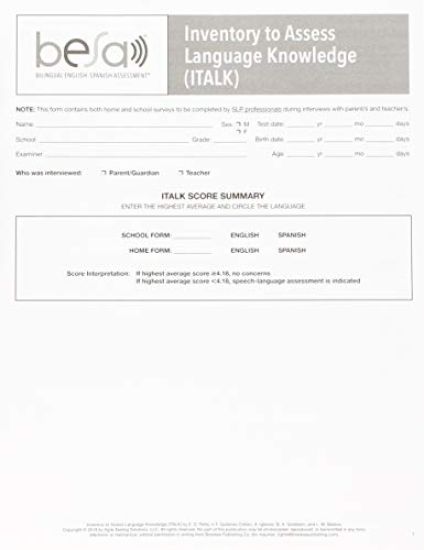
Bilingual English-Spanish Assessment™ (BESA™): Inventory to Assess Language Knowledge (ITLAK)

Bilingual English-Spanish Assessment™ (BESA™): Inventory to Assess Language Knowledge (ITLAK)

Elizabeth D. Peña; Vera F. Gutierrez-Clellen; Aquiles Iglesias; Brian A. Goldstein; Lisa Bedore

Brookes Publishing Co
2018
muu
The Bilingual English-Spanish Assessment (BESA) was developed in response to the need for valid, reliable instruments for assessment of speech and language ability, along a continuum, in English-Spanish bilingual children ages 4 through 6 years.The BESA is a comprehensive assessment of a child’s speech and language abilities in English and Spanish. Two ancillary questionnaires (BIOS and ITALK) can be used to document language exposure and use, allowing the examiner to develop a profile of any parent and teacher concerns. BESA subtests address the domains of phonology, morphosyntax, and semantics separately for both Spanish and English. There are three standardized and norm-referenced subtests addressing language ability, and one criterion-referenced activity allowing observation of pragmatic language. Administration time varies depending on whether or not both languages are tested and which subtests are included. Administration takes between one hour (for one language) and two hours (for both languages).The BIOS is typically completed as part of an interview by the examiner. In this survey, parents are asked about the language exposure history of the child. This information helps the examiner know when and in what context each of the child’s two languages were used on a year-to-year basis. In addition, parents and teachers are asked what language the child hears and uses during a typical school day, and during a typical weekend day on an hour-by-hour basis. This information provides clinicians with information about relative use and exposure to each language and can help guide whether to test children in Spanish, English, or both. The parent survey (BIOS-Home) takes 10 to 15 minutes to complete; the teacher survey (BIOS-School) can be completed in 5 to 10 minutes.The ITALK is completed by the examiner as a parent and teacher interview. The ITALK items address relative use of a child’s two languages and five areas of speech and language development in Spanish and English (vocabulary, grammar, sentence production, comprehension, and phonology). Parents and teachers are asked to identify the perceived level of the child's performance in each language. This inventory provides a brief indicator of relative language use. It also provides a description of parent and teacher concern and can be used to guide development of the assessment strategy. Results of the inventory can be used to interpret diagnostic results from BESA or other language tests. The ITALK can be completed in 10 minutes or less.The Pragmatics activity is based on Fey’s (1986) model of assertiveness and responsiveness. In an interactive format, children are asked to “help wrap a present” with the examiner. Through this realistic situation, obligatory contexts are set up to elicit different assertive and responsive acts. The Pragmatics activity utilizes English, Spanish, or both languages together (via code-switching) depending on the child’s preferred language of interaction. The activity should be used to identify children who may encounter difficulties in situations that require the children to be active participants (e.g., classroom). If administered at the beginning of a battery of tests, the Pragmatics activity provides an excellent opportunity to establish rapport with the child and will also provide clinicians with an indication of how collaborative and interactive the child will be during the rest of the assessment. This activity takes 5-10 minutes to complete.The Phonology subtest is a single-word phonological assessment designed primarily to differentially diagnose typical from atypical phonological skills in Spanish-English bilingual children. Analyses are also included that allow the examiner to profile the phonological skills in these children. The assessment includes two measures. The Spanish measure assesses phonological production using 28 Spanish words. The English measure assesses phonological production using 31 English words. The Phonology subtest takes 10 to 15 minutes to administer in each language, depending on the individual child (20 to 30 minutes total).The Morphosyntax subtest employs cloze and sentence repetition tasks to target grammatical morphemes and sentence structures that were predicted to be difficult for children with language impairment in English or Spanish. Forms tested in English include plural –s, possessive –s, past and present tense, third-person singular, progressives, copulas, auxiliary do negatives, and passives, as well as complex verb forms, conjunctions, and embedded prepositions and noun phrases. The English Morphosyntax Subtest has 24 cloze items and 9 sentence repetitions items. Forms tested in Spanish include articles, progressives, clitics, subjunctives, preterite, complex verb forms, and conjunctions. The Spanish Morphosyntax Subtest has 15 cloze items and 10 sentence repetitions items.For each language, a grammatical cloze subscore, a sentence repetition subscore, and a total score that is a composite of those two are derived. The morphosyntax test takes approximately 15 minutes to administer in each language (30 minutes total).The Semantics subtest targets six tasks: analogies, characteristic properties, categorization, functions, linguistic concepts, and similarities and differences. These six item types were based on the literature describing acquisition of semantic breadth and depth in order to tap into how children organize and access their lexical system (Peña, Bedore, & Rappazzo, 2003). The English Semantics subtest has a total of 25 items: 10 receptive and 15 expressive. The Spanish Semantics subtest also has 25 items, 12 receptive and 13 expressive. Scoring allows for code-mixing—giving children credit for a correct response in either language. Subscores are provided for semantics receptive and semantics expressive, as well as a total semantics score for each language. The Semantics subtest takes about 15 minutes to administer in each language (30 minutes total).The BESA is designed to be used with children who speak English, Spanish, or both languages. The BESA subtests are psychometrically sound and yield scaled and standard scores for each of the domain tests (phonology, morphosyntax, and semantics). The questionnaires provide criterion-based guidelines to determine language(s) of testing and to develop an assessment strategy. The tests can be used together for a complete speech and language battery or the examiner may select tests specific to the diagnostic question. Presently, the test is appropriate for children between the ages of 4;0 and 6;11. The BESA can be used (a) to identify language impairment in bilingual and monolingual Latino children, (b) to document progress in speech and language related to intervention, (c) to document the dominant language in each domain including morphosyntax, semantics, and phonology, and (d) in research studies of bilingual children with and without language impairment.The BESA is specifically designed to assess the speech and language of English-Spanish bilingual children’s two languages. The primary use of the BESA is to identify phonological and/or language impairment in bilingual and EL children via a standardized protocol. The objective scores obtained on the BESA across three domains can be used in combination with clinical observations, language samples, as well as with other standardized measures to identify children with speech and/or language impairment. Through use of a combination of BESA subtests, clinicians can document children’s speech and language strengths and needs.A second use of the BESA is to monitor children’s progress in speech and language. After initiation of a speech and language intervention program, children’s progress should be regularly documented. It is recommended that daily probes be used to monitor children’s session-to-session progress. This information should be used to make decisions about the direction of the intervention. The BESA is sensitive to year-to-year changes in children’s speech and language growth and the particular language in which progress is being made. Thus, in addition to the more sensitive measures of daily progress, the BESA can be administered at broader intervals (e.g., annually or semi-annually) to gauge progress in a specific program of intervention, to document continued need for intervention, and to document achievement of treatment goals for exiting services.Documentation of a bilingual’s dominant language is a challenge in school settings. Many children who have exposure to more than one language demonstrate mixed dominance, whereby they perform higher in one language in one domain, but higher in the other language in a different domain. It is therefore important to know what a child’s relative dominance is across different domains of speech and language. This information can be useful for planning intervention, as well as for planning educational programming for bilingual children. Together, the BIOS-Home and BIOS-School provide an objective measure of children’s input and output of Spanish and English. This information helps speech-language pathologists, parents, teachers, and administrators know how much the child hears and uses each language and in what contexts. This information is independent of performance, which can be affected by child characteristics such as language ability. In addition to the BIOS, the Spanish and English standardized test scores can be compared directly for phonology, morphosyntax, and semantics to determine a child’s best language for a particular domain. If children’s standard scores across domains are within 5 points of each other, we consider them to be balanced.There are a number of ways that the BESA subtests can be used in research. ITALK can be used to gain parent and teacher observations about the child’s performance across five domains of speech and language in Spanish and English as part of qualifying data for a study. BIOS can be used to document weekly input and output in Spanish and English as a way of grouping children by language experience and/or by year of first exposure. For bilingual children with language impairment, BIOS provides a measure that is independent of their test performance on speech and language tasks.The three domain subtests can be used together or independently to assess children’s speech and language. These can be used to qualify children for a study or to group children by ability. As of this writing, the authors have conducted and published several studies with the longer, experimental versions of BESA subtests. In addition, researchers across the country have used the experimental versions of BESA in studies of bilingual Spanish-English speakers. Researchers in Spanish-speaking countries are in the process of using the Spanish version of these measures in research studies.

Poison Candy

Poison Candy

Elizabeth Parker; Mark Ebner; F. Lee Bailey

BenBella Books
2014
sidottu
In August 2009, former madam Dalia Dippolito conspired with a hit man to arrange her ex-con husband's murder. Days later, it seemed as if all had gone according to plan. The beautiful, young Dalia came home from her health club to an elaborate crime scene, complete with yellow tape outlining her townhome and police milling about. When Sgt. Frank Ranzie of the Boynton Beach, Florida, police informed her of her husband Michael's apparent murder, the newlywed Dippolito can be seen on surveillance video collapsing into the cop's arms, like any loving wife would--or any wife who was pretending to be loving would. The only thing missing from her performance were actual tears...And the only thing missing from the murder scene was an actual murder. Tipped off by one of Dalia's lovers, an undercover detective posing as a hit man met with Dalia to plot her husband's murder while his team planned, then staged the murder scenario--brazenly inviting the reality TV show Cops along for the ride. The Cops video went viral, sparking a media frenzy: twisted tales of illicit drugs, secret boyfriends, sex-for-hire, a cuckolded former con man, and the defense's ludicrous claim that the entire hit had been staged by the intended victim for reality TV fame. In Poison Candy, case prosecutor Elizabeth Parker teams with bestselling crime writer Mark Ebner take you behind and beyond the courtroom scenes with astonishing never-before-revealed facts, whipsaw plot twists, and exclusive photos and details far too lurid for the trial that led to 20 years in state prison for Dalia Dippolito.
Midnight in the Graveyard

Midnight in the Graveyard

Thomas F. Monteleone; Elizabeth Massie; Kealan Patrick Burke

Silver Shamrock Publishing
2019
nidottu
Midnight. Some call it the witching hour. Others call it the devil's hour. Here in the graveyard, midnight is a very special time. It is a time when ghostly spirits are at their strongest, when the veil between our world and theirs is at its thinnest. Legend has it, that while most of the world is asleep, the lack of prayers allow the spirits to communicate under the cover of darkness, among the headstones, their whispers rustling in the leaves of the old oak trees. But if you're here in the graveyard, you can tell yourself it's just the wind, that the moonlight is playing tricks on your eyes, that it's only the swirling mist you see. But when you hear the graveyard gate clang shut, the dead have something to say. Here are their stories...
Coach and Couch

Coach and Couch

Manfred F. r. kets De Vries; Konstantin Korotov; Elizabeth Florent-Treacy

Palgrave Macmillan
2007
sidottu
The INSEAD Global Leadership Centre (IGLC) was founded, and is directed by Professor Kets de Vries. IGLC has helped thousands of executives to increase their effectiveness in dealing with colleagues and clients, and to refocus their own professional and personal aspirations. This book is a volume of essays on topics relevant to leadership development. Drawing upon substantial research, this book presents the essential leadership models and equips practitioners with tools for developing executive coaches and working with business leaders.
The New Global Leaders

The New Global Leaders

Manfred F. R. Kets de Vries; Elizabeth Florent-Treacy

JOHN WILEY SONS INC
1999
sidottu
Spend some time with three of today's most noted business pioneers and share their secrets for achieving international success. The New Global Leaders takes readers into the private worlds of Asea Brown Boveri's Percy Barnevik, Virgin founder Richard Branson, and British Petroleum titan David Simon to provide rare and candid profiles of how these charismatic leaders have redefined organizational growth and development in the latter 20th century. The authors were granted unprecedented access to these men and the results are as fascinating as they are informative. Readers are treated to personal interviews with these very powerful and very different personalities, each of whom provides a behind-the-scenes account of how he put his company on the global map. Sharing their philosophies, visions, and strategies, they exemplify leadership in an age of rapid and relentless change and provide new models of success for our post-industrial era.
Moving Toward the Future of Policing

Moving Toward the Future of Policing

Gregory F. Treverton; Matt Wollman; Elizabeth Wilke; Deborah Lai

RAND
2011
pokkari
Some police forces believe that 20 years from now they will operate much as they do today, but advances in technology and operating concepts are driving significant changes in day-to-day police operations. This book explores potential visions of the future of policing, based on the drivers of jurisdiction, technology, and threat, and includes concrete steps for implementation. This analysis is based on a review of policing methods and theories from the 19th century to the present day. Recommendations include educating personnel and leaders to build internal support for change, transitioning to shared technical platforms, and leveraging winning technologies. Because criminals will also use new technology that becomes available, the key to the future of policing will not be the technology itself; it will be the ways in which police forces adapt the technology to their needs.
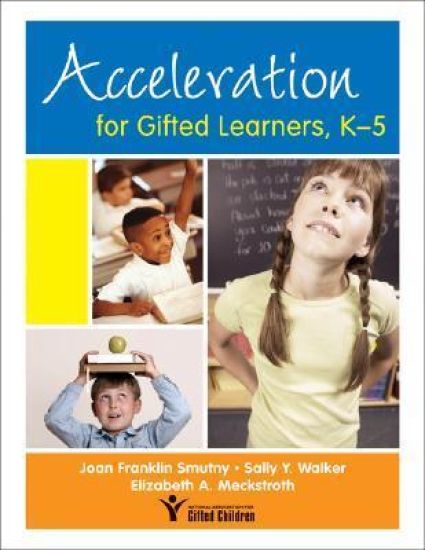
Acceleration for Gifted Learners, K-5

Acceleration for Gifted Learners, K-5

Smutny Joan F.; Walker Sally Y.; Meckstroth Elizabeth A.

SAGE Publications Inc
2006
sidottu
Dispelling common myths about acceleration, the author describes what it is, what forms it takes and what it can do for gifted students--intellectually, socially, and emotionally. Case studies and illustrations of specific mindsets offer readers a new perspective on how prevailing attitudes have influenced their districts and deprived students of opportunities to develop their talents. This guidebook also presents nuts-and-bolts guidance for: Implementing and applying accelerated learning strategies in different school settings Providing accelerated learning opportunities for underserved groups, such as multicultural and urban poor students
Acceleration for Gifted Learners, K-5

Acceleration for Gifted Learners, K-5

Smutny Joan F.; Walker Sally Y.; Meckstroth Elizabeth A.

SAGE Publications Inc
2007
nidottu
Dispelling common myths about acceleration, the author describes what it is, what forms it takes and what it can do for gifted students--intellectually, socially, and emotionally. Case studies and illustrations of specific mindsets offer readers a new perspective on how prevailing attitudes have influenced their districts and deprived students of opportunities to develop their talents. This guidebook also presents nuts-and-bolts guidance for: Implementing and applying accelerated learning strategies in different school settings Providing accelerated learning opportunities for underserved groups, such as multicultural and urban poor students
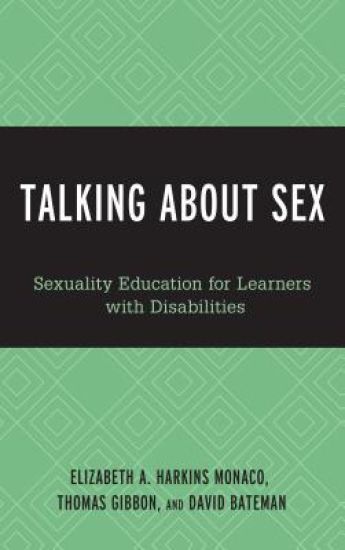
Talking About Sex

Talking About Sex

Elizabeth A. Harkins Monaco; Thomas C. Gibbon; David F. Bateman

Rowman Littlefield
2018
sidottu
Key social and emotional milestones during adolescence are often directly related to the abilities to initiate and maintain intimate relationships, maintain physically maturing bodies, and manage personal sexuality. Most adolescents with developmental disabilities have particular difficulty expressing sexuality in satisfying ways, consequently facing issues such as limited intimate relationships, low self-esteem, increased social isolation, deregulated emotional maintenance, reduced sexual functioning, and limited sexual health. Appropriate sexual knowledge assists not only in achieving personal fulfillment, but protection from mistreatment, abuse, unplanned pregnancies, or sexually transmitted diseases (STDs). It also works to help solve problems of loneliness and problems with self-esteem. This book will address this but also much more. Issues of physical and cognitive development will be discussed, including appropriate sexual development/urges and brain development, and innate similarities and differences of sexuality that could occur between people with autism spectrum disorders and intellectual or developmental disabilities, including the complexities of physical disabilities. The authors will also consider special considerations for group homes and recreational facilities, and specifically focus on concepts of ethics and models of consent (medical, legal, social, and educational), as well as how to deal with uncertainty.
Talking About Sex

Talking About Sex

Elizabeth A. Harkins Monaco; Thomas C. Gibbon; David F. Bateman

Rowman Littlefield
2018
nidottu
Key social and emotional milestones during adolescence are often directly related to the abilities to initiate and maintain intimate relationships, maintain physically maturing bodies, and manage personal sexuality. Most adolescents with developmental disabilities have particular difficulty expressing sexuality in satisfying ways, consequently facing issues such as limited intimate relationships, low self-esteem, increased social isolation, deregulated emotional maintenance, reduced sexual functioning, and limited sexual health. Appropriate sexual knowledge assists not only in achieving personal fulfillment, but protection from mistreatment, abuse, unplanned pregnancies, or sexually transmitted diseases (STDs). It also works to help solve problems of loneliness and problems with self-esteem. This book will address this but also much more. Issues of physical and cognitive development will be discussed, including appropriate sexual development/urges and brain development, and innate similarities and differences of sexuality that could occur between people with autism spectrum disorders and intellectual or developmental disabilities, including the complexities of physical disabilities. The authors will also consider special considerations for group homes and recreational facilities, and specifically focus on concepts of ethics and models of consent (medical, legal, social, and educational), as well as how to deal with uncertainty.
Education for a New Morality

Education for a New Morality

Agnes Elizabeth Ernst Meyer; E. I. F. Williams

Literary Licensing, LLC
2011
sidottu
Education For A New Morality is a book written by Agnes Elizabeth Ernst Meyer. The book delves into the topic of morality in education and how it can be improved to create a better society. Meyer argues that traditional education systems have failed to instill moral values in students, resulting in a decline in ethical behavior in society. She proposes a new approach to education that focuses on teaching empathy, compassion, and responsibility to students. Meyer also explores the role of parents and teachers in shaping the moral character of children. The book offers practical suggestions for educators and parents on how to foster moral development in children. It is a thought-provoking read for anyone interested in the intersection of education and morality.This scarce antiquarian book is a facsimile reprint of the old original and may contain some imperfections such as library marks and notations. Because we believe this work is culturally important, we have made it available as part of our commitment for protecting, preserving, and promoting the world's literature in affordable, high quality, modern editions, that are true to their original work.