Kirjojen hintavertailu. Mukana 12 016 292 kirjaa ja 12 kauppaa.

Kirjahaku

Etsi kirjoja tekijän nimen, kirjan nimen tai ISBN:n perusteella.

1000 tulosta hakusanalla Elizabeth Frances Perry

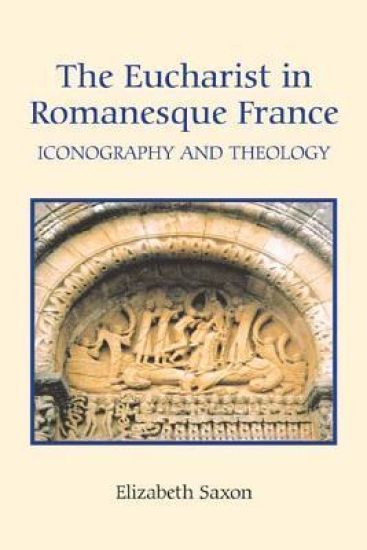
The Eucharist in Romanesque France

The Eucharist in Romanesque France

Elizabeth Saxon

The Boydell Press
2006
sidottu
An overview of the theologies of the eucharist leads on to a detailed exploration of the Berengarian debates of the eleventh century and the complex of eucharistic ideas subsequently developed. During the Romanesque period in France, and accelerated by a growing introspection and consciousness of self-identity, a penitential focus was given to eucharistic piety. Population increase and prosperity brought greater tithe income to the Church, allowing new discipline and religious regulation in respect of the sacraments. The aim of this book is to bring together aspects of the multi-faceted penitential-eucharistic devotion, as revealed in theological writings and Mass commentaries, in Gregorian reform, in heretical circles both clerical and popular and in works of art, so that the reader can contemplate, through a wider juxtaposition than that usually practicable in more detailed specialised scholarship, something of the mood of the period. Just as the new scholastic writings impressed by their innovative creativity, the best late eleventh- and twelfth-century art was astonishingly vital and the comparison of art and textual works is central to the volume. Dr Elizabeth Saxon has recently retired from the staff of the Open University.
Publishing Women's Life Stories in France, 1647-1720

Publishing Women's Life Stories in France, 1647-1720

Elizabeth C. Goldsmith

Ashgate Publishing Limited
2001
sidottu
In this new study, Elizabeth Goldsmith continues her pursuit of issues treated in her earlier books on conversation, epistolary writing, and the female voice in literature. She examines how French women in the seventeenth and early eighteenth centuries first came to publish their private life stories; in doing so, she explores what the writers have to say about why they decide to write about themselves, what they choose to write, how they get their stories circulated and printed, and what they do to defend themselves against the threat to personal reputation and credibility that was implied by such public self-exposure. Goldsmith scrutinizes the autobiographical writing of six women, all of whom were, for different reasons, the objects of fairly intense publicity during their lifetime, at the historical moment when the idea of "publicity" via the printed word was still a new concept. Three of the women-Jeanne des Anges, Marie de l'Incarnation, and Jeanne Guyon-were charismatic religious figures whose writings were widely circulated. The other three writers-the sisters Hortense and Marie Mancini, and Madame de Villedieu-are more worldly, but like their spiritual counterparts, they undertook self-publication as a form of conversation with the world, and a way of participating in other forms of public discourse. Publishing Women's Life Stories in France, 1647-1720 considers the different forms that the life writing of these three women took: autobiographies; letter correspondences (which in four of the six cases have never before been published); trial transcripts; testimonials published as part of other authors' works; and written self-portraits that were circulated among friends. Drawing on the work of Michel de Certeau on voice and communities of readers in the 17th century, as well as the work of Roger Chartier and other historians of the book and print culture, Goldsmith retraces the complicated networks of human interaction that underlie these early a
Secrets of the Golden Age Prince: Francis Bacon

Secrets of the Golden Age Prince: Francis Bacon

Elizabeth Clare Prophet

SUMMIT UNIVERSITY PRESS,U.S.
2024
nidottu
This book stands with respect on the shoulders of four centuries of Francis Bacon's biographers, referencing historical and cipher inquiries about his noble person and transcendent body of work, but pushing further to ask: Did his vision for the ages, the Great Instauration, die with him? The premise of the fine, foregoing biographies has been to discern and explain the secrets of a great, historic personality, perhaps the world's greatest genius, from a fixed birthdate to a fixed date of death. The less conventional premise of this book is to explain the context of the life of the person, Francis Bacon, as one crucial chapter within a long continuity of lifetimes, yet unending. Francis, and those closest to him, manifested the beginning of the Great Instauration in the form of an extraordinary array of civilization-building services, sacrificially, under persecution, for the love of humanity and the latent divinity within the people. Francis' conclave of literary men saw themselves as brothers, demonstrating a constructive vision and true charity, outside the churches which had suppressed as heresy what the people needed to know about nature and themselves. How did twelve-year old Francis see the need and then generate the beneficial concept of the Great Instauration, meaning the restoration of a golden age of abundance, a paradise lost? This would require prior knowledge and likely actual engagement in such a civilization. Why was it lost? Why did he persevere under Job-like trials to produce a legacy of enlightenment he knew would only bear fruit long after his passing? And, is a soul of this magnitude lost forever to humanity at his passing? None of these questions can be answered entirely by original source documents, especially when for safety's sake Francis deliberately hid or obscured the records of that lifetime. To answer the questions, the scope of Elizabeth Clare Prophet's biography of Francis Bacon honors the existing body of documented research and then necessarily expands the lens of discovery to summarize a continuous chain of prior lives, the lifestream of this soul.
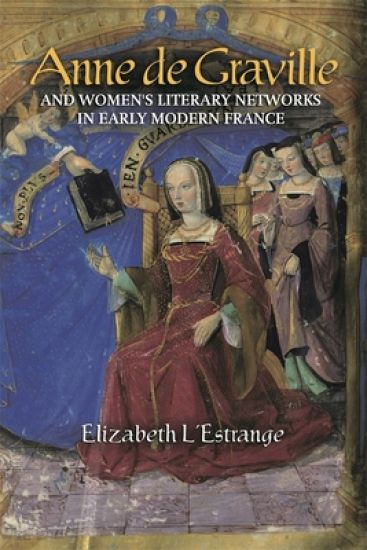
Anne de Graville and Women's Literary Networks in Early Modern France
First detailed reconstruction of Anne de Graville's library, establishing her as one of the most well-read and erudite poets of the period. WINNER: 2024 Society for the Study of Early Modern Women and Gender Book Award In the 1520s, the French noblewoman Anne de Graville composed two poetic works, based on older, canonical, male-authored texts: Giovanni Boccaccio's Teseida and Alain Chartier's Belle dame sans mercy. The first, the Beau roman, she offered to Claude, queen of France and wife of Francis I, and the second, the Rondeaux, to the king's mother, Louise of Savoy. With the pro-feminine spin of her rewritings, Anne developed the legacy of another woman writer from 100 years earlier, Christine de Pizan, by entering the on-going debate known as the querelle des femmes. Like Christine, Anne sought to redress the negative view of women found in much contemporary popular literature and to offer role models for both men and women at the court of Francis I. This book is the first detailed reconstruction and interpretation of Anne's library and her collecting practice, showing how they relate to her own writings and her literary milieu. It also teases out her links to other women writers of the time interested in the querelle, such as Catherine d'Amboise and Margaret of Navarre. Paying close attention to literary, manuscript, and artistic sources, it establishes Anne's reputation as one of the most erudite poets of the period, and one keenly attuned to the position of women in society as well as to the political sensitivities of the French court.