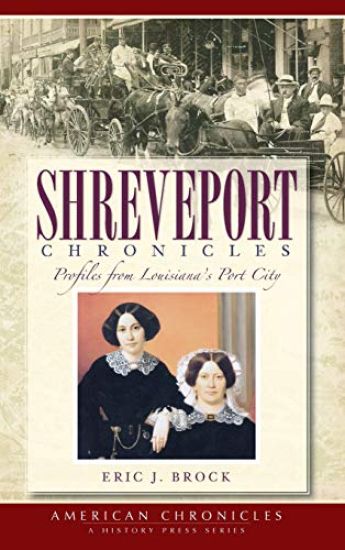
"Here are heroes and scoundrels, businessmen and religious leaders, artists and soldiers, pioneers and planters as well as a number of stories that are ironic, bizarre or simply curious." In this newest collection of his popular columns, Eric J. Brock portrays Shreveport's historical pageant through the lives of a cross section of truly fascinating characters. From the enigmatic mayor Robert Nathaniel Wood to forgotten beauty queen Janet Currie, Brock sketches the men and women--both ordinary and extraordinary--who shaped the course of Shreveport history. These biographical vignettes, originally printed in the Shreveport Times and the Forum News Magazine, are a must-read for any native or resident of northwest Louisiana."
Marinship was a World War II shipyard built by the W.A. Bechtel Company to fulfill an urgent need for cargo ships to support soldiers all over the world. Sausalito was selected as the site for its unused railroad capacity and access to a deepwater channel and the Golden Gate Bridge. In March 1942, the shipyard was built on the site of the railroad maintenance yard and adjacent vacant mudflats, with the first ship being launched in September. At the time of its peak operation, there were as many as 20,000 workers. Workers were recruited from local resources at first but eventually a more widespread recruitment brought people from the Midwest and the South. These new workers, including minorities and women, enabled Marinship to become a leader in the integrated workforce phenomenon. As the war in Europe was won, fewer ships were needed. The Marinship labor force was reduced by about half until the victory in Japan, when ships were no longer needed. Marinship was soon taken over by the US Army Corps of Engineers, which disposed of what it did not need for its operations and currently maintains several buildings to facilitate its regional operations.
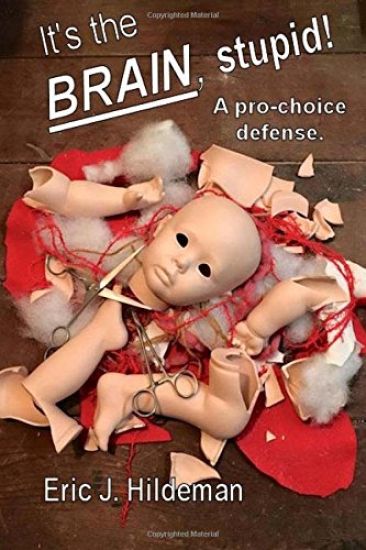
"The brain defines the being." Five little words. But former minister-in-training Eric J. Hildeman makes them a new offensive in the pro-abortion side of the debate. Using historical references, thought experiments and even scripture, he argues conclusively that the anti-abortion movement is based on a canard, invented by clergy, not God, for political rather than religious purposes.
What is the meaning of "Lest We Forget?" In the words of the writer Edmund Burke, "It means those who don't know history are doomed to repeat it." This is especially true for individuals who have overcome addiction as ongoing vigilance is required to maintain sobriety. The stories in this book walk the reader through the possibility of recovery from seemingly hopeless situations. It is recommended not only for alcoholic/addicts but also for their family members who are often baffled by the alcoholic/addict's behavior. The author is a former addictions counselor who worked for many years in a major hospital and also in a community clinic.
The whole world is caught up in a social media frenzy Do you find yourself hooked to your phone and looking at your feed multiple times a day? You are not the only one hooked. Billions of people are doing it daily. Do you wish there was some way you could capitalise on this?Understanding exactly why people do what they do is the key.This will not only help you market your brand exceptionally well and cheaply, but it will also allow you to gain quick exposure that was never possible in the past.Social media marketing is all about constantly growing your audience with insightful and compelling content. Your content helps you build your brand, foster customer loyalty, and lay the foundations for future sales. You need to create things that excite your customers and make them think, "Wow, I really want to buy from them," and, "I really trust them."Knowing how to start and which direction to take is always the hardest thing.Remember, you have only a few seconds to attract a customer before they move on. Keep your audience entertained and excited, and they will always come back for more. This is when you make the sales.In this book, I will start you on the path to understanding the big picture around your goal, and which social network to use to achieve that goal. You don't need to use all social media networks, only the one which your brand is suited to.As a bonus, I have provided case studies to enlighten you on how best to position your brand to attract a larger audience for paid and non-paid advertising.This book includes actionable pointers and practical ideas to allow you to take action from the start.Read this book and find out exactly what your potential is, and how you can achieve and even surpass it Scroll to the top and click the Buy Button.
The days of gradual change are gone.Social media is fast-paced-if you blink you will miss something.To predict and change in time is the most important thing. This will help you stay on top of your competition and engage your audience where others can't.These are the most important factors to building your authority in any niche and keeping it there.You want to be known as the go-to company.Some questions to ask yourself include: What separates average brands from the ones that do roaring business on social media?What makes it easy for some companies to dominate social media, while others struggle to find their feet?What makes interaction and engagement a cakewalk for some brands?Building authority is the key.Do you want to become the go-to company in your niche?Would you like to develop your brand as powerful, authoritative, and influential?Constant value is something people want.Your audience is always after the quick fix, and the best thing you can give them is sizzling hot information on a platter-this will allow you to dominate your market.There are resourceful strategies, creative yet simple tactics, and little-known actionable tips that can quickly put even newbies into the authority-building lane.Find out what you need to do in order to build your brand while keeping your audience engaged with everything you have to say.Scroll to the top and click BUY NOW
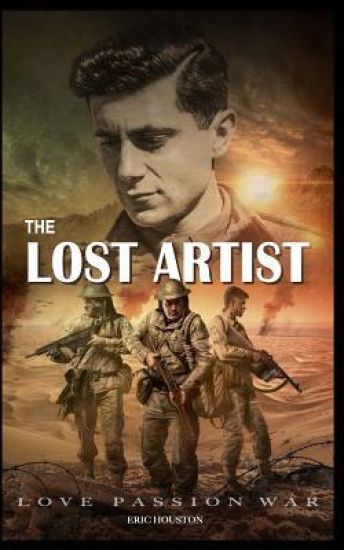
"A page-turner Revealing important insight into little-known history of pre-state Palestine and World War II, this fascinating journey of a remarkable man is a rip-roaring story from beginning to end. I recommend it to everyone." Rabbi Mark S. Golub, JBS TV, jbstv.org ............................................................................................................................................... THE LOST ARTIST 1934: a 13-year-old Jewish boy escapes Nazi Germany to become the highest decorated WW II Palestinian (future Israeli) soldier in the British Army 2010: a top Israeli computer scientist searches for the favorite artist of her youth. From the rise of the Nazi Party through the formation of the State of Israel, across a sea of time to present day, their worlds collide in LOVE PASSION WAR. PART 1 My father, Fred Hausman, was the highest decorated Jewish WW II Palestinian soldier in the British Army, but his passion was art. In 1948 before leaving Palestine to be with his sister in New York City, he turned in a job of illustration for a little kibbutz-publishing house, never knowing that the book would one day be referred to as "The pearl of Israeli children literature". For sixty years there was a search for the illustrator of 'AND THERE WAS EVENING'. After finally solving the mystery, Einat Amitay contacted me. Moved by her story of finding my father, with Einat's encouragement I decided to tell her story of finding my father as a present day back drop of his escape of Nazi Germany in 1934 at the age of 13, going alone to Palestine, the treacherous years in Palestine before WW II, his miraculously survival of the war, and the tumultuous post-war years in Palestine up to the formation of the State of Israel. Without Einat Amitay, THE LOST ARTIST would not have been possible. I will always be grateful to her and feel lucky to have had her as a friend. Eric Hausman-Houston Also: In 2014, I discovered that a crime ring within the British Ministry of Defense (MoD) stole my father's Distinguished Conduct Medal (DCM). Taking in the facts, so far that is the only plausible explanation. Billionaire Lord Michael Ashcroft bought the entire group of my father's medals from The London Medal Company in 2012, but we have all of my father's other medals. By taking other war heroes medals and passing them off as my father's, a despicable act of disassociating the true heroes with their medals, the London Medal Company greatly increased the value of my father's stolen DCM, in part by making it appear more legitimate. Although Lord Michael Ashcroft has been given definitive proof that he was ripped off, he apparently prefers to keep a war hero's stolen medal along with spurious medals rather than to simply get his money back from the corrupt dealer who sold them to him. Lord Michael Ashcroft may currently possess my father's stolen medal, but he will never have the complete group. I believe that anyone knowingly keeping a stolen war hero's medal from its rightful owners is an enemy to all those who served, and under no conditions will my father's other medals ever be within his clutches. The overwhelming evidence that my father's DCM was stolen from within the MoD is included at the end of the THE LOST ARTIST. How many medals have been stolen is unknown, but the proceeds of THE LOST ARTIST will go to uniting all of the stolen medals from within the MoD with their rightful owners. In purchasing THE LOST ARTIST you are helping the brave soldiers who risked and gave their lives for our freedom to finally find justice.
My spiritual battles began shortly after my dad was diagnosed terminally ill. I quickly became anxious about whether he would go to Heaven after he died. I should have been more concerned about myself. I came to trust Jesus for salvation shortly after he lost his battle with cancer; I was 33. Over the next couple of years I was hospitalized multiple times for manic and depression, and diagnosed as bipolar. In short, I was a mess. Things only improved after confessing to sins I previously chose to pretend never happened. You cannot step into the light expecting to keep the darkness hidden, it must be exposed. Also, Christians are called to share the Gospel, but it is not our responsibility to ensure others will make the same decision to believe. Initially I believed it was. This is my story. This is my journey.
My spiritual battles began shortly after my dad was diagnosed terminally ill. I quickly became anxious about whether he would go to Heaven after he died. I should have been more concerned about myself. I came to trust Jesus for salvation shortly after he lost his battle with cancer; I was 33. Over the next couple of years I was hospitalized multiple times for manic and depression, and diagnosed as bipolar. In short, I was a mess. Things only improved after confessing to sins I previously chose to pretend never happened. You cannot step into the light expecting to keep the darkness hidden, it must be exposed. Also, Christians are called to share the Gospel, but it is not our responsibility to ensure others will make the same decision to believe. Initially I believed it was. This is my story. This is my journey.
Striking full-colour guides. Bound in water repellent, film laminated covers. Extensive centre-spread maps of the state highlights locations featured in each book. Special 8-pocket and 4-pocket lucite display racks available with purchase of the series.
Everyone knows there's much to see and do in San Francisco. But what, exactly, are those things? Use this book to decide what you want to visit. Cable cars, Fisherman's Warf, and the Golden Gate Bridge are just the tip of the iceberg.
There is no more technically demanding laparoscopic procedure than laparoscopic proximal gastric bypass. Furthermore, training and skill in advanced laparoscopy are inadequate background for developing a program since the bariatric patient presents many complex issues in management for the surgeon. Thus, the novice must master the skills of two disciplines: advanced laparoscopy and bariatric surgical care. The authors bring forward their significant experience in bariatric surgery and lessons learned from the development of their laparoscopic obesity surgery program in order to provide a resource to surgeons committed to bringing safe and effective laparoscopic treatment to their morbidly obese patients.
The primary objective of this book is to help readers become educated consumers of research. It provides a practical, applied, and user-friendly approach to research methods by consistently applying the concepts learned to real-life examples of research. Each chapter builds upon prior chapters so readers can incrementally learn the dynamics of the research process. Readers will understand how research is one of several sources of knowledge when they are faced with the question “How do we know what we know?” Students will learn core research topics, including sampling methods, survey research, experimental and quasi-experimental designs, field research, and unobtrusive methods. A practical and applied approach to statistics allows readers to engage with the material while they critique, evaluate, and comment on research findings.
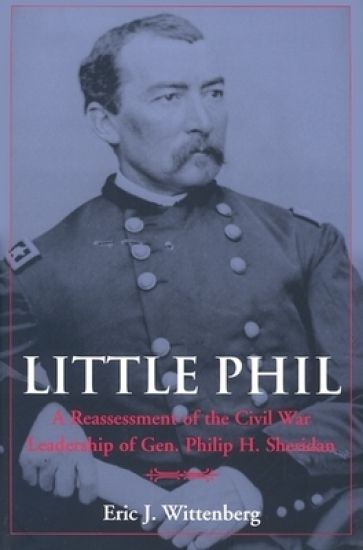
Unlike Gen. Ulysses S. Grant and Gen. William T. Sherman, whose controversial Civil War-era reputations persist today, Maj. Gen. Philip H. Sheridan has been largely untouched by controversy. In Little Phil, historian Eric J. Wittenberg reassesses the war record of a man long considered one of the Union Army's greatest generals. From his earliest days at West Point, Phil Sheridan refused to play by the rules. He was fortunate to receive merely a suspension, rather than expulsion, when as a cadet he charged a superior officer with a bayonet. Although he achieved fame as a cavalryman late in the Civil War, Sheridan actually began the conflict as an infantry commander and initially knew little of the mounted service. In his first effort as a cavalry commander with the Army of the Potomac in the spring of 1864, he gave a performance that Wittenberg argues has long been overrated. Later that year in the Shenandoah Valley, where Sheridan secured his legendary reputation, he benefited greatly from the tactical ability of his subordinates and from his huge manpower advantage against the beleaguered Confederate troops of Lt. Gen. Jubal Early. Sheridan was ultimately rewarded for numerous acts of insubordination against his superiors throughout the war, while he punished similar traits in his own officers. Further, in his combat reports and postwar writings, he often manipulated facts to show himself in the best possible light, ensuring an exalted place in history. Thus, Sheridan successfully foisted his own version of history on the American public. This controversial new study challenges the existing literature on Phil Sheridan and adds valuable insight to our understanding of this famous, but altogether fallible, warrior.
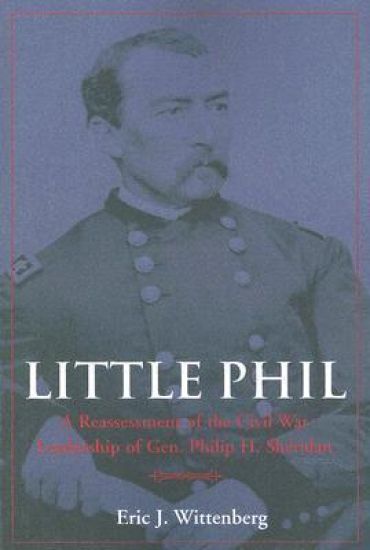
Unlike Gen. Ulysses S. Grant and Gen. William T. Sherman, whose controversial Civil War-era reputations persist today, Maj. Gen. Philip H. Sheridan has been largely untouched by controversy. In Little Phil, historian Eric J. Wittenberg reassesses the war record of a man long considered one of the Union Army's greatest generals. From his earliest days at West Point, Phil Sheridan refused to play by the rules. He was fortunate to receive merely a suspension, rather than expulsion, when as a cadet he charged a superior officer with a bayonet. Although he achieved fame as a cavalryman late in the Civil War, Sheridan actually began the conflict as an infantry commander and initially knew little of the mounted service. In his first effort as a cavalry commander with the Army of the Potomac in the spring of 1864, he gave a performance that Wittenberg argues has long been overrated. Later that year in the Shenandoah Valley, where Sheridan secured his legendary reputation, he benefited greatly from the tactical ability of his subordinates and from his huge manpower advantage against the beleaguered Confederate troops of Lt. Gen. Jubal Early. Sheridan was ultimately rewarded for numerous acts of insubordination against his superiors throughout the war, while he punished similar traits in his own officers. Further, in his combat reports and postwar writings, he often manipulated facts to show himself in the best possible light, ensuring an exalted place in history. Thus, Sheridan successfully foisted his own version of history on the American public. This controversial new study challenges the existing literature on Phil Sheridan and adds valuable insight to our understanding of this famous, but altogether fallible, warrior.