Kirjojen hintavertailu. Mukana 11 627 916 kirjaa ja 12 kauppaa.

Kirjahaku

Etsi kirjoja tekijän nimen, kirjan nimen tai ISBN:n perusteella.

1000 tulosta hakusanalla FREEDOM DIVIDEND

Freedom and Reason in Kant, Schelling, and Kierkegaard

Freedom and Reason in Kant, Schelling, and Kierkegaard

Michelle Kosch

Oxford University Press
2010
nidottu
Michelle Kosch's book traces a complex of issues surrounding moral agency - how is moral responsibility consistent with the possibility of theoretical explanation? is moral agency essentially rational agency? can autonomy be the foundation of ethics? - from Kant through Schelling to Kierkegaard. There are two complementary projects here. The first is to clarify the contours of German idealism as a philosophical movement by examining the motivations not only of its beginning, but also of its end. In tracing the motivations for the transition to mid-19th century post-idealism to Schelling's middle and late periods and, ultimately, back to a problem originally presented in Kant, it shows the causes of the demise of that movement to be the same as the causes of its rise. In the process it presents the most detailed discussion to date of the moral psychology and moral epistemology of Schelling's work after 1809. The second project - which is simply the first viewed from a different angle - is to trace the sources of Kierkegaard's theory of agency and his criticism of philosophical ethics to this same complex of issues in Kant and post-Kantian idealism. In the process, Kosch argues that Schelling's influence on Kierkegaard was greater than has been thought, and builds a new understanding of Kierkegaard's project in his pseudonymous works on the basis of this revised picture of their historical background. It is one that uncovers much of interest and relevance to contemporary debates.
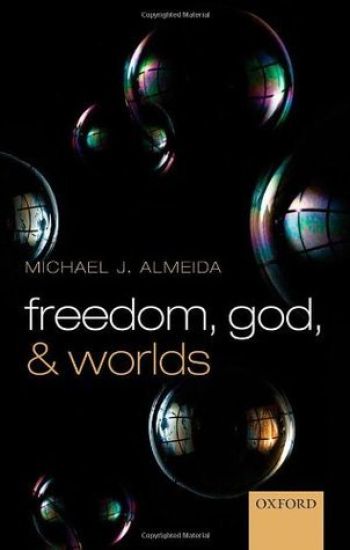
Freedom, God, and Worlds

Freedom, God, and Worlds

Michael J. Almeida

Oxford University Press
2012
sidottu
Michael J. Almeida presents a powerful argument which holds that several widely believed and largely undisputed objections to the idea of the existence of God are in fact just philosophical dogmas. He challenges some of the most well-entrenched principles in philosophical theology, which have served as basic assumptions in influential apriori, atheological arguments. But most theists also maintain that the principles express apriori necessary truths, including those principles that are presumed to follow from the nature of an essentially omnipotent, essentially omniscient, essentially perfectly good and necessarily existing being. Among the atheological arguments that deploy these philosophical dogmas are the Logical Problem of Evil, the Logical Problem of the Best Possible World, the Logical Problem of Good Enough Worlds, the Problem of Divine Freedom, the Problem of No Best World, and the Evidential Problem of Evil. In Freedom, God, and Worlds Almeida claims that these arguments present no important challenge to the existence of an Anselmian God. Not only are these philosophical principles false, they are necessarily false.
Freedom's Price

Freedom's Price

S. A. Eddie

Oxford University Press
2013
sidottu
It is usually claimed that serfs were oppressed and unfree, but is this assumption true? Freedom's Price, building on a new reading of archival material, attempts a fundamental re-appraisal of the continuing orthodoxy that a 'serf' economy embodied peasant exploitation. It reveals that, in fact, Prussian 'subject' peasants fared much better than their 'free' neighbours; they had mutual rights and obligations with nobles and the state. In this volume, Sean Eddie seeks to establish the true 'price of freedom' paid by the peasants both in the so-called Second Serfdom around 1650 and in the enfranchisement of 1807-21. Far from representing further exploitation, the peasants drove a hard bargain, and many nobles subsequently fared worse than their tenants; subjection was abolished and land ownership was transferred from noble to peasant. Capital was therefore at the centre of the pre-capitalist economy, and the growing economic polarization of society owed more to the peasants' access to capital than to noble exploitation. By locating Prussian serfdom and reforms in a pan-European context, and within debates about the nature of economic development, feudalism, and capitalism, Freedom's Price targets a wider audience of early modern and modern European historians, economic historians, and interested general readers.
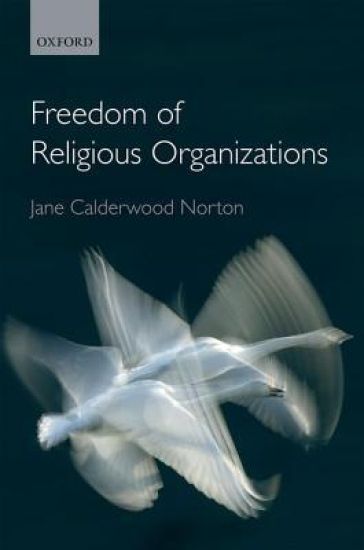
Freedom of Religious Organizations

Freedom of Religious Organizations

Jane Calderwood Norton

Oxford University Press
2016
sidottu
Religious freedom is now widely accepted as fundamental to any liberal democracy. It is recognised in domestic, regional, and international human rights instruments and its importance is lauded by philosophers, lawyers, judges, clergy, and even politicians. While it is easy to support religious freedom in the abstract, tensions can arise between the activities of religious organizations and the law that challenge this general commitment to religious freedom. Should religious organizations be permitted to discriminate against women or gay people in their employment practices, when admitting members, or in providing goods and services? Should the courts interfere in these organizations to protect the interests of a disaffected member or to resolve internal property disputes? Should the state allow religious tribunals to determine or advise on family matters? While much has been written about religious individuals and the law, there has been a discernible lack of literature on organizations and the law. Jane Norton fills this gap with Freedom of Religious Organizations. By exploring potential conflicts between the law and religious organizations, and examining whether the current British response to such conflicts is justified, this book will consider when English law ought to apply to religious organizations and how these conflicts should be dealt with.
Freedom of Establishment and Private International Law for Corporations
Freedom of establishment is one of the four fundamental freedoms of the European Union. The principle is that natural persons who are European Union Citizens, and legal entities formed in accordance with the law of a Member State and having its registered office, central administration or principal place of business within the EU, may take up economic activity in any Member State in a stable and continuous form regardless of nationality or mode of incorporation. This book examines the way in which EU law has influenced how national courts in Europe assert jurisdiction in cross-border corporate disputes and insolvencies, and the mechanism which allows them to decide which national law should apply to the substance of the dispute. The book also considers the potential for EU Member States to compete for devising national corporate and insolvency legislation that will attract incorporations or insolvencies. Central to the book is the concept of national choice of law. In considering the impact of freedom of establishment on private international law for corporations, the book uniquely analyses both corporate and insolvency law together, presenting the topic in the broadest possible sense. Importantly, the doctrine of abuse in corporate and insolvency law is covered, raising the question of 'forum shopping' and regulatory competition which underpins the intersection between freedom of establishment and private international law. Through examination of the most recent and leading judgments of the European Court of Justice in Centros and Cadbury Schweppes, the book derives certain conclusions as to the operation of the doctrine of abuse and the limits thereof in the context of freedom of establishment. Being the first in the field to examine the leading ECJ cases of Inspire Art, Sevic and Cartesio regarding the real seat doctrine, the book makes the judgment that there is no incompatibility as such between the doctrine and the freedom of establishment. Ultimately, the book analyses to what extent diversity in the corporate and insolvency laws of the Member States should be preserved, so as to encourage competition between jurisdictions in Europe.
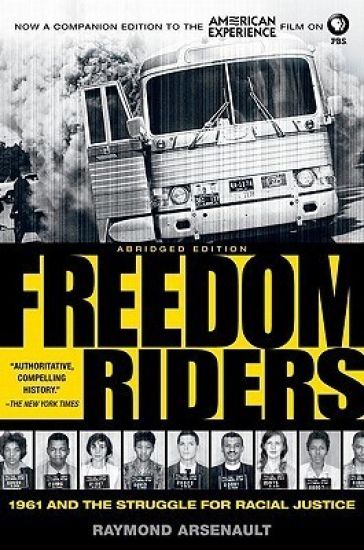
Freedom Riders Abridged

Freedom Riders Abridged

Raymond Arsenault

Oxford University Press Inc
2011
nidottu
The saga of the Freedom Rides is an improbable, almost unbelievable story. In the course of six months in 1961, four hundred and fifty Freedom Riders expanded the realm of the possible in American politics, redefining the limits of dissent and setting the stage for the civil rights movement. In this new version of his encyclopedic Freedom Riders, Raymond Arsenault offers a significantly condensed and tautly written account. With characters and plot lines rivaling those of the most imaginative fiction, this is a tale of heroic sacrifice and unexpected triumph. Arsenault recounts how a group of volunteers--blacks and whites--came together to travel from Washington DC through the Deep South, defying Jim Crow laws in buses and terminals and putting their lives on the line for racial justice. News photographers captured the violence in Montgomery, shocking the nation and sparking a crisis in the Kennedy administration. Here are the key players--their fears and courage, their determination and second thoughts, and the agonizing choices they faced as they took on Jim Crow--and triumphed. Winner of the Owsley Prize Publication is timed to coincide with the airing of the American Experience miniseries documenting the Freedom Rides "Arsenault brings vividly to life a defining moment in modern American history." --Eric Foner, The New York Times Book Review "Authoritative, compelling history." --William Grimes, The New York Times "For those interested in understanding 20th-century America, this is an essential book." --Roger Wilkins, Washington Post Book World "Arsenault's record of strategy sessions, church vigils, bloody assaults, mass arrests, political maneuverings and personal anguish captures the mood and the turmoil, the excitement and the confusion of the movement and the time." --Michael Kenney, The Boston Globe
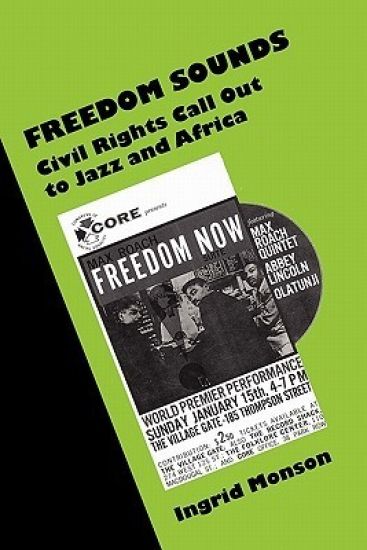
Freedom Sounds

Freedom Sounds

Monson Ingrid

Oxford University Press Inc
2010
nidottu
An insightful examination of the impact of the Civil Rights Movement and African Independence on jazz in the 1950s and 60s, Freedom Sounds traces the complex relationships among music, politics, aesthetics, and activism through the lens of the hot button racial and economic issues of the time. Ingrid Monson illustrates how the contentious and soul-searching debates in the Civil Rights, African Independence, and Black Power movements shaped aesthetic debates and exerted a moral pressure on musicians to take action. Throughout, her arguments show how jazz musicians' quest for self-determination as artists and human beings also led to fascinating and far reaching musical explorations and a lasting ethos of social critique and transcendence. Across a broad body of issues of cultural and political relevance, Freedom Sounds considers the discursive, structural, and practical aspects of life in the jazz world in the 1950s and 1960s. In domestic politics, Monson explores the desegregation of the American Federation of Musicians, the politics of playing to segregated performance venues in the 1950s, the participation of jazz musicians in benefit concerts, and strategies of economic empowerment. Issues of transatlantic importance such as the effects of anti-colonialism and African nationalism on the politics and aesthetics of the music are also examined, from Paul Robeson's interest in Africa, to the State Department jazz tours, to the interaction of jazz musicians such Art Blakey and Randy Weston with African and African diasporic aesthetics. Monson deftly explores musicians' aesthetic agency in synthesizing influential forms of musical expression from a multiplicity of stylistic and cultural influences—African American music, popular song, classical music, African diasporic aesthetics, and other world musics—through examples from cool jazz, hard bop, modal jazz, and the avant-garde. By considering the differences between aesthetic and socio-economic mobility, she presents a fresh interpretation of debates over cultural ownership, racism, reverse racism, and authenticity. Freedom Sounds will be avidly read by students and academics in musicology, ethnomusicology, anthropology, popular music, African American Studies, and African diasporic studies, as well as fans of jazz, hip hop, and African American music.
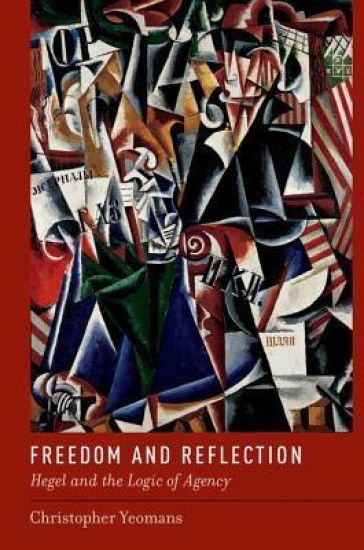
Freedom and Reflection

Freedom and Reflection

Christopher Yeomans

Oxford University Press Inc
2012
sidottu
There are many insightful discussions of Hegel's practical philosophy that emphasize the uniqueness of his expressivist and social theory of agency, but few recognize that these two aspects of Hegel's theory of the will are insufficient to avoid the traditional problem of free will. In fact, the problem can easily be shown to recur in the very language used to express why Hegel's theory is a theory of freedom at all. In part, this lack of recognition results from the fact that there has not yet been a study of Hegel's theory of the will that has formulated the problem against the background of the contemporary literature on free will, where basic concerns about the explicability of action loom large. By using the continuity between the contemporary concerns and those of Hegel's predecessors (particularly Kant), Yeomans shows the necessity of reference to the Logic in order to supplement Hegel's own practical philosophy and the scholarship based on it. In addition to adding significantly to our understanding of Hegel's theory of agency and recapturing its significance with respect to continuing modern reflection on free will, this study also shows that Hegel's Logic can do some real philosophical work on a specific problem. Though Hegel's logical terminology is notorious for its impenetrability, Yeomans translates Hegel's jargon into a more easily comprehensible vocabulary. He further helps the reader by providing introductory discussions framing the central issues of each chapter both in terms of the problem of free will and in terms of the development of Hegel's argument to that point in the Logic. Presenting the reader with frequent use of examples, Yeomans leavens the abstractness of Hegel's presentation and makes the topic accessible to readers new to Hegel as well as those well versed in his work.
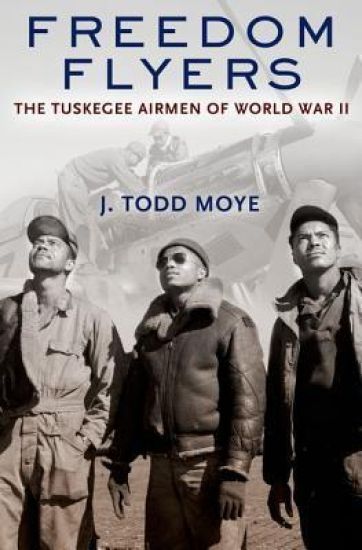
Freedom Flyers

Freedom Flyers

J. Todd Moye

Oxford University Press Inc
2012
nidottu
In this inspiring account of the Tuskegee Airmen--the country's first African American military pilots--historian J. Todd Moye captures the challenges and triumphs of these brave aviators in their own words, drawing on more than 800 interviews recorded for the National Park Service's Tuskegee Airmen Oral History Project. Denied the right to fully participate in the U.S. war effort alongside whites at the beginning of World War II, African Americans--spurred on by black newspapers and civil rights organizations such as the NAACP--compelled the prestigious Army Air Corps to open its training programs to black pilots, despite the objections of its top generals. Thousands of young men came from every part of the country to Tuskegee, Alabama, in the heart of the segregated South, to enter the program, which expanded in 1943 to train multi-engine bomber pilots in addition to fighter pilots. By the end of the war, Tuskegee Airfield had become a small city populated by black mechanics, parachute packers, doctors, and nurses. Together, they helped prove that racial segregation of the fighting forces was so inefficient as to be counterproductive to the nation's defense. Freedom Flyers brings to life the legacy of a determined, visionary cadre of African American airmen who proved their capabilities and patriotism beyond question, transformed the armed forces--formerly the nation's most racially polarized institution--and jump-started the modern struggle for racial equality. "The personal nature of the examples Moye cites make it a far deeper and richer narrative than typical WWII fare.... The author's friendly style should open the title up to even casual readers." --Booklist "An excellent history of the first African-American military pilots.... Moye's lively prose and the intimate details of the personal narratives yield an accessible scholarly history that also succeeds as vivid social history." --Publishers Weekly
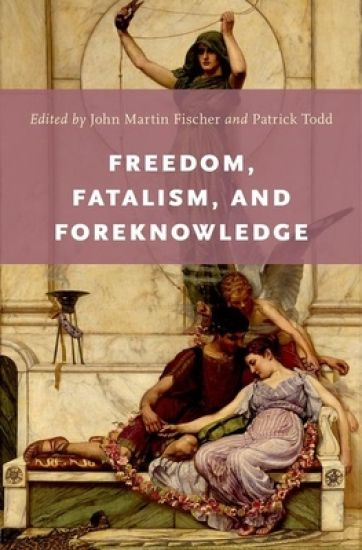
Freedom, Fatalism, and Foreknowledge

Freedom, Fatalism, and Foreknowledge

Oxford University Press Inc
2015
sidottu
We typically think we have free will. But how could we have free will, if for anything we do, it was already true in the distant past that we would do that thing? Or how could we have free will, if God already knows in advance all the details of our lives? Such issues raise the specter of "fatalism". This book collects sixteen previously published articles on fatalism, truths about the future, and the relationship between divine foreknowledge and human freedom, and includes a substantial introductory essay and bibliography. Many of the pieces collected here build bridges between discussions of human freedom and recent developments in other areas of metaphysics, such as philosophy of time. Ideal for courses in free will, metaphysics, and philosophy of religion, Freedom, Fatalism, and Foreknowledge will encourage important new directions in thinking about free will, time, and truth.
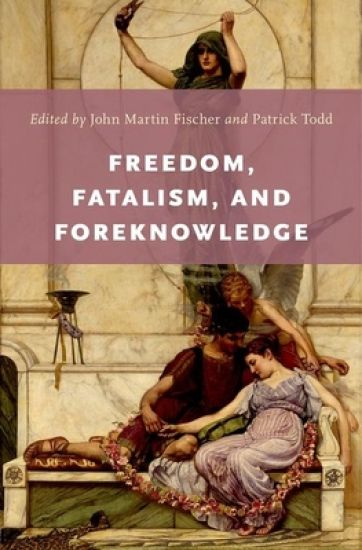
Freedom, Fatalism, and Foreknowledge

Freedom, Fatalism, and Foreknowledge

Oxford University Press Inc
2015
nidottu
We typically think we have free will. But how could we have free will, if for anything we do, it was already true in the distant past that we would do that thing? Or how could we have free will, if God already knows in advance all the details of our lives? Such issues raise the specter of "fatalism". This book collects sixteen previously published articles on fatalism, truths about the future, and the relationship between divine foreknowledge and human freedom, and includes a substantial introductory essay and bibliography. Many of the pieces collected here build bridges between discussions of human freedom and recent developments in other areas of metaphysics, such as philosophy of time. Ideal for courses in free will, metaphysics, and philosophy of religion, Freedom, Fatalism, and Foreknowledge will encourage important new directions in thinking about free will, time, and truth.
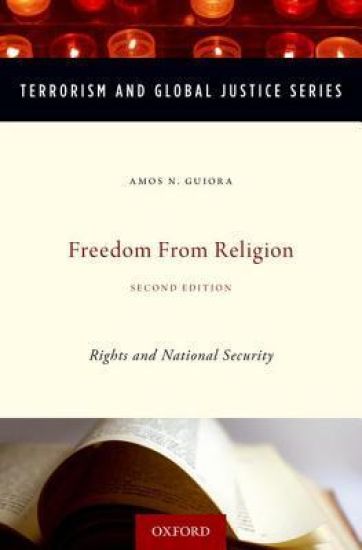
Freedom from Religion

Freedom from Religion

Amos N. Guiora

Oxford University Press Inc
2013
sidottu
Although many books on terrorism and religious extremism have been published in the years since 9/11, none of them written by Western authors call for the curtailment of religious freedom and freedom of expression for the sake of greater security. Issues like torture, domestic surveillance, and unlawful detentions have dominated the literature in this area, but few, if any, major scholars have questioned the vast allowances made by Western nations for the freedoms of religion and speech. Freedom from Religion challenges the almost sacrosanct inviolability of these two civil liberties. By drawing the connection between politically-correct tolerance of extremist speech and the rise of terrorist activity, this book sets the context for its unique proposal that governments should introduce new limits on religious practice within their borders. To demonstrate the wisdom of this course, the author presents the disparate policies and security circumstances of five countries: the U.S., the UK, the Netherlands, Turkey, and Israel. The book benefits not just from the author's own counter-terrorism experience in Israel and the U.S. but also from an international advisory group of leading scholars from all five of the countries under review. This second edition includes significant new material analyzing the trial of Warren Jeffs, self-censorship in the face of religious sensitivity, religious extremism and violence in Israel, and the complicated tension in the Netherlands between speech and religion. In it, Guiora responds to public discussion and criticism provoked by the proposal presented in the first edition that governments impose limits on religious extremist practices and speech within their borders. In doing so, Guiora sheds new light on the existential and practical predicaments confronting civil democratic society: how much intolerance should the nation-state tolerate and to whom does government owe a duty.
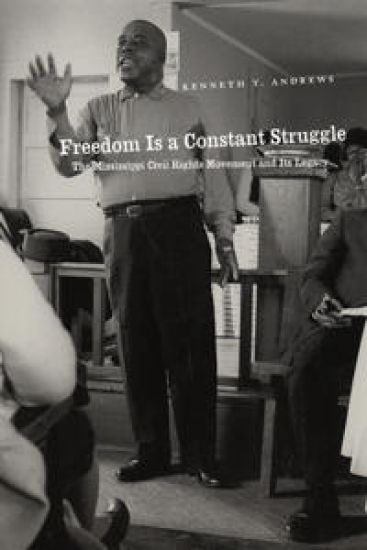
Freedom Is a Constant Struggle

Freedom Is a Constant Struggle

Kenneth T. Andrews

University of Chicago Press
2004
nidottu
No part of the United States was more resistant to the civil rights movement and its pursuit of racial equality than Mississippi. Freedom Is a Constant Struggle explores the civil rights movement in that state to consider its emergence before the 1965 Voting Rights Act and its impact long after. Did the civil rights movement have a lasting impact, and, if so, how did it bring about change? Kenneth T. Andrews is the first scholar to examine not only the history of the movement but its social and political legacy as well. His study demonstrates how during the 1970s and '80s, local movements worked to shape electoral politics, increase access to better public schools, and secure the administration of social welfare to needy African Americans.Freedom Is a Constant Struggle is also the first book of its kind to detail the activities of white supremacists in Mississippi, revealing how white repression and intimidation sparked black activism and simultaneously undermined the movement's ability to achieve far-reaching goals. Andrews shows that the federal government's role was important but reactive as federal actors responded to the sustained struggles between local movements and their opponents. He tracks the mobilization of black activists by the NAACP, the creation of Freedom Summer, efforts to galvanize black voters, the momentous desegregation of public schools and the rise of all-white private academies, and struggles over the economic development of black communities. From this complex history, Andrews shows how the civil rights movement built innovative organizations and campaigns that empowered local leadership and had a lasting legacy in Mississippi and beyond.Based on an original and creative research design that combines extensive archival research, interviews with activists, and quantitative historical data, Freedom Is a Constant Struggle provides many new insights into the civil rights struggle, and it presents a much broader theory to explain whether and how movements have enduring impacts on politics and society. What results is a work that will be invaluable to students of social movements, democratic politics, and the struggle for racial freedom in the U.S.
Freedom's Moment

Freedom's Moment

Paul M. Cohen

University of Chicago Press
1997
sidottu
Examining the principle of freedom propagated by the French Revolution, and the kind of individual created by it, this text examines the lives and ideas of eight cultural critics from the 18th century to the present day: Rousseau, Robespierre, Stendhal, Michelot, Bergson, Peguy, Sartre and Foucault. Arranged not according to the lives and times of its protagonists, but according to the narrative themes and structures they held in common, this study discerns a single master narrative of liberty in modern France. It captures these radicals, whose tradition bids them resist the authority of power structures and public opinion. They denounce bourgeois and utilitarian values, the power of Church and State, and the corrupting influence of everyday politics, and they dream of a revolutionary rupture, a fleeting instant of sometimes violent but always meaningful transgression. This work also seeks to explain how France, even as it has oscillated between political stagnation and crisis, has held onto its belief that liberty, equality and fraternity remain within the grasp of its citizens.
Freedom's Moment

Freedom's Moment

Paul M. Cohen

University of Chicago Press
1997
nidottu
Examining the principle of freedom propagated by the French Revolution, and the kind of individual created by it, this text looks at the lives and ideas of eight cultural critics from the 18th century to the present day: Rousseau, Robespierre, Stendhal, Michelot, Bergson, Peguy, Sartre and Foucault. Arranged not according to the lives and times of its protagonists, but according to the narrative themes and structures they held in common, this study discerns a single master narrative of liberty in modern France. It captures these radicals, whose tradition bids them resist the authority of power structures and public opinion. They denounce bourgeois and utilitarian values, the power of Church and State, and the corrupting influence of everyday politics, and they dream of a revolutionary rupture, a fleeting instant of sometimes violent but always meaningful transgression. This work also seeks to explain how France, even as it has oscillated between political stagnation and crisis, has held onto its belief that liberty, equality and fraternity remain within the grasp of its citizens.
Freedom as Marronage

Freedom as Marronage

Neil Roberts

University of Chicago Press
2015
sidottu
What is the opposite of freedom? In Freedom as Marronage, Neil Roberts answers this question with definitive force: slavery. From there he unveils powerful new insights on the human condition as it has been understood between these poles. Crucial to his investigation is the concept of marronage - a form of slave escape that was an important aspect of Caribbean and Latin American slave systems. Examining this overlooked phenomenon - one of action from slavery and toward freedom - he deepens our understanding of freedom itself and the origin of our political ideals. Roberts examines the liminal and transitional space of slave escape in order to develop a theory of freedom as marronage, which contends that freedom is fundamentally located within this space-that it is a form of perpetual flight. He engages a stunning variety of writers, including Hannah Arendt, W. E. B. Du Bois, Angela Davis, Frederick Douglass, Samuel Taylor Coleridge, and the Rastafari, among others, to develop a compelling lens through which to interpret the quandaries of slavery, freedom, and politics that still confront us today. The result is a sophisticated, interdisciplinary work that unsettles the ways we think about freedom by always casting it in the light of its critical opposite.
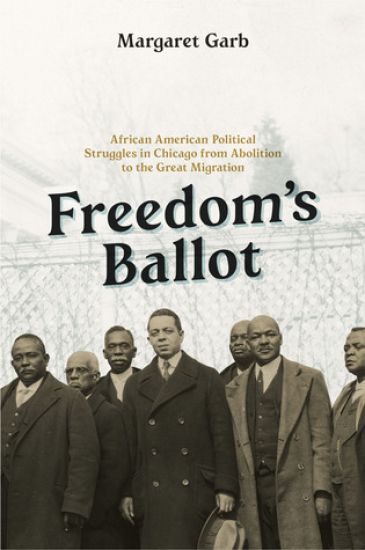
Freedom's Ballot

Freedom's Ballot

Margaret Garb

University of Chicago Press
2014
sidottu
In the spring of 1915, Chicagoans elected the city's first black alderman, Oscar DePriest. In a city where African Americans made up less than five percent of the voting population, and in a nation that dismissed and denied black political participation, DePriest's victory was astonishing. It did not, however, surprise the unruly group of black activists who had been working for several decades to win representation on the city council. Freedom's Ballot is the history of three generations of African American activists - the ministers, professionals, labor leaders, clubwomen, and entrepreneurs - who transformed twentieth-century urban politics. This is a complex and important story of how black political power was institutionalized in Chicago in the half-century following the Civil War. Margaret Garb explores the social and political fabric of Chicago, revealing how the physical makeup of the city was shaped by both political corruption and racial empowerment - in ways that can still be seen and felt today.
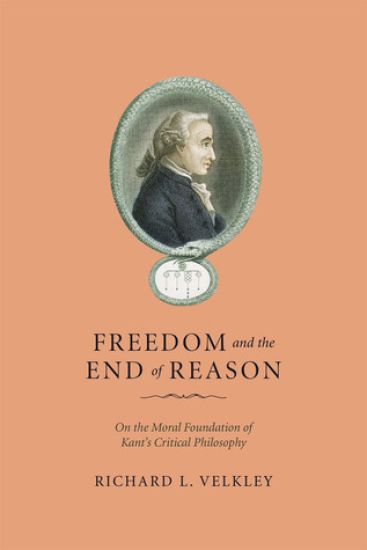
Freedom and the End of Reason

Freedom and the End of Reason

Richard L. Velkley

University of Chicago Press
2014
nidottu
In Freedom and the End of Reason, Richard L. Velkley offers an influential interpretation of the central issue of Kant's philosophy and an evaluation of its position within modern philosophy's larger history. He persuasively argues that the whole of Kantianism - not merely the Second Critique - focuses on a "critique of practical reason" and is a response to a problem that Kant saw as intrinsic to reason itself: the teleological problem of its goodness. Reconstructing the influence of Rousseau on Kant's thought, Velkley demonstrates that the relationship between speculative philosophy and practical philosophy in Kant is far more intimate than generally has been perceived. By stressing a Rousseau-inspired notion of reason as a provider of practical ends, he is able to offer an unusually complete account of Kant's idea of moral culture.
Freedom as Marronage

Freedom as Marronage

Neil Roberts

University of Chicago Press
2015
nidottu
What is the opposite of freedom? In Freedom as Marronage, Neil Roberts answers this question with definitive force: slavery. From there he unveils powerful new insights on the human condition as it has been understood between these poles. Crucial to his investigation is the concept of marronage - a form of slave escape that was an important aspect of Caribbean and Latin American slave systems. Examining this overlooked phenomenon - one of action from slavery and toward freedom-he deepens our understanding of freedom itself and the origin of our political ideals. Roberts examines the liminal and transitional space of slave escape in order to develop a theory of freedom as marronage, which contends that freedom is fundamentally located within this space - that it is a form of perpetual flight. He engages a stunning variety of writers, including Hannah Arendt, W. E. B. Du Bois, Angela Davis, Frederick Douglass, Samuel Taylor Coleridge, and the Rastafari, among others, to develop a compelling lens through which to interpret the quandaries of slavery, freedom, and politics that still confront us today. The result is a sophisticated, interdisciplinary work that unsettles the ways we think about freedom by always casting it in the light of its critical opposite.
Freedom Beyond Sovereignty

Freedom Beyond Sovereignty

Sharon R. Krause

University of Chicago Press
2015
sidottu
What does it mean to be free? We invoke the word frequently, yet the freedom of countless Americans is compromised by social inequalities that systematically undercut what they are able to do and to become. If we are to remedy these failures of freedom, we must move beyond the common assumption, prevalent in political theory and American public life, that individual agency is best conceived as a kind of personal sovereignty, or as self-determination or control over one's actions. In Freedom Beyond Sovereignty, Sharon R Krause shows that individual agency is best conceived as a non-sovereign experience because our ability to act and affect the world depends on how other people interpret and respond to what we do. The intersubjective character of agency makes it vulnerable to the effects of social inequality, but it is never in a strict sense socially determined. The agency of the oppressed sometimes surprises us with its vitality. Only by understanding the deep dynamics of agency as simultaneously non-sovereign and robust can we remediate the failed freedom of those on the losing end of persistent inequalities and grasp the scope of our own responsibility for social change. Freedom Beyond Sovereignty brings the experiences of the oppressed to the center of political theory and the study of freedom. It fundamentally reconstructs liberal individualism and enables us to see human action, personal responsibility, and the meaning of liberty in a totally new light.