The book titled ""The Corner Tang Flint Artifacts Of Texas: The University Of Texas Bulletin, No. 3618"" is authored by John Thomas Patterson. This book is a comprehensive study of the prehistoric artifacts found in Texas, specifically the corner tang flint artifacts. The book is published by the University of Texas and is part of their Bulletin series.The book provides detailed information about the corner tang flint artifacts, which are believed to be from the Late Archaic period in Texas. The author has conducted extensive research on these artifacts and has provided a detailed analysis of their characteristics, distribution, and chronology.The book is divided into several chapters, each of which covers a specific aspect of the corner tang flint artifacts. The first chapter provides an introduction to the study of prehistoric artifacts in Texas, while the second chapter discusses the corner tang flint artifacts in detail.The third chapter provides a detailed analysis of the distribution of the corner tang flint artifacts in Texas, while the fourth chapter discusses the chronology of these artifacts. The fifth chapter provides a detailed analysis of the manufacturing techniques used to create these artifacts.Overall, ""The Corner Tang Flint Artifacts Of Texas: The University Of Texas Bulletin, No. 3618"" is an essential resource for anyone interested in the prehistoric artifacts of Texas. The book provides a detailed analysis of the corner tang flint artifacts, which are an important part of Texas' archaeological heritage.Bureau Of Research In The Social Sciences, Study No. 18. Anthropological Papers, V1, No. 4.This scarce antiquarian book is a facsimile reprint of the old original and may contain some imperfections such as library marks and notations. Because we believe this work is culturally important, we have made it available as part of our commitment for protecting, preserving, and promoting the world's literature in affordable, high quality, modern editions, that are true to their original work.
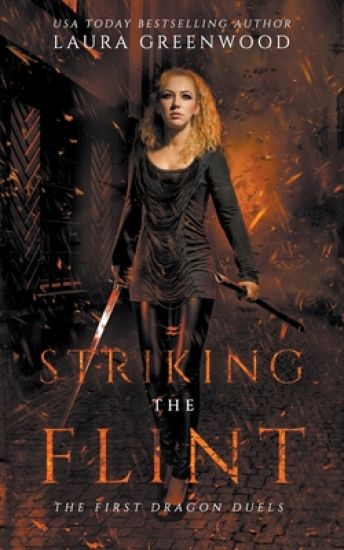
When Piper Miller is drafted to be a contestant in the Dragon Duels, she knows she's about to face something horrific. Thrown into an arena with fifty other prisoners, mostly those convicted of petty crimes like hers, she has to survive ten days under the constant threat of death from exposure, other contestants, and the fire-breathing dragons that no one can predict. Alongside her childhood friend, Joseph, she does her best to survive everything thrown at her. Can she survive the inaugural Dragon Duels? - Starting The Fire is a prequel to the urban fantasy dystopian series, The Dragon Duels. It is set approximately 150 years before the events of the main series and follows Piper as she competes in the first ever Duels. There is a romantic m/f sub-plot.
Kenneth Harper, a Black doctor and WWI veteran, returns to his hometown in Georgia to practice medicine after graduating from medical school in the North and completing a residency in France. Having forgotten the realities of life in the Jim Crow South, Dr. Harper initially believes “times have changed” and racial tensions are a thing of the past. But when Dr. Harper helps local Black sharecroppers organize for higher payment, he draws the ire of the Ku Klux Klan—and discovers he has no choice but to join the fight against white supremacy.
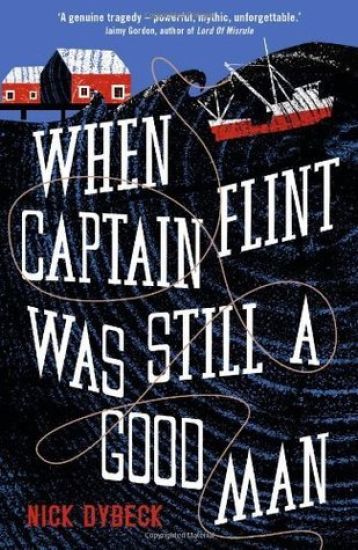
Cal lives with his parents on Loyalty Island. Each winter, Cal's father - a captain of the island's trawling fleet - sets sail for Alaska; and though Cal is still too young to join them, he is old enough to know that everything depends on the fate of those few boats, thousands of miles north.When the fleet's owner dies, not only is the town's livelihood threatened, but so too is Cal's family. With winter fast approaching, and the fleet on the brink of extinction, Cal starts to suspect that his parents both have secrets to hide. Plagued by doubt, his loyalties strained and his moral compass thrown wildly off course, Cal is forced to make a brave and terrible choice.
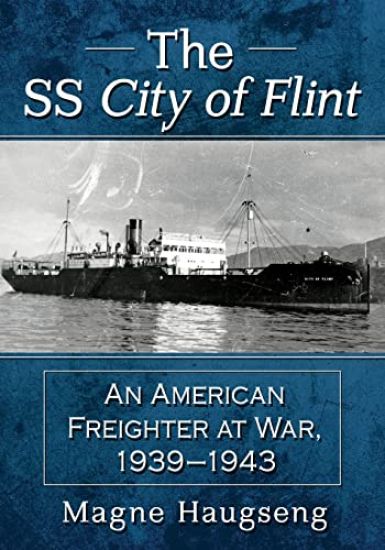
In Europe, World War II was four months old by Christmas 1939. The City of Flint, an American freighter, had been instrumental in rescuing 1200 passengers from a torpedoed ocean liner, making headlines on both sides of the Atlantic. She was captured by a Nazi warship and sent towards a German port, rigged with explosives to ensure the British Navy would not capture it. Norwegian soldiers liberated the ship--by then even Hitler knew her name. Christmas 1942 saw the City of Flint in New York with other freighters loading for North Africa. Allied codes had been cracked and the convoy was expected by a group of U-Boats. Secretly carrying poison gas as part of her cargo, she was torpedoed and exploded on January 25, 1943. Eleven survivors in her fourth lifeboat fought mountainous seas, sharks and hunger. One went mad and walked overboard. The others survived 46 days before rescue. Eyewitness accounts, war diaries and archival sources bring this untold story to life.
The Fire in the Flint (1924) is a novel by Walter Francis White. Although he is generally recognized for his accomplishments as the longtime leader of the NAACP, White also wrote several novels during the Harlem Renaissance exploring the themes of Alain Locke’s New Negro Movement. Praised by W. E. B. Du Bois in The Crisis and by Konrad Bercovici in The Nation, The Fire in the Flint remains an invaluable testament to the power of fiction to address political matters. Dr. Kenneth Harper finds it difficult to overcome the deep inequities of life in the American South. Born and raised in Georgia, he returns to his hometown following his graduation from medical school and service in the First World War. Determined to open a clinic for his friends and neighbors, he avoids confrontation with white townspeople and focuses on the task at hand. Soon, however, he encounters opposition from neighbors who regard his success and intelligence as a threat to their power. Eventually, Harper is forced to lay his life on the line by opposing the Ku Klux Klan. The Fire in the Flint is a powerful bildungsroman grounded in truth and moral decency. Praised by Nobel Laureate Sinclair Lewis upon publication, White’s novel is a largely forgotten masterpiece of the Harlem Renaissance, perhaps the finest decade for art in the history of American culture. With a beautifully designed cover and professionally typeset manuscript, this edition of Walter Francis White’s The Fire in the Flint is a classic of African American literature reimagined for modern readers.
The Fire in the Flint (1924) is a novel by Walter Francis White. Although he is generally recognized for his accomplishments as the longtime leader of the NAACP, White also wrote several novels during the Harlem Renaissance exploring the themes of Alain Locke’s New Negro Movement. Praised by W. E. B. Du Bois in The Crisis and by Konrad Bercovici in The Nation, The Fire in the Flint remains an invaluable testament to the power of fiction to address political matters. Dr. Kenneth Harper finds it difficult to overcome the deep inequities of life in the American South. Born and raised in Georgia, he returns to his hometown following his graduation from medical school and service in the First World War. Determined to open a clinic for his friends and neighbors, he avoids confrontation with white townspeople and focuses on the task at hand. Soon, however, he encounters opposition from neighbors who regard his success and intelligence as a threat to their power. Eventually, Harper is forced to lay his life on the line by opposing the Ku Klux Klan. The Fire in the Flint is a powerful bildungsroman grounded in truth and moral decency. Praised by Nobel Laureate Sinclair Lewis upon publication, White’s novel is a largely forgotten masterpiece of the Harlem Renaissance, perhaps the finest decade for art in the history of American culture. With a beautifully designed cover and professionally typeset manuscript, this edition of Walter Francis White’s The Fire in the Flint is a classic of African American literature reimagined for modern readers.