Kirjojen hintavertailu. Mukana 12 016 292 kirjaa ja 12 kauppaa.

Kirjahaku

Etsi kirjoja tekijän nimen, kirjan nimen tai ISBN:n perusteella.

1000 tulosta hakusanalla Florian Rotkowski

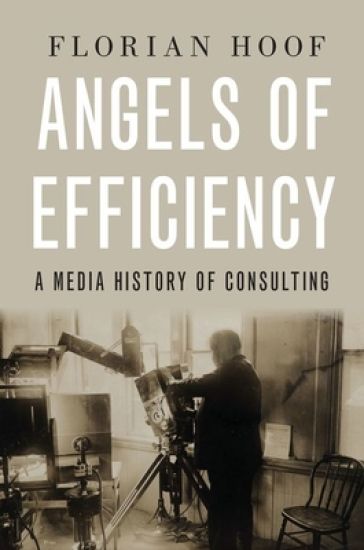
Angels of Efficiency

Angels of Efficiency

Florian Hoof

Oxford University Press Inc
2020
sidottu
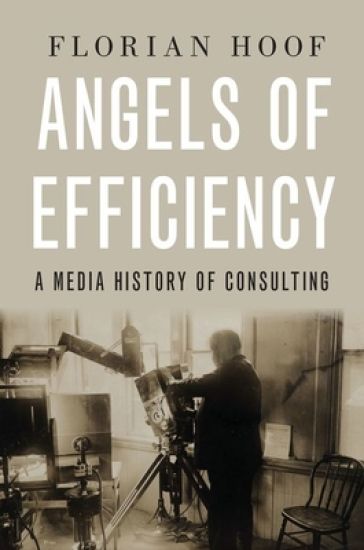
Angels of Efficiency traces the invention of film and the parallel rise of management consulting, telling the story of how these together brought about new forms of information visualization and visual management. The period from 1880 to 1930, author Florian Hoof argues, saw the genesis of a form of visual knowledge that provided a novel means to intervene in management processes. Visual management largely superseded oral and written forms of communication and decision-making, instituting a strategy for overcoming the mid-nineteenth-century crisis of control and resulting in a media-based form of rationality. Focusing largely on early corporate consulting in America by tracing the careers of Frank Gilbreth and his wife and business partner, Lillian Gilbreth, Hoof examines the rise and lasting effects of corporate consulting as a visual form. Framing consulting as a cultural technique that is characterized by media processes in which the boundaries of economic logic and legitimacy emerge, Angels of Efficiency forges a new approach to the history of consulting. In addition to pioneering a new field of film and media studies, Hoof contributes original research to American cultural and economic history, such as archival findings concerning Gilbreth's consulting efforts for the German Army during WWI. With this distinct and innovative interdisciplinary approach, Hoof has marshalled cinema and media studies, business history, and science and technology studies to make sense of the rise of consulting practices and their remarkable stability to this day.
Angels of Efficiency

Angels of Efficiency

Florian Hoof

Oxford University Press Inc
2020
nidottu
Angels of Efficiency traces the invention of film and the parallel rise of management consulting, telling the story of how these together brought about new forms of information visualization and visual management. The period from 1880 to 1930, author Florian Hoof argues, saw the genesis of a form of visual knowledge that provided a novel means to intervene in management processes. Visual management largely superseded oral and written forms of communication and decision-making, instituting a strategy for overcoming the mid-nineteenth-century crisis of control and resulting in a media-based form of rationality. Focusing largely on early corporate consulting in America by tracing the careers of Frank Gilbreth and his wife and business partner, Lillian Gilbreth, Hoof examines the rise and lasting effects of corporate consulting as a visual form. Framing consulting as a cultural technique that is characterized by media processes in which the boundaries of economic logic and legitimacy emerge, Angels of Efficiency forges a new approach to the history of consulting. In addition to pioneering a new field of film and media studies, Hoof contributes original research to American cultural and economic history, such as archival findings concerning Gilbreth's consulting efforts for the German Army during WWI. With this distinct and innovative interdisciplinary approach, Hoof has marshalled cinema and media studies, business history, and science and technology studies to make sense of the rise of consulting practices and their remarkable stability to this day.
Language Policy

Language Policy

Florian Coulmas

Oxford University Press
2025
sidottu
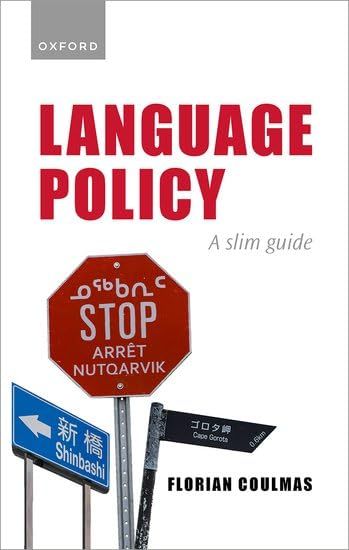
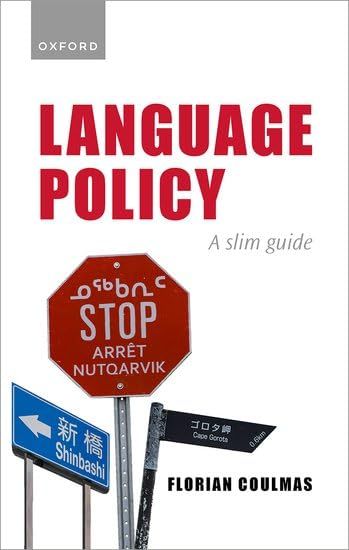
This book offers an accessible introduction to the main issues in language policy today, and to the origins and conceptual foundations of the relationship between language and the state. Florian Coulmas draws on specific examples from around the world to explore how countries make decisions about which language - and which variety or form of that language - should be used for key functions such as primary education, government administration, and the law. The book provides historical background to shed light on present-day policy disputes concerning language, and looks at how the resulting decisions are implemented in schools and other institutions. A common thread that runs through the chapters is the question of whether the involvement of the government in language regulation is a necessity, a blessing, or a curse. Written in a concise and engaging style, Language Policy: A Slim Guide is suitable for readers from all backgrounds who are interested in the interaction between language and politics.
Language Policy

Language Policy

Florian Coulmas

Oxford University Press
2025
nidottu
This book offers an accessible introduction to the main issues in language policy today, and to the origins and conceptual foundations of the relationship between language and the state. Florian Coulmas draws on specific examples from around the world to explore how countries make decisions about which language - and which variety or form of that language - should be used for key functions such as primary education, government administration, and the law. The book provides historical background to shed light on present-day policy disputes concerning language, and looks at how the resulting decisions are implemented in schools and other institutions. A common thread that runs through the chapters is the question of whether the involvement of the government in language regulation is a necessity, a blessing, or a curse. Written in a concise and engaging style, Language Policy: A Slim Guide is suitable for readers from all backgrounds who are interested in the interaction between language and politics.
Language, Writing, and Mobility

Language, Writing, and Mobility

Florian Coulmas

Oxford University Press
2022
sidottu
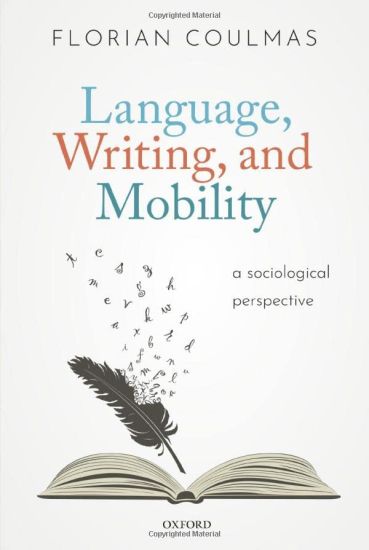
This book explores the interaction between three key aspects of everyday life—language, writing, and mobility —with particular focus on their effects on language contact. While the book adopts an established view of language and society that is in keeping with the sociolinguistic paradigm developed in recent decades, it differs from earlier studies in that it assigns writing a central position. Sociolinguistics has long concentrated primarily on speech, but Florian Coulmas shows in this volume that the social importance of writing should not be disregarded: it is the most consequential technology ever invented; it suggests stability; and it defines borders. Linguistic studies have often emphasized that writing is external to language, but the discipline nevertheless owes its analytic categories to writing. Finally, the digital revolution has fundamentally changed communication patterns, transforming the social functions of writing and consequently also of language.
Semi-State Actors in Cybersecurity

Semi-State Actors in Cybersecurity

Florian J. Egloff

OXFORD UNIVERSITY PRESS INC
2022
sidottu
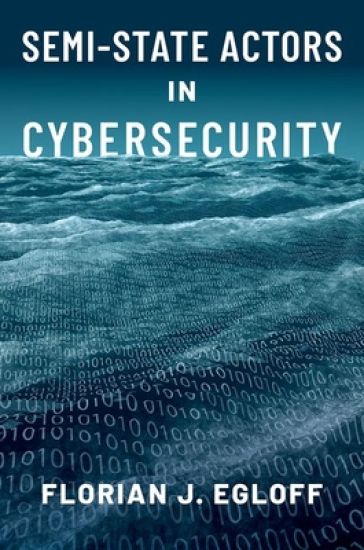
The universe of actors involved in international cybersecurity includes both state actors and semi- and non-state actors, including technology companies, state-sponsored hackers, and cybercriminals. Among these are semi-state actors--actors in a close relationship with one state who sometimes advance this state's interests, but are not organizationally integrated into state functions. In Semi-State Actors in Cybersecurity, Florian J. Egloff argues that political relations in cyberspace fundamentally involve concurrent collaboration and competition between states and semi-state actors. To understand the complex interplay of cooperation and competition and the power relations that exist between these actors in international relations, Egloff looks to a historical analogy: that of mercantile companies, privateers, and pirates. Pirates, privateers, and mercantile companies were integral to maritime security between the 16th and 19th centuries. In fact, privateers and mercantile companies, like today's tech companies and private cyber contractors, had a particular relationship to the state in that they conducted state-sanctioned private attacks against foreign vessels. Pirates, like independent hackers, were sometimes useful allies, and other times enemies. These actors traded, explored, plundered, and controlled sea-lanes and territories across the world's oceans--with state navies lagging behind, often burdened by hierarchy. Today, as cyberspace is woven into the fabric of all aspects of society, the provision and undermining of security in digital spaces has become a new arena for digital pirates, privateers, and mercantile companies. In making the analogy to piracy and privateering, Egloff provides a new understanding of how attackers and defenders use their proximity to the state politically and offers lessons for understanding how actors exercise power in cyberspace. Drawing on historical archival sources, Egloff identifies the parallels between today's cyber in-security and the historical quest for gold and glory on the high seas. The book explains what the presence of semi-state actors means for national and international security, and how semi-state actors are historically and contemporarily linked to understandings of statehood, sovereignty, and the legitimacy of the state.
Semi-State Actors in Cybersecurity

Semi-State Actors in Cybersecurity

Florian J. Egloff

OXFORD UNIVERSITY PRESS INC
2022
nidottu
The universe of actors involved in international cybersecurity includes both state actors and semi- and non-state actors, including technology companies, state-sponsored hackers, and cybercriminals. Among these are semi-state actors--actors in a close relationship with one state who sometimes advance this state's interests, but are not organizationally integrated into state functions. In Semi-State Actors in Cybersecurity, Florian J. Egloff argues that political relations in cyberspace fundamentally involve concurrent collaboration and competition between states and semi-state actors. To understand the complex interplay of cooperation and competition and the power relations that exist between these actors in international relations, Egloff looks to a historical analogy: that of mercantile companies, privateers, and pirates. Pirates, privateers, and mercantile companies were integral to maritime security between the 16th and 19th centuries. In fact, privateers and mercantile companies, like today's tech companies and private cyber contractors, had a particular relationship to the state in that they conducted state-sanctioned private attacks against foreign vessels. Pirates, like independent hackers, were sometimes useful allies, and other times enemies. These actors traded, explored, plundered, and controlled sea-lanes and territories across the world's oceans--with state navies lagging behind, often burdened by hierarchy. Today, as cyberspace is woven into the fabric of all aspects of society, the provision and undermining of security in digital spaces has become a new arena for digital pirates, privateers, and mercantile companies. In making the analogy to piracy and privateering, Egloff provides a new understanding of how attackers and defenders use their proximity to the state politically and offers lessons for understanding how actors exercise power in cyberspace. Drawing on historical archival sources, Egloff identifies the parallels between today's cyber in-security and the historical quest for gold and glory on the high seas. The book explains what the presence of semi-state actors means for national and international security, and how semi-state actors are historically and contemporarily linked to understandings of statehood, sovereignty, and the legitimacy of the state.
Guardians of Language

Guardians of Language

Florian Coulmas

Oxford University Press
2016
sidottu
This book provides an accessible account of the origins and conceptual foundations of language policy. Florian Coulmas discusses the influence of twenty intellectuals from medieval to modern times, and from a variety of cultures, who have taken issue with language, its use, development, and political potential. These 'guardians of language' range from renowned figures such as Dante, Noah Webster, and Gandhi, to less well-known individuals such as the Spanish grammarian Antonio de Nebrija and Senegalese politician and poet Léopold Sédar Senghor. Each chapter begins by providing background information on the scholar whose work is being reviewed and ends with a summary of his key thoughts on language in the form of an imaginary interview.
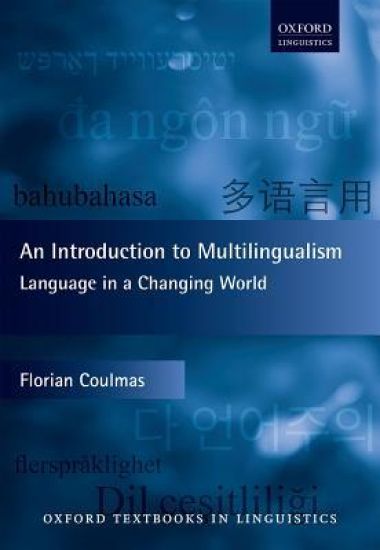
An Introduction to Multilingualism

An Introduction to Multilingualism

Florian Coulmas

Oxford University Press
2017
sidottu
This book offers an introduction to the many facets of multilingualism in a changing world. It begins with an overview of the multiplicity of human languages and their geographic distribution, before moving on to the key question of what multilingualism actually is and what is understood by terms such as 'mother tongue', 'native speaker', and 'speech community'. In the chapters that follow, Florian Coulmas systematically explores multilingualism with respect to the individual, institutions, cities, nations, and cyberspace. In each of these domains, the dynamics of language choice are undergoing changes as a result of economic, political, and cultural forces. Against this background, two chapters discuss the effects of linguistic diversity on the integration and separation of language and society, before a final chapter describes and assesses research methods for investigating multilingualism. Each chapter concludes with problems and questions for discussion, which place the topic in a real-world context. The book explores where, when, and why multilingualism came to be regarded as a problem, and why it presents a serious challenge for linguistic theory today. It provides the basic tools to analyse different kinds of multilingualism at both the individual and society level, and will be of interest to students of linguistics, sociology, education, and communication studies.
An Introduction to Multilingualism

An Introduction to Multilingualism

Florian Coulmas

Oxford University Press
2017
nidottu
This book offers an introduction to the many facets of multilingualism in a changing world. It begins with an overview of the multiplicity of human languages and their geographic distribution, before moving on to the key question of what multilingualism actually is and what is understood by terms such as 'mother tongue', 'native speaker', and 'speech community'. In the chapters that follow, Florian Coulmas systematically explores multilingualism with respect to the individual, institutions, cities, nations, and cyberspace. In each of these domains, the dynamics of language choice are undergoing changes as a result of economic, political, and cultural forces. Against this background, two chapters discuss the effects of linguistic diversity on the integration and separation of language and society, before a final chapter describes and assesses research methods for investigating multilingualism. Each chapter concludes with problems and questions for discussion, which place the topic in a real-world context. The book explores where, when, and why multilingualism came to be regarded as a problem, and why it presents a serious challenge for linguistic theory today. It provides the basic tools to analyse different kinds of multilingualism at both the individual and society level, and will be of interest to students of linguistics, sociology, education, and communication studies.
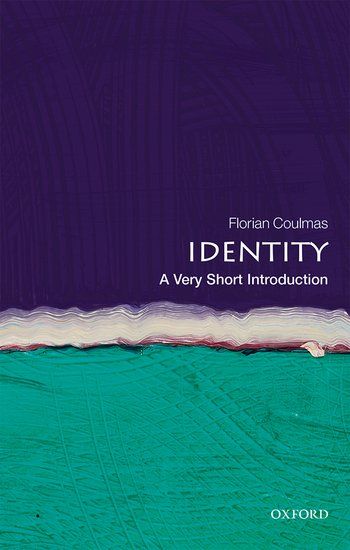
Identity

Identity

Florian Coulmas

Oxford University Press
2019
nidottu
Identity has become one of the most widely used terms today, appearing in many different contexts. Anything and everything has an identity, and identity crises have become almost equally pervasive. Yet 'identity' is extremely versatile, meaning different things to different people and in different scientific disciplines. To many its meaning seems self-evident, since its various uses share common features, so often the term is used without a definition of what, exactly, is meant by it. This provokes the core question: What exactly is identity? In this Very Short Introduction Florian Coulmas provides a survey of the many faces of the concept of identity, and discusses its significance and varied meanings in the fields of philosophy, sociology, and psychology, as well as politics and law. Tracing our concern with identity to its deep roots in Europe's intellectual history, individualism, and the felt need to draw borderlines, Coulmas identifies the most important features used to mark off individual and collective identities, and demonstrates why they are deemed important. He concludes with a glimpse at the many ways in which literature has engaged with problems of identity throughout history. ABOUT THE SERIES: The Very Short Introductions series from Oxford University Press contains hundreds of titles in almost every subject area. These pocket-sized books are the perfect way to get ahead in a new subject quickly. Our expert authors combine facts, analysis, perspective, new ideas, and enthusiasm to make interesting and challenging topics highly readable.
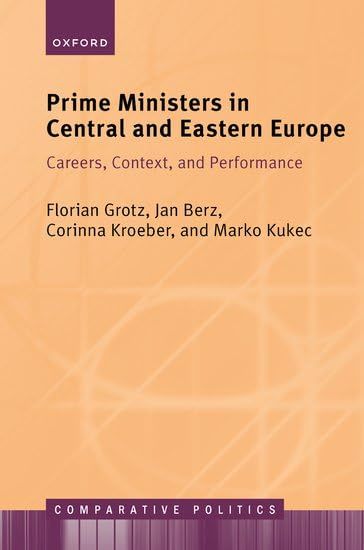
Prime Ministers in Central and Eastern Europe

Prime Ministers in Central and Eastern Europe

Florian Grotz; Jan Berz; Corinna Kroeber; Marko Kukec

Oxford University Press
2025
sidottu
Prime Ministers (PMs) are the most influential, powerful, and visible politicians in parliamentary democracies. Their prominent role has been increasing in Western democracies due to the 'presidentialization of politics'. But is this also true for new democracies, such as those in post-communist Central and Eastern Europe (CEE)? As politics in CEE has been characterized by high personalization, weak voter-party linkages, and strong media influence of political leaders, prime-ministerial performance may be even more important for the functioning of parliamentary democracy in those countries. At the same time, conventional wisdom suggests that prime ministers in CEE perform weakly because they lack political experience and operate in an extraordinarily difficult context, but this assumption has not been systematically examined. To close this research gap, this book presents a new conceptual approach to measuring prime-ministerial performance and offers a novel dataset of 131 cabinets in eleven CEE countries between 1990 and 2018. The comparative analyses of this data reveal that the political experience of post-communist prime ministers varies considerably-they range from politically inexperienced outsiders to insiders with long-standing careers in parliament, government, and party leadership. At the same time, multivariate analyses of the quantitative data and qualitative cases demonstrate that variations in the careers, contexts, and performance of prime ministers are systematically connected. In this way, the book not only qualifies conventional assumptions about prime ministers in CEE but also substantiates the theoretical relationship between their careers, contexts, and performance. Prime Ministers in Central and Eastern Europe thus contributes to an enhanced understanding of the functioning of post-communist democracies and provides new insights for scholarly work engaging with political leadership. Comparative Politics is a series for researchers, teachers, and students of political science that deals with contemporary government and politics. Global in scope, books in the series are characterized by a stress on comparative analysis and strong methodological rigour. The series is published in association with the European Consortium for Political Research. For more information visit: www.ecprnet.eu. The series is edited by Nicole Bolleyer, Chair of Comparative Political Science, Geschwister Scholl Institut, LMU Munich and Jonathan Slapin, Professor of Political Institutions and European Politics, Department of Political Science, University of Zurich.
The Right to Education in India

The Right to Education in India

Florian Matthey-Prakash

OUP India
2019
sidottu
What does it mean for education to be a fundamental right, and how may children benefit from it? Surprisingly, even when the right to education was added to the Indian Constitution as Article 21A, this question received barely any attention. This book identifies justiciability (or, more broadly, enforceability) as the most important feature of Article 21A, meaning that children and their parents must be provided with means to effectively claim their right from the state. Otherwise, it would remain a "right" only on paper. The book highlights how lack of access to the Indian judiciary means that the constitutional promise of justiciability is unfulfilled, particularly so because the poor, who cannot afford quality private education for their children, must be the main beneficiaries of the right. It then deals with possible alternative means the state may provide for the poor to claim the benefits under Article 21A, and identifies the grievance redress mechanism created by the Right to Education Act as a potential system of enforcement. Even though this system is found to be deficient, the book concludes with an optimistic outlook, hoping that rights advocates may, in the future, focus on improving such mechanisms for legal empowerment.
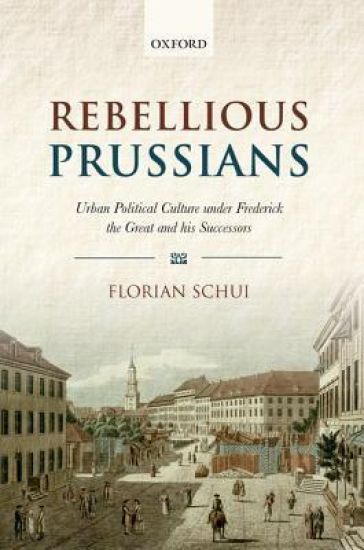
Rebellious Prussians

Rebellious Prussians

Florian Schui

Oxford University Press
2013
sidottu
Prussian discipline is legendary. Central to debates about modern German history is the view that an oppressive Prussian state cast a shadow on the development of civil society. In particular, historians have seen the absence of a revolution in the eighteenth century as a symptom of a delayed and incomplete emancipation of the Prussian bourgeoisie. Prussia's urban dwellers have often been portrayed as poor relations of the self-reliant and assertive bourgeois of Western Europe and the Atlantic world. Economically backward and politically oppressed, they were allegedly in no position to challenge the iron grip of the state and question the authority of the Hohenzollern dynasty. Drawing from extensive and original research, Florian Schui challenges the accepted view and argues that Prussians in the eighteenth century were much more willing to challenge the state than has been recognised. Schui explores several instances where urban Prussians successfully resisted government policies and forced Frederick the Great and his successors to give in to their demands. Rebellious Prussians thus sheds light on a little-known historical reality in which weak Hohenzollern monarchs - and a still weaker Prussian bureaucracy - were confronted with prosperous, fearless, argumentative, and occasionally violent Prussian burghers. Such conflicts between state and citizens were by no means unique to Prussia. Rather the events in Prussia were, on many levels, connected to similar contemporary developments in other parts of Europe and North America. Florian Schui systematically explores these links and thus develops a new European and Atlantic perspective on Prussian history in the eighteenth century.
Theory of Form

Theory of Form

Florian Klinger

University of Chicago Press
2022
sidottu
A pragmatist conception of artistic form, through a study of the painter Gerhard Richter. In this study of the practice of contemporary painter Gerhard Richter, Florian Klinger proposes a fundamental change in the way we think about art today. In reaction to the exhaustion of the modernist-postmodernist paradigm’s negotiation of the “essence of art,” he takes Richter to pursue a pragmatist model that understands artistic form as action. Here form is no longer conceived according to what it says—as a vehicle of expression, representation, or realization of something other than itself—but strictly according to what it does. Through its doing, Klinger argues, artistic form is not only more real but also more shared than non-artistic reality, and thus enables interaction under conditions where it would otherwise not be possible. It is a human practice aimed at testing and transforming the limits of shared reality, urgently needed in situations where such reality breaks down or turns precarious. Drawing on pragmatist thought, philosophical aesthetics, and art history, Klinger’s account of Richter’s practice offers a highly distinctive conceptual alternative for contemporary art in general.
Theory of Form

Theory of Form

Florian Klinger

University of Chicago Press
2022
nidottu
A pragmatist conception of artistic form, through a study of the painter Gerhard Richter. In this study of the practice of contemporary painter Gerhard Richter, Florian Klinger proposes a fundamental change in the way we think about art today. In reaction to the exhaustion of the modernist-postmodernist paradigm’s negotiation of the “essence of art,” he takes Richter to pursue a pragmatist model that understands artistic form as action. Here form is no longer conceived according to what it says—as a vehicle of expression, representation, or realization of something other than itself—but strictly according to what it does. Through its doing, Klinger argues, artistic form is not only more real but also more shared than non-artistic reality, and thus enables interaction under conditions where it would otherwise not be possible. It is a human practice aimed at testing and transforming the limits of shared reality, urgently needed in situations where such reality breaks down or turns precarious. Drawing on pragmatist thought, philosophical aesthetics, and art history, Klinger’s account of Richter’s practice offers a highly distinctive conceptual alternative for contemporary art in general.
Pricing Perspectives

Pricing Perspectives

Florian Siems

Palgrave Macmillan
2008
sidottu
The world of pricing has been changing at a fast pace. There has been a development of new dynamic pricing strategies, an explosion of new pricing tactics, and a focus on smarter buyers. This book focuses on those developments and highlights new perspectives for pricing strategies.
Advertising in the Aging Society

Advertising in the Aging Society

Florian Kohlbacher; Michael Prieler

Palgrave Macmillan
2016
sidottu
Population aging is a powerful megatrend affecting many countries around the world. This demographic shift has vast effects on societies, economies and businesses, and thus also for the advertising industry. Advertising in the Aging Society presents insights from a large-scale content analysis as well as questionnaire surveys among advertising practitioners and consumers in Japan. As the most aged society in the world, Japan lends itself as particularly suitable to study the implications of population aging. This book shows that older people, and especially older women, are highly underrepresented in advertising and are generally portrayed in stereotypical, albeit not necessarily unfavorable ways. This is despite the fact that advertising practitioners have a generally positive view towards using older models, even though only for an older target audience. Finally the book explore how both younger and older consumers perceive the representation of older people in advertising as stereotypical and partly negative, and are willing to boycott companies portraying older people negatively.
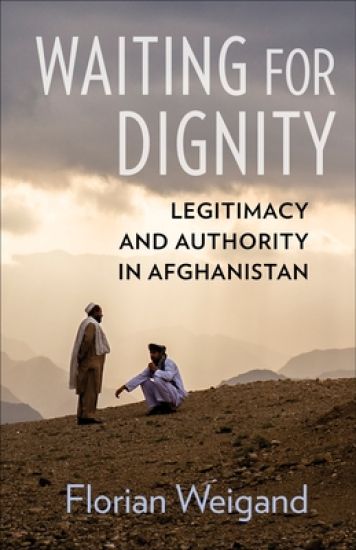
Waiting for Dignity

Waiting for Dignity

Florian Weigand

Columbia University Press
2022
sidottu
In August 2021, Taliban fighters entered the presidential palace in Kabul, ending twenty years of international efforts to build a democratic state in Afghanistan. Did the Taliban’s success rest on coercion and violence alone, or did they win the battle for public support through ideology and better services? Or did most people in the country not believe in the idea of the state at all, trusting only local elders and traditional councils? What is the source of legitimacy during armed conflict?In Waiting for Dignity, Florian Weigand investigates legitimacy and its absence in Afghanistan. Drawing on hundreds of interviews, he examines the perspectives of ordinary people in Afghanistan as well as those of rival claimants to authority: insurgents, warlords, members of parliament, security forces, and community leaders. By exploring how different types of authority attempted to legitimize their rule, Waiting for Dignity challenges common assumptions about how to build legitimacy, such as by delivering services, holding elections, or adopting traditional institutions. Weigand shows that what matters in conflict zones is what he terms interactive dignity: Citizens judge authorities on the basis of their day-to-day experiences with them. People want to be treated with dignity. The extent to which people perceive interactions to be fair, inclusive, and respectful is vital to the construction of lasting order. Combining theoretical originality with in-depth and compelling empirical detail, this book offers timely new insights into recent developments in Afghanistan and the challenges facing conflict-torn areas more widely.
Waiting for Dignity

Waiting for Dignity

Florian Weigand

Columbia University Press
2022
pokkari
In August 2021, Taliban fighters entered the presidential palace in Kabul, ending twenty years of international efforts to build a democratic state in Afghanistan. Did the Taliban’s success rest on coercion and violence alone, or did they win the battle for public support through ideology and better services? Or did most people in the country not believe in the idea of the state at all, trusting only local elders and traditional councils? What is the source of legitimacy during armed conflict?In Waiting for Dignity, Florian Weigand investigates legitimacy and its absence in Afghanistan. Drawing on hundreds of interviews, he examines the perspectives of ordinary people in Afghanistan as well as those of rival claimants to authority: insurgents, warlords, members of parliament, security forces, and community leaders. By exploring how different types of authority attempted to legitimize their rule, Waiting for Dignity challenges common assumptions about how to build legitimacy, such as by delivering services, holding elections, or adopting traditional institutions. Weigand shows that what matters in conflict zones is what he terms interactive dignity: Citizens judge authorities on the basis of their day-to-day experiences with them. People want to be treated with dignity. The extent to which people perceive interactions to be fair, inclusive, and respectful is vital to the construction of lasting order. Combining theoretical originality with in-depth and compelling empirical detail, this book offers timely new insights into recent developments in Afghanistan and the challenges facing conflict-torn areas more widely.