Kirjojen hintavertailu. Mukana 11 717 486 kirjaa ja 12 kauppaa.

Kirjahaku

Etsi kirjoja tekijän nimen, kirjan nimen tai ISBN:n perusteella.

1000 tulosta hakusanalla Forrest Roth

Be Ready When the Sh*t Goes Down

Be Ready When the Sh*t Goes Down

Forrest Griffin; Erich Krauss

William Morrow Paperbacks
2011
nidottu
In "Got Fight?" Forrest Griffin and Erich Krauss unleashed their unique brand of humor by showing people how to toughen up. Now in this sequel, Griffin and Krauss teach them the ultimate form of manliness: surviving the coming apocalypse. For years Forrest Griffin has been waiting anxiously to find himself in a post-apocalyptic future. Why is he so excited about the near-extinction of mankind? Because of the freedom it offers: with grooming and personal hygiene no longer a prerequisite to social acceptance, men can let their mutton chops grow and live out their secret fantasies of becoming Wolverine. They can kill animals with their bare hands, practice throw knives all day, and never have to say excuse me or please. With survival tips, illustrations, and photos of Forrest showing off his wilderness expertise, this book is a survival guide for everyone who believes the end is near and wants to be prepared. From eating in the wild to fighting dirty in a world that looks like Mad Max, "Be Ready When the Sh*t Goes Down" is the ultimate guide for staying alive, no matter the conditions.
Troubleshooting SQL

Troubleshooting SQL

Forrest Houlette

Osborne/McGraw-Hill
2001
pokkari
This programmer's resource explains how to optimize SQL statements and procedures and create a customized SQL debugging environment for error-free applications. You'll get programming tips, best practices, plus coverage of Oracle SQL and PL/SQL and T-SQL for SQL Server.
Researching Developing Countries

Researching Developing Countries

Forrest Daniel Wright

Chandos Publishing (Oxford) Ltd
2015
nidottu
Why are some countries rich while others are poor? Why are some well governed while others experience frequent conflict? And how do you measure a country’s true success anyways? Social scientists have attempted to answer these types of questions for decades, and have increasingly turned to data for this task. Researching Developing Countries: A Data Resource Guide for Social Scientists serves as a reference guide for social scientists and students interested in answering these complex questions. The book will also be helpful to librarians serving the social science disciplines. Topics covered in the book include: human development, economics, governance, conflict, demographics, migration and refugees, environment, foreign aid, energy and infrastructure, innovation and entrepreneurship, geography and urban development, and public opinion.
Philosophic Classics, Volume IV

Philosophic Classics, Volume IV

Forrest Baird

Routledge Member of the Taylor and Francis Group
2002
nidottu
This anthology of readings in contemporary Western philosophy focuses on 19th-century philosophers who represent a variety of responses to the issue of their day: whether or not there was a knowable, nonhuman rational order upon which thinking persons could willfully choose to act. The selections are readable and accessible, yet remain faithful to the original works. Accompanying the text are drawings, diagrams, photographs, and a timeline; all of which allow the reader to really study the major philosophical thinkers of the 19th-century: Bentham, Wollstonecraft, Fichte, Hegel, Schopenhauer, Comte, Feuerbach, Mill, Kierkegaard, Marx, Peirce, James, and Nietzche. For anyone interested in owning a collection of works from the greatest philosophical thinkers in the 19th-century.
Philosophic Classics, Volume V

Philosophic Classics, Volume V

Forrest Baird

Routledge Member of the Taylor and Francis Group
2002
nidottu
For courses in 20th-century Philosophy, recent Continental Philosophy, Anglo-American Philosophy; as part of courses in Contemporary Philosophy; or courses on Epistemology or Metaphysics that take a historical approach. This anthology in 20th-century philosophical classics includes recent European and American philosophers, and contains texts that are presently seen as classics or as emerging classics. It features complete works or complete sections of works. Includes introductions to each philosopher, an abundance of drawings, diagrams, photographs, and a timeline.
Curriculum Leadership

Curriculum Leadership

Forrest Parkay; Eric Anctil; Glen Hass

Pearson
2013
nidottu
A premier collection of high-quality articles from leading voices in education, curriculum planning, and development. Curriculum Leadership: Readings for Developing Quality Educational Programs, 10/e combines high-quality articles with cases that illustrate pre-K through high school curriculum development in action. Featuring 72 articles from historic greats and current leaders, this book balances seminal works with contemporary perspectives. New to this edition are 38 recently published articles spotlighting technology, Common Core State Standards, high-stakes testing, and assessment. Each chapter is filled with background theory, articles, case studies and essays that show school leaders how to plan quality educational programs.
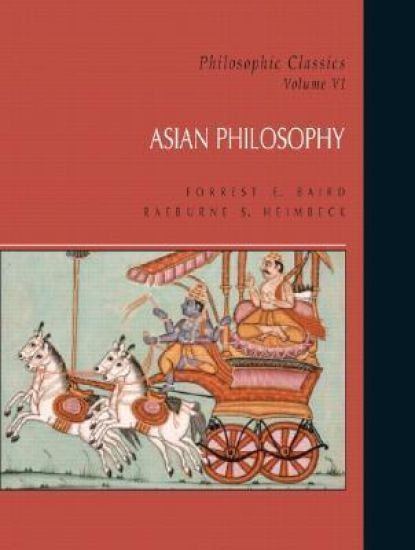
Philosophic Classics: Asian Philosophy, Volume VI

Philosophic Classics: Asian Philosophy, Volume VI

Forrest Baird; Raeburne S. Heimbeck

Routledge Member of the Taylor and Francis Group
2017
nidottu
Accessible to today’s readers, this anthology of readings is a survey of Asian thought–in India and China. It strikes a balance between major and minor figures, and features the best available translations of texts–complete works or complete sections of works–which are both central to each thinker or school and are widely accepted to be part of the emerging Asian canon. Introductions to each historical period and to each thinker, photographs, and a timeline help to keep learners focused throughout. For individuals interested in learning about World Religions, Asian thought, or Chinese and Indian philosophy.
Becoming a Teacher

Becoming a Teacher

Forrest Parkay

Pearson
2019
nidottu
Explore the world teaching today through first-person stories and in-depth coverage of current issues With a bright and engaging writing style that enlists the voices of experts as well as novices, Becoming a Teacher explores what it means to be a professional teacher in today’s climate of accountability, high-stakes testing, and changing legislation. Becoming a Teacher embraces and articulates the challenges of the field of education, outlining ways to be an agent of change in the profession; pinpointing meaningful uses of technology in the classroom; clarifying the realities of diversity in the classroom; and clearly outlining past, present, and future thoughts on curriculum, instruction, assessment, management, philosophy, and issues in education. The down-to-earth and straightforward approach provides students with the tools and information necessary to answer the question, “Is teaching for me?” Fully revised, the 11th Edition includes increased emphasis on culturally responsive teaching; two new chapters that address curriculum, standards, and student learning (Ch. 11) and becoming a professional teacher (Ch. 13); a thoroughly revised chapter on integrating technology into teaching (Ch. 12); emphasis on teacher preparation and STEM; and expanded chapter coverage to address the most current trends and issues in teaching such as students of undocumented immigrant parents, adverse childhood experiences (ACE), and trauma-sensitive schools. Becoming a Teacher, 11th Edition is also available via RevelTM, an interactive learning environment that enables students to read, practice, and study in one continuous experience.
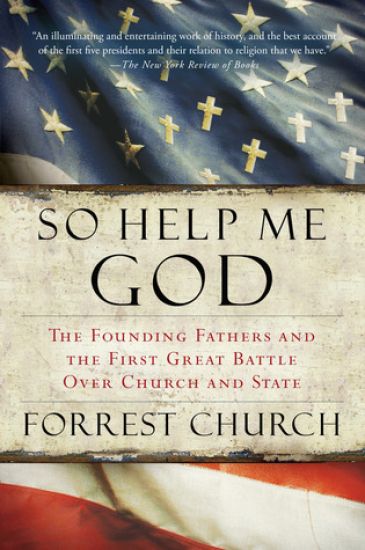
So Help Me God: The Founding Fathers and the First Great Battle Over Church and State
Today's dispute over the line between church and state (or the lack thereof) is neither the first nor the fiercest in our history. In a revelatory look at our nation's birth, Forrest Church re-creates our first great culture war--a tumultuous, nearly forgotten conflict that raged from George Washington's presidency to James Monroe's. Religion was the most divisive issue in the nation's early presidential elections. Battles raged over numerous issues while the bible and the Declaration of Independence competed for American affections. The religous political wars reached a vicious peak during the War of 1812; the American victory drove New England's Christian right to withdraw from electoral politics, thereby shaping our modern sense of church-state separation. No longer entangled, both church and state flourished.Forrest Church has written a rich, page-turning history, a new vision of our earliest presidents' beliefs that stands as a reminder and a warning for America today.
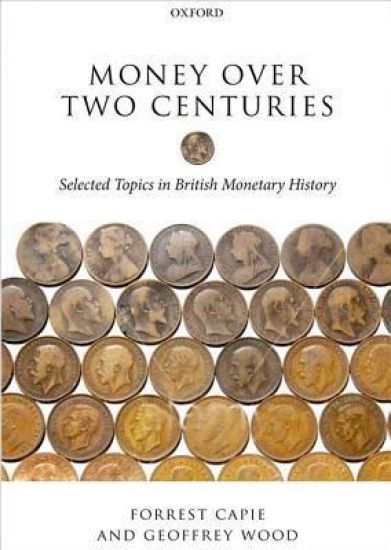
Money over Two Centuries

Money over Two Centuries

Forrest Capie; Geoffrey Wood

Oxford University Press
2012
sidottu
This collection of essays by the eminent financial and monetary historians Forrest Capie and Geoffrey Wood examines and offers explanations of the parts played by money and the banking system in the British economy over the last two centuries. Structured in three chronological parts, it covers: the period of the classical gold standard from 1870 until the First World War, and the associated key issues of the time; the troublesome interwar years, when there was a breakdown in the international economy, the Second World War and immediate post-War years; and the international dimensions of the post-War period up to the present day. It deals with financial crises, periods of stability, and Britain in the international system, and covers topics such as debt management, money and the exchange rate, interest rates and velocity, as well as central bank independence, monetary unions, price controls and the role of the IMF. Combining empirical research and economic theory, this timely publication is essential reading for all scholars of financial, monetary, and economic history.
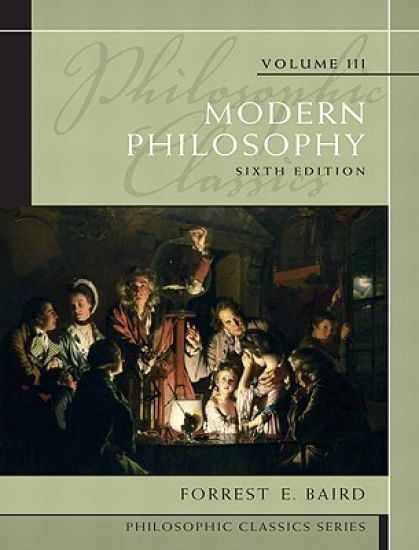
Philosophic Classics, Volume III

Philosophic Classics, Volume III

Forrest Baird

Routledge Member of the Taylor and Francis Group
2016
nidottu
Esteemed for providing the best available translations, Philosophic Classics: Modern Philosophy, features complete works or complete sections of the most important works by the major thinkers, as well as shorter samples from transitional thinkers. First published in 1961, Forrest E. Baird's revision of Philosophic Classics continues the tradition of providing generations of students with high quality course material. Using the complete works, or where appropriate, complete sections of works, this anthology allows philosophers to speak directly to students.
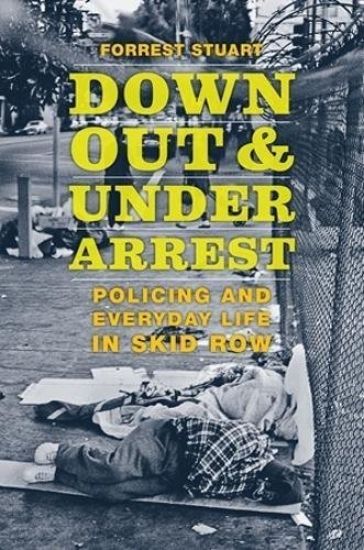
Down, Out, and Under Arrest

Down, Out, and Under Arrest

Forrest Stuart

University of Chicago Press
2018
pokkari
In his first year working in Los Angeles's Skid Row, Forrest Stuart was stopped on the street by police fourteen times. Usually for doing little more than standing there. Juliette, a woman he met during that time, has been stopped by police well over one hundred times, arrested upward of sixty times, and has given up more than a year of her life serving weeklong jail sentences. Her most common crime? Simply sitting on the sidewalk--an arrestable offense in LA. Why? What purpose did those arrests serve, for society or for Juliette? How did we reach a point where we've cut support for our poorest citizens, yet are spending ever more on policing and prisons? That's the complicated, maddening story that Stuart tells in Down, Out and Under Arrest, a close-up look at the hows and whys of policing poverty in the contemporary United States. What emerges from Stuart's years of fieldwork--not only with Skid Row residents, but with the police charged with managing them--is a tragedy built on mistakes and misplaced priorities more than on heroes and villains. He reveals a situation where a lot of people on both sides of this issue are genuinely trying to do the right thing, yet often come up short. Sometimes, in ways that do serious harm. At a time when distrust between police and the residents of disadvantaged neighborhoods has never been higher, Stuart's book helps us see where we've gone wrong, and what steps we could take to begin to change the lives of our poorest citizens--and ultimately our society itself--for the better.
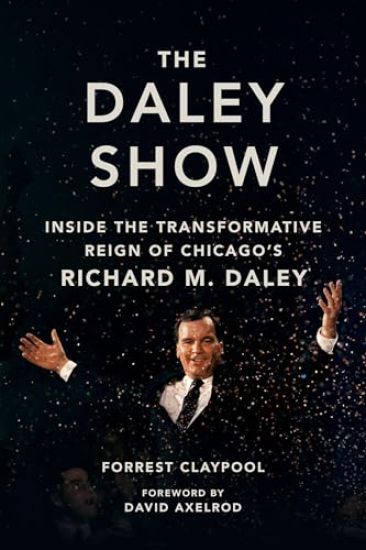
The Daley Show

The Daley Show

Forrest Claypool; David Axelrod

UNIVERSITY OF ILLINOIS PRESS
2024
sidottu
“You have to have passion. You have to have honesty in office. You have to love the people.” Those words summed up the outlook, if not always the actions, of Chicago Mayor Richard M. Daley. Elected to govern a city roiled by racial and economic crises, Daley adroitly wielded the tools of power in the rough-and-tumble world of Chicago politics. Under his rule, Chicago rebuilt a dying downtown, becoming a cultural and tourism mecca punctuated by construction of the iconic Millenium Park. To drive growth, he engineered a massive expansion of O’Hare Airport. To correct a historical injustice, he razed the city’s notorious public housing high rises as part of a sweeping plan to transform the lives of the city’s poorest residents. Yet corruption and graft, City Hall’s role in calamities like the 1995 heat wave, and Daley’s inaction in the face of evidence of police torture, tarnished his many accomplishments. A two-time Daley chief-of-staff, Forrest Claypool draws on his long career in local government to examine the lasting successes, ongoing dramas, and disastrous failures that defined Daley’s twenty-two years in City Hall. Throughout, Claypool uses Daley’s career to illustrate how effectual political leadership relies on an adept and unapologetic use of power--and how wielding that power without challenge inevitably pulls government toward corruption. A warts-and-all account of a pivotal figure in Chicago history, The Daley Show tells the story of how Richard M. Daley became the quintessential big city mayor.
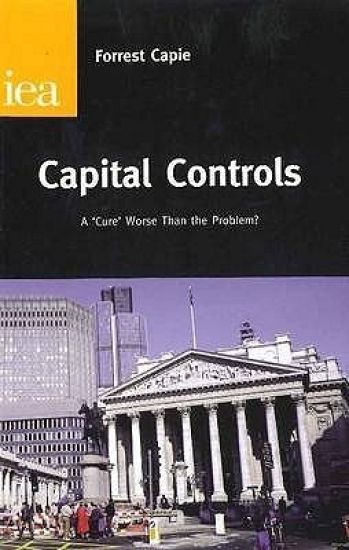
Capital Controls

Capital Controls

Forrest Capie

Institute of Economic Affairs
2002
nidottu
Free capital movements played an important part in the economic integration and globalisation of the nineteenth century. By the end of the century capital flows were on a remarkable scale. The modern use of capital controls dates back to the 1930s. Professor Capie analyses historical experience with capital controls, in Britain and elsewhere, and reviews the theory. He concludes that such controls are damaging and that there is no case for reviving them, as some economists have suggested and as anti-globalisers would wish. Capital mobility improves the worldwide allocation of resources, channelling resources to their most productive uses. Controls on capital movements result in dead weight losses and bureaucratic costs. They are difficult to remove and they damage the credibility of the government's commitment to a market economy.
Pride and Prejudice

Pride and Prejudice

Forrest R. White

Praeger Publishers Inc
1992
sidottu
Two events make the history of Norfolk in the 1950s remarkable: the voracity of its attack upon urban blight, and the ferocity of its resistance to school desegregation. One of the first cities in the nation to initiate large-scale redevelopment efforts, Norfolk was the chief battleground for court-ordered school desegregation. The author shows how Southern cities used their powers of redevelopment, city planning, and school administration to resist and delay school desegregation. He notes that this occurred in three distinct phases. These findings present a breakthrough in urban studies and school desegregation research. The author establishes that the history of school desegregation began much earlier than commonly thought, with almost a decade of planning, redevelopment, and urban renewal initiatives; and that school boards and administrators were only minor actors in a cast that included mayors, city councils, state legislators, planning commissioners, redevelopment authorities, and other public officials.
Compellence and the Strategic Culture of Imperial Japan

Compellence and the Strategic Culture of Imperial Japan

Forrest Morgan

Praeger Publishers Inc
2003
sidottu
Compellence is a fundamental tool of international security policy. This study explains how culture shapes the ways that decision-makers respond to the threat of force. First, Morgan builds a theoretical framework, next he analyzes three cases in which states attempted to compel Japan to change its behavior. The first is an in-depth analysis of the 1895 triple intervention in which Russia, Germany, and France forced Japanese leaders to return the Liaotung Peninsula to China following the first Sino-Japanese War. The second and third relate to World War II: the 1941 oil embargo intended to coerce Tokyo to withdraw its military from China and Washington's 1945 efforts to force Japan to end the war. These cases explain much of the seemingly irrational behavior previously attributed to Japanese leaders. Morgan demonstrates that culture clearly influenced outcomes in all three cases by conditioning Japanese perceptions, strategic preferences, and governmental processes. These findings are relevant today, and recent conflicts suggest that they will be increasingly important into the 21st century. This book offers policy makers a much-needed method for employing strategic culture analysis to develop more effective security strategies—strategies that will be of vital importance in an increasingly volatile world.
Varieties of Liberalism in Central America

Varieties of Liberalism in Central America

Forrest D. Colburn; Arturo Cruz S.

University of Texas Press
2007
pokkari
Why do some countries progress while others stagnate? Why does adversity strengthen some countries and weaken others? Indeed, in this era of unprecedented movement of people, goods, and ideas, just what constitutes a nation-state? Forrest Colburn and Arturo Cruz suggest how fundamental these questions are through an exploration of the evolution of Guatemala, El Salvador, Honduras, Nicaragua, and Costa Rica over the last quarter of a century, a period of intriguing, often confounding, paradoxes in Central America's development. Offering an elegant defense of empiricism, Colburn and Cruz explore the roles of geography and political choice in constructing nations and states. Countries are shown to be unique: there are a daunting number of variables. There is causality, but not the kind that can be revealed in the laboratory or on the blackboard. Liberalism-today defined as democracy and unfettered markets-may be in vogue, but it has no inherent determinants. Democracy and market economies, when welded to the messy realities of individual countries, are compatible with many different outcomes. The world is more pluralistic in both causes and effects than either academic theories or political rhetoric suggest.
My Car in Managua

My Car in Managua

Forrest D. Colburn

University of Texas Press
1991
pokkari
Histories of revolutions often focus on military, political, or economic upheavals but sometimes neglect to connect these larger events to the daily lives of "ordinary" people. Yet the peoples' perception that "things are worse than before" can topple revolutionary governments, as shown by the recent defeat of the Sandinista regime in Nicaragua and the governments of Eastern Europe. Providing the kind of prosaic, revealing details that more formal histories have excluded, My Car in Managua offers an objective, often humorous description of the great difficulties and occasional pleasures of life in Nicaragua during the Sandinista revolution.During a year's work (1985-1986) at the Instituto Centroamericano de AdministraciÓn de Empresas (INCAE), Forrest Colburn purchased a dilapidated car-and with it an introduction to everyday life in Nicaragua. His discoveries of the length of time required to register the car (approximately six weeks), the impossibility of finding spare parts (except when U.S. dollars were applied to the search), and the fact that "anyone getting into a car in Managua can be charged a small fee [for car watching] by anyone else" all suggest the difficulties most Nicaraguans faced living in a devastated economy.Drawing on experiences from visits throughout the revolutionary period (1979-1989), Colburn also sheds light on how the Revolution affected social customs and language, gender roles and family relationships, equality and authority, the availability of goods and services, the status of ethnic minorities, and governmental and other institutions. Illustrations by Nicaragua's celebrated political cartoonist RÓger SÁnchez Flores enliven the lucid text.