Kirjojen hintavertailu. Mukana 12 016 292 kirjaa ja 12 kauppaa.

Kirjahaku

Etsi kirjoja tekijän nimen, kirjan nimen tai ISBN:n perusteella.

1000 tulosta hakusanalla Frank Merlo

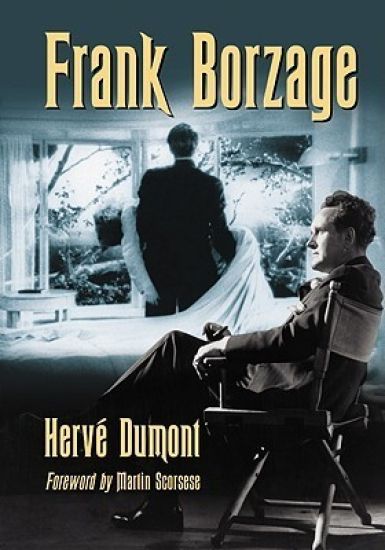
Frank Borzage

Frank Borzage

Hervé Dumont

McFarland Co Inc
2009
pokkari
This work brings to readers of English a comprehensive and engaging treatment of one of America's greatest, if largely forgotten, film directors. Dumont's celebrated 1993 study, translated from the French by Jonathan Kaplansky, offers complete coverage of Borzage's entire career--the more than 100 films he made and the effect of those films on movie audiences, especially between 1920 and 1940. Lavishly illustrated with 120 photographs, the book also contains a complete filmography, a chronological bibliography, and an index.
Col. Frank Huger, C.S.A.

Col. Frank Huger, C.S.A.

Frank Huger

McFarland Co Inc
2011
pokkari
Mostly cheerful and optimistic in tone, these missives include sketches of the battles in which Huger participated and fair and honest opinions of his superiors and fellow soldiers, including harsh criticism of generals Braxton Bragg and James Longstreet. Huger also declares his frustration with technical artillery problems and his appetite for the charms of young women at home. The colonel's correspondence offers insights into the day-to-day life of an artillery man in Virginia and Tennessee and reveals the trials and triumphs of one patriotic family during wartime. An informative introduction details his family background, his education at West Point, and his postwar career as a railroad executive.
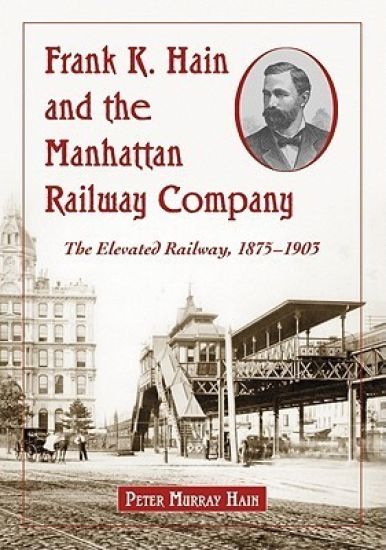
Frank K. Hain and the Manhattan Railway Company

Frank K. Hain and the Manhattan Railway Company

Peter Murray Hain

McFarland Co Inc
2011
pokkari
Organized under the Rapid Transit Act of 1875, the Manhattan Railway Company (commonly known as the Manhattan Elevated Railway, or the "el") dominated public transportation in late 19th-century New York City. Its four lines extended the length of Manhattan Island into the Bronx, with 334 steam locomotives carrying 1,122 passenger cars over 102 miles of track. From 1880 to 1902, more passengers traveled the el than on any other rapid transit system in the world. Frank K. Hain was vice president and general manager of the company for 16 years, during which time he confronted union organizers, horrifying accidents, and a relentless media crusade for conversion to electric power and the establishment of a subway system. This chronicle of New York's elevated steam railways illuminates an important era in transportation.
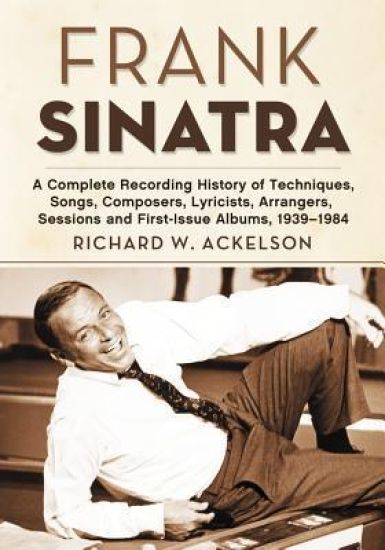
Frank Sinatra

Frank Sinatra

Richard W. Ackelson

McFarland Co Inc
2011
pokkari
Frank Sinatra's 45-year recording career and the songs he recorded: his professional biography as a recording artist; the evolution of his vocal technique and performance style; sources and variety of songs recorded; his 12 most-recorded composers and lyricists (20 others are discussed briefly); his interaction with his six major sources of orchestration; his recording sessions; a review of all albums referenced; and the technical and commercial side of his career. Supporting the research are a master song list (approximately 1,250 recordings), songs by publication date, composer and lyricist indexes, every arrangers work (listing each conductor and orchestra), a detailed list of recording sessions--in order--plus radio, television and film work, and three album lists, showing contents, order of first releases, label sequence and producers.
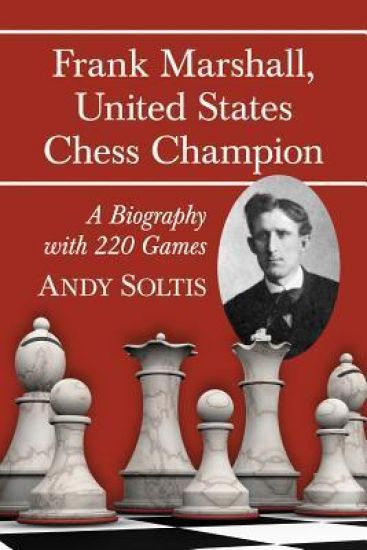
Frank Marshall, United States Chess Champion
Frank Marshall (1877-1944) reigned as America's chess champion from 1907 through 1936--the longest stint of anyone in history. A colorful character almost always decked out in an ascot and chewing a cigar, his career coincided with many evolutionary changes in competitive chess. Marshall was a master gamesman. He took up the game of salta, akin to Chinese checkers, and was soon world champion. But more than anything, he loved chess, claiming that after he learned the game at 10 he played every day for the next 57 years. Marshall's life and playing style are fully examined here, including 220 of his games (some never before published) with 190 positional diagrams.
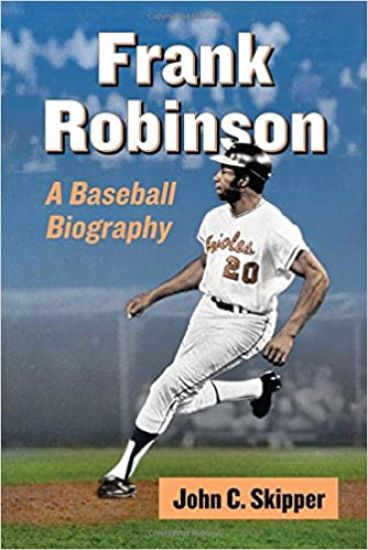
Frank Robinson

Frank Robinson

John C. Skipper

McFarland Co Inc
2014
pokkari
Frank Robinson was one of the greatest baseball players of the 20th century. He was Rookie of the Year for the Cincinnati Reds in 1956, won the Triple Crown in 1966, led the Baltimore Orioles to four World Series appearances, and is the only player in baseball history to be voted Most Valuable Player in both the American and National leagues. When his playing career was over, he became the first black manager in both leagues and was elected to the Hall of Fame in 1982. Amid these accomplishments, he continually strived for recognition--as if he had something to prove--and as a manager demanded respect from his players and his bosses. This is a biography of a man who "crowded the plate" in all aspects of his baseball life.
Frank Vignola's Complete Rhythm Changes
In order to master jazz Guitar, it is essential to first understand rhythm changes.This comprehensive book by renowned jazz guitarist Frank Vignola introduces the foundational chord progressions of jazz and will teach you how to navigate comfortably through rhythm changes in every key.Frank Vignola's Complete Rhythm Changes Play-Along For Guitar presents 34 original etudes in standard notation and tablature. Readers can practice these melodies and solos along with Vignola's recorded accompaniments which are included for download online.Daily practice will enable the guitarist to hear and improvise over rhythm changes in any key/position. The performance-tempo recordings of the solos include numerous choruses of isolated rhythm section accompaniment. This allows the reader to practice just the written solos (as well as their own).
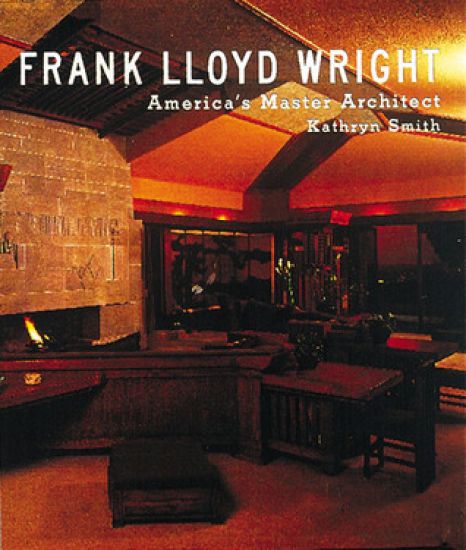
Frank Lloyd Wright

Frank Lloyd Wright

Kathryn Smith

Abbeville Press Inc.,U.S.
1998
sidottu
This diminutive survey features all aspects of Wright's art, from lowslung Prairie houses to the dramatic, seminal Fallingwater, to larger projects such as his two homes, Taliesin and Taliesin West, culminating in that icon of modernism, New York's Guggenheim Museum. This satisfying volume is complete with drawings and rarely seen works from Wright's own Asian art collection.
Frank Lloyd Wright

Frank Lloyd Wright

Kathryn Smith

Abbeville Press Inc.,U.S.
1998
sidottu
Frank Lloyd Wright (1867-1959) is unquestionably America's most celebrated architect. Even today, almost forty years after his death, he continues to tower over the architectural landscape. In fact, his career was so long and his accomplishments so varied it can be difficult still to grasp the full range of Wright's achievement. In this refreshing new study, Wright scholar Kathryn Smith does just that, exploring the grace and beauty found in all facets of Wright's work: from office desks and chairs to his first residential commissions, from magazine cover designs to major public buildings. The concise text and brilliant color photographs chart Wright's entire career, beginning with his apprenticeship to Adler and Sullivan before the turn of the century. Readers witness the Prairie period, Wright's years in Japan and California, his major designs of the late 1920s and 1930s, his Usonian houses, and the monumental late works of his last decades. Smith shows examples of Wright's drawings, furniture, and decorative arts, too, supplementing our understanding of Wright's aesthetic. The book concludes with a glimpse at the architect's seldom-seen collection of Asian art, which once comprised tens of thousands of pieces - a source of much inspiration and edification for the architect and his students, and a key to understanding Wright's views on art and nature. Here is a broad portrait of the master builder who sought the title "greatest architect of all time." Although it may never be possible to fully assess Wright's legacy, Kathryn Smith's authoritative book is a fitting testament to his lasting genius.
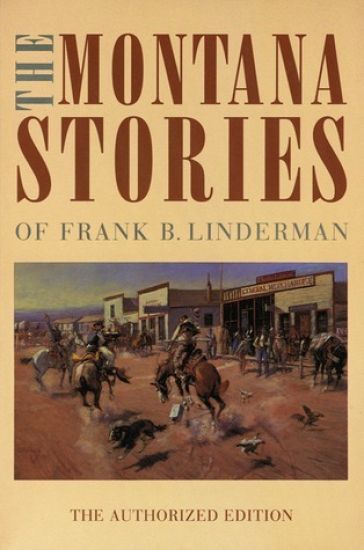
The Montana Stories of Frank B. Linderman

The Montana Stories of Frank B. Linderman

Frank B. Linderman

University of Nebraska Press
1997
pokkari
Frank B. Linderman knew the frontier types who appear in these robust stories and sketches. A trapper in Montana during his youth, he stayed on as a publisher, politician, and businessman, beginning to write in middle age. The Montana Stories of Frank B. Linderman, originally published in 1920, still crackles with the freshness of arctic wind, the pungency of aged whiskey, the impact of a whip. "In the Name of Friendship" sets up a deadly bluff with ironic results. "Was Chet Smalley Honest?" shows a good deed in danger of punishment. "Jake Hoover's Pig" describes a hungry man's sentimental attachment to a fat porker. "Cranks" is a frontier precursor of the Odd Couple. "What Followed a Sermon" testifies to the sobering effect of preaching in a saloon. These and other stories are filled with rustlers and hustlers, Mounties and tenderfeet, Crows and Blackfeet, mountain men, prospectors, bartenders, lawyers, townspeople, and assorted dogs, cats, and horses.
Frank Waters

Frank Waters

Swallow Press
1993
pokkari
"In addition to his accomplishments as a talented novelist, a thorough historian, and an excellent essayist, Frank Waters is that rare breed of man who has merged heart and mind early in his life and moved forward to confront ultimate questions. This dilemma of faith and heritage, religion and identity, and commitment and comfort has never been resolved intellectually. Even with profound faith and rigorous discipline of self, mystics have found it difficult to resolve through action and prayer…I look at the life and writing of Frank Waters…and find…a remarkable journey of inquiry spanning nearly a century and illuminating questions which I did not think possible to formulate." —Vine Deloria, Jr., editor Contributors to this volume are Alvin M. Josephy, Jr., Bobby Bridger, Steven Wall, Will Wright, William Eastlake, Larry Evers, David Jongeward, Max Evans, Win Blevins, Barbara Waters, Rudolfo Anaya, Thomas J. Lyon, Joe Gordon, Robert Kostka, Charles Adams, Father Peter J. Powell, Quay Grigg, Alexander Blackburn, and T. N. Luther.
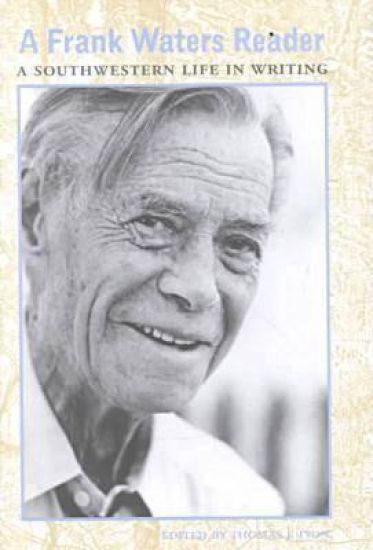
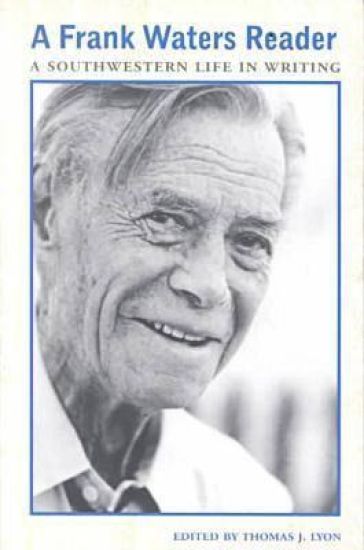
A Frank Waters Reader

A Frank Waters Reader

Frank Waters

Swallow Press
2000
sidottu
Over the course of his life, Frank Waters amassed a body of work that has few equals in the literature of the American West. Because his was a writing that touched every facet of the Western experience, his voice still echoes throughout that region's literary world. Swallow Press is especially proud to present this generous sampling of Frank Waters's writings. A Frank Waters Reader encompasses the full range of his work and draws from both his nonfiction and his many novels. It stands as a testament to his singular achievement and proof of the talent that established him as the foremost writer in the Southwest. This collection spanning forty years of writing provides an excellent introduction for the uninitiated as well as a retrospective for those already familiar with this giant talent. His gift for achieving a delicate balance among the many contrary forces at work in the land and the people who inhabit it is as true and enduring as the region that inspired him.
A Frank Waters Reader

A Frank Waters Reader

Frank Waters

Swallow Press
2000
pokkari
Over the course of his life, Frank Waters amassed a body of work that has few equals in the literature of the American West. Because his was a writing that touched every facet of the Western experience, his voice still echoes throughout that region's literary world. Swallow Press is especially proud to present this generous sampling of Frank Waters's writings. A Frank Waters Reader encompasses the full range of his work and draws from both his nonfiction and his many novels. It stands as a testament to his singular achievement and proof of the talent that established him as the foremost writer in the Southwest. This collection spanning forty years of writing provides an excellent introduction for the uninitiated as well as a retrospective for those already familiar with this giant talent. His gift for achieving a delicate balance among the many contrary forces at work in the land and the people who inhabit it is as true and enduring as the region that inspired him.
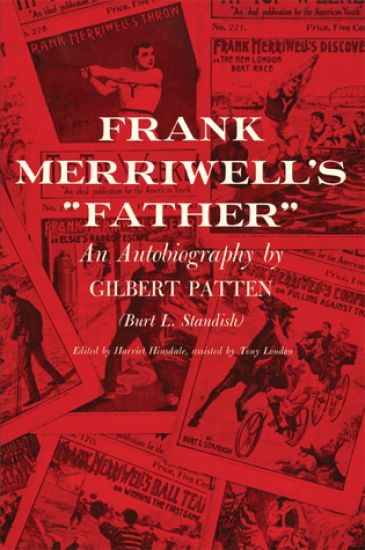
Frank Merriwell's ""Father

Frank Merriwell's ""Father

Gilbert Patten

University of Oklahoma Press
1964
nidottu
American drama critic George Jean Nathan once expressed a hope in a ""Suggestion for a Biography"" for The American Mercury: ""A book I should like to read - and doubtless there are thousands of ex-youngsters of the 1800's and early 1890's who have the same feeling about it as I have - would be a biography, or better still an autobiography, if he is still living, of the man known as Burt Standish, author of the famous Frank Merriwell literature. Who was this Standish; whence came he; what was his history?"" Now, nineteen years after his death and thirty-four years after Nathan expressed his wish, the autobiography of Burt L. Standish, who was really Gilbert Patten, appears for the first time. The author of the Frank and Dick Merriwell stories had not quite completed his account of himself but it has been possible, from his papers, for Harriet Hinsdale and Tony London to reconstruct the last phase of a long, happy, and exciting life. The result is a book scarcely less absorbing than the purely fictional accounts Gilbert Patten wrote. The Merriwell books, from their inception in 1896 to today, have sold more than 500,000,000 copies. With their success, Patten (or Burt L. Standish) became the real king of the dime and half-dime novelists. His heroes remain today among the best-remembered figures of an age of derring-do.
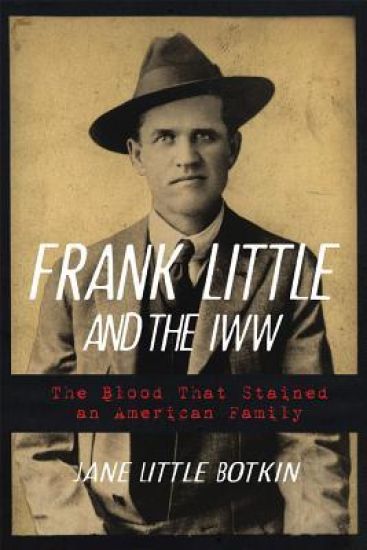
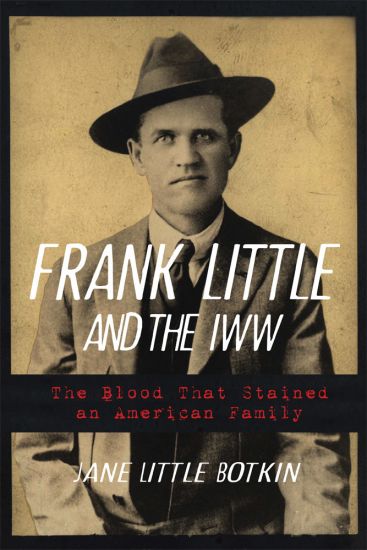
Frank Little and the IWW

Frank Little and the IWW

Jane Little Botkin

University of Oklahoma Press
2017
sidottu
Franklin Henry Little (1878-1917), an organizer for the Western Federation of Miners and the Industrial Workers of the World (IWW), fought in some of the early twentieth century's most contentious labor and free-speech struggles. Following his lynching in Butte, Montana, his life and legacy became shrouded in tragedy and family secrets. In Frank Little and the IWW, author Jane Little Botkin chronicles her great-granduncle's fascinating life and reveals its connections to the history of American labor and the first Red Scare. Beginning with Little's childhood in Missouri and territorial Oklahoma, Botkin recounts his evolution as a renowned organizer and agitator on behalf of workers in corporate agriculture, oil, logging, and mining. Frank Little traveled the West and Midwest to gather workers beneath the banner of the Wobblies (as IWW members were known), making soapbox speeches on city street corners, organizing strikes, and writing polemics against unfair labor practices. His brother and sister-in-law also joined the fight for labor, but it was Frank who led the charge - and who was regularly threatened, incarcerated, and assaulted for his efforts. In his final battles in Arizona and Montana, Botkin shows, Little and the IWW leadership faced their strongest opponent yet as powerful copper magnates countered union efforts with deep-laid networks of spies and gunmen, an antilabor press, and local vigilantes. For a time, Frank Little's murder became a rallying cry for the IWW. But after the United States entered the Great War and Congress passed the Sedition Act (1918) to ensure support for the war effort, many politicians and corporations used the act to target labor ""radicals,"" squelch dissent, and inspire vigilantism. Like other wage-working families smeared with the traitor label, the Little family endured raids, arrests, and indictments in IWW trials. Having scoured the West for firsthand sources in family, library, and museum collections, Botkin melds the personal narrative of an American family with the story of the labor movements that once shook the nation to its core. In doing so, she throws into sharp relief the lingering consequences of political repression.
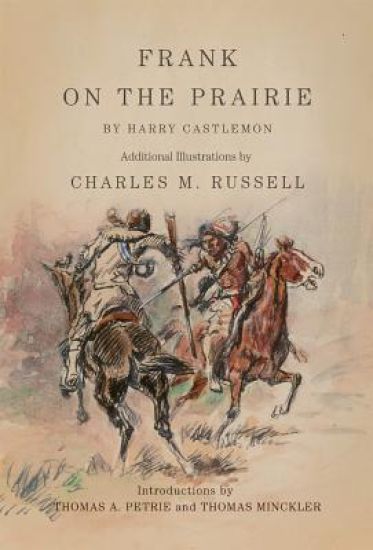
Frank on the Prairie

Frank on the Prairie

Harry Castlemon

University of Oklahoma Press
2017
sidottu
In 1903 the famed ""Cowboy Artist,"" Charles M. Russell, presented his nephew Austin with a copy of the boy's adventure book Frank on the Prairie with some extraordinary enhancements. Actually, the volume already belonged to Austin, and his Uncle Charlie had borrowed it to add to its pages a series of original illustrations. This new facsimile edition of that copy, among the rarest of rare books, features little-known works of art by the artist. The prolific author of the novel Frank on the Prairie, Charles Austin Fosdick (1842-1915), who went by the pen name Harry Castlemon, was one of Russell's favorite storytellers. Castlemon's book, which first appeared in 1868 as part of the Gunboat Series of Books for Boys, recounts the adventures of young Frank and his friend Archie as they travel across the Old West. Clearly inspired by the story line, Russell produced eleven watercolors for his nephew's 1893 copy. They are beautifully reproduced here in full color, along with a single pencil sketch of mounted horsemen departing a fort. As Montana art collector Thomas Minckler explains in his essay, the extra-illustrated Frank on the Prairie displays the full range of Russell's signature subjects and themes: the regal American Indian, a pitched Indian battle of counting coup, the fur trader, an iconic buffalo hunt, the outlaw, a nighttime camp scene, a tomahawk peace pipe, and a herd of wild horses. All of these images, meticulously drawn and painted, are replicated in this facsimile version exactly as they first appeared in Austin's personal copy of the book.Frank on the Prairie was only one of a handful of books to which Russell added illustrations during his career. It is one of even fewer to contain watercolors. Showcasing Russell's artistry and his perspective on the American West, the volume is, in Minckler's words, ""one of Russell's most personalized works of art.
Frank Little and the IWW

Frank Little and the IWW

Jane Little Botkin

University of Oklahoma Press
2019
nidottu
Franklin Henry Little (1878-1917), an organizer for the Western Federation of Miners and the Industrial Workers of the World (IWW), fought in some of the early twentieth century's most contentious labor and free-speech struggles. Following his lynching in Butte, Montana, his life and legacy became shrouded in tragedy and family secrets. In Frank Little and the IWW, author Jane Little Botkin chronicles her great-granduncle's fascinating life and reveals its connections to the history of American labor and the first Red Scare. Beginning with Little's childhood in Missouri and territorial Oklahoma, Botkin recounts his evolution as a renowned organizer and agitator on behalf of workers in corporate agriculture, oil, logging, and mining. Frank Little traveled the West and Midwest to gather workers beneath the banner of the Wobblies (as IWW members were known), making soapbox speeches on city street corners, organizing strikes, and writing polemics against unfair labor practices. His brother and sister-in-law also joined the fight for labor, but it was Frank who led the charge - and who was regularly threatened, incarcerated, and assaulted for his efforts. In his final battles in Arizona and Montana, Botkin shows, Little and the IWW leadership faced their strongest opponent yet as powerful copper magnates countered union efforts with deep-laid networks of spies and gunmen, an antilabor press, and local vigilantes. For a time, Frank Little's murder became a rallying cry for the IWW. But after the United States entered the Great War and Congress passed the Sedition Act (1918) to ensure support for the war effort, many politicians and corporations used the act to target labor ""radicals,"" squelch dissent, and inspire vigilantism. Like other wage-working families smeared with the traitor label, the Little family endured raids, arrests, and indictments in IWW trials. Having scoured the West for firsthand sources in family, library, and museum collections, Botkin melds the personal narrative of an American family with the story of the labor movements that once shook the nation to its core. In doing so, she throws into sharp relief the lingering consequences of political repression.
Frank Lloyd Wright and Ralph Waldo Emerson

Frank Lloyd Wright and Ralph Waldo Emerson

Ayad Rahmani

LOUISIANA STATE UNIVERSITY PRESS
2023
sidottu
Frank Lloyd Wright and Ralph Waldo Emerson: Transforming the American Mind is an interdisciplinary volume of literary and cultural scholarship that examines the link between two pivotal intellectual and artistic figures. It probes the degree to which the transcendentalist author influenced the architect's campaign against dominant strains of American thought. Inspired by Emerson's writings on the need to align exterior expression with interior self, Wright believed that architecture was not first and foremost a matter of accommodating spatial needs, but a tool to restore intellectual and artistic freedom, too often lost in the process of modernization.Ayad Rahmani shows that Emerson's writings provide an avenue for interpreting Wright's complex approach to country and architecture. The two thinkers cohered around a common concern for a nation derailed by nefarious forces that jeopardized the country's original promise. In Emerson's condemnations of slavery and inequality, Wright found inspiration for seeking redress against the humiliations suffered by the modern worker, be it at the hands of an industrial manager or an office boss. His designs sought to challenge dehumanizing labor practices and open minds to the beauty and science of agriculture and the natural world. Emerson's example helped Wright develop architecture that aimed less at accommodating a culture of clients and more at raising national historical awareness while also arguing for humane and equitable policies.Frank Lloyd Wright and Ralph Waldo Emerson presents a new approach to two vital thinkers whose impact on American society remains relevant to this day.
Frank Zappa's America

Frank Zappa's America

Bradley Morgan; Jeremy Richey

LOUISIANA STATE UNIVERSITY PRESS
2025
sidottu
From his early albums with the Mothers of Invention, Frank Zappa established a reputation as a musical genius who pushed the limits of culture throughout the 1960s and 1970s, experimenting with a blend of genres in innovative and unheard-of ways. Not only did his exploratory styles challenge the expectations of what popular music could sound like, but his prolific creative endeavors also shaped how audiences thought about the freedom of artistic expression. In Frank Zappa's America, Bradley Morgan casts the artist as an often-misunderstood figure who critiqued the actions of religious and political groups promoting a predominantly white, Christian vision of the United States. A controversial and provocative satirist, often criticized for the shocking subject matter of his songs, Zappa provided social commentary throughout his career that spoke truth to power about the nefarious institutions operating in the lives of everyday Americans. Beginning in the late 1970s, his music frequently addressed the rise of extremist religious influence in American politics, specifically white Christian nationalism. Despite commercial and critical pressure, Zappa refused to waver in his support for free speech during the era of Reagan and MTV, including his pointed testimony before the U.S. Senate at the Parents Music Resource Center (PMRC) hearings. Throughout the 1980s, and until his death in 1993, Zappa crafted his art form to advocate for political engagement, the security of individual liberties, and the advancement of education. Music became his platform to convey progressive views promoting the rights of marginalized communities most at risk in a society governed by the principles of what he perceived as Christian radicalism. Frank Zappa's America examines the musician's messaging through song, tracing the means by which Zappa created passionate, at times troubling, art that combats conservativism in its many manifestations. For readers in the twenty-first century, his music and public advocacy demonstrate the need to preserve democracy and the voices that uphold it.
Frank Porter Graham and the 1950 Senate Race in North Carolina
The tumultuous North Carolina Senate primaries of 1950 are still viewed as the most bitter chapter in the state's modern political history. The central figure in that frenzied race was the appointed incumbent, Frank Porter Graham, former president of the University of North Carolina (1931-49) and liberal activist of national stature.As a Senate candidate, Graham was unrelentingly attacked for both his social activism and his racial views, and the vicious tactics used against him shocked his supporters and alarmed national observers. Peeling away the myths that have accumulated over the years, the authors present the first thoroughly researched account of Graham's eventual defeat by Raleigh attorney Willis Smith. The result, a balanced study of North Carolina politics at mid-century, is a convincing explanation of the 1950 election.Using the campaign as a prism, the authors assess the factional struggles within the state, showing that Graham was defeated by a massive loss of support among white voters in eastern North Carolina. The principal force behind this switch was the fear promulgated by the Smith campaign that a vote for Graham was a vote to end statutory segregation in North Carolina. The authors also offer the fullest portrait to date of Frank Porter Graham as political candidate and social reformer. They examine his career as an educator and public activist, the steps that led to his unorthodox appointment, and his strengths and weaknesses as a political candidate.Frank Porter Graham and the 1950 Senate Race in North Carolina is based on manuscript materials never before examined, on interviews with more than 50 campaign participants and associates of both Graham and Smith, and on a thorough analysis of newspaper coverage and campaign literature.A UNC Press Enduring Edition -- UNC Press Enduring Editions use the latest in digital technology to make available again books from our distinguished backlist that were previously out of print. These editions are published unaltered from the original, and are presented in affordable paperback formats, bringing readers both historical and cultural value.