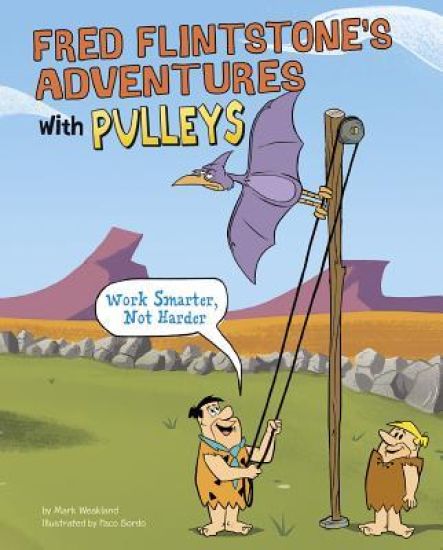
Have a Yabba-Dabba-Doo day with Fred Flintstone as he explains how a pulley works Fred shows readers the Flintstone way of using simple machines in everyday situations. With simple, informative text narrated by Fred and a few other Flintstone characters paired with colorful illustrations, students wil learn all about simple machines and basic physics concepts
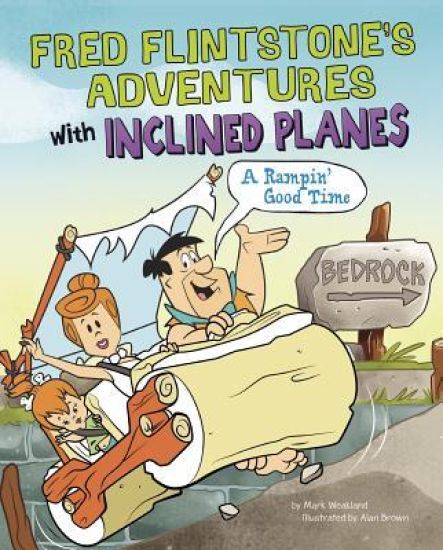
Have a Yabba-Dabba-Doo day with Fred Flintstone as he explains how an inclined plane works Fred shows readers the Flintstone way of using simple machines in everyday situations. With simple, informative text narrated by Fred and a few other Flintstone characters paired with colorful illustrations, students wil learn all about simple machines and basic physics concepts
Have a Yabba-Dabba-Doo day with Fred Flintstone as he explains how a wedge works Fred shows readers the Flintstone way of using simple machines in everyday situations. With simple, informative text narrated by Fred and a few other Flintstone characters paired with colorful illustrations, students wil learn all about simple machines and basic physics concepts
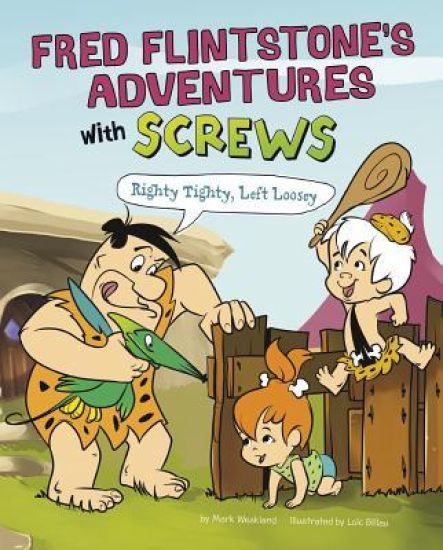
Have a Yabba-Dabba-Doo day with Fred Flintstone as he explains how a screw works Fred shows readers the Flintstone way of using simple machines in everyday situations. With simple, informative text narrated by Fred and a few other Flintstone characters paired with colorful illustrations, students wil learn all about simple machines and basic physics concepts
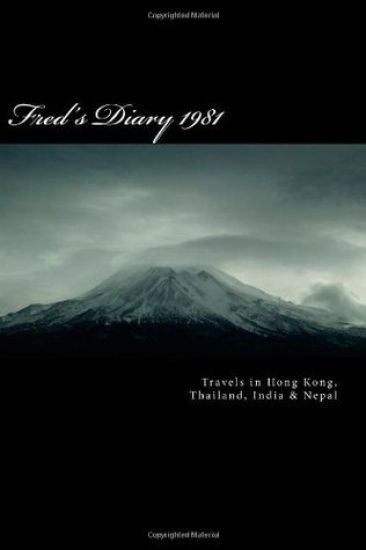
Fascinating time capsule from the 80'sHave you ever wanted to read someone else's diary?Would you like to experience travelling in Asia without leaving home?Then this book is for you. Fred's Diary 1981 is a fascinating insight into a young man's travels around Asia in the early 1980's. This is a unique opportunity to delve into Fred's daily diary, which details the 158 days he spent travelling around Asia. Follow Fred throughout his extensive travels to Hong Kong, Thailand, India and Nepal.Appreciate the many friendships formed along the way with fellow-travellers.Relive the highs and lows that he experienced during this fascinating journey.Recognise the huge differences in technology, particularly communications.Become immersed in the different cultures, peoples and surroundings of Asia in the early 1980's.Understand more about the drug culture of the 1980's, especially in Thailand and Nepal.Learn from Fred's youthful mistakes, especially if your dream of travelling to Asia becomes a reality.Favourite reviewsNot only a time-capsule but a cautionary tale of gems, drugs, and jail time as he explores waterfalls, Buddhist temples, and snow-capped peaks. Doug E. JonesFred's heart-felt awe towards the beauty and the intensity of the place, his appetite for living the adventure, the mishaps and his clear narrative "takes you there". Richard KleinI came to this diary with some expectation, having written a very similar diary myself...and only a few years after this one. And I was not disappointed. Frank KusyA real rollercoaster of a read written in a very clever and informative style. This really would make a fascinating movie. Caryl WilliamsThis book is written with respect and so is not about an Englishman patronisingly describing his trials in another country. Graham HigsonRobert Fear has written a masterpiece. Writing a story in the form of a daily diary is always a challenge but Robert Fear has shown how well he has mastered the art. Pankaj VarmaThis book allows for reflection and thought whilst experiencing the culture of Asia in full technicolor. Rukia the ReaderI was attracted to this diary as I was backpacking through some of the same places 33 years later, and I love travel writing. From start to finish I was hooked. G. HughesWhat a wonderful throwback to the 80s. Colour, sounds & sights of Asia are detailed, thoughts dissected which makes this book both fascinating and real. Paul JohnsonI learned what it is to be a traveler as opposed to a tourist. Well written and interesting, and at times, harrowing and turbulent. Bonni Morrison
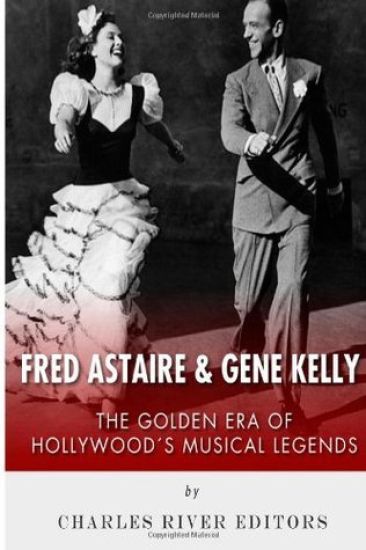
*Includes pictures. *Includes quotes about both men's lives and careers. *Includes bibliographies of both men. Virtually all famous actors are regaled by the public, but even still, Fred Astaire occupies a privileged position in American pop culture. The specific films in which Astaire acted may not be especially famous in their own right - most people likely cannot recall the title of Top Hat (1935), his most decorated film - but Astaire's dancing prowess invariably creates a lasting impact on viewers. Instead of tying his fame to a single film, Astaire's genius lay in constructing his star persona around a specific set of iconographic imagery that has become embedded within American culture. Across his films, the recurring iconic images of the top hat, cane, and coat tails, as well as the image of Astaire dancing with Ginger Rogers, all constitute a timeless symbol for elegance that continues to captivate viewers who are unfamiliar with the plots of his films. There have been other film musical actors who were proficient dancers, Gene Kelly chief among them, but none were able to perform with the seamless elegance of Astaire, and none have been remembered nearly as well. Astaire's popularity can in large part be tied to the escapism that his films offered to impoverished Depression-era American audiences, and yet Astaire was a working man, albeit one who labored in the studios of Hollywood rather than the factories of America. Considering the quiet life that he led off the movie set, it can be difficult to disassociate Astaire from his films, and while he may have attempted to project the same image off the screen, the era and his personal background were extremely important. As someone who was born just before the start of the 20th century, Astaire's life sheds light on the developments that occurred in American entertainment, from the stage (where he first performed during his youth) to cinema (the site of his greatest triumphs) and finally to television (a medium Astaire entered at the end of his career.) Astaire's career tends to obscure his all-American success story, one in which hard work transformed a Nebraska boy from a working-class family into America's most prominent symbol of grace. Although they did collaborate on two occasions, in many ways Gene Kelly's rise to popularity in the 1940s amounted to a changing of the guard, because Astaire's career had begun to wane by the mid-1940s. For film historians and fans of the musical, however, even if they weren't contemporaries, Astaire and Kelly will forever be viewed as rivals, with each having left an indelible stamp on the genre that defined their careers. Regardless of which dancer viewers film, there is no denying the cultural significance of some of Kelly's most famous films, including An American in Paris (1949) and Singin' in the Rain (1952), movies that occupy a central position within the pantheon of Hollywood musicals. While it is true that a comparison between Astaire and Kelly is indispensible to any study of Kelly's life, much can also be gained simply by focusing mostly on his life and career. What made Kelly unusual for actors of that era is that he did not actually arrive in Hollywood until he was nearly 30 years old, so his early life and work before film had a crucial influence on his star image. Furthermore, given that he came to prominence after Astaire, Kelly's career offers a valuable lens through which to chart the evolution of the musical genre, as well as a look at the prevailing standards of masculinity within Hollywood at the time. Fred Astaire and Gene Kelly examines the lives and careers of two of Hollywood's most iconic dancers, tracing their rise to stardom and the forces within Hollywood and American popular culture that would ultimately lead to the end of their careers.
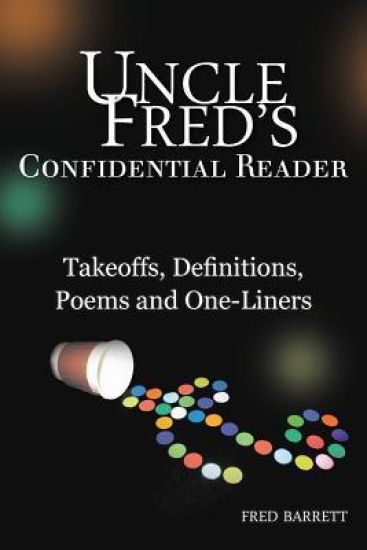
Following in the tradition of wit and wisdom, along with Ambrose Bierce's The Devil's Dictionary and Benjamin Franklin's Poor Richard's Almanac, Fred Barrett's Uncle Fred's Confidential Reader alphabetically addresses common terms, concepts, and public figures-both historical and contemporary-with a comedian's humor and a critic's commentary. Learn the real secrets of the republican and democratic parties. Get rich quick by following master schemer Alvin P. Golops's expensive investment advice. Discover the time-share opportunities at Scorching Sands Resort in Dry Creek, Nevada. And let Uncle Fred's bumper stickers, poems, and short plays entertain you-all the while delivering a dose of stinging truth. For example, "General Corncob's Acres of Conestogas" is a short play that places a contemporary car salesman's pitch into the Old West as Pa, Ma, and the kids look to buy a new wagon from Ike Roundabout, and Pa has his eye on a team of low-emission oxen to yoke it up to. Ranging from pointed to sarcastic to whimsical, and tackling every subject imaginable, Uncle Fred's Confidential Reader will entertain and surprise you with the turn of every page.
Fred Zinnemann directed some of the most acclaimed and controversial films of the twentieth century, yet he has been a shadowy presence in Hollywood history. In Fred Zinnemann and the Cinema of Resistance, J. E. Smyth reveals the intellectual passion behind some of the most powerful films ever made about the rise and resistance to fascism and the legacy of the Second World War, from The Seventh Cross and The Search to High Noon, From Here to Eternity, and Julia. Smyth's book is the first to draw upon Zinnemann's extensive papers at the Academy of Motion Picture Arts and Sciences and brings Fred Zinnemann's vision, voice, and film practice to life. In his engagement with the defining historical struggles of the twentieth century, Zinnemann fought his own battles with the Hollywood studio system, the critics, and a public bent on forgetting. Zinnemann's films explore the role of women and communists in the antifascist resistance, the West's support of Franco after the Spanish Civil War, and the darker side of America's national heritage. Smyth reconstructs a complex and conflicted portrait of Zinnemann's cinema of resistance, examining his sketches, script annotations, editing and production notes, and personal letters. Illustrated with seventy black-and-white images from Zinnemann's collection, Fred Zinnemann and the Cinema of Resistance discusses the director's professional and personal relationships with Spencer Tracy, Montgomery Clift, Audrey Hepburn, Vanessa Redgrave, and Gary Cooper; the critical reaction to his revisionist Western, High Noon; his battles over the censorship of From Here to Eternity, The Nun's Story, and Behold a Pale Horse; his unrealized history of the communist Revolution in China, Man's Fate; and the controversial study of political assassination, The Day of the Jackal. In this intense, richly textured narrative, Smyth enters the mind of one of Hollywood's master directors, redefining our knowledge of his artistic vision and practice.
In the New Yorker, Stephen Schiff has described Fred Schepisi (b. 1939) as “probably the least-known great director working in the mainstreamAmerican cinema—a master storyteller with a serenely muscular style that can make more flamboyant moviemakers look coarse and overweening.” Schepisi’s launch in Australia during the country’s film renaissance of the 1970s and his ongoing international work have rightfully earned him a reputation as an actors’ director. But he has also become a skillful stylist, forging his own way as he works alongside a talented team of collaborators.This volume includes twenty interviews with Schepisi andtwo with longtime collaborators, cinematographer Ian Baker and composer Paul Grabowsky. The interviews trace the filmmaker’s career from his beginnings in advertising, through his two early Australian features—The Devil’s Playground and The Chant of Jimmie Blacksmith—to his subsequent work in the United Statesand beyond on films as various as Plenty, Roxanne, A Cry in the Dark, The Russia House, Six Degrees of Separation, Empire Falls, Last Orders, and Eye of the Storm. Schepisi’s films are diverse thematically and visually. In what is effectively a master class on film direction, Schepisi discusses his creative choices and his workwith actors and collaborators behind the scenes. In the process, he provides a goldmine of insights into his films, his filmmaking style, and what makes him tick as an artist.
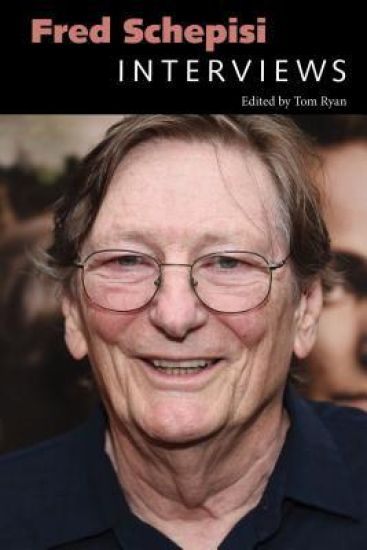
In the New Yorker, Stephen Schiff has described Fred Schepisi (b. 1939) as "probably the least-known great director working in the mainstream American cinema—a master storyteller with a serenely muscular style that can make more flamboyant moviemakers look coarse and overweening." Schepisi’s launch in Australia during the country’s film renaissance of the 1970s and his ongoing international work have rightfully earned him a reputation as an actors’ director. But he has also become a skillful stylist, forging his own way as he works alongside a talented team of collaborators. This volume includes twenty interviews with Schepisi and two with longtime collaborators, cinematographer Ian Baker and composer Paul Grabowsky. The interviews trace the filmmaker’s career from his beginnings in advertising, through his two early Australian features—The Devil's Playground and The Chant of Jimmie Blacksmith—to his subsequent work in the United States and beyond on films as various as Plenty, Roxanne, A Cry in the Dark, The Russia House, Six Degrees of Separation, Empire Falls, Last Orders, and Eye of the Storm. Schepisi’s films are diverse thematically and visually. In what is effectively a master class on film direction, Schepisi discusses his creative choices and his work with actors and collaborators behind the scenes. In the process, he provides a goldmine of insights into his films, his filmmaking style, and what makes him tick as an artist.