Kirjojen hintavertailu. Mukana 11 590 110 kirjaa ja 12 kauppaa.

Kirjahaku

Etsi kirjoja tekijän nimen, kirjan nimen tai ISBN:n perusteella.

1000 tulosta hakusanalla Friedrich Neumann

Friedrich von Schiller and the Drama of Human Existence
This volume demonstrates that many scholars and stage directors firmly believe Schiller is very much a writer for the twentieth century. The essays provide a scholarly perspective on Schiller's relevance as a role model for twentieth-century writers and offer in-depth discussions of his idealism, his political views, and his neoclassicism, against the backdrop of the unbalanced and politically turbulent epoch in which he lived. Specific works are examined in light of their particular focus and relevance in drama and history. Part II offers new insights into Schiller's aesthetics, his lyrical subjectivity, his significance for German authors and his relation to such German thinkers as Kant, Jung, and Schlegel.
Friedrich Max Müller and the Role of Philology in Victorian Thought
The German comparative philologist Friedrich Max Müller (1823-1900) was one of the most influential scholars in Victorian Britain. Müller travelled to Britain in 1846 in order to prepare a translation of the Rig Veda. This research visit would turn into a lifelong stay after Müller was appointed as Taylor Professor of Modern Languages at Oxford in 1854. Müller’s activities in this position would exert a profound influence on British intellectual life during the second half of the nineteenth-century: his book-length essay on Comparative Mythology (1856) inspired evolutionist thinkers such as Herbert Spencer and Edward Burnett Tylor and made philology into one of the master sciences at mid-century; his debates with Charles Darwin and his followers on the origin of language constituted a significant component of religiously informed reactions to Darwin’s ideas about human descent; his arguments concerning the interdependence of language and thought influenced fields such as psychology, neurology, paediatrics and education until the end of the nineteenth century; his theories concerning an ‘Aryan’ language that purportedly predated Sanskrit and ancient Greek led to controversial debates on the relations between language, religion and race in the Indian subcontinent and beyond; and his monumental 50-volume edition of the Sacred Books of the East helped to lay the foundations for the study of comparative religion. Müller’s interlocutors and readers included people as various as Alexander von Humboldt, Darwin, George Eliot, Matthew Arnold, Friedrich Nietzsche, Ferdinand de Saussure, Ernst Cassirer, Mohandas K. Gandhi and Jarwaharlal Nehru.This volume offers the most comprehensive and interdisciplinary assessment of Müller's career to date. Arising from a conference held at the German Historical Institute in London in 2015, it brings together papers by an international group of experts in German studies, German and British history, linguistics, philosophy, English literary studies, and religious studies in order to examine the many facets of Müller’s scholarship. This book was originally published as a special issue of the Publications of the English Goethe Society.
Friedrich Dürrenmatt, Volume 2

Friedrich Dürrenmatt, Volume 2

Friedrich Dürrenmatt

Readhowyouwant
2011
pokkari
The Swiss writer Friedrich D rrenmatt (1921 - 90) was one of the most important literary figures of the second half of the twentieth century. During the years of the cold war, arguably only Beckett, Camus, Sartre, and Brecht rivaled him as a presence in European letters. Yet outside Europe, this prolific author is primarily known for only one work, The Visit. With these long-awaited translations of his plays, fictions, and essays, D rrenmatt becomes available again in all his brilliance to the English-speaking world. This second volume of Selected Writings reveals a writer who may stand as Kafka's greatest heir. D rrenmatt's novellas and short stories are searing, tragicomic explorations of the ironies of justice and the corruptibility of institutions. Apart from The Pledge, a requiem to the detective story that was made into a film starring Jack Nicholson, none of the works in this volume are available elsewhere in English. Among the most evocative fictions included here are two novellas: The Assignment and Traps. The Assignment tells the story of a woman filmmaker investigating a mysterious murder in an unnamed Arab country and has been hailed by Sven Birkerts as ''a parable of hell for an age consumed by images.'' Traps, meanwhile, is a chilling comic novella about a traveling salesman who agrees to play the role of the defendant in a mock trial among dinner companions - and then pays the ultimate penalty. D rrenmatt has long been considered a great writer - but one unfairly neglected in the modern world of letters. With these elegantly conceived and expertly translated volumes, a new generation of readers will rediscover his greatest works.
Friedrich Nietzsche (1844-1900)

Friedrich Nietzsche (1844-1900)

Springer-Verlag New York Inc.
2006
sidottu
Nietzsche – Economy and Society: The Closed and the Open Questions a b Jürgen G. Backhaus and Wolfgang Drechsler a University of Erfurt, Germany b Tallinn University of Technology, Estonia Nietzsche’s impact and in?uence anywhere in and on our civilization was and is immense. This has by now been widely recognized in almost all areas, even in the “hard sciences” (see Babich 1999), but Nietzsche is still completely understudied in the ?eld of economics. This is all the more surprising because in?uence paths, both serious (e. g. , Joseph A. Schumpeter) and pop ones (e. g. , Ayn Rand), seem obvious, and because in some of his works, especially M- schliches, Allzumenschliches (1878-1886), a focus on economics is hard to miss. It would thus be only likely that he had some sort of signi?cant in?uence there; yet, one can ?nd hardly any references in the Nietzsche or economics 1 literature on what kind of in?uence that might have been or still is. To remedy this situation, the idea to plan an exploratory conference on Nietzsche and Economics arose. Because of the dif?cult and indeed unusual topic, we found it necessary to even start with a pre-conference, where the issues, questions, sources and possible approaches would be discussed. This pre-conference took place in Heilbronn, in the framework of the Heilbronn Symposia on Economics and the Social Sciences, in June 2000.
Friedrich A. Hayek
F.A. Hayek studied at the University of Vienna, where he became both a Doctor of Law and a Doctor of Political Science. After several years in the Austrian civil service, he was made the first diector of the Austrian Institute for Business Cycle Research. In 1931 he was appointed Tooke Professor of Economics and Statistics at the London School of Economics, and in 1950 he went to the University of Chicago as Professor of Social and Moral Sciences. He returned to Europe in 1962, to the chair of Economics at the University of Freiburg, where he became Professor Emeritus in 1967.The holder of numerous honorary doctorates, and a member of the British Academy, Hayek was awarded the Nobel Memorial Prize in Economics in 1974. He was created Companion of Honour in 1984. He is the author of some fifteen books, including Prices and Production, The Pure Theory of Capital, The Road to Serfdom, The Counter-Revolution of Science, The Sensory Order, The Constitution of Liberty, Law, Legislation and Liberty, and The Fatal Conceit.
Friedrich Nietzsche

Friedrich Nietzsche

Lee Spinks

Routledge
2003
sidottu
It is difficult to imagine a world without common sense, the distinction between truth and falsehood, the belief in some form of morality or an agreement that we are all human. But Friedrich Nietzsche did imagine such a world, and his work has become a crucial point of departure for contemporary critical theory and debate. This volume introduces this key thinker to students of literary and cultural studies, offering a lucid account of Nietzsche's thought on: * anti-humanism * good and evil * the Overman * nihilism * the Will to Power. Lee Spinks prepares readers for their first encounter with Nietzsche's most influential texts, enabling them to begin to apply his thought in studies of literature, art and contemporary culture.
Friedrich Nietzsche

Friedrich Nietzsche

Lee Spinks

Routledge
2003
nidottu
It is difficult to imagine a world without common sense, the distinction between truth and falsehood, the belief in some form of morality or an agreement that we are all human. But Friedrich Nietzsche did imagine such a world, and his work has become a crucial point of departure for contemporary critical theory and debate. This volume introduces this key thinker to students of literary and cultural studies, offering a lucid account of Nietzsche's thought on: * anti-humanism * good and evil * the Overman * nihilism * the Will to Power. Lee Spinks prepares readers for their first encounter with Nietzsche's most influential texts, enabling them to begin to apply his thought in studies of literature, art and contemporary culture.
Friedrich A. von Hayek
Hayek's reputation has gone through a remarkable cycle. An eminent exponent of the Austrian theory of business cycles in the 1930s, he was worsted in the controversy over Keynes' Treatise on Money (1930). Following this defeat, Hayek retreated into capital theory, an esoteric branch of economics in which few economists then took an active interest. He gave up economics altogether after the war and turned to psychology, political philosophy, philosophy of law and the history of ideas. However, in 1974 he won the Nobel Prize and returned to mainstream economics as a leading critic of Keynesianism and an advocate of free banking as the answer to inflation. Today Hayek reigns supreme as the kind of moral philosopher and political economist that economics has not seen since Adam Smith. Also forthcoming in this series is Paul A. Samuelson, 2nd Series (October 2004, 3 volumes, £425).
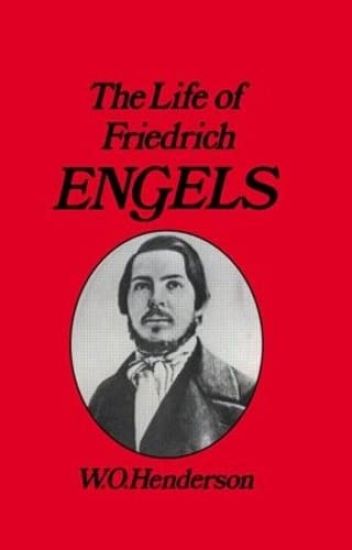
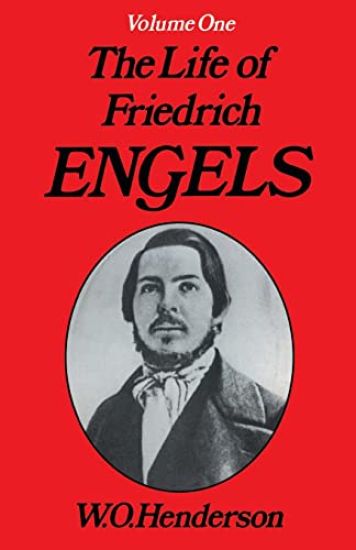
Friedrich Engels

Friedrich Engels

W. O. Henderson

Routledge
1976
muu
First published in 1976. The year 1970 saw the 150th anniversary of the birth of Friedrich Engels who was Karl Marx's most intimate friend and collaborator. Today the disciples of Marx and Engels are numbered in millions and the way of life of great states is based upon their doctrines. An understanding of the career and work of Friedrich Engels is essential to an appreciation of the origin and development of the Marxist form of socialism in the nineteenth century. This is the first volume in a set of two.
Friedrich List

Friedrich List

William Henderson

Routledge
2014
nidottu
Published in 2004, Friedrich List is a valuable contribution to the field of History. This study is based upon the material included in Friedrich List's collected works (cited as Werke) and upon the documents preserved in the List archives in Reutlingen. The most important biographies of List are those by Ludwig Hausser, Friedrich Lenz, Carl August Meissinger, Carl Brinkmann, and Hans Gehrig. List's early career has been examined by Karl Goeser and Paul Gehring, his services to the Union of Merchants by Hans-Peter Olshausen, his work as a journalist by Carl Schneider, and his activities in the United States by William Notz.
Friedrich Engels

Friedrich Engels

W.O. Henderson

Routledge
2013
nidottu
First published in 1976. The year 1970 saw the 150th anniversary of the birth of Friedrich Engels who was Karl Marx's most intimate friend and collaborator. Today the disciples of Marx and Engels are numbered in millions and the way of life of great states is based upon their doctrines. An understanding of the career and work of Friedrich Engels is essential to an appreciation of the origin and development of the Marxist form of socialism in the nineteenth century. This is the first volume in a set of two.
Friedrich Meinecke and German Politics in the Twentieth Century

Friedrich Meinecke and German Politics in the Twentieth Century

Robert A. Pois

University of California Press
2022
pokkari
Friedrich Meinecke and German Politics in the Twentieth Century examines the evolution of Friedrich Meinecke’s political thought against the backdrop of two world wars and the social and political upheavals in Germany. Meinecke, an influential historian and intellectual, witnessed and reflected on the monumental changes in his country during the early 20th century, navigating the aftermath of World War I, the rise of Nazism, and the eventual collapse of the Weimar Republic. His intellectual journey—from an advocate of statism in his early work Weltbürgertum und Nationalstaat (1907) to a postwar rejection of state absolutism—has been studied primarily through its ethical and philosophical implications. However, this work aims to explore Meinecke’s political responses to the crises of his time, specifically focusing on his views regarding Nazism, the Weimar Republic, and his relationship with the ideas of Friedrich Naumann. Meinecke's rejection of the unchecked statism of his youth, particularly in Weltbürgertum und Nationalstaat, ultimately prevented him from fully grasping the complex political realities that led to the rise of Nazi ideology. His devotion to a super-political cosmopolitanism, especially during the Weimar period, resulted in a failure to understand the deep cultural and political changes that shaped the modern German state. This essay highlights how Meinecke’s retreat into the idealized concept of Kultur (culture) created a chasm between his theoretical understanding and the political realities that faced his countrymen. Despite being positioned as part of the intellectual elite, Meinecke’s tendency to separate politics from cultural realities ultimately distanced him from the forces that fueled Nazi extremism. Through his examination of Meinecke’s political writings, the essay sheds light on the historical missteps of the German Bildungsbürgertum and its role in the wider tragedy of 20th-century German history. This title is part of UC Press's Voices Revived program, which commemorates University of California Press’s mission to seek out and cultivate the brightest minds and give them voice, reach, and impact. Drawing on a backlist dating to 1893, Voices Revived makes high-quality, peer-reviewed scholarship accessible once again using print-on-demand technology. This title was originally published in 1972.
Friedrich Meinecke and German Politics in the Twentieth Century

Friedrich Meinecke and German Politics in the Twentieth Century

Robert A. Pois

University of California Press
2022
sidottu
Friedrich Meinecke and German Politics in the Twentieth Century examines the evolution of Friedrich Meinecke’s political thought against the backdrop of two world wars and the social and political upheavals in Germany. Meinecke, an influential historian and intellectual, witnessed and reflected on the monumental changes in his country during the early 20th century, navigating the aftermath of World War I, the rise of Nazism, and the eventual collapse of the Weimar Republic. His intellectual journey—from an advocate of statism in his early work Weltbürgertum und Nationalstaat (1907) to a postwar rejection of state absolutism—has been studied primarily through its ethical and philosophical implications. However, this work aims to explore Meinecke’s political responses to the crises of his time, specifically focusing on his views regarding Nazism, the Weimar Republic, and his relationship with the ideas of Friedrich Naumann. Meinecke's rejection of the unchecked statism of his youth, particularly in Weltbürgertum und Nationalstaat, ultimately prevented him from fully grasping the complex political realities that led to the rise of Nazi ideology. His devotion to a super-political cosmopolitanism, especially during the Weimar period, resulted in a failure to understand the deep cultural and political changes that shaped the modern German state. This essay highlights how Meinecke’s retreat into the idealized concept of Kultur (culture) created a chasm between his theoretical understanding and the political realities that faced his countrymen. Despite being positioned as part of the intellectual elite, Meinecke’s tendency to separate politics from cultural realities ultimately distanced him from the forces that fueled Nazi extremism. Through his examination of Meinecke’s political writings, the essay sheds light on the historical missteps of the German Bildungsbürgertum and its role in the wider tragedy of 20th-century German history. This title is part of UC Press's Voices Revived program, which commemorates University of California Press’s mission to seek out and cultivate the brightest minds and give them voice, reach, and impact. Drawing on a backlist dating to 1893, Voices Revived makes high-quality, peer-reviewed scholarship accessible once again using print-on-demand technology. This title was originally published in 1972.
Friedrich Schleiermacher: Between Enlightenment and Romanticism
Friedrich Schleiermacher's groundbreaking work in theology and philosophy was forged in the cultural ferment of Berlin at the convergence of the Enlightenment and Romanticism. The three sections of this book include illuminating sketches of Schleiermacher's relationship to contemporaries (Mendelssohn, Hegel and Kierkegaard), his work as public theologian (dialogue on Jewish emancipation, founding the University of Berlin) as well as the formation and impact of his two most famous books, On Religion: Speeches to its Cultured Despisers and The Christian Faith. Richard Crouter examines Schleiermacher's stance regarding the status of doctrine, Church and political authority, and the place of theology among the academic disciplines. Dedicated to the Protestant Church in the line of Calvin, Schleiermacher was equally a man of the university who brought the highest standards of rationality, linguistic sensitivity and a sense of history to bear upon religion.
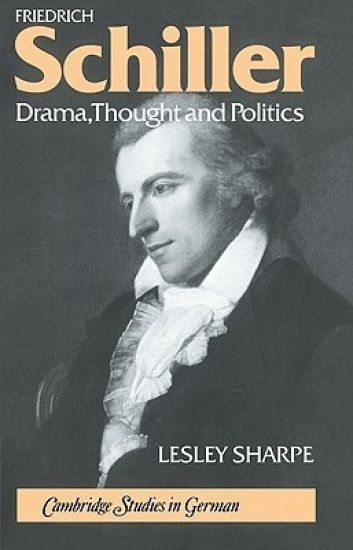
Friedrich Schiller

Friedrich Schiller

Lesley Sharpe

Cambridge University Press
2006
pokkari
In this important study, Lesley Sharpe assesses Schiller's development as a dramatist, poet and thinker, and provides detailed discussions of all his major works, including his essays on aesthetics. His works are viewed against the social, political and literary background of the late eighteenth century. Spanning a period from the late 1770s to 1805 they explore the insistent themes of the age - the loss of tradition and authority, the individual's claim to self-expression and the search for stability. While the early works focus on the turbulent individual, Schiller later turns to the great public concerns of the French Revolutionary era - legitimacy and power, the exercise of freedom and the relationship between morality and politics. The aesthetic essays explore the vital role of art in integrating the aesthetic, moral and political realms.