Kirjojen hintavertailu. Mukana 11 241 044 kirjaa ja 12 kauppaa.

Kirjahaku

Etsi kirjoja tekijän nimen, kirjan nimen tai ISBN:n perusteella.

1000 tulosta hakusanalla Fritz Heithecker

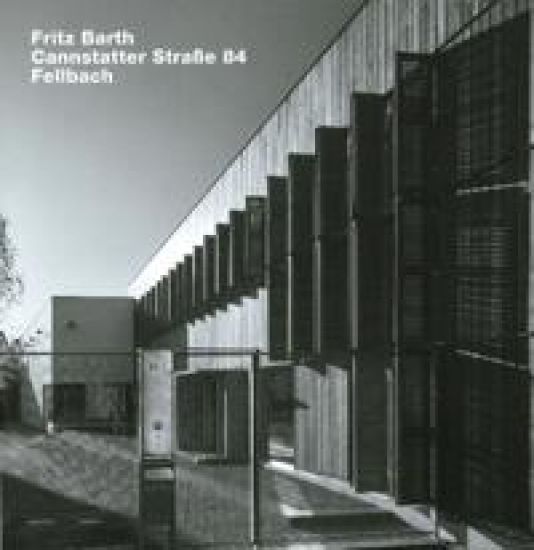
Fritz Barth

Fritz Barth

Thomas Hettche; Amber Sayah; Gerhart Schröder

Edition Axel Menges
2010
sidottu
Text in English & German. Heroic 20th-century Modernism saw the private home as a place to first test out utopian theories -- a place for free play and experimentation where new approaches could be put into action, on a small scale but no less radical. Here, where architecture and life are most closely interwoven, Frank Lloyd Wright, Gerrit Rietveld, Le Corbusier and even Konstantin Melnikov found the suitable space to give their visionary concepts a plastic reality. The house built by the architect Fritz Barth for his own use in his home town of Fellbach places itself in an ironic, possibly melancholic distance from this kind of heroic pathos, but still has this tradition as its background. So it is considered by his builder as an experiment to determine the state of architecture at the start of the 21st century -- not to apply whatever offers itself to expand the architectonic repertoire (an approach that Barth considers to be a questionable, increasingly rhetoricised form of a somewhat naïve belief in the future), but to find out what possibilities are still open to architecture and how far architecture still permits a concept of 'dwelling' in the sense the word was used by Heidegger. The result is not a backward-looking homeliness, but a structure that, as a commitment to architecture in and of itself, stands his ground like few others in its time and place. This is not least because its complexity its multi-layered, opulent fabric of allusions, references and quotations, only reveals itself gradually and with close observation behind a simple appearance targeted on the immediacy of experience and architecture. Despite the somewhat polemical intentions of its builder and inhabitant, the house is not experienced as an ideological manifesto in bricks and mortar. It is and here lies its radicality, devoted to the immediate experience of 'dwelling' in so far as it does not allow, as Thomas Hettche writes in his essay, any distinction between surface and function, life and experience.
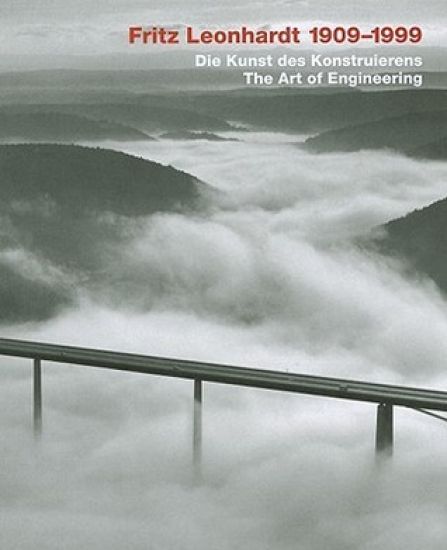
Fritz Leonhardt 1909-1999

Fritz Leonhardt 1909-1999

Edition Axel Menges
2009
sidottu
Text in English & German. Fritz Leonhardt would have been 100 years old in 2009. The Südwestdeutsches Archiv für Architektur und Ingenieurbau (saai) at the University of Karlsruhe is presenting the first full retrospective of this famous structural engineer's work, which holds his exten-sive estate. Leonhardt studied at the Technische Hochschule in Stuttgart and then travelled in the USA. He made his professional début with the German autobahn, for which he designed the Rodenkirchen suspension bridge in 1938-41. Leonhardt supported Herrmann Giesler's plans for the "capital of the movement" with a domed structure for the new main station in Munich, a project that was never realised. In the post-war period he worked mainly on reinforced and pre-stressed concrete structures. He combined pioneering structural innovations with a high standard of creative design. The television tower in Stuttgart, which he designed in 1953/54, is a good example of this. It has had countless successors all over the world. Leonhardt made important technical innovations in bridge-building in particular. He and his colleagues worked on the Düsseldorf family of bridges from the 1950s to the 1970s, diagonal cable bridges with an aesthetic shaping the urban landscape, and the Leonhardt, Andrä und Partner practice founded by him created wide-span bridges all over the world based on these models. Leonhardt was involved as a structural engineer on the first post-war high-rise buildings in Germany. He worked with the architects concerned on the cable-net structures for the German Pavilion at the 1967 Montreal World's Fair, and for the roofs of the 1972 Munich Olympics buildings. The interplay between science and practice was crucial to Leonhardt. With texts by Hans-Peter Andrä, Wolfgang Eilzer, Holger Svens-son and Thomas Wickbold, Ursula Baus, Norbert Becker, Dirk Bühler, Hans-Wolf Reinhardt and Christoph Gehlen, Theresia Gürtler Berger, Gerhard Kabierske, Joachim Kleinmanns, Karl-Eugen Kurrer, Alfred Pauser, Eberhard Pelke, Jörg Peter, Klaus Jan Philipp, Jörg Schlaich, Dietrich W. Schmidt, Werner Sobek, Elisabeth Spieker, Christiane Weber and Friedmar Voormann, Fritz Weller, and Fritz Wenzel.
U-Boot-Maschinist Fritz Kasten - Ein Frontbuch der deutschen Kriegsmarine
Dieser einzigartige Roman schildert Deutschlands Kampf gegen die englische Seeblockade im Ersten Weltkrieg. Autor Ludwig Freiwald stellt den Maschinistenmaat Fritz Kasten in den Vordergrund seiner Geschichte, um dann immer wieder zur Gro wetterlage berzugehen und ber das schwere Ringe der Kaiserlichen Marine und speziell ihrer U-Waffe zu berichten. Fritz Kasten, zu Beginn der Geschichte noch Kadett, wird bald auf den Schlachtkreuzer Derfflinger versetzt, mit dem er seine ersten Kampfeins tze absolviert, ehe er zum U-Boot SM U B 34 wechselt. An Bord des Einh llen-U-Bootes begibt sich Kasten auf gef hrliche Feindfahrten, w hrend der Krieg immer weiter w tet ... Freiwald zeichnet den Verlauf des Seekrieges 1914 bis 1918 aus zeitgen ssischer deutscher Perspektive in romanhafter Form nach. Freiwald versteht es dabei, Seeschlachten zwischen Kriegsschiffen und U-Booten eindringlich und packend zu beschreiben. U-Boot-Maschinist Fritz Kasten als zeithistorischer Goldschatz Lange waren pseudohistorische Abhandlungen in Romanform ber milit rgeschichtliche Ereignisse eine beliebte Literaturform im deutschsprachigen Raum. Autoren wie Paul Carell und die Landser-Hefte pr gten das Geschichtsbild hunderttausender Leser und etablierten dabei Mythen und Legenden. Bis heute haben echte geschichtswissenschaftliche Erkenntnisse Probleme, das durch die Autoren der Popul rgeschichte errichtete und sich wacker haltende Geschichtsbild zu korrigieren. Das vorliegende Werk ist vor allem deshalb interessant, weil es als zeitgeschichtliches Dokument anschaulich verdeutlich, wie die Nationalsozialisten das K mpfen, Leiden und Sterben der U-Boot-M nner im Ersten Weltkrieg zur Heldenverehrung hochstilisiert haben. Ludwig Freiwald verdingte sich bis Kriegsende als Propagandist des NS-Regimes und schrieb daher ganz auf Linie der Nationalsozialisten. Verlagsleiter Jill Marc M nstermann steuert eine Einordnung des Textes bei. Dar ber hinaus bietet Freiwalds Roman zweifelsohne
The World of Dystopia: Apocalyptic & Post-Apocalyptic Stories of Fritz Leiber
In 'The World of Dystopia, ' Fritz Reuter Leiber masterfully explores the intricate tapestry of societies spiraling into darkness, deftly weaving together elements of science fiction and speculative fiction. Through vivid prose and intricate world-building, Leiber presents a series of cautionary tales that interrogate the human condition in the face of oppressive regimes, and the fragility of freedom. The book is notable for its prescient commentary on technology, alienation, and the moral complexities of power, echoing the anxieties of the mid-20th century while remaining strikingly relevant to contemporary discourse. Fritz Reuter Leiber, an acclaimed author and influential figure in the realm of fantasy and science fiction, was deeply affected by the tumultuous events of his time, including World War II and the existential threats posed by burgeoning technology. His experiences shaped his vivid imagination and critical understanding of societal constructs, driving him to challenge readers to confront uncomfortable truths about their realities. Leiber's background as both a writer and a scholar informed his unique perspective on dystopian narratives, allowing him to articulate the nuances of human resilience and despair. 'The World of Dystopia' is essential for readers engaged in the exploration of societal fears and philosophical dilemmas posed by modernity. Leiber's compelling narratives encourage thoughtful reflection on current and future societal trajectories, making this book a vital addition to the library of anyone interested in the interplay between humanity and the forces that shape our destinies.
Fritz Schwigerling oder Der Liebestrank
Dieses Buch: "Fritz Schwigerling oder Der Liebestrank (Vollst ndige Ausgabe)" ist mit einem detaillierten und dynamischen Inhaltsverzeichnis versehen und wurde sorgf ltig korekturgelesen. Frank Wedekind (1864-1918) war ein deutscher Schriftsteller, Dramatiker und Schauspieler. Mit seinen gesellschaftskritischen Theaterst cken geh rte er zu den meistgespielten Dramatikern seiner Epoche. Wedekind wirkte als Dichter, Schauspieler, Kabarettist und Journalist. In seinen Theaterst cken bte der Dichter scharfe Gesellschaftskritik. Vor allem als Dramatiker hat sich Wedekind einen Namen gemacht. Er geh rte zu den meistgespielten Dramatikern seiner Epoche. Mit Dramen wie "Fr hlings Erwachen" und "Lulu" wandte er sich gegen schulische Dressur, b rgerliche Scheinheiligkeit und Pr derie. Seine Texte wurden oftmals als sittenwidrig angesehen und beschlagnahmt. Ein Grund f r die wiederholte Zensur von Wedekinds Werken war der sexuell anst ige Inhalt. So enth lt z. B. Fr hlings Erwachen sadomasochistische Motive: Ilse wird von verschiedenen M nnern gewaltsam unterworfen, Wendla bettelt Melchior um Schl ge mit der Rute an, und auch H nschens Gespr ch mit dem Aktbildnis weist deutlich sadomasochistische Aspekte auf. Aus dem Buch: "F RST. Er soll die Kinder in fremden Sprachen und im guten Ton unterrichten. KATHARINA. Und dazu engagieren Sie einen Kunstreiter? F RST. Der Mann kennt alle f nf Weltteile KATHARINA. Diese Degradation F RST. Nebenher unterrichtet er meine S hne im Reiten, Kutschieren und Zimmergymnastik. Das tut mir ein ordin rer Hauslehrer nicht. KATHARINA. Sie sind zu dumm F RST sich n hernd. Katja KATHARINA sich erhebend. Haben Sie Kama f ttern lassen? F RST. Katinka KATHARINA mit funkelnden Augen. Lassen Sie Kama hungern? F RST. Katharina "
Fritz Wedel Jarlsberg

Fritz Wedel Jarlsberg

Per Arne Totland

Cappelen Damm
sidottu
I løpet av hans lange liv har Storbritannia vært styrt av fem monarker, flere av dem kjente han personlig. Han har hatt relasjoner til tre svenske og tre danske konger. Fritz kjenner derimot bare én norsk konge, men til gjengjeld har han rekruttert ham selv.Fritz Wedel Jarlsberg (1855 - 1942) var en av Norges mest betydningsfulle skikkelser gjennom første del av 1900-tallet. Gjennom flere tiår var han Norges fremste diplomat og satte sitt personlige stempel på viktige hendelser i vår historie, som kongevalget i 1905 og ikke minst Svalbardtraktaten. I sin samtid var han en superkjendis. Han hadde en brennende fedrelandskjærlighet, samtidig som han var europeer. Hans livsførsel og forfengelige væremåte gjorde at mange har fremstilt ham som en klovn. Andre er blitt løftet frem på bekostning av Fritz Wedel Jarlsberg, som dermed gled inn i historiens skygge. Biografien om ham er fortellingen om et fargerikt liv og samtidig en strålende skildring av en europeisk historie.
Fritz W. Scharpf

Fritz W. Scharpf

Mads Dagnis Jensen og Dorte Sindbjerg Martinsen

Jurist- og økonom-
2018
nidottu
Denne bog handler om den tyske samfundsforsker Fritz Wilhelm Scharpf, som kan betegnes som en intellektuelt vidtspændende forsker, der selvstændigt har påvirket mange forskningsområder indenfor politologien. Læser man værker, der beskæftiger sig med Scharpfs forfatterskab, fremgår det, at han har leveret betydelige bidrag til et sted mellem syv og elleve vidt forskellige forskningsdagsordener indenfor politologi, jura og økonomi. I denne bog fokuserer vi kun på fire af dem, der har det til fælles, at de dækker de seneste tre årtier af hans forfatterskab.