
Kirjahaku
Etsi kirjoja tekijän nimen, kirjan nimen tai ISBN:n perusteella.
1000 tulosta hakusanalla Fritz Stephan Neumann

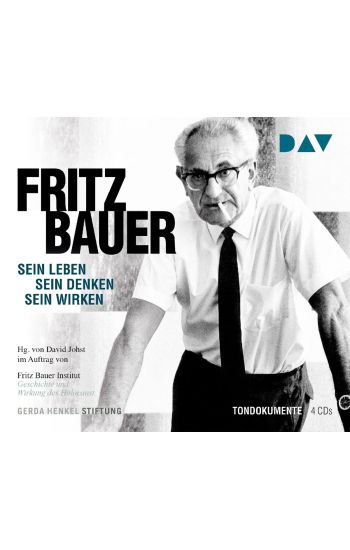
Fritz Bauer. Sein Leben, sein Denken, sein Wirken
Audio Verlag Der GmbH
2017
cd


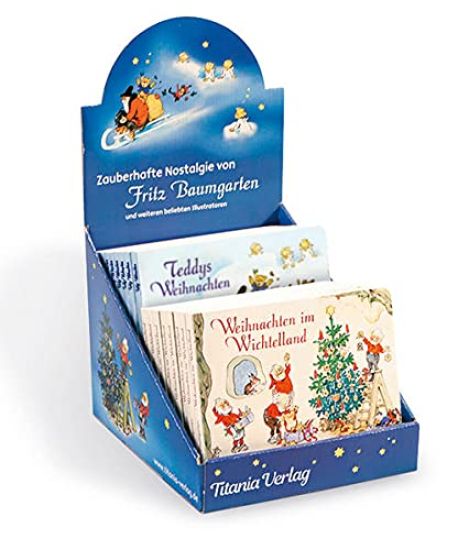
Fritz Baumgarten Weihnachts-Display
Titania Verlag GmbH
2021
pahvisivuinen

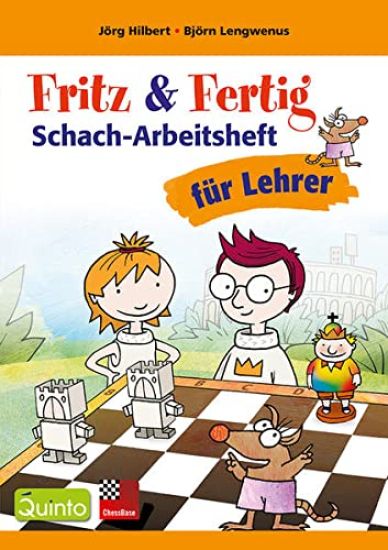


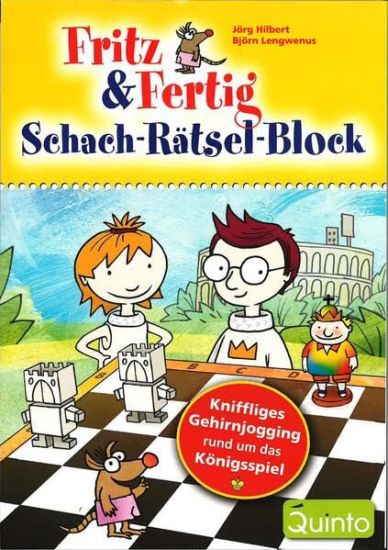
Fritz & Fertig Schach-Rätsel-Block: Kombinieren für Siegertypen
Jörg Hilbert; Björn Lengwenus
Chess Base
2017
nidottu

Fritz&Fertig Schach-Rätselblock: Mattalarm im schwarzen Schloss
Jörg Hilbert; Björn Lengwenus
Chess Base
2020
nidottu

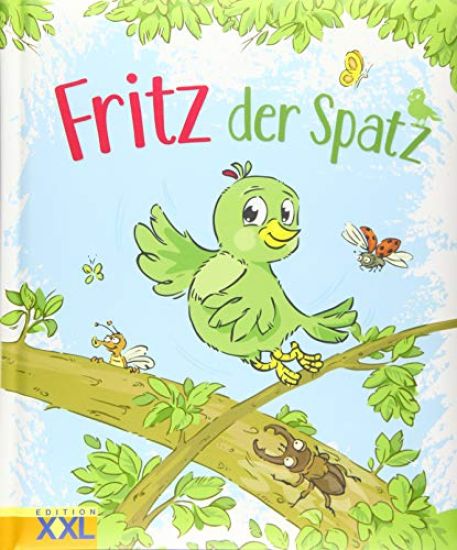
Fritz, der Spatz
Edition XXL GmbH
2019
pahvisivuinen

Gabriela Koschatzky-Elias writes absorbingly on the life and work of Fritz Maierhofer, one of the most important contemporary Austrian jewellery artists, whose international career took off in late-1960s London. Under the sway of that throbbing city, he had arrived at a conception of jewellery and a language of forms that were distinctively his own. Maierhofer places jewellery on an equal footing with painting, sculpture and architecture. What is crucial to him is the artistic intention rather than the market value of the materials used. Maierhofer keeps coming up with new statements - using acrylic glass and precious metals in the 1970s, pewter and gold in the 1980s and, in the 1990s, aluminium, steel and computer technology while his most recent work features the new material CORIAN®. A new publication in our Art Jewellery Series, this is the first comprehensive monograph surveying Fritz Maierhofer's work from the 1960s to the present. With superlative colour illustrations and texts by a group of distinguished specialists in the field (including Ralph Turner and Graziella Folchini Grassetto). Text in German and English.

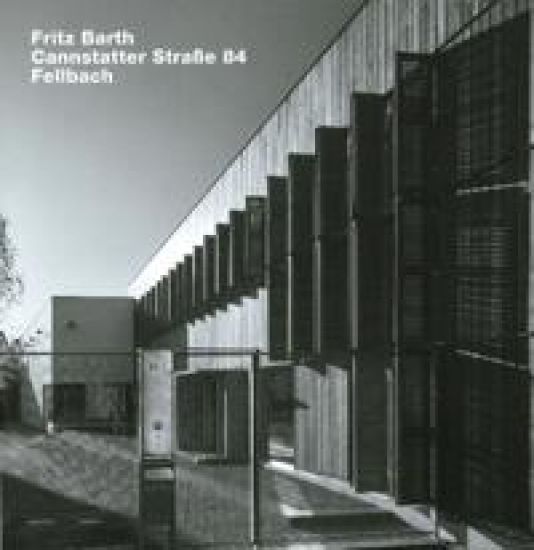
Text in English & German. Heroic 20th-century Modernism saw the private home as a place to first test out utopian theories -- a place for free play and experimentation where new approaches could be put into action, on a small scale but no less radical. Here, where architecture and life are most closely interwoven, Frank Lloyd Wright, Gerrit Rietveld, Le Corbusier and even Konstantin Melnikov found the suitable space to give their visionary concepts a plastic reality. The house built by the architect Fritz Barth for his own use in his home town of Fellbach places itself in an ironic, possibly melancholic distance from this kind of heroic pathos, but still has this tradition as its background. So it is considered by his builder as an experiment to determine the state of architecture at the start of the 21st century -- not to apply whatever offers itself to expand the architectonic repertoire (an approach that Barth considers to be a questionable, increasingly rhetoricised form of a somewhat naïve belief in the future), but to find out what possibilities are still open to architecture and how far architecture still permits a concept of 'dwelling' in the sense the word was used by Heidegger. The result is not a backward-looking homeliness, but a structure that, as a commitment to architecture in and of itself, stands his ground like few others in its time and place. This is not least because its complexity its multi-layered, opulent fabric of allusions, references and quotations, only reveals itself gradually and with close observation behind a simple appearance targeted on the immediacy of experience and architecture. Despite the somewhat polemical intentions of its builder and inhabitant, the house is not experienced as an ideological manifesto in bricks and mortar. It is and here lies its radicality, devoted to the immediate experience of 'dwelling' in so far as it does not allow, as Thomas Hettche writes in his essay, any distinction between surface and function, life and experience.