This book is an abstract of Human Action, a treatise on economics, the magnum opus of Ludwig von Mises, a central author of the "Austrian" school and one of the greatest thinkers in economics. Published in 1949, the original work has nearly a thousand pages. Although traditionally obscured by the neoclassical mainstream, the Austrian tradition is faithful to the ideas that have prevailed from the origins of economic thinking until the beginning of the twentieth century. It embodies a realistic conception of the economic discipline, rejecting the reductionist model of homo oeconomicus and the study of equilibrium states in order to focus on the processes of change and on the causal relations between events. Those ideas form a more solid foundation for the study of the market, of money, of economic crises, of enterprise and of modern industrial structures than the neoclassical paradigm. They are gradually being rediscovered by economists and increasingly validated by the evolution of the real world. Human Action exposes those id es in a systematic way, in a language accessible to all, and beyond its economic aspect, is in addition a particularly eloquent defense of freedom. As such, it should be part of the library of any "honest man".
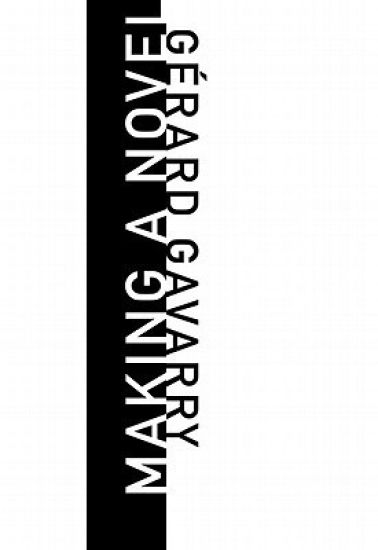
A literary exploration into the serendipitous convergences underpinning the writing of a novel (here, Ge rard Gavarry s masterful Hoppla! 1 2 3), this rare and revealing glimpse into the creative process pulls back the curtain on the composition of a playful and self-conscious work of fiction.
What is the true meaning of Christmas?Follow Julie as she discovers the true meaning of Christmas in the graphic novella for kids. Written and illustrated by Gerard Arantowicz.
"Okay, class. Come back to Earth with me for just a few more minutes..."A space odyssey for kids created by Gerard Arantowicz.Sometimes you need to get lost in order to find yourself.
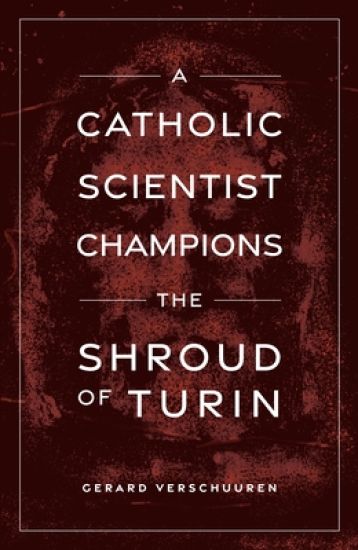
Challenging today's accepted "wisdom," Catholic scientist Gerard Verschuuren, Ph.D., here demonstrates that the question of whether God exists is not one science can answer. Indeed, that would be like expecting a microscope to reveal the square root of sixteen Verschuuren begins by explaining the five famous medieval proofs for the existence of God -- based on reason alone -- that have survived despite nearly a thousand years of efforts to refute them. With his wise help, you'll come to see that just as reason gives us access to the existence of numbers, so it is reason that gives us access to the existence of God. In fact, when we use our reason to investigate the existence of God, we encounter proofs that are more powerful, by far, than any that science could ever provide.Yes, Verschuuren is a Catholic; but he's also a long-standing scientist, schooled in using reason alone to draw forth from evidence the proofs to which it necessarily leads. Among the many truths that Verschuuren evinces here by reason alone are the following: Why science is not qualified to speak about the existence -- or nonexistence -- of GodThe many ways we can know for certain that God existsHow we know that God is all-perfectHow God can be all-knowingHow we know He is all-powerfulWhat it means to say that He is "all-present"Why the same God cannot be the God of all religionsAnd much more that reveals the enormous power of reason -- and the even greater power of God Try it Verschuuren's stunning proofs for God's existence -- based on evidence alone -- will open your eyes, stir your heart and, more importantly, deepen your faith in the wondrous Creator of Heaven and earth
The Shroud of Turin is celebrated as one of the holiest and most important relics of Christianity, with millions of pilgrims traveling to see the precious cloth in Italy on the rare occasions it has been displayed. Yet despite its enormous global popularity, the Shroud's authenticity is not without question.To address lingering uncertainties head-on, celebrated Catholic scientist Dr. Gerard Verschuuren explores and synthesizes the various scientific studies conducted on the Shroud --including those analyzing DNA, blood, carbon, pollen, textile, and anatomical issues -- as well as its storied history.He then scrutinizes the motives of the individual scientists performing these studies, the assumptions they employed to arrive at their conclusions, and the instances in which they veered into areas outside the competence of the sciences.After this exhaustive and highly satisfying analysis, Dr. Verschuuren reveals the reasons why he believes the Shroud of Turin to be the actual burial cloth of Jesus Christ, the crucified Savior of mankind. And he celebrates it as a rare instance in which the science and faith communities can meet each other -- and agree.
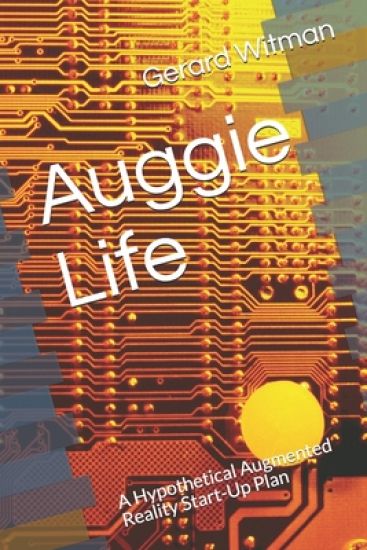
"Auggie, the world's first wearable device positioned to appeal to the masses is unlike the clunky alternatives currently on the market. Auggie will enter as a wearable fashion accessory targeting young technological savvy consumers who are looking for new ways to access information on the go and who want to look cool."This hypothetical start-up plan was compiled as the final capstone project for graduation by Gerard L. Witman Jr. It uses current research and analysis techniques to better understand the feasibility of wearable devices in the current marketplace. Auggie is a fake augmented reality company that seeks to position fashionable alternatives to the current wearable augmented reality devices. Augmented Reality Sunglasses.Additionally, the project proposes steps for Auggie to become first to market with physical devices through rapid innovation, then transition to a digital marketplace once the wearable market becomes saturated. This project was never meant to become a viable business plan, however, aspects of the information within the document could help position others who have the determination and capital backing to make augmented reality cost-effective and sustainable.Author's Note: I believe that the new digital frontier for marketing is through augmented reality. Rapidly accessing information and displaying back to the user will become as natural as listening to the radio or watching television. The brave new innovators, artists, and marketers to embrace this technology will shape both the physical and virtual world into something we can only yet imagine.
A collection of essays written as the personal legacy of an older man navigating his way through the aging process as he discovers he is slowly rusting away, that death does not happen suddenly for himself or many others. These essays are part observation, curiosity, reflection and hope; a legacy.
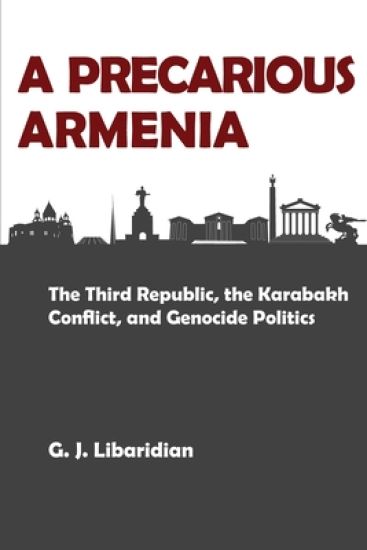
In this volume of selected essays and interviews, the author explores a number of fundamental issues regarding Armenia's foreign and security policies and scrutinizes the political culture as the framework within which positions have been defined and solutions have been sought. The previously published and unpublished material collectively analyze the political thinking that characterized the response to challenges the Third Republic faced and failed to address from the standpoint of statehood versus a vague but powerful nationalism. The author achieves this difficult task by studying themes such as Armenia and Armenians as agents of their own history as opposed to the dominant sense of victimhood, maximalism confused with patriotism, the role of mediators and other states as saviors, the comfort zone of illusions and legends as opposed to hard realism and pragmatism. Libaridian argues that the dominant but faulty framework led leaders of the state and Diaspora to a policy that bet on war rather than peace, a second Karabakh war that Armenia lost in 2020, a war that should have been avoided.
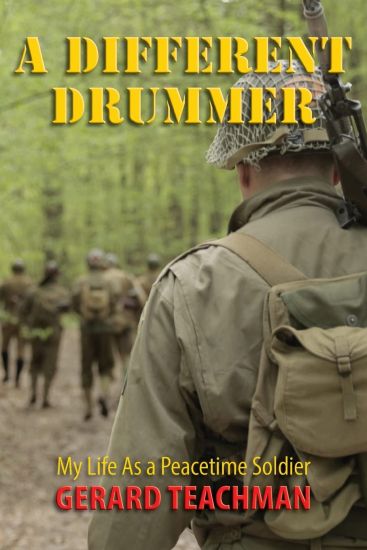
In this engaging memoir, Gerard Teachman, PhD, shares his coming-of-age experience as a young soldier in the U.S. Army from 1957 until his honorable discharge in 1960. With each spirited vignette, Gerry invites you to experience the humor, the humiliation, and the life lessons that laid the foundation for his future as an educator and humanitarian.A Different Drummer: My Life as a Peacetime Soldier begins with his working-class roots in Detroit, Michigan, where Gerry-slacking in college, and facing the threat of being drafted-voluntarily enlists with the hopes of attending the Army Language School in Monterey, California.But getting there is a difficult road that starts with Basic Training at Fort Leonard Wood, Missouri and leads to the ominous forest around Fort Lewis, Washington.Through newfound friends and strokes of luck, Gerry shares fun and sometimes frightening stories about his exposure to new foods, families, and adventures. This Midwestern teen raised on peanut butter and jelly sandwiches finds himself worlds away from his roots at extravagant parties at opulent mansions in California, and a Mexican restaurant in Tijuana.Then he gets his wish: experiencing Europe as a GI stationed in Coburg, Germany. His emotionally and physically grueling reality continues amidst mean-spirited soldiers and military superiors. At times flaunting a rebellious attitude, he's even court-martialed once. But Gerry makes friends, enjoys romance, and travels Europe, where he experiences La Boh me and Don Giovanni at the Vienna State Opera House, the Louvre Museum in Paris, the Palace of Versailles in France, and many other picturesque, historic places.In the end, Gerry returns to Michigan, enriched by his military service, ready to embark on a fulfilling life as a husband, father, and educator.Now in his eighties, Gerry offers A Different Drummer: My Life as a Peacetime Soldier as a delightful, entertaining read brimming with wisdom and wit.
In this engaging memoir, Gerard Teachman, PhD, shares his coming-of-age experience as a young soldier in the U.S. Army from 1957 until his honorable discharge in 1960. With each spirited vignette, Gerry invites you to experience the humor, the humiliation, and the life lessons that laid the foundation for his future as an educator and humanitarian.A Different Drummer: My Life as a Peacetime Soldier begins with his working-class roots in Detroit, Michigan, where Gerry-slacking in college, and facing the threat of being drafted-voluntarily enlists with the hopes of attending the Army Language School in Monterey, California.But getting there is a difficult road that starts with Basic Training at Fort Leonard Wood, Missouri and leads to the ominous forest around Fort Lewis, Washington.Through newfound friends and strokes of luck, Gerry shares fun and sometimes frightening stories about his exposure to new foods, families, and adventures. This Midwestern teen raised on peanut butter and jelly sandwiches finds himself worlds away from his roots at extravagant parties at opulent mansions in California, and a Mexican restaurant in Tijuana.Then he gets his wish: experiencing Europe as a GI stationed in Coburg, Germany. His emotionally and physically grueling reality continues amidst mean-spirited soldiers and military superiors. At times flaunting a rebellious attitude, he's even court-martialed once. But Gerry makes friends, enjoys romance, and travels Europe, where he experiences La Boh me and Don Giovanni at the Vienna State Opera House, the Louvre Museum in Paris, the Palace of Versailles in France, and many other picturesque, historic places.In the end, Gerry returns to Michigan, enriched by his military service, ready to embark on a fulfilling life as a husband, father, and educator.Now in his eighties, Gerry offers A Different Drummer: My Life as a Peacetime Soldier as a delightful, entertaining read brimming with wisdom and wit.