Kirjojen hintavertailu. Mukana 11 699 587 kirjaa ja 12 kauppaa.

Kirjahaku

Etsi kirjoja tekijän nimen, kirjan nimen tai ISBN:n perusteella.

1000 tulosta hakusanalla George Barrell Cheever

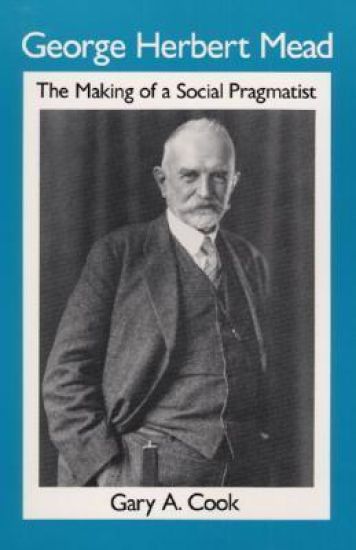
George Herbert Mead

George Herbert Mead

Gary A. Cook

University of Illinois Press
1993
nidottu
This groundbreaking study details the intellectual development of George Herbert Mead as a thinker of great originality and as a practitioner of social reform. Gary Cook traces the genesis of Mead's social psychological and philosophical ideas by analyzing his journal articles and posthumously published writings.
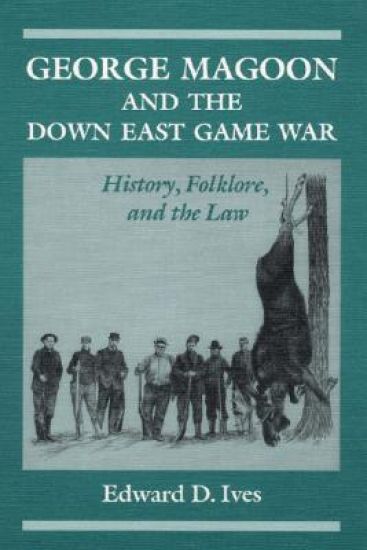
George Magoon and the Down East Game War

George Magoon and the Down East Game War

Edward D. Ives

University of Illinois Press
1992
nidottu
George Magoon (1851-1929), a notorious moose and deer poacher in Maine, was the hero of scores of funny stories of how he outwitted game wardens. Preserving these oral histories, Edward Ives documents Magoon's life and explores his significance as a folk hero within the context of the conservation movement, the cult of the sportsman, and Maine's increasingly restrictive game laws. "A rich and subtle book, an important work by a major scholar. . . . It is a major contribution to folklore studies, and to history and American studies as well." -- Journal of American Folklore
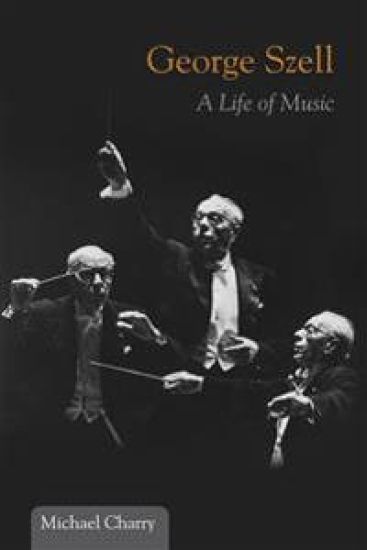
George Szell

George Szell

Michael Charry

University of Illinois Press
2014
nidottu
This book is the first full biography of George Szell, one of the greatest orchestra and opera conductors of the twentieth century. From child prodigy pianist and composer to world-renowned conductor, Szell's career spanned seven decades, and he led most of the great orchestras and opera companies of the world, including the New York Philharmonic, the NBC and Chicago Symphonies, the Berlin Philharmonic, the Vienna Philharmonic and Opera, and the Concertgebouw Orchestra. A protégé of composer-conductor Richard Strauss at the Berlin State Opera, his crowning achievement was his twenty-four-year tenure as musical director of the Cleveland Orchestra, transforming it into one of the world's greatest ensembles, touring triumphantly in the United States, Europe, the Soviet Union, South Korea, and Japan. Michael Charry, a conductor who worked with Szell and interviewed him, his family, and his associates over several decades, draws on this first-hand material and correspondence, orchestra records, reviews, and other archival sources to construct a lively and balanced portrait of Szell's life and work from his birth in 1897 in Budapest to his death in 1970 in Cleveland. Readers will follow Szell from his career in Europe, Great Britain, and Australia to his guest conducting at the New York Philharmonic and his distinguished tenure at the Metropolitan Opera and Cleveland Orchestra. Charry details Szell's personal and musical qualities, his recordings and broadcast concerts, his approach to the great works of the orchestral repertoire, and his famous orchestrational changes and interpretation of the symphonies of Robert Schumann. The book also lists Szell's conducting repertoire and includes a comprehensive discography. In highlighting Szell's legacy as a teacher and mentor as well as his contributions to orchestral and opera history, this biography will be of lasting interest to concert-goers, music lovers, conductors, musicians inspired by Szell's many great performances, and new generations who will come to know those performances through Szell's recorded legacy.
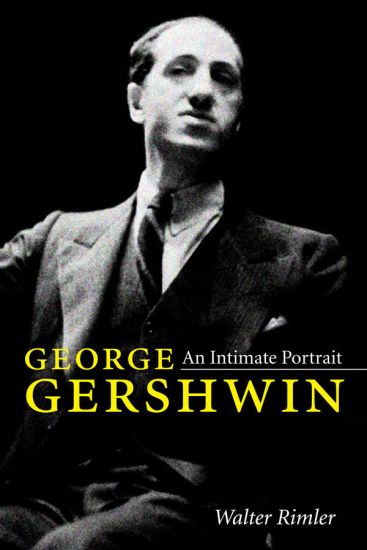
George Gershwin

George Gershwin

Walter Rimler

University of Illinois Press
2015
nidottu
George Gershwin lived with purpose and gusto, but with melancholy as well, for he was unable to make a place for himself--no family of his own and no real home in music. He and his siblings received little love from their mother and no direction from their father. Older brother and lyricist Ira managed to create a home when he married Leonore Strunsky, a hard-edged woman who lived for wealth and status. The closest George came to domesticity was through his longtime relationship with Kay Swift. She was his lover, musical confidante, and fellow composer. But she remained married to another man while he went endlessly from woman to woman. Only in the final hours of his life, when they were separated by a continent, did he realize how much he needed her. Fatally ill, unprotected by (and perhaps estranged from) Ira, he was exiled by Leonore from the house she and the brothers shared, and he died horribly and alone at the age of thirty-eight.Nor was Gershwin able to find a satisfying musical harbor. For years his songwriting genius could be expressed only in the ephemeral world of show business, as his brilliance as a composer of large-scale works went unrecognized by highbrow music critics. When he resolved this quandary with his opera Porgy and Bess, the critics were unable to understand or validate it. Decades would pass before this, his most ambitious composition, was universally regarded as one of music's lasting treasures and before his stature as a great composer became secure.In George Gershwin: An Intimate Portrait, Walter Rimler makes use of fresh sources, including newly discovered letters by Kay Swift as well as correspondence between and interviews with intimates of Ira and Leonore Gershwin. It is written with spirited prose and contains more than two dozen photographs.
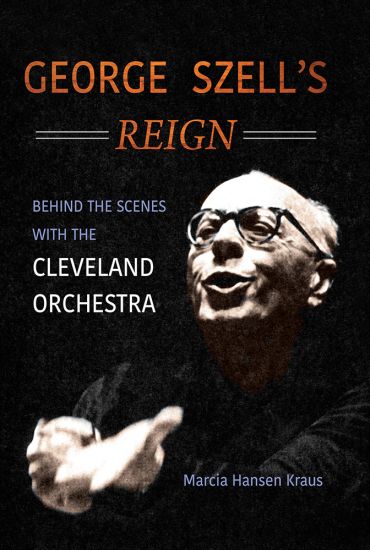
George Szell's Reign

George Szell's Reign

Marcia Hansen Kraus

University of Illinois Press
2019
nidottu
George Szell was the Cleveland Orchestra's towering presence for over a quarter of a century. From the boardroom to the stage, Szell's powerful personality affected every aspect of a musical institution he reshaped in his own perfectionist image. Marcia Hansen Kraus's participation in Cleveland's classical musical scene allowed her an intimate view of Szell and his achievements. As a musician herself, and married to an oboist who worked under Szell, Kraus pulls back the curtain on this storied era through fascinating interviews with orchestra musicians and patrons. Their recollections combine with Kraus's own to paint a portrait of a multifaceted individual who both earned and transcended his tyrannical reputation. If some musicians hated Szell, others loved him or at the least respected his fair-minded toughness. A great many remember playing under his difficult leadership as the high point in their lives. Filled with vivid backstage stories, George Szell's Reign reveals the human side of a great orchestra ”and how one visionary built a premier classical music institution.
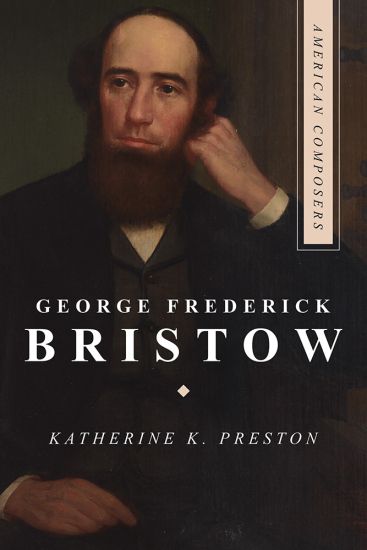
George Frederick Bristow

George Frederick Bristow

Katherine K. Preston

University of Illinois Press
2020
nidottu
As American classical music struggled for recognition in the mid-nineteenth century, George Frederick Bristow emerged as one of its most energetic champions and practitioners. Katherine K. Preston explores the life and works of a figure admired in his own time and credited today with producing the first American grand opera and composing important works that ranged from oratorios to symphonies to chamber music. Preston reveals Bristow's passion for creating and promoting music, his skills as a businessman and educator, the respect paid him by contemporaries and students, and his tireless work as both a composer and in-demand performer. As she examines Bristow against the backdrop of the music scene in New York City, Preston illuminates the little-known creative and performance culture that he helped define and create. Vivid and richly detailed, George Frederick Bristow enriches our perceptions of musical life in nineteenth-century America.
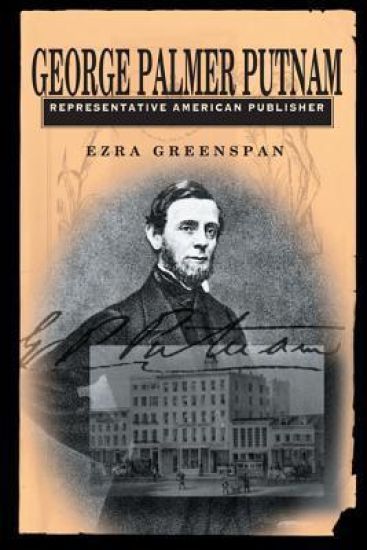
George Palmer Putnam

George Palmer Putnam

Ezra Greenspan

Pennsylvania State University Press
2000
sidottu
George Palmer Putnam (1814–1872) was arguably the most important American publisher of the nineteenth century, a man fully and multiply involved in developments transforming all aspects of literary culture. In this comprehensive cultural biography, Ezra Greenspan offers a wide-ranging account of a rich, productive life lived in print, interrelating Putnam’s life with the life of his family (one of the most remarkable of its time), with the changing patterns of life in New York City and the nation, and with the institutionalization of modern print culture in nineteenth-century America. Putnam’s roles and achievements were many: he established and ran the publishing house of G. P. Putnam’s in New York City; published many of the leading American antebellum writers, male and female, canonical and noncanonical (indeed, was responsible for the first act of American canonization—of Washington Irving); was the leading publisher of art books in his time and launched Putnam's Monthly; led efforts resulting in the institutionalization of the American publishing industry and was the most outspoken promoter of American authorship; led the fight in the United States for international copyright; was the first American publisher to open an overseas (London) branch office; and for a decade was the leading American agent in the international book trade. Putnam’s achievements were not limited to his professional sphere: he was also the founding Superintendent of the Metropolitan Museum of Art, the official publisher to the New York World's Fair of 1853, the Commissioner of the Internal Revenue in New York City during the Civil War, and the organizer of the greatest authors-publishers dinner ever given in nineteenth-century America. Friend and confidant to many of the leading figures of his time, he was not simply a centrally placed publisher but was one of the most centrally placed people of his entire society.This study is based on meticulous archival research into not only Putnam's own papers but into the records of his business, the papers of other family members, and the archives of persons with whom Putnam had contact through business and social networks. In a finely detailed narrative, Greenspan weaves together the story of Putnam's life and that of the development of print culture in nineteenth-century America to offer an ambitious, comprehensive biography of this "representative American publisher."
George Herbert's Christian Narrative

George Herbert's Christian Narrative

Harold Toliver

Pennsylvania State University Press
1993
pokkari
No seventeenth-century poet was more popularly read or imitated than George Herbert, and none represents the lyric implications of the Christian narrative more fully, with the possible exception of Milton. There is therefore a growing perception that George Herbert deserves to be placed more in the mainstream of literary history and that romanticism and modernism are not exclusively post-Milton phenomena. As one of the centers of new historicist interest, The Temple has of late been seated in the context of church controversies, Reformation thought, and the politics of the 1620s. Yet previous studies have been reluctant to widen their focus to locate Herbert within the intellectual movements of the earlier seventeenth century, apart from doctrinal issues and the social idiom that he often uses.Harold Toliver explores the implications for Herbert's lyrics of the Christian narrative—the secular labyrinth and the parables' guiding rope, the conflicts between heart and mind, the agonies of postponement, intervals and abstract totality, the visible church and its calendar, the concept of an ending, and Herbert's adaptation of the sonnet form. To establish Herbert's place among other seventeenth-century writers who make use of the Christian narrative, Toliver provides close readings of several poems and new configurations that reveal the pressure of the narrative whole on lyric moments as well as the bearing of the times on them. Herbert had difficulty salvaging any interest in a university or a secular career once he turned to sacred poetry. He also subordinated all phases of the Bible as a cultural history to the single pattern imposed by the Pauline reduction of the Bible to a single story. As part of Toliver's assessment of Herbert's intellectual landscape and active engagement in alternatives, the treatment polarizes that Pauline method and the Hebrew Bible's anecdotal, political, and social detail.
George Palmer Putnam

George Palmer Putnam

Ezra Greenspan

Pennsylvania State University Press
2000
pokkari
George Palmer Putnam (1814–1872) was arguably the most important American publisher of the nineteenth century, a man fully and multiply involved in developments transforming all aspects of literary culture. In this comprehensive cultural biography, Ezra Greenspan offers a wide-ranging account of a rich, productive life lived in print, interrelating Putnam’s life with the life of his family (one of the most remarkable of its time), with the changing patterns of life in New York City and the nation, and with the institutionalization of modern print culture in nineteenth-century America. Putnam’s roles and achievements were many: he established and ran the publishing house of G. P. Putnam’s in New York City; published many of the leading American antebellum writers, male and female, canonical and noncanonical (indeed, was responsible for the first act of American canonization—of Washington Irving); was the leading publisher of art books in his time and launched Putnam's Monthly; led efforts resulting in the institutionalization of the American publishing industry and was the most outspoken promoter of American authorship; led the fight in the United States for international copyright; was the first American publisher to open an overseas (London) branch office; and for a decade was the leading American agent in the international book trade. Putnam’s achievements were not limited to his professional sphere: he was also the founding Superintendent of the Metropolitan Museum of Art, the official publisher to the New York World's Fair of 1853, the Commissioner of the Internal Revenue in New York City during the Civil War, and the organizer of the greatest authors-publishers dinner ever given in nineteenth-century America. Friend and confidant to many of the leading figures of his time, he was not simply a centrally placed publisher but was one of the most centrally placed people of his entire society.This study is based on meticulous archival research into not only Putnam's own papers but into the records of his business, the papers of other family members, and the archives of persons with whom Putnam had contact through business and social networks. In a finely detailed narrative, Greenspan weaves together the story of Putnam's life and that of the development of print culture in nineteenth-century America to offer an ambitious, comprehensive biography of this "representative American publisher."
George Sand

George Sand

Martine Reid

Pennsylvania State University Press
2018
sidottu
The romantic and rebellious novelist George Sand, born in 1804 as Amantine Lucile Aurore Dupin, remains one of France’s most infamous and beloved literary figures. Thanks to a peerless translation by Gretchen van Slyke, Martine Reid’s acclaimed biography of Sand is now available in English.Drawing on recent French and English biographies of Sand as well as her novels, plays, autobiographical texts, and correspondence, Reid creates the most complete portrait possible of a writer who was both celebrated and vilified. Reid contextualizes Sand within the literature of the nineteenth century, unfolds the meaning and importance of her chosen pen name, and pays careful attention to Sand’s political, artistic, and scientific expressions and interests. The result is a candid, even-handed, and illuminating representation of a remarkable woman in remarkable times.With its clear, flowing language and impeccable scholarship, this Ernest Montusès Award–winning biography of the author of La Petite Fadette and A Winter in Majorca will be of great interest to those specializing in Sand and nineteenth-century literature—and to readers everywhere.
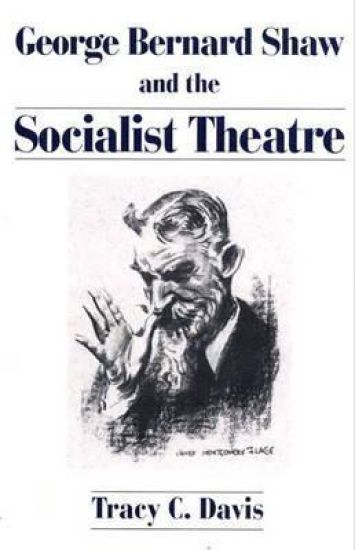
George Bernard Shaw and the Socialist Theatre

George Bernard Shaw and the Socialist Theatre

Tracy C. Davis

Praeger Publishers Inc
1994
nidottu
A biographically based study of George Bernard Shaw and his milieu, this book offers a non-laudatory reading of Shaw's economic practices and theories, augments feminist and postcolonial critiques that preoccupy the study of literary history in the 1990s, and provides a long overdue revisionist reading of Shaw for an undergraduate readership. It traces the theatrical and political influences on Shaw from his earliest days in London; tracks his interest in socialism as an activist and author of tracts, novels, and plays emphasizing certain polemical traits; and follows his career as a major literary figure into the mid-20th century. The overarching themes of theatre and politics are narrated in relation to attempts by Shaw and his contemporaries to identify an audience and aesthetic for socialist theatre. The bibliographic essay that concludes the book is particularly helpful for student readers, who can benefit from a manageably-sized orientation to the mountain of Shavian scholarship.
George F. Kennan's Strategic Thought

George F. Kennan's Strategic Thought

Richard Russell

Praeger Publishers Inc
1999
sidottu
George F. Kennan's strategic thought was instrumental in the formulation of the American grand strategy of containment of the Soviet Union. As Dr. Russell points out, Kennan's strategic thought was forged in the diplomatic practice and scholarship of the time. Russell looks beyond containment, however, to sift through Kennan's work to illuminate the worldview that informed his analysis of international relations and American foreign policy.Kennan's realist worldview contained principles for governing American diplomacy and the use of force to achieve national interests within the bounds set by the international competition for power between nation-states. Kennan's worldview illuminates the continuities of international politics that are often overlooked because of the massive changes in the post-Cold War world. Ironically, Kennan's worldview continues to provide a theoretical footing for guiding American foreign policy after containment. This is an important study for scholars, policymakers, and concerned citizens interested in international relations, American foreign policy, diplomatic history, and strategic studies.
George Washington and the Origins of the American Presidency

George Washington and the Origins of the American Presidency

William D. Pederson; Mark J. Rozell; Frank J. Williams

Praeger Publishers Inc
2000
sidottu
This essay collection is a retrospective analysis of the Washington administration's importance to the understanding of the modern presidency. Contemporary presidential scholarship gives little attention to the enormous impact that Washington's actions had on establishing the presidency. Most contemporary literature starts with 1933 and, although FDR's impact on the development of the modern institution of the presidency is undeniable, Washington's actions in office also established standards for practices that continue to this day.This analysis of the Washington presidency begins with an examination of Washington's leadership and its relevance to the modern presidency. The second group of essays looks at different aspects of presidential powers and the precedents established by the Washington administration. The third section examines Washington's press coverage, looking at the origins of Washington's image and the various myths in the press as well as the president's difficult relations with his contemporary press. A thoughtful and important corrective that will be of interest to scholars, students, and researchers involved with the American presidency and its history.
George Washington

George Washington

Praeger Publishers Inc
2001
sidottu
There have been many serious abuses of presidential power in recent decades, including Watergate, the Iran-Contra scandal, and the Lewinsky affair, subsequently Americans have demonstrated renewed interest in discussing the relationship between character and political leadership. Through an investigation of the life and career of George Washington, often considered the exemplary moral president, the chapters offer a balanced scholarly contribution to this analysis.Fishman, Pederson, Rozell, and their contributors examine the legacy of Washingtons presidency. Leading political scientists and historians describe and evaluate the impact of Washington's leadership on the institution of the presidency and on those who have since occupied the Oval Office. In the contemporary era of almost endless speculation about the role of character in presidential leadership, an analysis of Washington's character and the model he established is especially germane.The chapters provide diverse interpretations of the value of understanding Washington's leadership and the character of the modern presidency. Some of the scholars conclude that Washington indeed laid the foundation for good character and strong leadership in the presidency. Others take a more critical approach and see Washington, like many of his successors, as a fallible human being who possessed both character strengths and weaknesses. The lasting value of this analysis for political scientists, historians, and other students of the American presidency is that it demonstrates the continued vibrant debate over Washington's authentic legacy to the office.
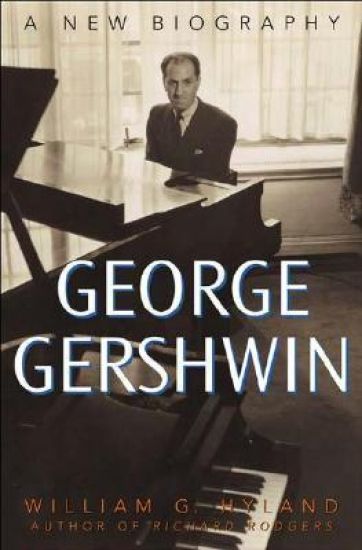
George Gershwin

George Gershwin

William G. Hyland

Praeger Publishers Inc
2003
sidottu
Having retired from a career in government, Hyland has taken to writing about American popular music and here traces the life, personality, and work of composer Gershwin (1898-1937) from his birth in New York City to the impact his music continues to exert. Annotation (c) Book News, Inc., Portland,
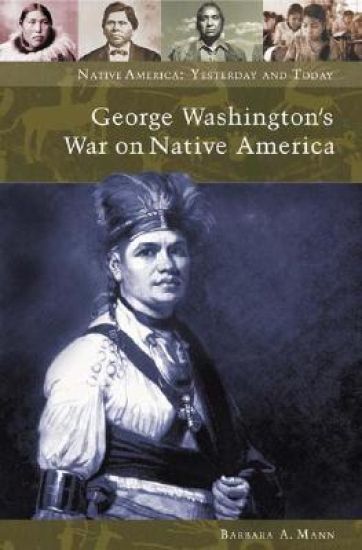
George Washington's War on Native America

George Washington's War on Native America

Barbara Alice Mann

Praeger Publishers Inc
2005
sidottu
The Revolutionary War is ordinarily presented as a conflict exclusively between colonists and the British, fought along the northern Atlantic seacoast. This important work recounts the tragic events on the forgotten Western front of the American Revolution—a war fought against and ultimately won by Native America. The Natives, primarily the Iroquois League and the Ohio Union, are erroneously presented in history texts as allies (or lackeys) of the British, but Native America was working from its own internally generated agenda: to prevent settlers from invading the Old Northwest. Native America won the war in the West, holding the land west and north of the Allegheny-Ohio River systems. While the British may have awarded these lands to the colonists in the Treaty of Paris, the Native Americans did not concur.Throughout the war, the unwavering goal of the Revolutionary Army, under George Washington, and their associated settler militias was to break the power of the Iroquois League, which had successfully held off invasion for the preceding two centuries, and the newly formed Ohio Union. To destroy the Natives in the way of land seizure, Washington authorized a series of rampages intended to destroy the League and the Union by starvation. Food, livestock, homes, and trees were destroyed, first in the New York breadbaskets, then in the Ohio granaries—spreading famine across Native lands. Uncounted thousands of Natives perished from New York to Pennsylvania to Ohio. This book tells how, in the wake of the massive assaults, the Natives held back the American onslaught.
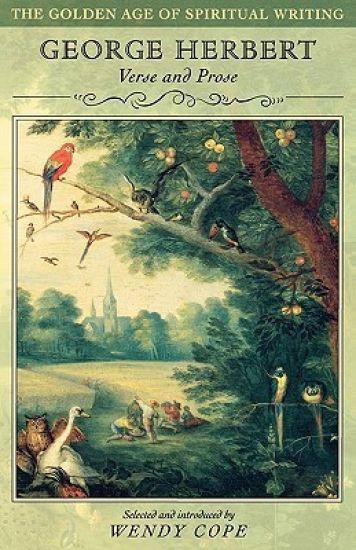
George Herbert

George Herbert

SPCK Publishing
2002
nidottu
George Herbert was a 17th century spiritual writer. This is a selection of his poetry and prose chosen by the poet, Wendy Cope. The volume also contains some biographical detail and historical context.