Kirjojen hintavertailu. Mukana 11 342 296 kirjaa ja 12 kauppaa.

Kirjahaku

Etsi kirjoja tekijän nimen, kirjan nimen tai ISBN:n perusteella.

1000 tulosta hakusanalla George Malcolm Stratton

George Gabriel Stokes

George Gabriel Stokes

Oxford University Press
2019
sidottu
George Gabriel Stokes was one of the most important mathematical physicists of the 19th century. During his lifetime he made a wide range of contributions, notably in continuum mechanics, optics and mathematical analysis. His name is known to generations of scientists and engineers through the various physical laws and mathematical formulae named after him, such as the Navier-Stokes equations in fluid dynamics. Born in Ireland into a family of academics, clergymen and physicians, he became the longest serving Lucasian Professor of Mathematics at Cambridge. Impressive as his own scientific achievements were, he made an equally important contribution as a sounding board for his contemporaries, providing good judgement and mathematical rigour in his wide correspondence and during his 31 years as Secretary of the Royal Society where he played a major role in the direction of British science. Outside his own area he was a distinguished public servant and MP for Cambridge University. He was keenly interested in the relation between science and religion and wrote at length on their interaction. Stokes was a remarkable scientist who lived in an equally remarkable age of discovery and innovation. This edited collection of essays brings together experts in mathematics, physics and the history of science to cover the many facets of Stokes's life in a scholarly but accessible way to mark the bicentenary of his birth.
George Orwell

George Orwell

Oxford University Press
2025
sidottu
George Orwell has never been more quoted and misquoted. Can he be rescued from the soundbites? George Orwell remains a work in progress. He is, or has become, a meme, a global writer, a national treasure, a London statue, a scholarly society, a Prize and a Journal, a trope and a show, various movies, various murals, various misquotations, two adjectives, at least half a dozen fictions and most recently “a dead metaphor” with plenty more accolades to come. George Orwell: Life and Legacy by Colls is an intellectual biography which offers an original account of Orwell's life and work from his birth in the high noon of British imperialism in 1903, to his death on the eve of the Cold War in 1950. Orwell's life played out against a background of two world wars, two great revolutions, one long global depression, the rise and rise of Communism, and the war-time pre-eminence of the United. Yet no matter how alert he was to all these great struggles, and no matter how guarded he was in his personal life, Orwell never turned away from the question of who he was, and the contradictions that entailed. His two great modern masterpieces Animal Farm (1945) and Nineteen Eighty-Four (1949) arrived to define the age he lived in. Interest in him has never abated since; no writer is more quoted or misquoted. Orwell is in danger of being lost to soundbites. Colls reveals the author once again.
George Bernard Shaw

George Bernard Shaw

Christopher Wixson

Oxford University Press
2020
nidottu
George Bernard Shaw has been called the second greatest playwright in English (after William Shakespeare) and one of the inventors of modern celebrity as the most famous public intellectual of his time. Beginning in the 1880s, as a critic and as a playwright, he transformed British drama, bringing to it intellectual substance, ethical imperatives, and modernity itself, setting the theatrical course for the subsequent century. That his legacy endures seventy years after his death is testament to the prescience of his thinking and his prolific creativity. This Very Short Introduction looks at Shaw's life, starting with his upbringing in Ireland, and then takes a chronological approach through his works. Considering Shaw's committed antagonism on behalf of a range of socio-political issues; his use of comedy as a mode for communicating serious ideas; and his rhetorical style that pushes conventional boundaries, Christopher Wixson provides an overview of the creative evolution of core themes throughout Shaw's long career. ABOUT THE SERIES: The Very Short Introductions series from Oxford University Press contains hundreds of titles in almost every subject area. These pocket-sized books are the perfect way to get ahead in a new subject quickly. Our expert authors combine facts, analysis, perspective, new ideas, and enthusiasm to make interesting and challenging topics highly readable.
George Eliot

George Eliot

Juliette Atkinson

Oxford University Press
2025
nidottu
Very Short Introductions: Brilliant, Sharp, Inspiring George Eliot pushed the boundaries of fiction and of Victorian society. She was an extraordinary woman whose unconventional life meant that she was judged harshly by family, friends, and strangers. Eliot wanted to draw attention to the feelings and motivations of ordinary people, so that we might feel more generous towards each other. But human beings are complex, and to capture that complexity Eliot drew on an astonishing range of philosophical, psychological, and scientific ideas. She hoped her work might do good, yet she was clear-eyed about the limits of both human sympathy and the novel. In this Very Short Introduction, Juliette Atkinson explores the ideas feeding Eliot's fiction and looks at the literary techniques - such as narrative voice, genre, imagery, structure, and syntax - that she used to embody them. These shape her recurrent themes: the stifling nature of gossip, the hardships experienced by commonplace individuals, the duty of practising fellow-feeling and the difficulty of doing so. Atkinson argues that George Eliot was a social outcast who became a sage, through the creation of some of the most influential novels ever written in English. ABOUT THE SERIES: The Very Short Introductions series from Oxford University Press contains hundreds of titles in almost every subject area. These pocket-sized books are the perfect way to get ahead in a new subject quickly. Our expert authors combine facts, analysis, perspective, new ideas, and enthusiasm to make interesting and challenging topics highly readable.
George Herbert and the Business of Practical Piety

George Herbert and the Business of Practical Piety

Ceri Sullivan

Oxford University Press
2024
sidottu
Contemporary nudge theory points out that people make good choices over issues where they have had past experience of similar circumstances, where there is reliable, substantial, and relevant information about the situation, and where they will get prompt feedback about the effect of their decision. Yet none of these conditions apply to the most vital choice of action facing early modern Protestants: how can they be saved? In George Herbert and the Business of Practical Piety, Ceri Sullivan uses nudge theory to show how practical divinity disregards the doleful conclusions of predestination--that salvation cannot be earned--to supply readers with suggestions on how to prepare to act, regardless of their final destiny. Such texts create cognitive niches to support cheerful, godly thought and action, in a way which is far from being despairing or compulsive. Their nudges were repeatedly put into practice by Herbert's friends, the Ferrars, who tried to form an ideal religious community at Little Gidding. These prescriptions and examples illustrate how George Herbert's The Temple (1633) is a compendium of the techniques of choice architecture. Herbert's poems are full of the humour emerging from a life of faith which is willing to guard high ideals by low cunning, stooping to use the least little things to change a self. George Herbert and the Business of Practical Piety initially calls on theories of the extended mind to ask what sort of minor physical and social structures scaffold decisions, then examines a selection of nudges used by Herbert: contracts with the self, building a mind, cleaning a heart, conversing with God, making to-do lists, and working on working well.
George Akropolites: The History

George Akropolites: The History

Oxford University Press
2007
sidottu
This is the first English translation and study of George Akropolites' History, the main Greek source for the history of Byzantium between 1204 and 1261. Akropolites relates what happened to Byzantium after the Latin conquest of its capital, Constantinople, by the Fourth Crusade in 1204. He narrates the fragmentation of the Byzantine world, describing how the newly established 'empire' in Anatolia prevailed over its foreign and Byzantine enemies to recapture the capital in 1261. Akropolites was an eyewitness to most of the events he relates and a man close to the emperors he served, and his account has therefore influenced modern perceptions of this period. It has been an essential source for all those studying the eastern Mediterranean in the thirteenth century. However, until now historians have made use of his History without knowing anything about its author. Ruth Macrides remedies this deficiency by providing a detailed guide to Akropolites' work and an analysis of its composition, which places it in the context of medieval Greek historical writing.
George Oppen and the Fate of Modernism

George Oppen and the Fate of Modernism

Peter Nicholls

Oxford University Press
2007
sidottu
Regard for George Oppen's poetry has been growing steadily over the last decade. Peter Nicholls's study offers a timely opportunity to engage with a body of work which can be both luminously simple and intriguingly opaque. Nicholls charts Oppen's commitment to Marxism and his later explorations of a 'poetics of being' inspired by Heidegger and Existentialism, providing detailed accounts of each of the poet's books. He is the first critic to draw extensively on the Oppen archive, with its thousands of pages of largely unpublished notes and drafts for poems; in doing so, he is able to map the distinctive contours of Oppen's poetic thinking and to investigate the complex origins of many of his poems. Oppen emerges from this study as a writer of mercurial intensities for whom every poem constitutes a 'beginning again', a freeing of the mind from thoughts known in advance. A strikingly innovative and challenging poetics results from Oppen's attempt to avoid what he regards as the errors of the modernist avant-garde and to create instead a designedly 'impoverished' aesthetic which keeps poetry close to the grain of experience and to the political and ethical dilemmas it constantly poses.
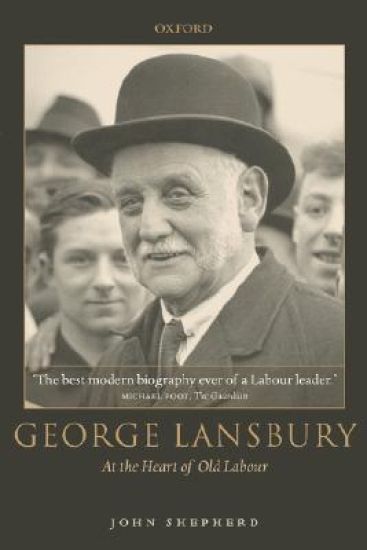
George Lansbury

George Lansbury

John Shepherd

Oxford University Press
2004
nidottu
'The most loveable figure in modern politics' was how A. J. P. Taylor described the Christian pacifist, George Lansbury, who at 73 took over the helm of the Labour Party of only 46 MPs in the Depression years of the 1930s. Throughout a remarkable life, Lansbury remained an extraordinary politician of the people, associated with a multitude of crusades for social justice. He resigned from Parliament to support 'Votes for Women' and for the next ten years edited the fiery Daily Herald. In 1921 Lansbury led the 'Poplar Rates Rebellion' - when thirty Labour councillors went willingly to prison in defiance of the government, the courts, and their own party leadership. As Labour leader, Lansbury was known universally as a committed socialist and an implacable opponent of capitalism and imperialism. He never sought personal wealth, travelled everywhere by public transport, and made his home in impoverished East London. His final years were spent in a tireless international peace crusade to prevent the drift towards another world war. In this major new biography, John Shepherd draws on an impressive range of research to reconstruct the life of a charismatic Labour pioneer. He reaffirms George Lansbury's standing at the heart of Old Labour and his importance to British politics as a whole.
George Oppen and the Fate of Modernism

George Oppen and the Fate of Modernism

Peter Nicholls

Oxford University Press
2013
nidottu
Regard for George Oppen's poetry has been growing steadily over the last decade. Peter Nicholls's study offers a timely opportunity to engage with a body of work which can be both luminously simple and intriguingly opaque. Nicholls charts Oppen's commitment to Marxism and his later explorations of a 'poetics of being' inspired by Heidegger and Existentialism, providing detailed accounts of each of the poet's books. He is the first critic to draw extensively on the Oppen archive, with its thousands of pages of largely unpublished notes and drafts for poems; in doing so, he is able to map the distinctive contours of Oppen's poetic thinking and to investigate the complex origins of many of his poems. Oppen emerges from this study as a writer of mercurial intensities for whom every poem constitutes a 'beginning again', a freeing of the mind from thoughts known in advance. A strikingly innovative and challenging poetics results from Oppen's attempt to avoid what he regards as the errors of the modernist avant-garde and to create instead a designedly 'impoverished' aesthetic which keeps poetry close to the grain of experience and to the political and ethical dilemmas it constantly poses.
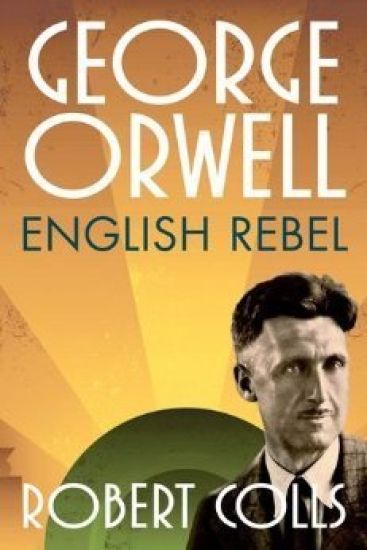
George Orwell

George Orwell

Robert Colls

Oxford University Press
2013
sidottu
An intellectual who did not like intellectuals, a socialist who did not trust the state, a writer of the left who found it easier to forgive writers of the right, a liberal who was against free markets, a Protestant who believed in religion but not in God, a fierce opponent of nationalism who defined Englishness for a generation. Aside from being one of the greatest political essayists in the English language and author of two of the most famous books in twentieth century literature, George Orwell was a man of many fascinating contradictions, someone who liked to go against the grain because he believed that was where the truth usually lay. George Orwell. English Rebel takes us on a journey through the many twists and turns of Orwell's life and thought, from the precocious public school satirist at Eton and the imperial policeman in Burma, through his early years as a rather dour documentary writer, down and out on the streets of Paris and London and on the road to Wigan pier, o his formative experiences as a volunteer soldier in the Spanish Civil War. Above all, the book skilfully traces Orwell's gradual reconciliation with his country, a journey which began down a coal mine in 1936 to find its exhilarating peaks during the dark days of the Second World War.
George W. Bush and the Redemptive Dream

George W. Bush and the Redemptive Dream

Dan P. McAdams

Oxford University Press Inc
2010
sidottu
George W. Bush remains a highly controversial figure, a man for whom millions of Americans have very strong feelings. Dan McAdams' book offers an astute psychological portrait of Bush, one of the first biographies to appear since he left office as well as the first to draw systematically from personality science to analyze his life. McAdams, an international leader in personality psychology and the narrative study of lives, focuses on several key events in Bush's life, such as the death of his sister at age 7, his commitment to sobriety on his 40th birthday, and his reaction to the terrorist attacks of September 11, and his decision to invade Iraq. He sheds light on Bush's life goals, the story he constructed to make sense of his life, and the psychological dynamics that account for his behavior. Although there are many popular biographies of George W. Bush, McAdams' is the first true psychological analysis based on established theories and the latest research. Short and focused, written in an engaging style, this book offers a truly penetrating look at our forty-third president.
George Fletcher's Essays on Criminal Law

George Fletcher's Essays on Criminal Law

Oxford University Press Inc
2013
sidottu
While George Fletcher's book, Rethinking Criminal Law, is justly celebrated as the most widely cited and influential book on criminal law, his articles and essays have been comparatively overlooked. But it is in these essays where Fletcher hones and polishes the themes of Rethinking as well as advances new ground. They are critical in understanding the evolution of his views on criminal law. This volume collects, for the first time, a selection of his most famous previously published shorter works as well as some that are less known but equally important. Each of the twelve essays by Fletcher is paired with one or more new critical commentaries on that essay. These critical commentaries trace the significance of the respective essay in the development of the criminal law and assess its future significance. The commentators include leading criminal law scholars, philosophers, and a judge. Reflecting Fletcher's comparative law focus, the commentators hail from America, England, and Israel. Preceding these paired sets of essays/critical commentaries is an Introduction that broadly assesses Fletcher's body of work and career in criminal scholarship as well as provides an overview of each essay and critical commentary. Concluding the volume is a new, original essay by Fletcher in which he responds to his critics. Fletcher also reflects back on his six-decade spanning career and takes stock. Fletcher's essay concludes with some speculations as to the trend of future developments in the field. In the enterprise of theoretical criminal law, the essays in this book represent the pinnacle of the thinking of one of the fields' most celebrated scholars.
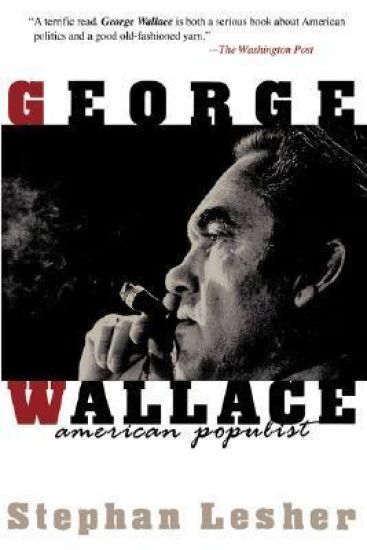
George Wallace

George Wallace

Stephan Lesher

Da Capo Press Inc
1995
pokkari
A full-scale biography of the complex life and times of George Wallace, from rural poverty under Roosevelt to national prominence in the age of segregationAlabama Governor George Wallace captured the national spotlight in fiery opposition to civil rights as one of the last great demagogues of the Jim Crow South. That image, however, has overshadowed his other and more lasting significance--as spokesman for a tide of working-class resentment and general opposition to big, intrusive government that persists to this day. As historian Alan Brinkley wrote in the New York Times, Wallace emerges in this biography as "the first of a new breed of protest politicians, the first to articulate themes that have no inherent racial content and that have now become a staple of American politics, having shaped every national campaign from Richard Nixon's in 1968 to Bill Clinton's and Ross Perot's in 1992." George Wallace explores the origins of Wallace's racism, his relentless dedication to his own political advancement, the influence of his public life on the nation, and his role as the embodiment of the dark side of our nation's politics--for America made George Wallace, not the other way around. "A terrific read. George Wallace is both a serious book about American politics and a good old-fashioned yarn."--Washington Post
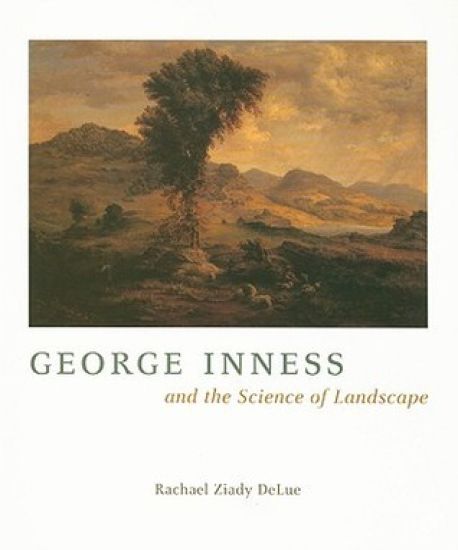
George Inness and the Science of Landscape

George Inness and the Science of Landscape

Rachael Z. DeLue

University of Chicago Press
2008
nidottu
George Inness (1825-94) is considered one of America's greatest landscape painters. A complicated artist and thinker, he painted stunning, evocative views of the American countryside.Throughout his career, Inness struggled to make visible what was invisible to the human eye by combining a deep interest in nineteenth-century scientific inquiry - including optics, psychology, physiology, and mathematics - with an idiosyncratic brand of mysticism. Rachael Ziady DeLue's "George Inness and the Science of Landscape" - the first in-depth examination of Inness' career to appear in several decades - demonstrates how the artistic, spiritual, and scientific aspects of Inness' art found expression in his masterly landscapes. In fact, Inness' practice was not merely shaped by his preoccupation with the nature and limits of human perception; he conceived of his labor as a science in its own right. This beautifully illustrated work reveals Inness' profound investment in the science and philosophy of his time and illuminates the complex manner in which the fields of art and science intersected in nineteenth-century America.
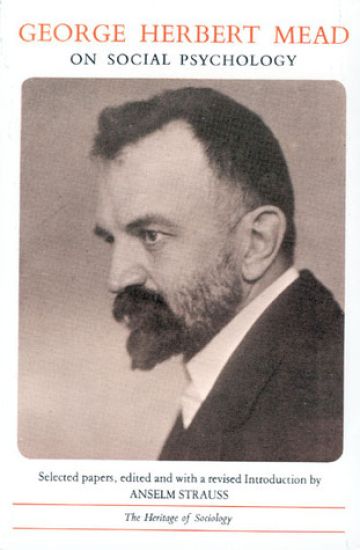
George Herbert Mead on Social Psychology

George Herbert Mead on Social Psychology

George Herbert Mead

University of Chicago Press
1964
nidottu
One of the most brilliantly original of American pragmatists, George Herbert Mead published surprisingly few major papers and not a single book during his lifetime. Yet his influence on American sociology and social psychology since World War II has been exceedingly strong. This volume is a revised and enlarged edition of the book formerly published under the title The Social Psychology of George Herbert Mead. It contains selections from Mead's posthumous books: Mind, Self, and Society; Movements of Thought in the Nineteenth Century; The Philosophy of the Act; and The Philosophy of the Present, together with an incisive, newly revised, introductory essay by Anselm Strauss on the importance of Mead for contemporary social psychology. "Required reading for the social scientist."—Milton L. Barron, Nation
George Meléndez Wright

George Meléndez Wright

Jerry Emory

THE UNIVERSITY OF CHICAGO PRESS
2023
sidottu
The first biography of a visionary biologist whose groundbreaking ideas regarding wildlife and science revolutionized national parks. When twenty-three-year-old George Meléndez Wright arrived in Yosemite National Park in 1927 to work as a ranger naturalist—the first Hispanic person to occupy any professional position in the National Park Service (NPS)—he had already visited every national park in the western United States, including McKinley (now Denali) in Alaska. Two years later, he would organize the first science-based wildlife survey of the western parks, forever changing how the NPS would manage wildlife and natural resources. At a time when national parks routinely fed bears garbage as part of “shows” and killed “bad” predators like wolves, mountain lions, and coyotes, Wright’s new ideas for conservation set the stage for the modern scientific management of parks and other public lands. Tragically, Wright died in a 1936 car accident while working to establish parks and wildlife refuges on the US-Mexico border. To this day, he remains a celebrated figure among conservationists, wildlife experts, and park managers. In this book, Jerry Emory, a conservationist and writer connected to Wright’s family, draws on hundreds of letters, field notes, archival research, interviews, and more to offer both a biography of Wright and a historical account of a crucial period in the evolution of US parks and the wilderness movement. With a foreword by former NPS director Jonathan B. Jarvis, George Meléndez Wright is a celebration of Wright’s unique upbringing, dynamism, and enduring vision that places him at last in the pantheon of the great American conservationists.
George Meléndez Wright

George Meléndez Wright

Jerry Emory

THE UNIVERSITY OF CHICAGO PRESS
2026
nidottu
The first biography of a visionary biologist whose groundbreaking ideas regarding wildlife and science revolutionized national parks. When twenty-three-year-old George Meléndez Wright arrived in Yosemite National Park in 1927 to work as a ranger naturalist—the first Hispanic person to occupy any professional position in the National Park Service (NPS)—he had already visited every national park in the western United States, including McKinley (now Denali) in Alaska. Two years later, he would organize the first science-based wildlife survey of the western parks, forever changing how the NPS would manage wildlife and natural resources. At a time when national parks routinely fed bears garbage as part of “shows” and killed “bad” predators like wolves, mountain lions, and coyotes, Wright’s new ideas for conservation set the stage for the modern scientific management of parks and other public lands. Tragically, Wright died in a 1936 car accident while working to establish parks and wildlife refuges on the US-Mexico border. To this day, he remains a celebrated figure among conservationists, wildlife experts, and park managers. In this book, Jerry Emory, a conservationist and writer connected to Wright’s family, draws on hundreds of letters, field notes, archival research, interviews, and more to offer both a biography of Wright and a historical account of a crucial period in the evolution of US parks and the wilderness movement. With a foreword by former NPS director Jonathan B. Jarvis, George Meléndez Wright is a celebration of Wright’s unique upbringing, dynamism, and enduring vision that places him at last in the pantheon of the great American conservationists.
George Kelly

George Kelly

Trevor Butt

Red Globe Press
2008
nidottu
Kelly's pragmatic approach to psychology arose from his clinical practice and has been a strong formative influence on clinical psychology and personality theory. Taking us through the development of Kelly's work and setting it in its historical context, this is a fascinating account of one of the foremost personality theories of the 20th century.
George C. Marshall

George C. Marshall

Palgrave Macmillan
2011
sidottu
Bringing together a who's who of Marshall scholars, this volume examines the major roles assumed by Marshall over his five-decade career - soldier; statesman and peacemaker; and leader and manager - to illuminate key issues and themes surrounding the man and his era.
George Sand and Idealism

George Sand and Idealism

Naomi Schor

Columbia University Press
1993
sidottu
A reanalysis of Sand's major writing, ranging from her early short stories to her later fiction, which identifies her writing as an example of an aesthetic mode often associated with femininity. The study compares Sand's place in the history of the realist novel to that of her male counterparts.