
Kirjahaku
Etsi kirjoja tekijän nimen, kirjan nimen tai ISBN:n perusteella.
1000 tulosta hakusanalla Goethe
Goethe s Female Characters from the Original Drawings of William Kaulbach
Johann Wolfgang Von Goethe
Kessinger Pub
2003
pokkari
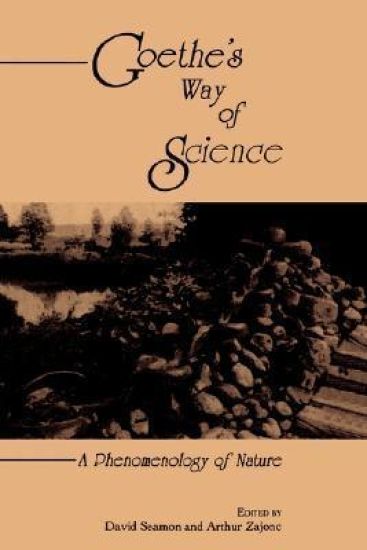
Goethe's Way of Science
State University of New York Press
1998
pokkari
Though best known for his superlative poetry and plays, Johann Wolfgang von Goethe (1749-1832) also produced a sizable body of scientific work that focused on such diverse topics as plants, color, clouds, weather, and geology. Goethe's way of science is highly unusual because it seeks to draw together the intuitive awareness of art with the rigorous observation and thinking of science. Written by major scholars and practitioners of Goethean science today, this book considers the philosophical foundations of Goethe's approach and applies the method to the real world of nature, including studies of plants, animals, and the movement of water. Part I discusses the philosophical foundations of the approach and clarifies its epistemology and methodology; Part II applies the method to the real world of nature; and Part III examines the future of Goethean science and emphasizes its great value for better understanding and caring for the natural environment.

In this book, Jane K. Brown offers an original reading of Goethe's complex masterpiece in the context of European Romanticism. Looking at the two parts of Faust in sequence, she views the second part as an elaboration of what was implicit in the first, and she clarifies the patterns of thought and organization underlying the play. In Faust, she argues, Goethe not only situates German culture within the wider European literary tradition, but also demonstrates that all literature is by its nature allusive—that it exists only as part of a tradition.
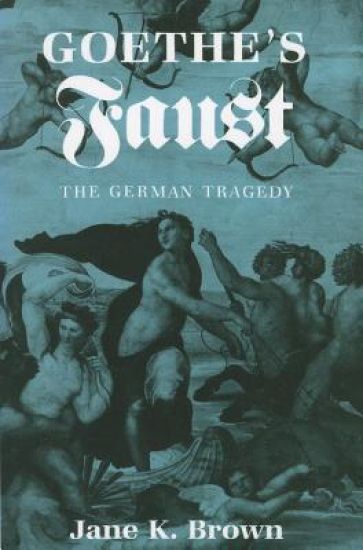
In this book, Jane K. Brown offers an original reading of Goethe's complex masterpiece in the context of European Romanticism. Looking at the two parts of Faust in sequence, she views the second part as an elaboration of what was implicit in the first, and she clarifies the patterns of thought and organization underlying the play. In Faust, she argues, Goethe not only situates German culture within the wider European literary tradition, but also demonstrates that all literature is by its nature allusive—that it exists only as part of a tradition.

In this study originally published in 1955, Steer explores the importance of Goethe's family concept in two autobiographical works, Campagne in Frankreich and Belagerung von Mainz. Through a close textual analysis, Steer argues that at the center of both pieces is Goethe's conception of the family as Urform of society.
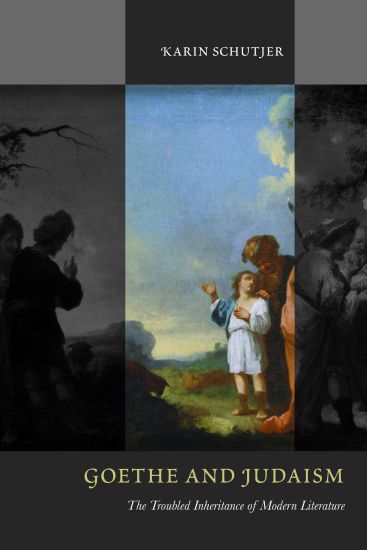
In Goethe and Judaism, Karin Schutjer examines the iconic German writer’s engagement with, and portrayal of, Judaism. Her premise is that Goethe’s conception of modernity—his apprehensions as well as his most affirmative vision concerning the trajectory of his age—is deeply entwined with his conception of Judaism.Schutjer argues that behind his very mixed representations of Jews and Judaism stand crucial tensions within his own thinking and a distinct anxiety of influence. Goethe draws,for example, from the Jewish ban on idolatry for his own semiotics, from the narratives of nomadic wanderings in the Hebrew Bible for his own trope of the existential wanderer, from the history of Jewish exile for his own emergent conception of a GermanKulturnation. Schutjer thus uncovers the surprising debt to Judaism owed by one the most formative thinkers in German history.
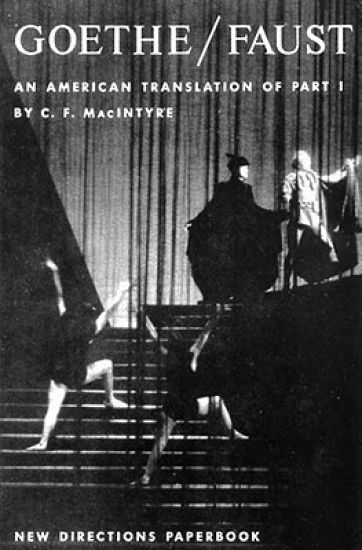
Goethe's Faust, Part I
Johann Wolfgang von Goethe
New Directions Publishing Corporation
1957
nidottu
From the wager between God and Mephistopheles and the pact Faust makes with the latter—that this genial, urbane devil could have his soul if ever Faust became satisfied with any experience or knowledge Mephistopheles could show him—the drama unfolds in scenes that are human and compelling, that hold the reader by their despair and ecstasy, their tender love, passionate desire and wisdom, but also by their gaiety, humor, and irony. As Faust proceeds with his devilish guide, it is his striving for understanding that becomes important, not the attainment, and in fact this is what saves him in the end. Part I of Faust, which Goethe published twenty-four years before its sequel, deals with Faust's journey through the everyday world and his love for Gretchen. It is made especially memorable in this translation, which Victor Lange, Chairman of the Department of German at Princeton, has called "certainly the most usable and most appealing Faust translation in English. It is modern without losing the dignity of the original and is perhaps the only translation that conveys something of the freshness and poetic vitality of Goethe's own speech."
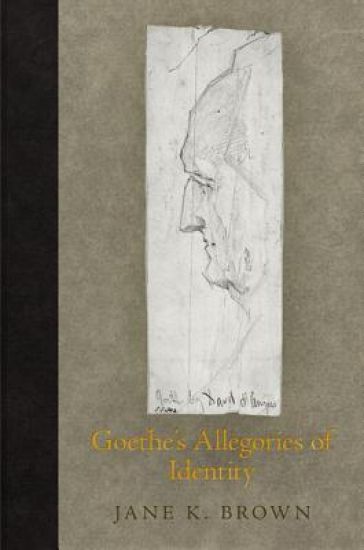
A century before psychoanalytic discourse codified a scientific language to describe the landscape of the mind, Johann Wolfgang von Goethe explored the paradoxes of an interior self separate from a conscious self. Though long acknowledged by the developers of depth psychology and by its historians, Goethe's literary rendering of interiority has not been the subject of detailed analysis in itself. Goethe's Allegories of Identity examines how Goethe created the essential bridge between the psychological insights of his contemporary, Jean-Jacques Rousseau, and the psychoanalytic theories of his admirer Sigmund Freud. Equally fascinated and repelled by Rousseau's vision of an unconscious self, Goethe struggled with the moral question of subjectivity: what is the relation of conscience to consciousness? To explore this inner conflict through language, Goethe developed a unique mode of allegorical representation that modernized the long tradition of dramatic personification in European drama. Jane K. Brown's deft, focused readings of Goethe's major dramas and novels, from The Sorrows of Young Werther to Elective Affinities, reveal each text's engagement with the concept of a subconscious or unconscious psyche whose workings are largely inaccessible to the rational mind. As Brown demonstrates, Goethe's representational strategies fashioned a language of subjectivity that deeply influenced the conceptions of important twentieth-century thinkers such as Freud, Michel Foucault, and Hannah Arendt.
Goethe's Science in the Structure of the Wanderjahre
A. G. Steer
University of Georgia Press
2008
pokkari
Published in 1979, this study is intended as a continuation of the work of the scholars and previous commentators on Goethe's Wanderjahre. While considering the scientific structure, it concentrates first on one basic question of form--that of the series of narrative insertions--and then of necessity on one matter of content that is linked so closely with them that the two are almost inseparable, namely the concept of the family as the Urform (archetype) and metamorphosis of the types of human association. Thus the intention of this book is to contribute to the new and better understanding of the novel and which will, it is to be hoped, at long last help the work take its place as one of the two crowning masterpieces (along with Faust II) of Goethe's life.
Description currently unavailable

This collection of four stories by the writer George Steiner called “one of the masters of European fiction” is, as longtime fans of Thomas Bernhard would expect, bleakly comic and inspiringly rancorous. The subject of his stories vary: in one, Goethe summons Wittgenstein to discuss the Tractatus Logico-Philosophicus; “Montaigne: A Story (in 22 Installments)” tells of a young man sealing himself in a tower to read; “Reunion,” meanwhile, satirizes that very impulse to escape; and the final story rounds out the collection by making Bernhard himself a victim, persecuted by his greatest enemy—his very homeland of Austria. Underpinning all these variously comic, tragic, and bitingly satirical excursions is Bernhard’s abiding interest in, and deep knowledge of, the philosophy of doubt. Bernhard’s work can seem off-putting on first acquaintance, as he suffers no fools and offers no hand to assist the unwary reader. But those who make the effort to engage with Bernhard on his own uncompromising terms will discover a writer with powerful comic gifts, penetrating insight into the failings and delusions of modern life, and an unstinting desire to tell the whole, unvarnished, unwelcome truth. Start here, readers; the rewards are great.
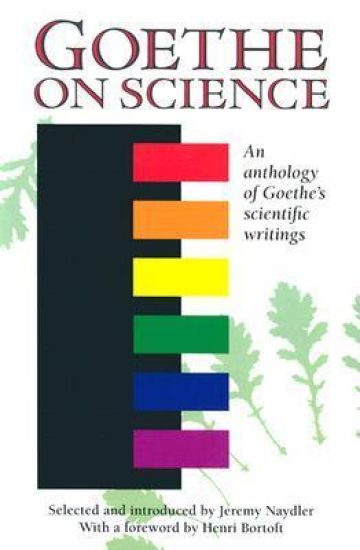
A systematic arrangement of extracts from Goethe's major scientific works which reveal how fundamentally different his approach was to scientific study of the natural world. According to Goethe, our deepest knowledge of phenomena can arise only from a contemplative relationship with nature.
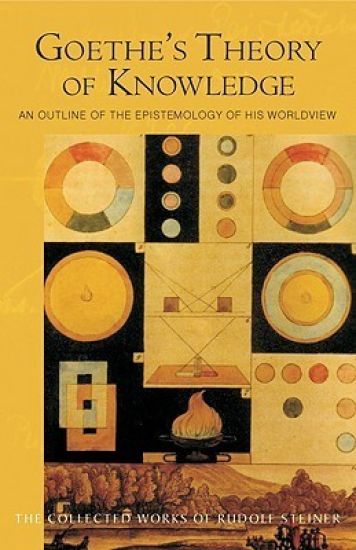
Written 1884-1885; first published 1886 (CW 2) As the editor of Goethe's scientific writings during the 1880s, Rudolf Steiner became immersed in a worldview that paralleled and amplified his own views in relation to epistemology, the interface between science and philosophy, the theory of how we know the world and ourselves. At the time, like much of the thinking today and the foundation of modern natural science, the predominant theories held that individual knowledge is limited to thinking that reflects objective, sensory perception. Steiner's view was eventually distilled in his Anthroposophical Leading Thoughts in 1924: "There are those who believe that, with the limits of knowledge derived from sensory perception, the limits of all insight are given. Yet if they would carefully observe how they become conscious of these limits, they would find in the very consciousness of the limits the faculties to transcend them." In this concise volume, Steiner lays out his argument for this view and, moreover, begins his explication of how one goes beyond thinking to the observation of thinking itself. Goethe's Theory of Knowledge is essential reading for a deeper understanding of Rudolf Steiner's seminal work, Intuitive Thinking as a Spiritual Path: A Philosophy of Freedom. CONTENTS: Introduction by Christopher BamfordPreface to the Edition of 1924 by Rudolf SteinerForeword to the First Edition (1886) by Rudolf Steiner A. Preliminary Questions 1. The Point of Departure2. Goethe's Science According to Schiller's Method3. The Purpose of Our Science B. Experience 4. Establishing the Concept of Experience5. Examining the Essence of Experience6. Correcting the Erroneous View of Experience as a Totality7. The Experience of Each Individual Reader C. Thinking 8. Thinking as a Higher Experience within Experience9. Thinking and Consciousness10. The Inner Nature of Thinking D. Knowledge 11. Thought and Perception12. Intellect and Reason13. The Act of Cognition14. Cognition and the Ultimate Ground of Things E. Knowing Nature 15. Inorganic Nature16. Organic Nature F. The Humanities 17. Introduction: Mind and Nature18. Psychological Cognition19. Human Freedom20. Optimism and Pessimism G. Conclusion 21. Knowledge and Artistic Creation Notes to the First Edition 1886] Annotations to the Edition of 1924 This volume is a translation from the German of Grundlinien einer Erkenntnistheorie der Goetheschen Weltanschauung, mit besonderer R cksicht auf Schiller (GA 2). Previous translations were published as The Science of Knowing (1988) and The Theory of Knowledge implicit in Goethe's World-Conception: Fundamental Outlines with Special Reference to Schiller (1940).
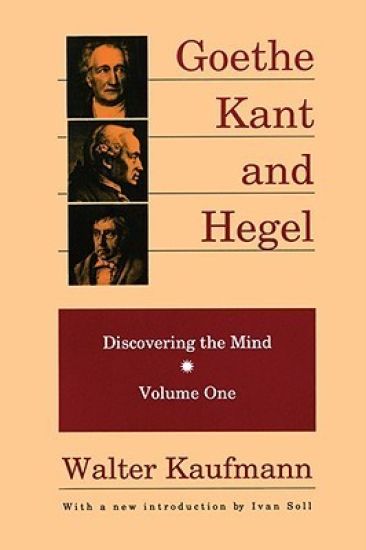
This immensely readable and absorbing book - the first of a three-volume series on understanding the human mind - concentrates on three major figures who have changed our image of human beings. Kaufmann drastically revises traditional conceptions of Goethe, Kant, and Hegel, showing how their ideas about the mind were shaped by their own distinctive mentalities.Kaufmann's version of psychohistory stays clear of gossip and is carefully documented. He offers us a radically new understanding of two centuries of intellectual history, but his primary focus is on self-knowledge. He is in a unique position to perform this task by virtue of being, according to Stephen Spender, "the best translator of Faust"; and in Sidney Hook's view, "unquestionably the most interesting and informative writer of Hegel in English."The foremost interpreter of Kant, Lewis White Beck, has called this book on Goethe, Kant, and.Hegel "fascinating" - a work which "will stir up a good many people by telling them things they have never heard, and providing an alternative to what is the accepted reading of that part of the history of philosophy. The story of how personality affects philosophy has never been better told." We are shown how Goethe advanced the discovery of the mind more than anyone before him, while Kant was in many ways a disaster. Hegel, like others between 1790 to 1990, tried to reconcile Kant and Goethe.Kaufmann shows this is impossible He paints a large picture, but he is always highly specific and details the major contributions of Goethe and Hegel as well as the ways in which Kant's immense influence proved catastrophic.
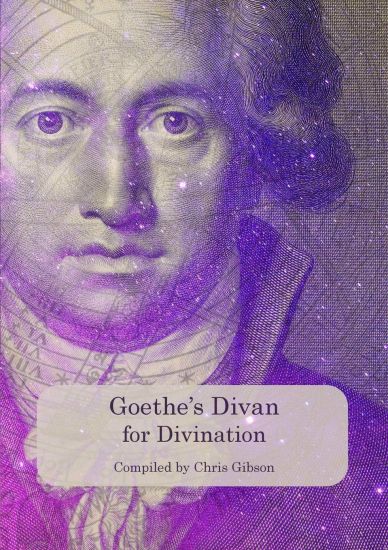
Goethe's Divan for Divination
Chris Gibson Art
2018
nidottu
Goethe Bicentennial Convocation and Music Festival ... 1949
International Goethe Bicentennial Con
Hassell Street Press
2021
nidottu
This work has been selected by scholars as being culturally important and is part of the knowledge base of civilization as we know it.This work is in the public domain in the United States of America, and possibly other nations. Within the United States, you may freely copy and distribute this work, as no entity (individual or corporate) has a copyright on the body of the work.Scholars believe, and we concur, that this work is important enough to be preserved, reproduced, and made generally available to the public. To ensure a quality reading experience, this work has been proofread and republished using a format that seamlessly blends the original graphical elements with text in an easy-to-read typeface.We appreciate your support of the preservation process, and thank you for being an important part of keeping this knowledge alive and relevant.

Goethe and Music: a List of Parodies: and Goethe's Relationship to Music: a List of References
Frederick W. (Frederick Wi Sternfeld
Hassell Street Press
2021
sidottu

This work has been selected by scholars as being culturally important and is part of the knowledge base of civilization as we know it.This work is in the public domain in the United States of America, and possibly other nations. Within the United States, you may freely copy and distribute this work, as no entity (individual or corporate) has a copyright on the body of the work.Scholars believe, and we concur, that this work is important enough to be preserved, reproduced, and made generally available to the public. To ensure a quality reading experience, this work has been proofread and republished using a format that seamlessly blends the original graphical elements with text in an easy-to-read typeface.We appreciate your support of the preservation process, and thank you for being an important part of keeping this knowledge alive and relevant.