Kirjojen hintavertailu. Mukana 12 016 292 kirjaa ja 12 kauppaa.

Kirjahaku

Etsi kirjoja tekijän nimen, kirjan nimen tai ISBN:n perusteella.

1000 tulosta hakusanalla Grass Timothy

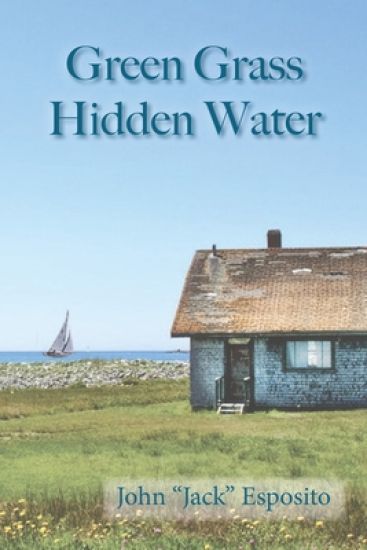
Green Grass, Hidden Water

Green Grass, Hidden Water

John Jack Esposito

John G. Esposito
2020
pokkari
An exhilarating story of a man destined to find himself. As his life unfolds, we are led on a path of unexpected twists, personal conflict, and emotional depth. The adventure is spread out against a changing background of loves, travel, some failure, an evolving awareness of self, and the joys of a simplified lifestyle. A renewed sense of life sculpted on the coast of Maine and buttressed by the challenges of living with and sailing on the temperamental Atlantic Ocean impact his bearings and choices. A positive transformation manifests only to be altered by conflict, complications and the unexpected.
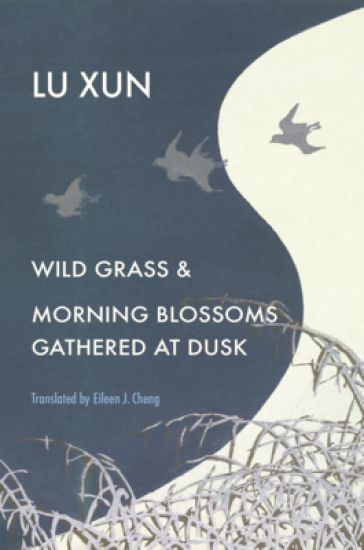
Wild Grass and Morning Blossoms Gathered at Dusk
A brilliant new translation of the short improvisational fiction and memoirs of Lu Xun, the father of modern Chinese literature.This captivating translation assembles two volumes by Lu Xun, the founder of modern Chinese literature and one of East Asia’s most important thinkers at the turn of the twentieth century. Wild Grass and Morning Blossoms Gathered at Dusk represent a pinnacle of achievement alongside Lu Xun’s famed short stories.In Wild Grass, a collection of twenty-three experimental pieces, surreal scenes come alive through haunting language and vivid imagery. These are landscapes populated by ghosts, talking animals, and sentient plants, where a protagonist might come face-to-face with their own corpse. By depicting the common struggle of real and imagined creatures to survive in an inhospitable world, Lu Xun asks the deceptively simple question, “What does it mean to be human?”Alongside Wild Grass is Morning Blossoms Gathered at Dusk, a memoir in eight essays capturing the literary master’s formative years and featuring a motley cast of dislocated characters—children, servants, outcasts, the dead and the dying. Giving voice to vulnerable subjects and depicting their hopes and despair as they negotiate an unforgiving existence, Morning Blossoms affirms the value of all beings and elucidates a central predicament of the human condition: feeling without a home in the world.Beautifully translated and introduced by Eileen J. Cheng, these lyrical texts blur the line between autobiography and literary fiction. Together the two collections provide a new window into Lu Xun’s mind and his quest to find beauty and meaning in a cruel and unjust world.
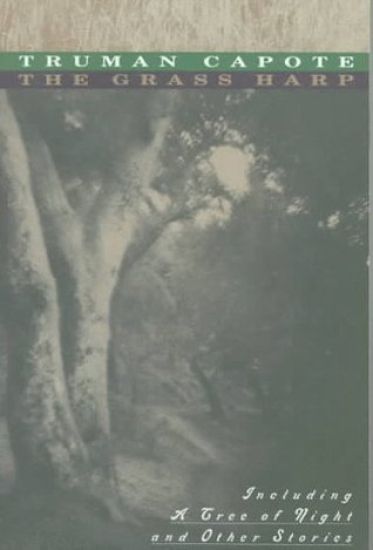
The Grass Harp

The Grass Harp

Truman Capote

Vintage Books
1993
nidottu
Set on the outskirts of a small Southern town, The Grass Harp tells the story of three endearing misfits--an orphaned boy and two whimsical old ladies--who one day take up residence in a tree house. AS they pass sweet yet hazardous hours in a china tree, The Grass Harp manages to convey all the pleasures and responsibilities of freedom. But most of all it teaches us about the sacredness of love, "that love is a chain of love, as nature is a chain of life."This volume also includes Capote's A Tree of Night and Other Stories, which the Washington Post called "unobstrusively beautiful...a superlative book."
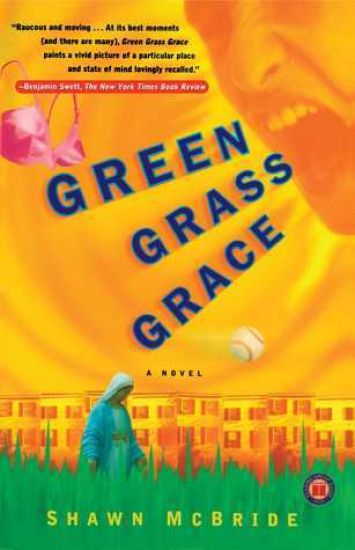
Green Grass Grace

Green Grass Grace

McBride

Simon Schuster
2003
pokkari
Henry Hank Toohey, a thirteen-year-old altar boy, is an incessant smart-ass with a deep love of life...and other four-letter words. But with his foul mouth comes a heart of gold, and he's going to need it to get through the last weekend of summer 1984. Everyone up and down St. Patrick Street, Henry's claustrophobic Irish-Catholic block in Philadelphia -- with its seventy-eight row homes, seventy-eight skinny mile-high lawns, seventy-eight statues of saints, and seventy-eight Mondale-Ferraro signs -- knows that the Toohey family is falling apart. Henry's mailman father is having an affair with a neighbor lady right under his mother's nose. His big brother has been a drunken mess since his girlfriend died. And his little sister is counting on him to keep her laughing through it all. But Henry has a plan to pull the family back together: He'll propose to his chain-smoking fourteen-year-old girlfriend, Grace McClain, at a neighborhood wedding. To prepare, he and his ragtag group of friends pinball around the streets, making elaborate plans for his proposal, riding bikes, rating breasts, bothering the local merchants, talking trash about Mike Schmidt and Bob Seger, and kissing behind the seafood-store dumpster. Gritty, giddy, and bursting with Henry's boundless energy, Green Grass Grace is a heart-thumping rocket ride back to adolescence that is riotously funny and tragic at the same time.
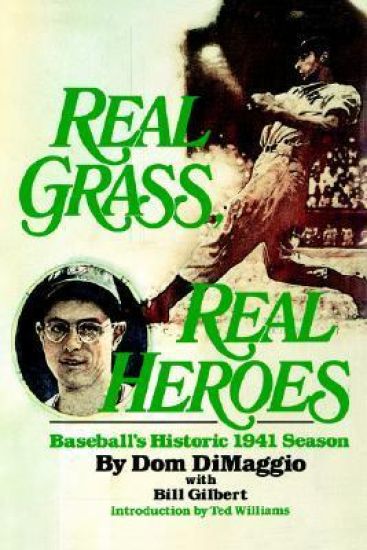
Real Grass, Real Heroes

Real Grass, Real Heroes

Dom Dimaggio

Kensington Publishing Corporation
1990
pokkari
Against the backdrop of the growing storm clouds of World War II, the 1941 baseball season was remarkable both for its players and events--and for its significance as the end of an era. Written by Joe DiMaggio's brother.
Eating Grass, Drinking Wine

Eating Grass, Drinking Wine

Liyan Liu

Hamilton Books
2021
nidottu
Eating Grass, Drinking Wine is a gripping memoir of the life of one woman and her family, which began in China under Mao Zedong in the 1950’s. Surviving hardships and tribulations, she survived and made it to the United States where her life transformed for the better. This book is filled with powerful reflections of a China of the not too distant past. Survival was not necessarily a given in those very challenging years. Many people the author knew including relatives either died or disappeared in mass campaigns Mao launched, such as the Anti-Rightist Movement, the Great Leap Forward, and the Cultural Revolution. It sheds light on a world much different than that of the West, told through the eyes of someone who lived it. This book also demonstrates the author’s passion for and gratitude to her adopted homeland and the people she’s met.
Eating Grass

Eating Grass

Feroz Khan

Stanford University Press
2012
sidottu
The history of Pakistan's nuclear program is the history of Pakistan. Fascinated with the new nuclear science, the young nation's leaders launched a nuclear energy program in 1956 and consciously interwove nuclear developments into the broader narrative of Pakistani nationalism. Then, impelled first by the 1965 and 1971 India-Pakistan Wars, and more urgently by India's first nuclear weapon test in 1974, Pakistani senior officials tapped into the country's pool of young nuclear scientists and engineers and molded them into a motivated cadre committed to building the 'ultimate weapon.' The tenacity of this group and the central place of its mission in Pakistan's national identity allowed the program to outlast the perennial political crises of the next 20 years, culminating in the test of a nuclear device in 1998. Written by a 30-year professional in the Pakistani Army who played a senior role formulating and advocating Pakistan's security policy on nuclear and conventional arms control, this book tells the compelling story of how and why Pakistan's government, scientists, and military, persevered in the face of a wide array of obstacles to acquire nuclear weapons. It lays out the conditions that sparked the shift from a peaceful quest to acquire nuclear energy into a full-fledged weapons program, details how the nuclear program was organized, reveals the role played by outside powers in nuclear decisions, and explains how Pakistani scientists overcome the many technical hurdles they encountered. Thanks to General Khan's unique insider perspective, it unveils and unravels the fascinating and turbulent interplay of personalities and organizations that took place and reveals how international opposition to the program only made it an even more significant issue of national resolve. Listen to a podcast of a related presentation by Feroz Khan at the Stanford Center for International Security and Cooperation at cisac.stanford.edu/events/recording/7458/2/765.
Eating Grass

Eating Grass

Feroz Khan

Stanford University Press
2012
pokkari
The history of Pakistan's nuclear program is the history of Pakistan. Fascinated with the new nuclear science, the young nation's leaders launched a nuclear energy program in 1956 and consciously interwove nuclear developments into the broader narrative of Pakistani nationalism. Then, impelled first by the 1965 and 1971 India-Pakistan Wars, and more urgently by India's first nuclear weapon test in 1974, Pakistani senior officials tapped into the country's pool of young nuclear scientists and engineers and molded them into a motivated cadre committed to building the 'ultimate weapon.' The tenacity of this group and the central place of its mission in Pakistan's national identity allowed the program to outlast the perennial political crises of the next 20 years, culminating in the test of a nuclear device in 1998. Written by a 30-year professional in the Pakistani Army who played a senior role formulating and advocating Pakistan's security policy on nuclear and conventional arms control, this book tells the compelling story of how and why Pakistan's government, scientists, and military, persevered in the face of a wide array of obstacles to acquire nuclear weapons. It lays out the conditions that sparked the shift from a peaceful quest to acquire nuclear energy into a full-fledged weapons program, details how the nuclear program was organized, reveals the role played by outside powers in nuclear decisions, and explains how Pakistani scientists overcome the many technical hurdles they encountered. Thanks to General Khan's unique insider perspective, it unveils and unravels the fascinating and turbulent interplay of personalities and organizations that took place and reveals how international opposition to the program only made it an even more significant issue of national resolve. Listen to a podcast of a related presentation by Feroz Khan at the Stanford Center for International Security and Cooperation at cisac.stanford.edu/events/recording/7458/2/765.
Like Grass Before the Scythe

Like Grass Before the Scythe

William Remmel

The University of Alabama Press
2019
nidottu
Uncommonly articulate letters from a young German-American soldier with the Union forces Sergeant William Remmel was a German immigrant who had settled with his parents and family in far upstate New York. His letters collected in Like Grass before the Scythe cover more than two full years of his service and provide details on military and social history in the eastern theater of operations and on the experience of the home front in upstate New York among a largely immigrant, working-class family and community. Remmel wrote in English and apparently his parents responded in German. In addition to the important material on an immigrant family's experience, Remmel also deals with the question of slavery, illness and hospital care (when he was wounded), the problem of hard war/total war, as well as the campaigns of Chancellorsville, Gettysburg, and the Shenandoah Valley in 1864.
Hard Grass

Hard Grass

Mary Zeiss Stange

University of New Mexico Press
2010
sidottu
Mary Zeiss Stange's story of running a bison ranch with her husband in southeastern Montana--on the outskirts of nowhere and far-from-here--is a narrative of survival in a landscape and a society at once harsh and alluring. In this series of essays she illustrates the realities of ranch life at a time when the "New West" of subdivision, "ranchettes," telecommuting, and tourism collides with the "True West" of too much, too little, too hard, and too harsh. This society is molded by the climate, and both run to extremes, simultaneously unforgiving, often brutal, yet capable of unalloyed charm and breathtaking beauty. Her stories explore the myths and realities of ranch life in modern America--the brandings, rodeos, and demolition derbies that are major events, and the social, environmental, and political factors at work in shaping the land and the people. Less memoir than deep history of people and place, these vivid, naturalistic tales examine the complex relationships that comprise life in the rural West today.
Hard Grass

Hard Grass

Mary Zeiss Stange

UNIVERSITY OF NEW MEXICO PRESS
2024
pokkari
Gold Medal Winner for Best Regional Non-Fiction, 2011 Independent Publisher Book AwardsMary Zeiss Stange's story of running a bison ranch with her husband in southeastern Montana--on the outskirts of nowhere and far-from-here--is a narrative of survival in a landscape and a society at once harsh and alluring. In this series of essays she illustrates the realities of ranch life at a time when the ""New West"" of subdivision, ""ranchettes,"" telecommuting, and tourism collides with the ""True West"" of too much, too little, too hard, and too harsh. This society is molded by the climate, and both run to extremes, simultaneously unforgiving, often brutal, yet capable of unalloyed charm and breathtaking beauty.Her stories explore the myths and realities of ranch life in modern America--the brandings, rodeos, and demolition derbies that are major events, and the social, environmental, and political factors at work in shaping the land and the people.Less memoir than deep history of people and place, these vivid, naturalistic tales examine the complex relationships that comprise life in the rural West today.
Between Grass and Sky

Between Grass and Sky

University of Nevada Press
2002
sidottu
Acclaimed nature writer Linda M. Hasselstrom sees herself as a rancher who writes - a self-definition that shapes the tone and content of her writing. Now owner of the cattle ranch where she grew up in western South Dakota, she lives in daily intimate contact with the natural world. As she says, ""Nature is to me both home and office. Nature is my boss, manager of the branch office - or ranch office - where I toil to convert native grass into meat...If I want to keep my job as well as my home, I pay attention not only to Nature's orders, but to her moods and whims."" The essays in this book reflect Hasselstrom's close attention to her homeplace and the depth of her sympathy with the world around her. She writes knowingly of the rancher's toil and of the intelligence and dignity of the animals she tends, especially the much-maligned cow, as well as of the wild creatures - the owls and antelope and coyotes and others - that share the prairie grassland she calls home. Hasselstrom's voice rings with the ardent common sense of one who knows and loves the land, who appreciates the concerns of environmental activists but also knows the role that responsible ranchers can play in nurturing a healthy rural ecosystem. This book is by no means an apologia for ranching but rather a lively picture of a specific part of the world, a world Hasselstrom writes about with candor, love, and the clear sight of one who knows it well. The essays are rich in closely observed details of the natural world, in humor and pathos and wry commentary on the scope of human folly and the even vaster potential of humans for community and empathy. These are essays to read with wonder and delight, to relish and ponder.
Between Grass and Sky

Between Grass and Sky

University of Nevada Press
2005
nidottu
An important collection of personal essays from one of the most widely published American environmental writers addresses the effects of ranching on the environment. Acclaimed nature writer Linda M. Hasselstrom sees herself as a rancher who writes—a definition that shapes the tone and content of her writing. Now owner of the South Dakota cattle ranch where she grew up, Hasselstrom lives in intimate contact with the natural world. ""Nature is to me both home and office. Nature is my boss, manager of the branch office—or ranch office—where I toil to convert native grass into meat. . . . If I want to keep my job as well as my home, I pay attention not only to Nature's orders, but to her moods and whims."" She writes knowingly of the rancher's toil and of the intelligence and dignity of the wild and domesticated creatures that share the prairie grassland she calls home. As one who knows and loves the land, Hasselstrom appreciates the concerns of environmental activists and understands that responsible ranchers can play a role in nurturing a healthy rural ecosystem. Rich in detail, humor, and pathos, these essays offer wry commentary on the scope of human folly and the even greater human potential for community and empathy. ""Only people who live in the country,"" she writes, ""could form a relationship with nature so intimate that they feel concern for one lonely duck. People who live in cities . . . only glimpse nature from high windows or speeding vehicles. Even wilderness lovers who probe deeply are only passing through. We who live on the land truly live within the land, each of our lives only one among the other inhabitants of the place."" These are essays to read with wonder and delight, to relish and ponder. Available in hardcover and paperback.
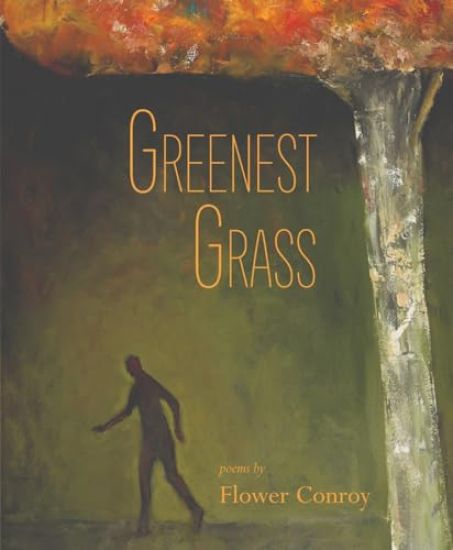
Greenest Grass

Greenest Grass

Flower Conroy

Lynx House Press
2023
pokkari
Here is a collection whose reach is insatiable. With a gymnastic flow that both utilizes and interrogates language, Conroy navigates loss and grief, love and memory, longing and frustration. The syntax is dizzying, the digressions erudite, and yet it all points to self-interrogation. In these poems, the dead are not dead, time suspends at the corner of the page, and nature intrudes relentlessly in a busy parlor of images. Whether it is champagne flowering from its bottle or "a bouquet of birds emerging from a snake's unhinged jaw," the motion of these poems is sudden, eruptive, and impossible to forget.
Our Grass Was Greener

Our Grass Was Greener

Peter G. Lawrence

Vroe Publishing
2008
sidottu
One family's tale of surviving the ups and downs of life in the Devon countryside, with the help of their wits, a sense of humour, an occasional slice of luck and regular visits to the drinks' cabinet
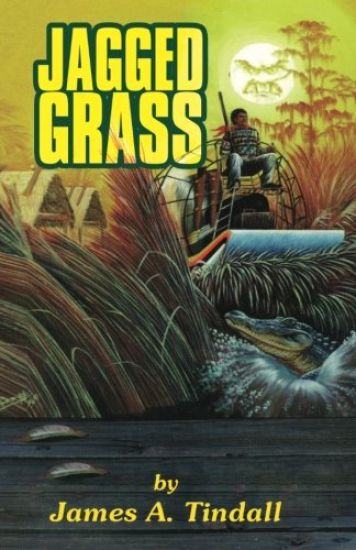
Jagged Grass

Jagged Grass

James A Tindall

Dtp Publishing
2012
pokkari
Emerging from the Florida Everglades after their third war against the United States Government, the Seminole Tribe had lost their identity and so, began anew, making their living by catering to tourists. A cultural shift that decades later on a very hot, humid summer day put Billie Panther and several other Indians in a dangerous predicament, capturing a large alligator for the wrestling pit of the Hollywood Reservation. Holding onto the head of the gator, blood gushing from multiple wounds, covered from head to foot in black muck, Billie believed he had found a better way. For years he had sought sustaining employment for his people on the remote Reservation of Big Cypress where jobs were difficult to find, hope even harder. Nearing completion of negotiations with business mogul Paul Lorio, Billie was about to realize his dreams. Or was he? Billie, Tribal Councilman of the Panther clan, is pitted against modern challenges and a mafia adversary to preserve his dignity, the heritage of his people, and the love of Christina through a course of events that would lead to intrigue, mystery, romance, and murder, and from which there would be no turning back. An airboat ambush would result in a fatal struggle between two men who would stop at nothing to achieve their goals and to win at any cost.