Kirjojen hintavertailu. Mukana 11 627 220 kirjaa ja 12 kauppaa.

Kirjahaku

Etsi kirjoja tekijän nimen, kirjan nimen tai ISBN:n perusteella.

1000 tulosta hakusanalla HENRY CONSTABLE

Henry M. Jackson

Henry M. Jackson

Robert G. Kaufman

University of Washington Press
2015
sidottu
Henry M. Jackson ranks as one of the great legislators in American history. With a Congressional career spanning the tenure of nine Presidents, Jackson had an enormous impact on the most crucial foreign policy and defense issues of the Cold War era, as well as a marked impact on energy policy, civil rights, and other watershed issues in domestic politics.Jackson first arrived in Washington, D.C., in January 1941 as the Democratic representative of the Second District of Washington State, at the age of 28 the youngest member of Congress. "Scoop" Jackson won reelection time and again by wide margins, moving to the Senate in 1953 and serving there until his death in 1983. He became a powerful voice in U.S. foreign policy and a leading influence in major domestic legislation, especially concerning natural resources, energy, and the environment, working effectively with Senator Warren Magnuson to bring considerable federal investment to Washington State.A standard bearer for the New Deal-Fair Deal tradition of Roosevelt and Truman, Jackson advocated a strong role for the federal government in the economy, health care, and civil rights. He was a firm believer in public control of electric and nuclear power, and leveled stern criticism at the oil industry's "obscene profits" during the energy crisis of the 1970s. He ran for the presidency twice, in 1972 and 1976, but was defeated for the nomination first by George McGovern and then by Jimmy Carter, marking the beginning of a split between dovish and hawkish liberal Democrats that would not be mended until the ascendance of Bill Clinton.Jackson's vision concerning America's Cold War objectives owed much to Harry Truman's approach to world affairs but, ironically, found its best manifestation in the actions taken by the Republican administration of Ronald Reagan. An early and strong supporter of Israel and of Soviet dissidents, he strongly opposed the Nixon/Kissinger policy of detente as well as many of Carter's methods of dealing with the Soviet Union.Robert Kaufman has immersed himself in the life and times of Jackson, poring over the more than 1,500 boxes of written materials and tapes that make up the Jackson Papers housed at the University of Washington, as well as the collections of every presidential library from Kennedy through Reagan. He interviewed many people who knew Jackson, both friends and rivals, and consulted other archival materials and published sources dealing with Jackson, relevant U.S. political history and commentary, arms negotiation documents, and congressional reports. He uses this wealth of material to present a thoughtful and encompassing picture of the ideas and policies that shaped America's Cold War philosophy and actions.
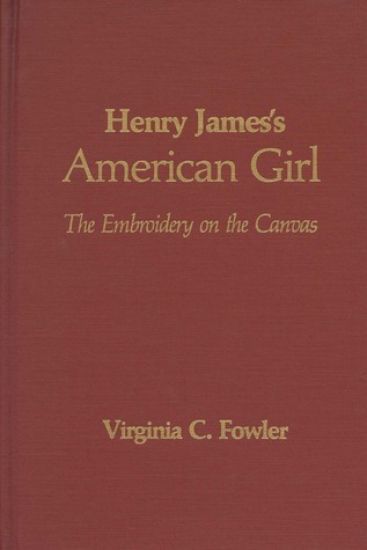
Henry James' American Girl

Henry James' American Girl

Virginia C. Fowler

University of Wisconsin Press
1984
sidottu
The figure of the American girl is one that surfaces regularly in Henry James s fiction. Most prominent in the international novels, where the compelling portrait of an Isabel Archer or a Maggie Verver commands attention. James s girl is a complex character eager for experience yet crippled by fear, hungry for selfhood yet tragically incapable of achieving it. In this lucid exploration of James s young women, Professor Fowler examines the psychology, literary function, and cultural roots of the American girl. The result is a new perspective on James s fiction and a reassessment of his views on feminine identity, sexual relations, and American culture that will be of interest and value to all students of American literature, women s studies, and Henry James."
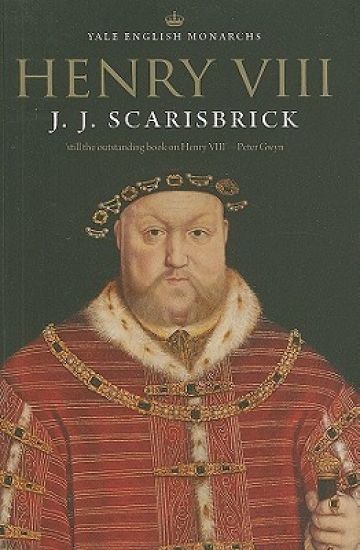
Henry VIII

Henry VIII

J. J. Scarisbrick

Yale University Press
2011
pokkari
Henry VIII's forceful personality dominated his age and continues to fascinate our own. In few other reigns have there been developments of such magnitude—in politics, foreign relations, religion, and society—that have so radically affected succeeding generations. Above all the English Reformation and the break with Rome are still felt more than four centuries on. First published in 1968, J. J. Scarisbrick's Henry VIII remains the standard account, a thorough exploration of the documentary sources, stylishly written and highly readable. In an updated foreword, Professor Scarisbrick takes stock of subsequent research and places his classic account within the context of recent publications. "It is the magisterial quality of J.J. Scarisbrick's work that has enabled it to hold the field for so long."—Steve Gunn, Times Literary Supplement
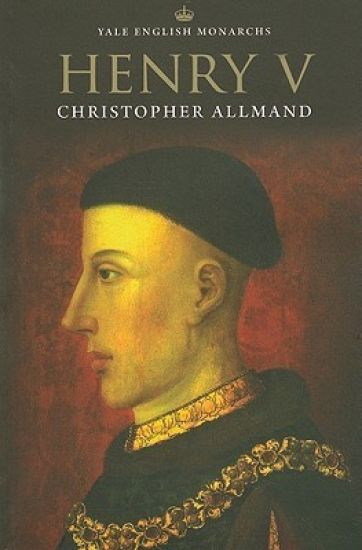
Henry V

Henry V

Christopher Allmand

Yale University Press
2011
pokkari
Thanks in part to Shakespeare, Henry V is one of England's best-known monarchs. The image of the king leading his army against the French, and the great victory at Agincourt, are part of English historical tradition. Yet, though indeed a soldier of exceptional skill, Henry V's reputation needs to be seen against a broader background of achievement. This sweepingly majestic book is based on the full range of primary sources and sets the reign in its full European context. Christopher Allmand shows that Henry V not only united the country in war but also provided domestic security, solid government, and a much needed sense of national pride. The book includes an updated foreword which takes stock of more recent publications in the field. "A far more rounded picture of Henry as a ruler than any previous study."--G.L. Harris, The Times
Henry VII

Henry VII

S. B. Chrimes

Yale University Press
1999
pokkari
Founder of the Tudor dynasty, Henry VII was a crucial figure in English history. In this acclaimed study of the king’s life and reign, the distinguished historian S. B. Chrimes explores the circumstances surrounding Henry’s acquisition of the throne, examines the personnel and machinery of government, and surveys the king’s social, political, and economic policies, law enforcement, and foreign strategy. This edition of the book includes a new critical introduction and bibliographical updating by George Bernard.
Henry II

Henry II

W.L. Warren

Yale University Press
2000
pokkari
Henry II (1133-1189) was an enigma in his own time and has continued to excite widely divergent judgments ever since. His quarrel with Archbishop Becket, his troubled relationships with his sons and with his wife, Eleanor of Aquitaine, and other dramatic incidents of his reign present rich material for historical novelists, playwrights, and filmmakers, but with no unanimity of interpretation. This masterful biography provides a comprehensive reappraisal of Henry II, the man and king. W. L. Warren explores a full range of contemporary sources to illuminate the king’s policy and personality as well as the events of his reign.Henry II’s greatness as a king is not in doubt. From an early age he impressed his will on a turbulent realm and established new standards of law and order in seemingly ungovernable territories. He fought and won the first great war over the balance of power in western Europe, laid the foundations for the growth of English Common Law and of royal administration, and destroyed the possibility that the realm might disintegrate into feudal principalities. Warren focuses on the actions of the king and, while not underrating the importance of the famous crises of Henry’s reign, gives equal attention to incidents that are little-known but equally revealing.
Henry VI

Henry VI

Bertram Wolffe

Yale University Press
2001
pokkari
In this widely acclaimed biography, Bertram Wolffe challenges the traditional view of Henry VI as an unworldly, innocent, and saintly monarch and offers instead a finely drawn but critical portrait of an ineffectual ruler. Drawing on widespread contemporary evidence, Wolffe describes the failures of Henry’s long reign from 1422 to 1471, which included the collapse of justice, the loss of the French territories, and the final disintegration of his government. He argues that the posthumous cult of Henry was promoted by Henry VII as a way of excusing his uncle’s political failures while enhancing the image of the dynasty. This edition includes a new foreword by John Watts that discusses the book and its place in the evolving literature.Reviews of the earlier edition: “A brilliant biography that brings us as near as we are ever likely to come to this elusive personality.” —Sunday Times (London) “A powerful, compulsively readable portrait.” —Observer “Much learning, skillfully deployed as here, evokes pleasure as well as admiration.” —R.L. Storey, Times Literary Supplement
Henry I

Henry I

C. Warren Hollister

Yale University Press
2003
pokkari
Henry I, son of William the Conqueror, ruled from 1100 to 1135, a time of fundamental change in the Anglo-Norman world. This long-awaited biography, written by one of the most distinguished medievalists of his generation, offers a major reassessment of Henry’s character and reign. Challenging the dark and dated portrait of the king as brutal, greedy, and repressive, it argues instead that Henry’s rule was based on reason and order. C. Warren Hollister points out that Henry laid the foundations for judicial and financial institutions usually attributed to his grandson, Henry II. Royal government was centralized and systematized, leading to firm, stable, and peaceful rule for his subjects in both England and Normandy. By mid-reign Henry I was the most powerful king in Western Europe, and with astute diplomacy, an intelligence network, and strategic marriages of his children (legitimate and illegitimate), he was able to undermine the various coalitions mounted against him. Henry strove throughout his reign to solidify the Anglo-Norman dynasty, and his marriage linked the Normans to the Old English line.Hollister vividly describes Henry’s life and reign, places them against the political background of the time, and provides analytical studies of the king and his magnates, the royal administration, and relations between king and church. The resulting volume is one that will be welcomed by students and general readers alike.
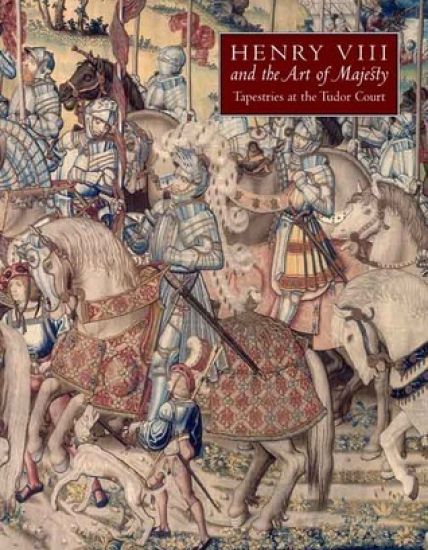
Henry VIII and the Art of Majesty

Henry VIII and the Art of Majesty

Thomas P. Campbell

Yale University Press
2007
sidottu
Luxurious, beautiful, and portable, tapestry was the pre-eminent art form of the Tudor court. Henry VIII amassed an unrivaled collection over the course of his reign, and the author weaves the history of this magnificent collection into the life of its owner with an engaging narrative style. Now largely dispersed or destroyed, Henry’s extensive inventory is here reassembled and reveals how, through tapestry, Henry identified himself with historic, religious, and mythological figures, putting England in dialogue—and competition—with the leading courts of Early Modern Europe while promoting his own religious and political agendas at home. Campbell’s original account sheds new light on Tudor political and artistic culture and the court’s response to Renaissance aesthetic ideals. Sumptuously illustrated with newly commissioned photographs, this stunning re-creation of Europe’s greatest tapestry collection challenges the predominantly text-driven histories of the period and offers a fascinating new perspective on the life of Henry VIII.Published for the Paul Mellon Centre for Studies in British Art
Henry van de Velde

Henry van de Velde

Katherine M. Kuenzli

Yale University Press
2019
sidottu
The painter, designer, and architect Henry van de Velde (1863–1957) played a crucial role in expanding modernist aesthetics beyond Paris and beyond painting. Opposing growing nationalism around 1900, he sought to make painting the basis of an aesthetic that transcended boundaries between the arts and between nations through his work in Belgium, France, Germany, and the Netherlands. Van de Velde’s designs for homes, museums, and theaters received international recognition. The artist, often associated with the Art Nouveau and Jugendstil, developed a style of abstraction that he taught in his School of Applied Arts in Weimar, the immediate precursor of and model for the Bauhaus. As a leading member of the German Werkbund, he helped shaped the fields of modern architecture and design. This long-awaited book, the first major work on van de Velde in English, firmly positions him as one of the twentieth century’s most influential artists and an essential voice within the modern movement.
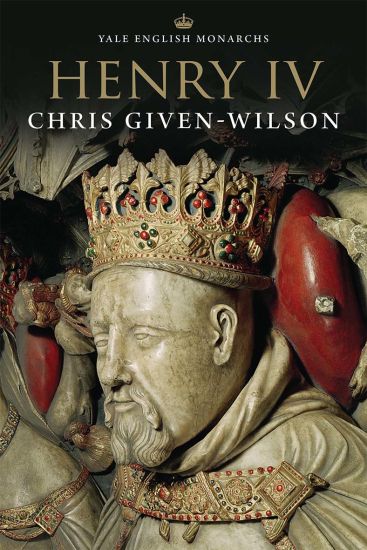
Henry IV

Henry IV

Chris Given-Wilson

Yale University Press
2017
pokkari
This definitive biography of England's Henry IV reassesses the adversities of his reign, his ruthlessness and extravagance, and his previously unrecognized successes"This wonderful biography of the first of the Lancastrian kings is no less accomplished than its subject. . . . A vivid and captivating study of England’s most neglected late medieval ruler."—David Green, author of The Hundred Years War Henry IV (1399–1413), the son of John of Gaunt, duke of Lancaster, seized the English throne at the age of thirty-two from his cousin Richard II and held it until his death, aged forty-five, when he was succeeded by his son, Henry V. This comprehensive and nuanced biography restores to his rightful place a king often overlooked in favor of his illustrious progeny. Henry faced the usual problems of usurpers: foreign wars, rebellions, and plots, as well as the ambitions and demands of the Lancastrian retainers who had helped him win the throne. By 1406 his rule was broadly established, and although he became ill shortly after this and never fully recovered, he retained ultimate power until his death. Using a wide variety of previously untapped archival materials, Chris Given-Wilson reveals a cultured, extravagant, and skeptical monarch who crushed opposition ruthlessly but never quite succeeded in satisfying the expectations of his own supporters.
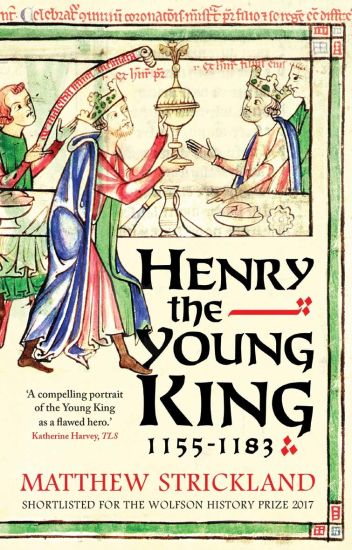
Henry the Young King, 1155-1183

Henry the Young King, 1155-1183

Matthew Strickland

Yale University Press
2018
pokkari
This first modern study of Henry the Young King, eldest son of Henry II but the least known Plantagenet monarch, explores the brief but eventful life of the only English ruler after the Norman Conquest to be created co-ruler in his father’s lifetime. Crowned at fifteen to secure an undisputed succession, Henry played a central role in the politics of Henry II’s great empire and was hailed as the embodiment of chivalry. Yet, consistently denied direct rule, the Young King was provoked first into heading a major rebellion against his father, then to waging a bitter war against his brother Richard for control of Aquitaine, dying before reaching the age of thirty having never assumed actual power. In this remarkable history, Matthew Strickland provides a richly colored portrait of an all-but-forgotten royal figure tutored by Thomas Becket, trained in arms by the great knight William Marshal, and incited to rebellion by his mother Eleanor of Aquitaine, while using his career to explore the nature of kingship, succession, dynastic politics, and rebellion in twelfth-century England and France.
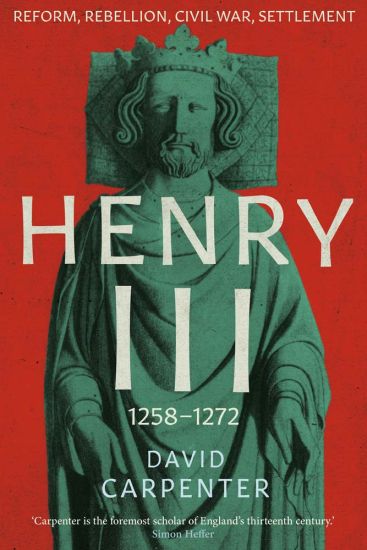
Henry III

Henry III

David Carpenter

YALE UNIVERSITY PRESS
2023
sidottu
The second volume in the definitive history of Henry III’s rule, covering the revolutionary events between 1258 and the king’s death in 1272 After coming to the throne aged just nine, Henry III spent much of his reign peaceably. Conciliatory and deeply religious, he created a magnificent court, rebuilt Westminster Abbey, and invested in soft power. Then, in 1258, the king faced a great revolution. Led by Simon de Montfort, the uprising stripped him of his authority and brought decades of personal rule to a catastrophic end. In the brutal civil war that followed, the political community was torn apart in a way unseen again until Cromwell. Renowned historian David Carpenter brings to life the dramatic events in the last phase of Henry III’s momentous reign. Carpenter provides a fresh account of the king’s strenuous efforts to recover power and sheds new light on the characters of the rebel de Montfort, Queen Eleanor, and Lord Edward—the future Edward I. A groundbreaking biography, Henry III illuminates as never before the political twists and turns of the day, showing how politics and religion were intimately connected.
Henry III

Henry III

David Carpenter

Yale University Press
2021
pokkari
The first in a groundbreaking two-volume history of Henry III’s rule “Professor Carpenter is one of Britain’s foremost medievalists. . . . No one knows more about Henry, and a lifetime of scholarship is here poured out, elegantly and often humorously. This is a fine, judicious, illuminating work that should be the standard study of the reign for generations to come.”—Dan Jones, Sunday Times Nine years of age when he came to the throne in 1216, Henry III had to rule within the limits set by the establishment of Magna Carta and the emergence of parliament. Pacific, conciliatory, and deeply religious, Henry brought many years of peace to England and rebuilt Westminster Abbey in honor of his patron saint, Edward the Confessor. He poured money into embellishing his palaces and creating a magnificent court. Yet this investment in “soft power” did not prevent a great revolution in 1258, led by Simon de Montfort, ending Henry’s personal rule. Eminent historian David Carpenter brings to life Henry’s character and reign as never before. Using source material of unparalleled richness—material that makes it possible to get closer to Henry than any other medieval monarch—Carpenter stresses the king’s achievements as well as his failures while offering an entirely new perspective on the intimate connections between medieval politics and religion.
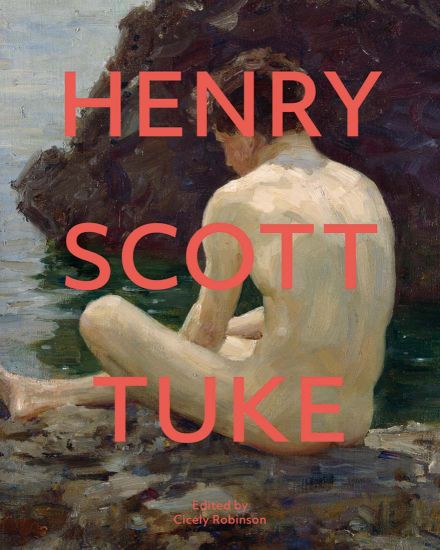
Henry Scott Tuke

Henry Scott Tuke

YALE UNIVERSITY PRESS
2022
pokkari
A timely survey of this significant British artist and the complexities surrounding his work and reputation today Famed for his depictions of sun, sea, and sailing during a late Victorian and Edwardian golden age, the British painter Henry Scott Tuke RA (1858–1929) is an intriguing artistic anomaly. Moving between Cornish-based artist colonies and the London art scene, stylistically Tuke presents a fusion of progressive plein airisme, loose impressionistic handling, and a vivid palette, and yet he was fundamentally an academic painter of exhibition nudes. Though consistently successful throughout his lifetime, in the wake of two world wars Tuke’s depictions of bathing boys came to represent a seemingly outmoded epoch. This far-reaching study features new research from leading authorities on Victorian and Edwardian art. Essays tackle questions of wide-ranging artistic influences, experimental art practice, and a varied reception history. Tuke’s repeated portrayal of adolescent male nudes provokes challenging questions about the depiction, exhibition, and reception of the body—especially the young body—both then and now.Published in association with Watts GalleryExhibition Schedule:Watts Gallery, Surrey (June 7–September 12, 2021)Falmouth Art Gallery, Cornwall (September 18–November 20, 2021)
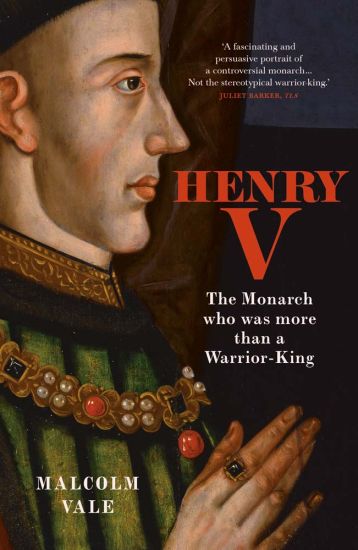
Henry V

Henry V

Malcolm Vale

YALE UNIVERSITY PRESS
2022
pokkari
More than just a single-minded warrior-king, Henry V comes to life in this fresh account as a gifted ruler acutely conscious of spiritual matters and his subjects’ welfare Shakespeare’s centuries-old portrayal of Henry V established the king’s reputation as a warmongering monarch, a perception that has persisted ever since. But in this exciting, thoroughly researched volume a different view of Henry emerges: a multidimensional ruler of great piety, a hands-on governor who introduced a radically new conception of England’s European role in secular and ecclesiastical affairs, a composer of music, an art patron, and a dutiful king who fully appreciated his obligations toward those he ruled. Historian Malcolm Vale draws on extensive primary archival evidence that includes many documents annotated or endorsed in Henry’s own hand. Focusing on a series of themes—the interaction between king and church, the rise of the English language as a medium of government and politics, the role of ceremony in Henry’s kingship, and more—Vale revises understandings of Henry V and his conduct of the everyday affairs of England, Normandy, and the kingdom of France.
Henry III

Henry III

David Carpenter

YALE UNIVERSITY PRESS
2024
pokkari
“There are few historians working today who know so much and write so well. Taken together, the two volumes of Henry III . . . set a gold standard for medieval royal biography.”—Dan Jones, Times (UK) “A superb work of scholarship, the fruit of a lifetime’s study of the subject. It is elegantly written, consistently shrewd and always good-humoured.”—Jonathan Sumption, The Spectator The second volume in the definitive history of Henry III’s rule, covering the revolutionary events between 1258 and the king’s death in 1272 After coming to the throne aged just nine, Henry III spent much of his reign peaceably. Conciliatory and deeply religious, he created a magnificent court, rebuilt Westminster Abbey, and invested in soft power. Then, in 1258, the king faced a great revolution. Led by Simon de Montfort, the uprising stripped him of his authority and brought decades of personal rule to a catastrophic end. In the brutal civil war that followed, the political community was torn apart in a way unseen again until Cromwell. Renowned historian David Carpenter brings to life the dramatic events in the last phase of Henry III’s momentous reign. Carpenter provides a fresh account of the king’s strenuous efforts to recover power and sheds new light on the characters of the rebel de Montfort, Queen Eleanor, and Lord Edward—the future Edward I. A groundbreaking biography, Henry III illuminates as never before the political twists and turns of the day, showing how politics and religion were intimately connected.
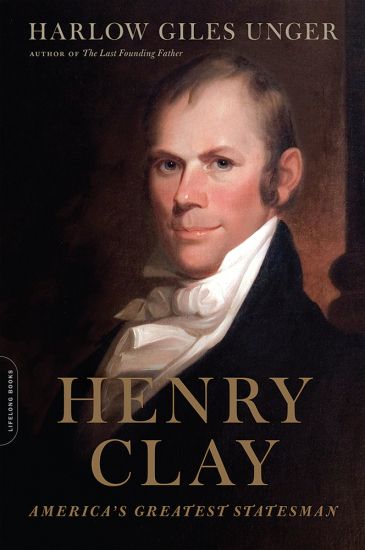
Henry Clay

Henry Clay

Harlow Giles Unger

Da Capo Press Inc
2017
pokkari
In a critical and little-known chapter of early American history, a fearless young Kentucky lawyer threw open the doors of Congress during the nation's formative years and prevented dissolution of the infant American republic.The only freshman congressman ever elected Speaker of the House, Henry Clay brought an arsenal of rhetorical weapons to subdue feuding members of the House of Representatives and established the Speaker as the most powerful elected official after the President. During fifty years in public service-as congressman, senator, secretary of state, and four-time presidential candidate-Clay constantly battled to save the Union, summoning uncanny negotiating skills to force bitter foes from North and South to compromise on slavery and forego secession. His famous "Missouri Compromise" and four other compromises thwarted civil war "by a power and influence," Lincoln said, "which belonged to no other statesman of his age and times."Explosive, revealing, and richly illustrated, Henry Clay is the story of one of the most courageous -and powerful - political leaders in American history.
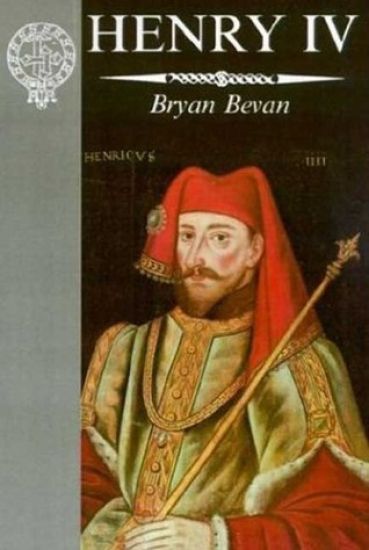
Henry IV

Henry IV

B. Bevan

Palgrave Macmillan
1994
sidottu
Henry of Bolingbroke was one of the most important noblemen of the later fourteenth century. Brave, chivalrous and cultured, a talented musician, he excelled at the jousts held at his cousin Richard II's Court, acquiring military experience at Radcot Bridge in Oxfordshire and later fighting with the Teutonic Knights in Prussia. A great medieval traveller, he visited Konigsberg as Earl of Derby, travelling to Danzig, Prague and later Venice and Jerusalem. Bitterly opposed to Richard II's favourites, Bolingbroke as one of the Lords Appellant played a vital part. Henry's most controversial actions were the deposition of Richard II (1399) and the execution of Richard Scrope, Archbishop of York, after he had usurped Richard's throne. As Henry IV, an usurper, the King knew little peace, incessantly engrossed as he was in preserving his throne; and the French and Scots never allowed him to forget his usurpation. For many years he fought a savage and frustrating war against the great Welsh rebel Owain Glyn Dwr, but defeated the immortal Harry Percy (Hotspur) at the Battle of Shrewsbury (1403). In his relations with his Parliaments, Henry showed acumen and praiseworthy restraint, unlike his predecessor who was determined to be an absolute King. His short reign was remarkable for the development of Parliament.
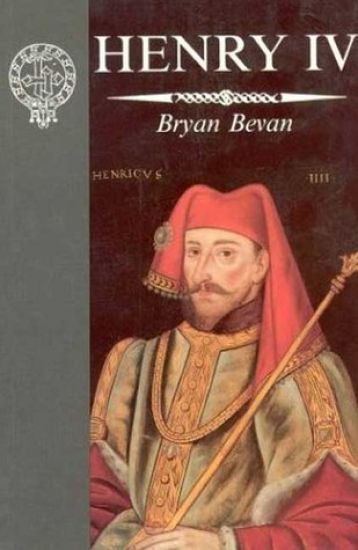
Henry IV

Henry IV

B. Bevan

Palgrave Macmillan
1994
nidottu
Henry of Bolingbroke was one of the most important noblemen of the later fourteenth century. Brave, chivalrous and cultured, a talented musician, he excelled at the jousts held at his cousin Richard II's Court, acquiring military experience at Radcot Bridge in Oxfordshire and later fighting with the Teutonic Knights in Prussia. A great medieval traveller, he visited Konigsberg as Earl of Derby, travelling to Danzig, Prague and later Venice and Jerusalem. Bitterly opposed to Richard II's favourites, Bolingbroke as one of the Lords Appellant played a vital part. Henry's most controversial actions were the deposition of Richard II (1399) and the execution of Richard Scrope, Archbishop of York, after he had usurped Richard's throne. As Henry IV, an usurper, the King knew little peace, incessantly engrossed as he was in preserving his throne; and the French and Scots never allowed him to forget his usurpation. For many years he fought a savage and frustrating war against the great Welsh rebel Owain Glyn Dwr, but defeated the immortal Harry Percy (Hotspur) at the Battle of Shrewsbury (1403). In his relations with his Parliaments, Henry showed acumen and praiseworthy restraint, unlike his predecessor who was determined to be an absolute King. His short reign was remarkable for the development of Parliament.