Kirjojen hintavertailu. Mukana 11 244 527 kirjaa ja 12 kauppaa.

Kirjahaku

Etsi kirjoja tekijän nimen, kirjan nimen tai ISBN:n perusteella.

447 tulosta hakusanalla Hadrian F. Cook

Surveying Roman military landscapes across northern Britain: The planning of Roman Dere street, Hadrian's Wall and the Vallum, and the Antonine Wall
How did the Romans plan their great road to the north, Dere Street? In setting out to answer this question, and to produce a method for diagnosing the direction of Roman surveying and planning from the landscape and structural remains, John Poulter's research eventually widened to ask the same question of Hadrian's Wall, its vallum and the Antonine Wall too. His analysis determines the probable directions in which the three structures were surveyed, and in so doing provides fascinating insight into their possible function - Hadrian's Wall, for example seem to have been set out with a view to maintaining a good view to the south, making signalling to the rear more of a priority in planning than observing to the north.
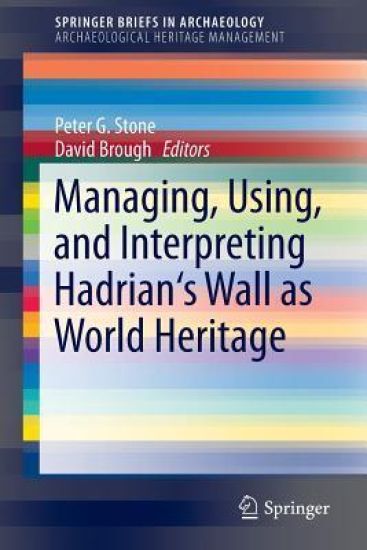
Managing, Using, and Interpreting Hadrian's Wall as World Heritage
Hadrian’s Wall was inscribed as a World Heritage Site (WHS) in 1987 and, with the German Limes, became one of the first two parts of the transnational ‘Frontiers of the Roman Empire’ (FRE) WHS in 2005. The World Heritage Site of Hadrian's Wall is unusual, although not unique, among World Heritage sites in its scale and linear nature: stretching from Ravenglass on the west coast of England to Newcastle upon Tyne on the east coast - over 150 miles. Along its length it passes through two major urban centres and a variety of rural landscapes and its remains vary from substantial upstanding architectural features to invisible below ground archaeology. Traditionally many of the constituent parts of Hadrian's Wall, forts etc, have been managed as separate entities by different State and private organisations. These and other issues make it an extremely complex WHS to manage. This book not only chronicles the past management of the Wall but also looks towards the future as more countries aspire to have their Roman frontiers added to the FRE. The experience gained over the last two decades illustrates developments in the management of large scale complex heritage sites that will be of value as a detailed case study to those involved in (and affected by) heritage management, as well as academics, and students. Many of the issues raised will find resonance in those faced by many other large (World) heritage sites.
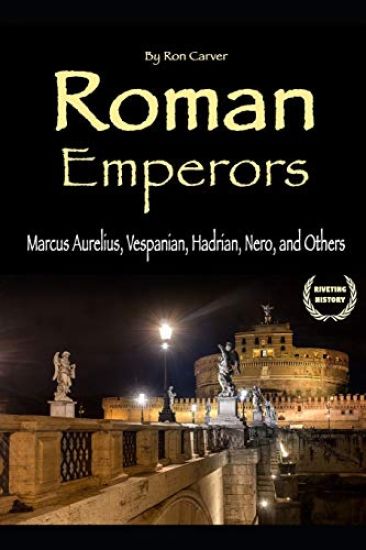
Roman Emperors: Marcus Aurelius, Vespanian, Hadrian, Nero, and Others
In this historical yet somewhat dramatic account of the Roman emperors, you'll find judgments, opinions, and for the most part, hard facts about the rulers of the vast empire that controlled the Mediterranean Sea and beyond for centuries. You'll discover the disgust of historians with Nero's and Caligula's murderous inclinations, their incest, their sexual orgies, and their betrayal. You'll read of Julius Ceasar's success and totalitarianism during his despot reign . You'll find out more about Marcus Aurelius and other emperors who mostly tried to do the right thing. Come to a knowledge of the truth of what happened in that remarkable era of our world history.Start reading now
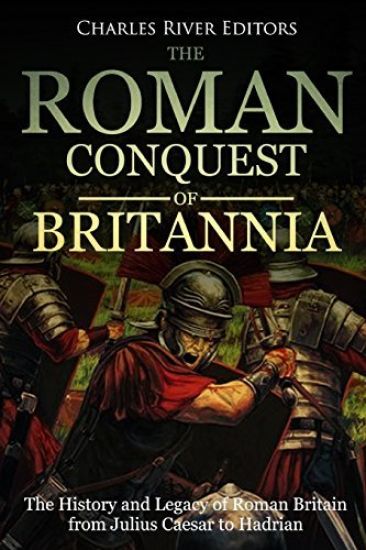
The Roman Conquest of Britannia: The History and Legacy of Roman Britain from Julius Caesar to Hadrian
*Includes pictures*Includes ancient accounts of Britain *Includes online resources and a bibliography for further reading" The Romans] thinking that it might be some help to the allies Britons], whom they were forced to abandon, constructed a strong stone wall from sea to sea, in a straight line between the towns that had been there built for fear of the enemy, where Severus also had formerly built a rampart." - Bede's description of Hadrian's Wall in the Middle AgesThe famous conqueror from the European continent came ashore with thousands of men, ready to set up a new kingdom in England. The Britons had resisted the amphibious invasion from the moment his forces landed, but he was able to push forward. In a large winter battle, the Britons' large army attacked the invaders but was eventually routed, and the conqueror was able to set up a new kingdom.Over 1,100 years before William the Conqueror became the King of England after the Battle of Hastings, Julius Caesar came, saw, and conquered part of "Britannia," setting up a Roman province with a puppet king in 54 BCE. In the new province, the Romans eventually constructed a military outpost overlooking a bridge across the River Thames. The new outpost was named Londinium, and it covered just over two dozen acres. For most of the past 1,000 years, London has been the most dominant city in the world, ruling over so much land that it was said the Sun never set on the British Empire. With the possible exception of Rome, no city has ever been more important or influential than London in human history. Thus, it was only fitting that it was the Romans who established London as a prominent city. Londinium was initially little more than a small military outpost near the northern boundary of the Roman province of Britannia, but its access to the River Thames and the North Sea made it a valuable location for a port. During the middle of the 1st century CE, the Romans conducted another invasion of the British Isles, after which Londinium began to grow rapidly. As the Romans stationed legions there to defend against the Britons, Londinium became a thriving international port, allowing trade with Rome and other cities across the empire. By the 2nd century CE, Londinium was a large Roman city, with tens of thousands of inhabitants using villas, palaces, a forum, temples, and baths. The Roman governor ruled from the city in a basilica that served as the seat of government. What was once a 30 acre outpost now spanned 300 acres and was home to nearly 15,000 people, including Roman soldiers, officials and foreign merchants. The Romans also built heavy defenses for the city, constructing several forts and the massive London Wall, parts of which are still scattered across the city today. Ancient Roman remains continue to dot London's landscape today, reminding everyone that almost a millennium before it became the home of royalty, London was already a center of power. The Romans were master builders, and much of what they built has stood the test of time. Throughout their vast empire they have left grand structures, from the Forum and Pantheon in Rome to the theatres and hippodromes of North Africa and the triumphal gates in Anatolia and France. Wherever they went, the Romans built imposing structures to show their power and ability, and one of their most impressive constructions was built on the northernmost fringe of the empire. Shortly after the emperor Hadrian came to power in the early 2nd century CE, he decided to seal off Scotland from Roman Britain with an ambitious wall stretching from sea to sea. To accomplish this, the wall had to be built from the mouth of the River Tyne - where Newcastle stands today - 80 Roman miles (76 miles or 122 kilometers) west to Bowness-on-Solway. The sheer scale of the job still impresses people today, and Hadrian's Wall has the advantage of being systematically studied and partially restored.
The Roman Conquest of Britannia: The History and Legacy of Roman Britain from Julius Caesar to Hadrian
*Includes pictures*Includes ancient accounts of Britain *Includes online resources and a bibliography for further reading" The Romans] thinking that it might be some help to the allies Britons], whom they were forced to abandon, constructed a strong stone wall from sea to sea, in a straight line between the towns that had been there built for fear of the enemy, where Severus also had formerly built a rampart." - Bede's description of Hadrian's Wall in the Middle AgesThe famous conqueror from the European continent came ashore with thousands of men, ready to set up a new kingdom in England. The Britons had resisted the amphibious invasion from the moment his forces landed, but he was able to push forward. In a large winter battle, the Britons' large army attacked the invaders but was eventually routed, and the conqueror was able to set up a new kingdom.Over 1,100 years before William the Conqueror became the King of England after the Battle of Hastings, Julius Caesar came, saw, and conquered part of "Britannia," setting up a Roman province with a puppet king in 54 BCE. In the new province, the Romans eventually constructed a military outpost overlooking a bridge across the River Thames. The new outpost was named Londinium, and it covered just over two dozen acres. For most of the past 1,000 years, London has been the most dominant city in the world, ruling over so much land that it was said the Sun never set on the British Empire. With the possible exception of Rome, no city has ever been more important or influential than London in human history. Thus, it was only fitting that it was the Romans who established London as a prominent city. Londinium was initially little more than a small military outpost near the northern boundary of the Roman province of Britannia, but its access to the River Thames and the North Sea made it a valuable location for a port. During the middle of the 1st century CE, the Romans conducted another invasion of the British Isles, after which Londinium began to grow rapidly. As the Romans stationed legions there to defend against the Britons, Londinium became a thriving international port, allowing trade with Rome and other cities across the empire. By the 2nd century CE, Londinium was a large Roman city, with tens of thousands of inhabitants using villas, palaces, a forum, temples, and baths. The Roman governor ruled from the city in a basilica that served as the seat of government. What was once a 30 acre outpost now spanned 300 acres and was home to nearly 15,000 people, including Roman soldiers, officials and foreign merchants. The Romans also built heavy defenses for the city, constructing several forts and the massive London Wall, parts of which are still scattered across the city today. Ancient Roman remains continue to dot London's landscape today, reminding everyone that almost a millennium before it became the home of royalty, London was already a center of power. The Romans were master builders, and much of what they built has stood the test of time. Throughout their vast empire they have left grand structures, from the Forum and Pantheon in Rome to the theatres and hippodromes of North Africa and the triumphal gates in Anatolia and France. Wherever they went, the Romans built imposing structures to show their power and ability, and one of their most impressive constructions was built on the northernmost fringe of the empire. Shortly after the emperor Hadrian came to power in the early 2nd century CE, he decided to seal off Scotland from Roman Britain with an ambitious wall stretching from sea to sea. To accomplish this, the wall had to be built from the mouth of the River Tyne - where Newcastle stands today - 80 Roman miles (76 miles or 122 kilometers) west to Bowness-on-Solway. The sheer scale of the job still impresses people today, and Hadrian's Wall has the advantage of being systematically studied and partially restored.
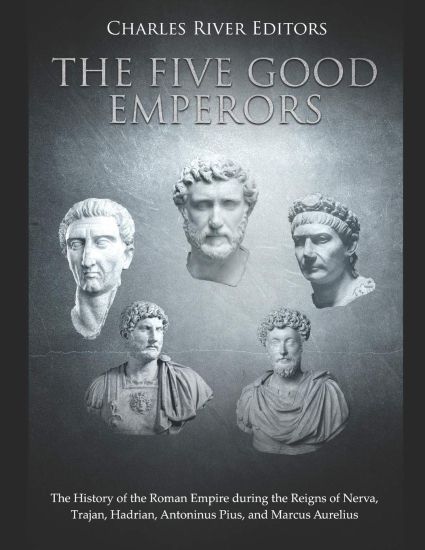
The Five Good Emperors: The History of the Roman Empire during the Reigns of Nerva, Trajan, Hadrian, Antoninus Pius, and Marcus Aurelius
*Includes pictures*Includes online resources and a bibliography for further reading"From the study of this history we may also learn how a good government is to be established; for while all the emperors who succeeded to the throne by birth, except Titus, were bad, all were good who succeeded by adoption, as in the case of the five from Nerva to Marcus. But as soon as the empire fell once more to the heirs by birth, its ruin recommenced...Titus, Nerva, Trajan, Hadrian, Antoninus, and Marcus had no need of praetorian cohorts, or of countless legions to guard them, but were defended by their own good lives, the good-will of their subjects, and the attachment of the senate." - Niccolo Machiavelli"If a man were called upon to fix that period in the history of the world during which the condition of the human race was most happy and prosperous he would, without hesitation, name that which elapsed from the deaths of Domitian to the accession of Commodus." - Edward Gibbon "The Five Good Emperors," a reference to the five emperors who ruled the Roman Empire between 96 and 180 CE (Nerva, Trajan, Hadrian, Antoninus Pius, and Marcus Aurelius), was a term first coined by Machiavelli and later adopted and popularized by historian Edward Gibbon, who said that under these men, the Roman Empire "was governed by absolute power under the guidance of wisdom and virtue." This period of 84 years is generally regarded as the high point of the Roman Empire, at least after Augustus, but what is uncertain and a matter of ongoing debate is whether the five emperors were personally responsible for the situation and the accompanying prosperity enjoyed throughout the empire at the time or if they were simply the beneficiaries of the Pax Romana, inaugurated by Augustus in the early part of the 1st century CE. In other words, historians have wondered whether anyone in power during those years would have enjoyed the same rewards. The description of these rulers as "good" is also a matter of interpretation, with some scholars suggesting they were only "good" in comparison to the preceding emperor (Domitian) and the emperor who followed Marcus Aurelius (Commodus). Both of them were horrible rulers in every aspect, making their near contemporaries look all the better. Regardless, it is clear that the era of the Five Good Emperors was one of unparalleled success and wealth, and the reasons Rome reached its zenith at this time are worthy of scrutiny. Perhaps most noteworthy is that none of these five emperors were blood relatives - while the final two are often referred to as the Antonines, they were not, in fact, related except by adoption, a practice that may in itself provide at least part of the answer to the question as to why this particular period was so magnificent. These 84 years also witnessed an impressive growth in the size of the Roman Empire. New acquisitions ranged from northern Britain to Arabia, Mesopotamia, and Dacia. Furthermore, existing possessions were consolidated, and the empire's defenses improved when compared to what had come before. A range of countries that had been client states became fully integrated provinces, and even Italy saw administrative reforms which created further wealth. Throughout the empire, the policy of Romanization proved successful, at least in terms of introducing a common language, enabling standards of living to rise, and creating a political system minimizing internal strife. With all of that said, according to some academics, the success these rulers had in centralizing the empire's administration, while undoubtedly bringing huge benefits, also sowed the seeds for later problems. After all, as so many Roman emperors proved, from Caligula and Nero to Commodus, the empire's approach to governance was predicated on the ruler's ability. When incompetent or insane emperors came to power, the whole edifice came tumbling down.
The Five Good Emperors: The History of the Roman Empire during the Reigns of Nerva, Trajan, Hadrian, Antoninus Pius, and Marcus Aurelius
*Includes pictures*Includes online resources and a bibliography for further reading"From the study of this history we may also learn how a good government is to be established; for while all the emperors who succeeded to the throne by birth, except Titus, were bad, all were good who succeeded by adoption, as in the case of the five from Nerva to Marcus. But as soon as the empire fell once more to the heirs by birth, its ruin recommenced...Titus, Nerva, Trajan, Hadrian, Antoninus, and Marcus had no need of praetorian cohorts, or of countless legions to guard them, but were defended by their own good lives, the good-will of their subjects, and the attachment of the senate." - Niccolo Machiavelli"If a man were called upon to fix that period in the history of the world during which the condition of the human race was most happy and prosperous he would, without hesitation, name that which elapsed from the deaths of Domitian to the accession of Commodus." - Edward Gibbon "The Five Good Emperors," a reference to the five emperors who ruled the Roman Empire between 96 and 180 CE (Nerva, Trajan, Hadrian, Antoninus Pius, and Marcus Aurelius), was a term first coined by Machiavelli and later adopted and popularized by historian Edward Gibbon, who said that under these men, the Roman Empire "was governed by absolute power under the guidance of wisdom and virtue." This period of 84 years is generally regarded as the high point of the Roman Empire, at least after Augustus, but what is uncertain and a matter of ongoing debate is whether the five emperors were personally responsible for the situation and the accompanying prosperity enjoyed throughout the empire at the time or if they were simply the beneficiaries of the Pax Romana, inaugurated by Augustus in the early part of the 1st century CE. In other words, historians have wondered whether anyone in power during those years would have enjoyed the same rewards. The description of these rulers as "good" is also a matter of interpretation, with some scholars suggesting they were only "good" in comparison to the preceding emperor (Domitian) and the emperor who followed Marcus Aurelius (Commodus). Both of them were horrible rulers in every aspect, making their near contemporaries look all the better. Regardless, it is clear that the era of the Five Good Emperors was one of unparalleled success and wealth, and the reasons Rome reached its zenith at this time are worthy of scrutiny. Perhaps most noteworthy is that none of these five emperors were blood relatives - while the final two are often referred to as the Antonines, they were not, in fact, related except by adoption, a practice that may in itself provide at least part of the answer to the question as to why this particular period was so magnificent. These 84 years also witnessed an impressive growth in the size of the Roman Empire. New acquisitions ranged from northern Britain to Arabia, Mesopotamia, and Dacia. Furthermore, existing possessions were consolidated, and the empire's defenses improved when compared to what had come before. A range of countries that had been client states became fully integrated provinces, and even Italy saw administrative reforms which created further wealth. Throughout the empire, the policy of Romanization proved successful, at least in terms of introducing a common language, enabling standards of living to rise, and creating a political system minimizing internal strife. With all of that said, according to some academics, the success these rulers had in centralizing the empire's administration, while undoubtedly bringing huge benefits, also sowed the seeds for later problems. After all, as so many Roman emperors proved, from Caligula and Nero to Commodus, the empire's approach to governance was predicated on the ruler's ability. When incompetent or insane emperors came to power, the whole edifice came tumbling down.
Holy Offering According to the Nazarani Rite

Holy Offering According to the Nazarani Rite

Hadrian Mâr Élijah Bar Israël

Lulu.com
2015
sidottu
The Nazarani R te is both the oldest and the newest version of the Holy Offering ("qurbana qadisha"), which is sometimes called the Divine Liturgy. It took eighteen years of work by scholars of both liturgics and the Aramaic language, to put together a version of the Holy Offering which truly represents the ancient teachings of the Church and the Holy Scriptures. It represents both the Didache, which was a partial description of the divine service, the earliest manuscripts of the Anaphora of Addai and Mari, and a number of other ancient texts, which outline the ancient liturgical practice of the Holy Church and Bride.
L'heure bleue

L'heure bleue

Hadrian Bagration

Createspace Independent Publishing Platform
2014
nidottu
"No hay, la comprobaci n es evidente, para sos que nos sean fieles, pero contamos con la colaboraci n de obcecados infiernos. Puede la vida de un hombre ignorar por completo aquello que lo har feliz (un consuelo ser , quiz s, imaginarlo), pero el mundo es plet rico en desgracias, algunas de ellas exc ntricas. He intentado prefigurar una realidad en la que la dicha poseyera creciente declinaci n y su ant nimo, adem s de reiteraci n incremental, omnipresencia. He pensado en una hora hospitalaria pero vac a, la azul; la he poblado de escenas inc modas y de inmensas soledades que se reh yen." "L'heure bleue" es un nfima saga familiar que abarca los duros a os de Weimar, la sospecha de la Shoa desde la segura distancia de Am rica y la lenta destrucci n de destinos que no lograron dejar atr s su camino tr gico.
The Cursed Keys

The Cursed Keys

Hadrian L M Anderson

Createspace Independent Publishing Platform
2018
pokkari
Young Annabelle is trying to discover her family's greatest secret. What is beyond the river that marks the spot of her brother's disappearance? Their mother is secretive and scared of it. An ominous story lingers in the air which might not be a story at all.