

Kirjahaku
Etsi kirjoja tekijän nimen, kirjan nimen tai ISBN:n perusteella.
1000 tulosta hakusanalla Harald Taglinger






Studien Ã?ber Die Algenflora Der Schwedischen WestkÃ1/4ste ...
Harald Kylin
Hutson Street Press
2025
sidottu

Studien Ã?ber Die Algenflora Der Schwedischen WestkÃ1/4ste ...
Harald Kylin
Hutson Street Press
2025
pokkari


From Sovereignty to Solidarity seeks to re-imagine human mobility in ways that are de-linked from national sovereignty. Using examples from around the world, the author examines contemporary practices of solidarity to illustrate what such a conceptualization of human mobility looks like. He suggests that urban and local scales, rather than the national scale, is a better way to frame human migration and belonging. The book ultimately proposes that solidarity, rather than sovereignty, offers an alternative approach to imagine how human mobility should, and already does, occur. This book will be relevant to upper-level undergraduate and graduate students in disciplines such as Migration Studies, Urban Studies, Human and Political Geography, and Refugee Studies. It is also relevant to researchers, development workers and human rights/environmental activists, and other intellectual practitioners.

Tracing the changing activities of international bureaucracies active in global climate and energy governance, this book provides an in-depth analysis of processes of institutional innovation and governance integration between the two fields.It shows that rather than the consequence of a designed strategy, governance integration – the convergence of approaches and practices among different actors within one or between two or more governance architectures – has come as the result of organizational changes arising from the international bureaucracies’ various efforts to pursue and broaden their mandate in a complex and dynamic global policy environment. Each of the three cases analyzed (the UNFCCC Secretariat, the IEA Secretariat and the World Bank) began their life focused on particular activities that today, following periods of sustained organizational change, make up only part of their operations. Beyond creating greater synergies for cooperation across the governance architectures, improving policies, and mobilizing greater investment to tackle the climate emergency, the book shows governance integration to have contributed to preserving and expanding the role and relevance of all three international bureaucracies.This book will be of interest to students and scholars of global climate and energy governance, climate policy, and international organizations and their bureaucratic arms. Practitioners will find this book useful in thinking about why innovation in governance emerges and how it may be directed.
Dual-Aspect Monism and the Deep Structure of Meaning
Harald Atmanspacher; Dean Rickles
TAYLOR FRANCIS LTD
2022
sidottu
Dual-Aspect Monism and the Deep Structure of Meaning investigates the metaphysical position of dual-aspect monism, with particular emphasis on the concept of meaning as a fundamental feature of the fabric of reality. As an alternative to other positions – mainly dualism, physicalism, idealism – that have been proposed to understand consciousness and its place in nature, the decompositional version of dual-aspect monism considers the mental and the physical as two aspects of one underlying undivided reality that is psychophysically neutral. Inspired by analogies with modern physics and driven by its conceptual problems, Wolfgang Pauli, Carl Gustav Jung, Arthur Eddington, John Wheeler, David Bohm, and Basil Hiley are the originators of the approaches studied. A radically novel common theme in their approaches is the constitutive role of meaning and its deep structure, relating the mental and the physical to a psychophysically neutral base.The authors reconstruct the formal structure of these approaches, and compare their conceptual emphases as well as their relative strengths and weaknesses. They also address a number of challenging themes for current and future interdisciplinary research, both theoretical and empirical, that arise from the presented frameworks of thinking.Dual-Aspect Monism and the Deep Structure of Meaning will be of interest to researchers and advanced students working in consciousness studies, philosophy of mind, philosophy of science, philosophy of physics, metaphysics, and the history of 20th-century philosophy and physics.
Dual-Aspect Monism and the Deep Structure of Meaning
Harald Atmanspacher; Dean Rickles
TAYLOR FRANCIS LTD
2024
nidottu
Dual-Aspect Monism and the Deep Structure of Meaning investigates the metaphysical position of dual-aspect monism, with particular emphasis on the concept of meaning as a fundamental feature of the fabric of reality. As an alternative to other positions – mainly dualism, physicalism, idealism – that have been proposed to understand consciousness and its place in nature, the decompositional version of dual-aspect monism considers the mental and the physical as two aspects of one underlying undivided reality that is psychophysically neutral. Inspired by analogies with modern physics and driven by its conceptual problems, Wolfgang Pauli, Carl Gustav Jung, Arthur Eddington, John Wheeler, David Bohm, and Basil Hiley are the originators of the approaches studied. A radically novel common theme in their approaches is the constitutive role of meaning and its deep structure, relating the mental and the physical to a psychophysically neutral base.The authors reconstruct the formal structure of these approaches, and compare their conceptual emphases as well as their relative strengths and weaknesses. They also address a number of challenging themes for current and future interdisciplinary research, both theoretical and empirical, that arise from the presented frameworks of thinking.Dual-Aspect Monism and the Deep Structure of Meaning will be of interest to researchers and advanced students working in consciousness studies, philosophy of mind, philosophy of science, philosophy of physics, metaphysics, and the history of 20th-century philosophy and physics.

First Published in 1980, London Patidars presents the case study of the Patidars, a landowning caste from the Indian state of Gujarat, in London. Patidars being the landowning caste has taken over much of the ideology of the merchant castes. This ‘merchant ideal’ is a central part of their self-image. It is an incitement to initiative in business and to some extent their actual economic behaviour does reflect the ideal. But the cases studied do not all conform to this ideal, and they pose questions: How does this particular type of ethnic boundary relate to the opportunities of the individual Patidar? Why and how is this boundary maintained? Harald Tambs-Lyche concludes that the form given to the ethnic boundary is advantageous to many Patidars but not to all in the same degree. This raises problems which potentially could change the present pattern. Other potential problems relate to their relationship with the English. As successful merchants they risk becoming objects of envy like, formerly, the Jewish community. This book is a must read for scholars of ethnic and race relations and sociology.

First Published in 1980, London Patidars presents the case study of the Patidars, a landowning caste from the Indian state of Gujarat, in London. Patidars being the landowning caste has taken over much of the ideology of the merchant castes. This ‘merchant ideal’ is a central part of their self-image. It is an incitement to initiative in business and to some extent their actual economic behaviour does reflect the ideal. But the cases studied do not all conform to this ideal, and they pose questions: How does this particular type of ethnic boundary relate to the opportunities of the individual Patidar? Why and how is this boundary maintained? Harald Tambs-Lyche concludes that the form given to the ethnic boundary is advantageous to many Patidars but not to all in the same degree. This raises problems which potentially could change the present pattern. Other potential problems relate to their relationship with the English. As successful merchants they risk becoming objects of envy like, formerly, the Jewish community. This book is a must read for scholars of ethnic and race relations and sociology.
In this volume, the author challenges a number of widely held cultural stereotypes about India. Caste is not as old as Indian civilization itself, and current changes are no more radical than in the past, for caste has evolved throughout its history. It is not a colonial invention, nor does it result from weak state control. There is no single form of Indian kingship, and power relations, fundamental as they are for understanding Indian society. Nor do Indian villages conform to a single type, and caste is as much urban as rural. Only in a regional ‘local’ perspective can we view it as a ‘system’. Caste does offer space for the individual, though in a particular Indian mould, and Hinduism does not provide for an integration of castes through ritual. In short, social organization varies widely in India, and cannot provide the key to the specificity of caste. This must be sought in the way society is imagined, the models of society current in Indian thought. Of course as mentioned above, there is no single model: Brahmins, kings, and merchants among others have all produced alternative models with themselves at the centre, vying for hegemony, while facing contesting models held by subalterns. Still, a hierarchical mode of thought is hegemonic and largely explains why Indians see their social stratification differently from people in the West.The volume will be indispensable for scholars of South Asian Sociology and Culture.
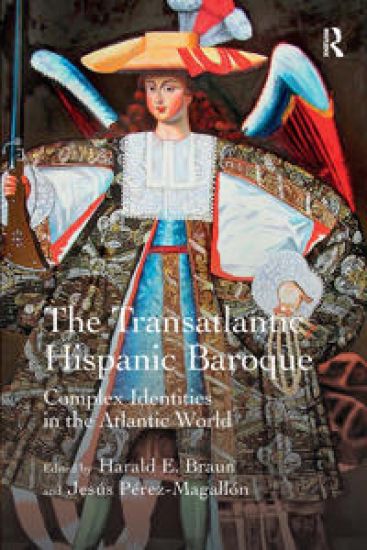
The Transatlantic Hispanic Baroque
Harald E. Braun; Jesús Pérez-Magallón
TAYLOR FRANCIS LTD
2024
nidottu
Gathering a group of internationally renowned scholars, this volume presents cutting-edge research on the complex processes of identity formation in the transatlantic world of the Hispanic Baroque. Identities in the Hispanic world are deeply intertwined with sociological concepts such as class and estate, with geography and religion (i.e. the mixing of Spanish Catholics with converted Jews, Muslims, Dutch and German Protestants), and with issues related to the ethnic diversity of the world’s first transatlantic empire and its various miscegenations. Contributors to this volume offer the reader diverse vantage points on the challenging problem of how identities in the Hispanic world may be analyzed and interpreted. A number of contributors relate earlier processes and formations to Neo-Baroque and postmodern conceptualisations of identity. Given the strong interest in identity and identity-formation within contemporary cultural studies, the book will be of interest to a broad group of readers from the fields of law, geography, history, anthropology and literature.

Mathematical Modelling Techniques
Harald Krogstad; Mohammed Yiha Dawed; Patrick Tchepmo Djomegni; Julien Arino
TAYLOR FRANCIS LTD
2026
nidottu
This book is based on lecture materials originally developed by Harald E. Krogstad for the MSc course Mathematical Modelling at the Norwegian University of Science and Technology (NTNU) and later adapted for the MASTMO MSc program at Hawassa University, Ethiopia. Following Prof. Krogstad’s passing in 2020, the project was continued by Mohammed Yiha Dawed and Patrick M. Tchepmo Djomegni, with contributions in mathematical epidemiology from Julien Arino. The text offers a structured and comprehensive introduction to mathematical modelling, blending classical methods with original content. Its goal is to equip beginning graduate students and advanced undergraduates in applied mathematics, statistics, and related fields with the tools to formulate, analyze, and interpret models across natural sciences, engineering, and biology. What distinguishes this book is its balance of theory and application, bridging rigorous mathematics with practical modelling problems. Students learn both the conceptual foundations and computational approaches, preparing them to tackle real-world challenges. Key Features Include: Introduction to dimensional analysis, scaling, and perturbation methods Equilibrium, bifurcation, and hysteresis analysis Classical and generalized population and epidemic models, including logistic, Lotka-Volterra, and SIR models Early introduction to partial differential equations through conservation-based modelling Applications to road traffic, mechanics, diffusion, and small project-based exercises Worked examples and chapter-end exercises for self-study. Concise “first aid” guide for solving first-order quasi-linear PDEs. This book is ideal for beginning graduate students and advanced undergraduates in applied mathematics, statistics, and related disciplines. Its combination of theory, applied examples, and project-based
Mathematical Modelling Techniques
Harald Krogstad; Mohammed Yiha Dawed; Patrick Tchepmo Djomegni; Julien Arino
TAYLOR FRANCIS LTD
2026
sidottu
This book is based on lecture materials originally developed by Harald E. Krogstad for the MSc course Mathematical Modelling at the Norwegian University of Science and Technology (NTNU) and later adapted for the MASTMO MSc program at Hawassa University, Ethiopia. Following Prof. Krogstad’s passing in 2020, the project was continued by Mohammed Yiha Dawed and Patrick M. Tchepmo Djomegni, with contributions in mathematical epidemiology from Julien Arino. The text offers a structured and comprehensive introduction to mathematical modelling, blending classical methods with original content. Its goal is to equip beginning graduate students and advanced undergraduates in applied mathematics, statistics, and related fields with the tools to formulate, analyze, and interpret models across natural sciences, engineering, and biology. What distinguishes this book is its balance of theory and application, bridging rigorous mathematics with practical modelling problems. Students learn both the conceptual foundations and computational approaches, preparing them to tackle real-world challenges. Key Features Include: Introduction to dimensional analysis, scaling, and perturbation methods Equilibrium, bifurcation, and hysteresis analysis Classical and generalized population and epidemic models, including logistic, Lotka-Volterra, and SIR models Early introduction to partial differential equations through conservation-based modelling Applications to road traffic, mechanics, diffusion, and small project-based exercises Worked examples and chapter-end exercises for self-study. Concise “first aid” guide for solving first-order quasi-linear PDEs. This book is ideal for beginning graduate students and advanced undergraduates in applied mathematics, statistics, and related disciplines. Its combination of theory, applied examples, and project-based