Kirjojen hintavertailu. Mukana 12 083 983 kirjaa ja 12 kauppaa.

Kirjahaku

Etsi kirjoja tekijän nimen, kirjan nimen tai ISBN:n perusteella.

1000 tulosta hakusanalla Helmut Bonheim

Introductory Lectures on Siegel Modular Forms

Introductory Lectures on Siegel Modular Forms

Helmut Klingen

Cambridge University Press
1990
sidottu
About half a century ago C. L. Siegel discovered a new type of automorphic forms in several variables in connection with his famous work on the analytic theory of quadratic forms. Since then Siegel modular forms have been studied extensively because of their significance in both automorphic functions in several complex variables and number theory. The comprehensive theory of automorphic forms to subgroups of algebraic groups and the recent arithmetical theory of modular forms illustrate these two aspects in an illuminating manner. The author’s aim is to present a straightforward and easily-accessible survey of the main ideas of the theory at an elementary level, providing a sound basis from which the reader can study advanced works and undertake original research. This book is based on lectures given by the author for a number of years and is intended for a one-semester graduate course, though it can also be used profitably for self-study. The only prerequisites are a basic knowledge of algebra, number theory and complex analysis.

Pest Control

Pest Control

Helmut F. van Emden

Cambridge University Press
1991
pokkari
The various approaches to pest control are reviewed with emphasis on their history, advantages, disadvantages and future potential. The book discusses how far chemical control has created problems and how far these may be solved by further chemical control or by alternative methods. The reasons why insects are pest problems are discussed so that the ecological merits and demerits of the various control methods can be assessed. Stress is laid on both the biotic and economic environments in which pest control has to operate. • Presents a balanced case concerning the advantages and disadvantages of the chemical control of pests in historical context. • A wide variety of examples are cited and an up-to-date guide to original sources is presented. • Thoroughly revised and updated edition of a highly successful concise textbook.
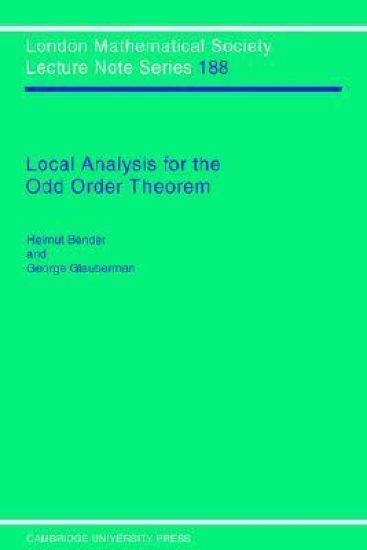
Local Analysis for the Odd Order Theorem

Local Analysis for the Odd Order Theorem

Helmut Bender; George Glauberman

Cambridge University Press
1995
pokkari
In 1963 Walter Feit and John G. Thompson published a proof of a 1911 conjecture by Burnside that every finite group of odd order is solvable. This proof, which ran for 255 pages, was a tour-de-force of mathematics and inspired intense effort to classify finite simple groups. This book presents a revision and expansion of the first half of the proof of the Feit–Thompson theorem. Simpler, more detailed proofs are provided for some intermediate theorems. Recent results are used to shorten other proofs. The book will make the first half of this remarkable proof accessible to readers familiar with just the rudiments of group theory.
Geometric Applications of Fourier Series and Spherical Harmonics
This is the first comprehensive exposition of the application of spherical harmonics to prove geometric results. All the necessary tools from classical theory of spherical harmonics are presented with full proofs. These tools are used to prove geometric inequalities, uniqueness results for projections and intersection by planes or half-spaces, stability results, and characterisations of convex bodies of a particular type, such as rotors in convex polytopes. Results arising from these analytical techniques have proved useful in many applications, particularly those related to stereology. To make the treatment as self-contained as possible the book begins with background material in analysis and the geometry of convex sets. This reference will be welcomed by both pure and applied mathematicians.
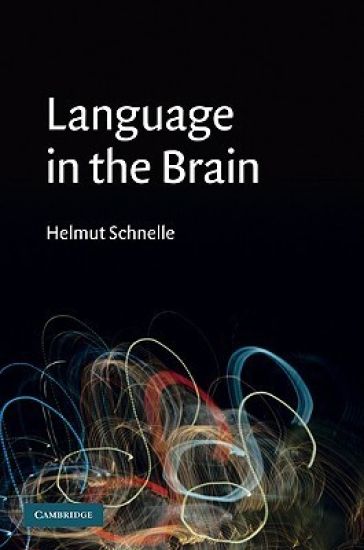
Language in the Brain

Language in the Brain

Helmut Schnelle

Cambridge University Press
2010
sidottu
Linguistics, neurocognition, and phenomenological psychology are fundamentally different fields of research. Helmut Schnelle provides an interdisciplinary understanding of a new integrated field in which linguists can be competent in neurocognition and neuroscientists in structure linguistics. Consequently the first part of the book is a systematic introduction to the function of the form and meaning-organising brain component - with the essential core elements being perceptions, actions, attention, emotion and feeling. Their descriptions provide foundations for experiences based on semantics and pragmatics. The second part is addressed to non-linguists and presents the structural foundations of currently established linguistic frameworks. This book should be serious reading for anyone interested in a comprehensive understanding of language, in which evolution, functional organisation and hierarchies are explained by reference to brain architecture and dynamics.
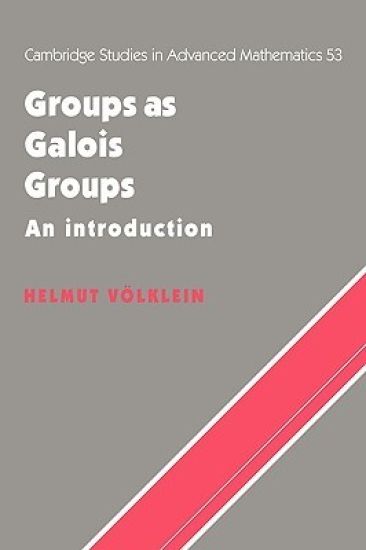
Groups as Galois Groups

Groups as Galois Groups

Helmut Volklein

Cambridge University Press
1996
sidottu
This book describes various approaches to the Inverse Galois Problem, a classical unsolved problem of mathematics posed by Hilbert at the beginning of the century. It brings together ideas from group theory, algebraic geometry and number theory, topology, and analysis. Assuming only elementary algebra and complex analysis, the author develops the necessary background from topology, Riemann surface theory and number theory. The first part of the book is quite elementary, and leads up to the basic rigidity criteria for the realisation of groups as Galois groups. The second part presents more advanced topics, such as braid group action and moduli spaces for covers of the Riemann sphere, GAR- and GAL- realisations, and patching over complete valued fields. Graduate students and mathematicians from other areas (especially group theory) will find this an excellent introduction to a fascinating field.
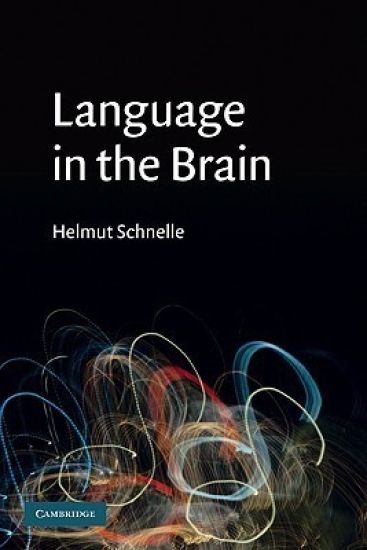
Language in the Brain

Language in the Brain

Helmut Schnelle

Cambridge University Press
2010
pokkari
Linguistics, neurocognition, and phenomenological psychology are fundamentally different fields of research. Helmut Schnelle provides an interdisciplinary understanding of a new integrated field in which linguists can be competent in neurocognition and neuroscientists in structure linguistics. Consequently the first part of the book is a systematic introduction to the function of the form and meaning-organising brain component - with the essential core elements being perceptions, actions, attention, emotion and feeling. Their descriptions provide foundations for experiences based on semantics and pragmatics. The second part is addressed to non-linguists and presents the structural foundations of currently established linguistic frameworks. This book should be serious reading for anyone interested in a comprehensive understanding of language, in which evolution, functional organisation and hierarchies are explained by reference to brain architecture and dynamics.
The Continuities of German History

The Continuities of German History

Helmut Walser Smith

Cambridge University Press
2008
sidottu
This book opens the debate about German history in the long term – about how ideas and political forms are traceable across what historians have taken to be the sharp breaks of German history. Smith argues that current historiography has become ever more focused on the twentieth century, and on twentieth-century explanations for the catastrophes at the center of German history. Against conventional wisdom, he considers continuities - nation and nationalism, religion and religious exclusion, racism and violence - that are the center of the German historical experience and that have long histories. Smith explores these deep continuities in novel ways, emphasizing their importance, while arguing that Germany was not on a special path to destruction. The result is a series of innovative reflections on the crystallization of nationalist ideology, on patterns of anti-Semitism, and on how the nineteenth-century vocabulary of race structured the twentieth-century genocidal imagination.
The Lighter Side of Travel

The Lighter Side of Travel

helmut peters

Lulu.com
2009
nidottu
During the course of his life, the author has traveled to over 50 countries, flown on many airlines, and lived on three continents. Today this may not be unusual, and there are many travel books which describe all of these remote and exotic places in great detail. However, what is unique, are some of the most funny experiences which the author has had on his travels, and these are the stories which are captured in this most humorous book
German Nationalism and Religious Conflict

German Nationalism and Religious Conflict

Helmut Walser Smith

Princeton University Press
2014
pokkari
The German Empire of 1871, although unified politically, remained deeply divided along religious lines. In German Nationalism and Religious Conflict, Helmut Walser Smith offers the first social, cultural, and political history of this division. He argues that Protestants and Catholics lived in different worlds, separated by an "invisible boundary" of culture, defined as a community of meaning. As these worlds came into contact, they also came into conflict. Smith explores the local as well as the national dimensions of this conflict, illuminating for the first time the history of the Protestant League as well as the dilemmas involved in Catholic integration into a national culture defined primarily by Protestantism. The author places religious conflict within the wider context of nation-building and nationalism. The ongoing conflict, conditioned by a long history of mutual intolerance, was an integral part of the jagged and complex process by which Germany became a modern, secular, increasingly integrated nation. Consequently, religious conflict also influenced the construction of German national identity and the expression of German nationalism. Smith contends that in this religiously divided society, German nationalism did not simply smooth over tensions between two religious groups, but rather provided them with a new vocabulary for articulating their differences. Nationalism, therefore, served as much to divide as to unite German society. Originally published in 1995. The Princeton Legacy Library uses the latest print-on-demand technology to again make available previously out-of-print books from the distinguished backlist of Princeton University Press. These editions preserve the original texts of these important books while presenting them in durable paperback and hardcover editions. The goal of the Princeton Legacy Library is to vastly increase access to the rich scholarly heritage found in the thousands of books published by Princeton University Press since its founding in 1905.
German Nationalism and Religious Conflict

German Nationalism and Religious Conflict

Helmut Walser Smith

Princeton University Press
2016
sidottu
The German Empire of 1871, although unified politically, remained deeply divided along religious lines. In German Nationalism and Religious Conflict, Helmut Walser Smith offers the first social, cultural, and political history of this division. He argues that Protestants and Catholics lived in different worlds, separated by an "invisible boundary" of culture, defined as a community of meaning. As these worlds came into contact, they also came into conflict. Smith explores the local as well as the national dimensions of this conflict, illuminating for the first time the history of the Protestant League as well as the dilemmas involved in Catholic integration into a national culture defined primarily by Protestantism. The author places religious conflict within the wider context of nation-building and nationalism. The ongoing conflict, conditioned by a long history of mutual intolerance, was an integral part of the jagged and complex process by which Germany became a modern, secular, increasingly integrated nation. Consequently, religious conflict also influenced the construction of German national identity and the expression of German nationalism. Smith contends that in this religiously divided society, German nationalism did not simply smooth over tensions between two religious groups, but rather provided them with a new vocabulary for articulating their differences. Nationalism, therefore, served as much to divide as to unite German society. Originally published in 1995. The Princeton Legacy Library uses the latest print-on-demand technology to again make available previously out-of-print books from the distinguished backlist of Princeton University Press. These editions preserve the original texts of these important books while presenting them in durable paperback and hardcover editions. The goal of the Princeton Legacy Library is to vastly increase access to the rich scholarly heritage found in the thousands of books published by Princeton University Press since its founding in 1905.
Notes From a Wayfarer RP

Notes From a Wayfarer RP

Helmut Thielicke

Lutterworth Press
2016
nidottu
Helmut Thielicke was one of the most read and most listened to theologians of the twentieth century. Like few others, he repeatedly came down from the ivory tower of academic religion in order to build bridges between the church and the world. In his autobiography, written in 1983, Thielicke sets forth his memoirs from a long and full life. His narrative is filled with deeply thoughtful reflections about the poignancy of life, told with a delightful humour that invites us into every story and encounter. Thielicke also introduces us to the figures he counted among his friends and acquaintances: Karl Barth, Konrad Adenauer, Dietrich Bonhoeffer, Dwight Eisenhower, Helmut Kohl and Jimmy Carter. Thielicke was a witness to many of the most significant events of our century; his life history is interwoven with the imperial era, the Weimar Republic, the rise of the Third Reich, a divided Germany, and the tumultuous 1960s. From the perspective of this single life we are afforded a broad and clear vision of the moments that have shaped the generation leading us into the twenty-first century.
Berlin Soldier

Berlin Soldier

Helmut Altner

The History Press Ltd
2005
nidottu
This book is an explosive memoir of a 17 year old German boy called up to fight in the last weeks of the Second World War. This is a teenager's vivid account of his experiences as a conscript during the final desperate weeks of the Third Reich, during which he experienced training immediately behind the front line east of Berlin, was caught up in the massive Soviet assault on Berlin from the Oder, retreated successfully and then took part in the fight for the western suburb of Spandau, where he became one of the only two survivors of his company of seventeen year-olds.
We Were Berliners

We Were Berliners

Helmut Jacobitz; Charlotte Jacobitz; Douglas Niles

The History Press Ltd
2012
sidottu
Helmut and Charlotte Jacobitz were born in Berlin during the mid-1920s. They experienced depression and inflation, and witnessed violence as fascists and communists vied for control of Germany. When the Nazis prevailed, they survived the 12 years of the Third Reich. Drafted in 1943, Helmut was wounded fighting in Normandy. Charlotte, meanwhile, worked at the Reichsbank and took shelter against frequent bombing raids. After the Russians surrounded Berlin in April 1945, she witnessed firsthand the brutal battle for the city. The two young Germans met each other after the war, Charlotte joining Helmut to smuggle food into Berlin through the Russian blockade. The family finally immigrated to America, barely escaping before the Berlin Wall sliced the city in half. We Were Berliners combines the personal reminiscences of the Jacobitzs with a lively, detailed overview of historical events as they related to the family, to Germany, and to Europe.
Authority, State and National Character

Authority, State and National Character

Helmut Kuzmics; Roland Axtmann

Ashgate Publishing Limited
2007
sidottu
This book presents a cross-disciplinary and methodologically innovative study, combining historical macro-sociology and a sociology of emotions with historical anthropology and cultural studies. Drawing on the concepts and theories of Norbert Elias on the Civilizing Process, it sets out to pin down and compare qualities that are simultaneously instantly recognisable and highly elusive, that is a kind of typical 'Englishness' and of 'Austrianness' that developed contemporaneously in the period up to the First World War. The authors chart the development of political authority structures in their varied historical manifestations, as well as their affective sedimentation as collective habitus ( national character ), comparing England and Austria from 1700 to 1900 as a case study. Their argument is based on an analysis of literary sources, mainly novels and plays, applying a sociology of literature approach. Axtmann and Kuzmics argue that the very different national characters formed in England and Austria during this time are related to differences in the affective experience of power and powerlessness, in short, of authority. They show that the formation of national character is determined partly by the different mixture of authoritative external constraints and milder self-restraint, and partly by the affective experience of human beings in uneven power balances. Specifically, they show how the formation of the bureaucratic state with strong patrimonial features in Austria, and of a self-organizing civil society with strong bourgeois-liberal features in England resulted both in different institutional structures of authority, and in different modes of the affective experience of this authority. Employing empirical detail of individual cases and texts to analyse and illuminate broad processes, the authors reach a clearer and deeper understanding of seemingly intangible and irrational aspects of national identity.