Kirjojen hintavertailu. Mukana 11 717 486 kirjaa ja 12 kauppaa.

Kirjahaku

Etsi kirjoja tekijän nimen, kirjan nimen tai ISBN:n perusteella.

1000 tulosta hakusanalla Herman M Moos

The Grihya-Sûtras

The Grihya-Sûtras

Hermann Oldenberg; Friedrich M Müller

Hansebooks
2021
pokkari
The Grihya-S tras - rules of Vedic domestic ceremonies - Vol. 1 is an unchanged, high-quality reprint of the original edition of 1893. Hansebooks is editor of the literature on different topic areas such as research and science, travel and expeditions, cooking and nutrition, medicine, and other genres. As a publisher we focus on the preservation of historical literature. Many works of historical writers and scientists are available today as antiques only. Hansebooks newly publishes these books and contributes to the preservation of literature which has become rare and historical knowledge for the future.
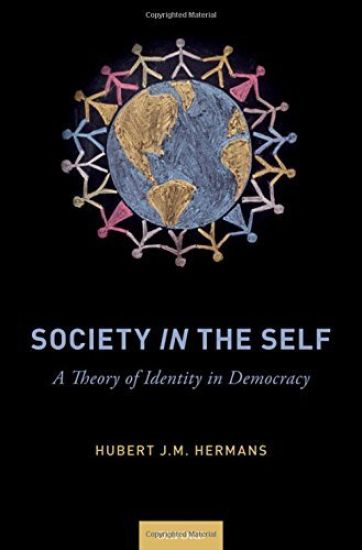
Society in the Self

Society in the Self

Hubert J.M. Hermans

Oxford University Press Inc
2018
sidottu
Instead of considering society as a social environment, Society in the Self begins from the assumption that society works in the deepest regions of self and identity, as expressed in phenomena like self-sabotage, self-radicalization, self-cure, self-government, self-nationalization, and self-internationalization. This leads to the central thesis that a democratic society can only function properly if it is populated by participants with a democratically organized self. In this book, an integrative model is presented that is inspired by three versions of democracy: cosmopolitan, deliberative, and agonistic democracy, with the latter focusing on the role of social power and emotions. Drawing on these democratic views, three levels of inclusiveness are distinguished in the self: personal (I as an individual), social (I as a member of a group), and global (I as a human being). A democratic self requires the flexibility of moving up and down across these levels of inclusiveness and has to find its way in fields of tension between the self and the other, and between dialogue and social power. As author Hubert Hermans explains, this theory has far reaching consequences for such divergent topics as leadership in the self, cultural diversity in the self, the relationship between reason and emotion, self-empathy, cooperation and competition between self-parts, and the role of social power in prejudice, enemy image construction, and scapegoating. The central message of this book is reflected in Mahatma Gandhi's dictum: "Be the change you want to see in the world."
Citizenship Education and the Personalization of Democracy

Citizenship Education and the Personalization of Democracy

Hubert J.M. Hermans; Rob Bartels

Routledge
2020
nidottu
The core message of this educational book is that democracy is, more than ever before, in need of the personal contribution of engaged citizens. Democracy is viable only if it is rooted in the hearts and minds of citizens who feel responsible not only for their own well-being, but also for the quality of social relationships in a society with marked differences in race, religion, culture, and gender. Three basic features define personalized democracy: A critical attitude not only towards others but also towards oneself; learning not only from others but also from oneself; and participation in society with attention to the contradictive nature of one’s own mind. The authors emphasize that the development of personalized democracy and global citizenship requires participation at different identity levels: I as individual, we as members of social groups, we as part of humanity, and we as part of the earth. Written for future teachers at secondary level, the book contains dialogical self theory, research and a wide range of exercises.
Citizenship Education and the Personalization of Democracy

Citizenship Education and the Personalization of Democracy

Hubert J.M. Hermans; Rob Bartels

Routledge
2020
sidottu
The core message of this educational book is that democracy is, more than ever before, in need of the personal contribution of engaged citizens. Democracy is viable only if it is rooted in the hearts and minds of citizens who feel responsible not only for their own well-being, but also for the quality of social relationships in a society with marked differences in race, religion, culture, and gender. Three basic features define personalized democracy: A critical attitude not only towards others but also towards oneself; learning not only from others but also from oneself; and participation in society with attention to the contradictive nature of one’s own mind. The authors emphasize that the development of personalized democracy and global citizenship requires participation at different identity levels: I as individual, we as members of social groups, we as part of humanity, and we as part of the earth. Written for future teachers at secondary level, the book contains dialogical self theory, research and a wide range of exercises.
The Alchemy of Slavery

The Alchemy of Slavery

M. Scott Heerman

UNIVERSITY OF PENNSYLVANIA PRESS
2022
pokkari
In this sweeping saga that spans empires, peoples, and nations, M. Scott Heerman chronicles the long history of slavery in the heart of the continent and traces its many iterations through law and social practice. Arguing that slavery had no fixed institutional form, Heerman traces practices of slavery through indigenous, French, and finally U.S. systems of captivity, inheritable slavery, lifelong indentureship, and the kidnapping of free people. By connecting the history of indigenous bondage to that of slavery and emancipation in the Atlantic world, Heerman shows how French, Spanish, and Native North American practices shaped the history of slavery in the United States. The Alchemy of Slavery foregrounds the diverse and adaptable slaving practices that masters deployed to build a slave economy in the Upper Mississippi River Valley, attempting to outmaneuver their antislavery opponents. In time, a formidable cast of lawyers and antislavery activists set their sights on ending slavery in Illinois. Abraham Lincoln, Lyman Trumbull, Richard Yates, and many other future leaders of the Republican party partnered with African Americans to wage an extended campaign against slavery in the region. Across a century and a half, slavery's nearly perpetual reinvention takes center stage: masters turning Indian captives into slaves, slaves into servants, former slaves into kidnapping victims; and enslaved people turning themselves into free men and women.
The Alchemy of Slavery

The Alchemy of Slavery

M. Scott Heerman

University of Pennsylvania Press
2018
sidottu
In this sweeping saga that spans empires, peoples, and nations, M. Scott Heerman chronicles the long history of slavery in the heart of the continent and traces its many iterations through law and social practice. Arguing that slavery had no fixed institutional form, Heerman traces practices of slavery through indigenous, French, and finally U.S. systems of captivity, inheritable slavery, lifelong indentureship, and the kidnapping of free people. By connecting the history of indigenous bondage to that of slavery and emancipation in the Atlantic world, Heerman shows how French, Spanish, and Native North American practices shaped the history of slavery in the United States. The Alchemy of Slavery foregrounds the diverse and adaptable slaving practices that masters deployed to build a slave economy in the Upper Mississippi River Valley, attempting to outmaneuver their antislavery opponents. In time, a formidable cast of lawyers and antislavery activists set their sights on ending slavery in Illinois. Abraham Lincoln, Lyman Trumbull, Richard Yates, and many other future leaders of the Republican party partnered with African Americans to wage an extended campaign against slavery in the region. Across a century and a half, slavery's nearly perpetual reinvention takes center stage: masters turning Indian captives into slaves, slaves into servants, former slaves into kidnapping victims; and enslaved people turning themselves into free men and women.
Psychoanalysis and Social Work

Psychoanalysis and Social Work

Marcel Heiman; M. Ralph Kaufman

Literary Licensing, LLC
2012
sidottu
Psychoanalysis and Social Work is a comprehensive book written by Marcel Heiman that explores the intersection of psychoanalysis and social work. The book provides a detailed analysis of the theories and practices of psychoanalysis and social work, and how they can be used together to address the complex issues faced by individuals and communities. The book covers a wide range of topics including the history of psychoanalysis and social work, the principles of psychoanalytic theory, the role of the therapist in psychoanalysis, and the ways in which psychoanalytic principles can be applied in social work practice. The author also explores the ways in which psychoanalysis and social work can be used to address issues such as trauma, addiction, and mental illness, and how these approaches can help individuals and communities to heal and grow. Throughout the book, Heiman provides numerous case examples and practical applications of psychoanalysis and social work, making it an accessible and useful resource for social workers, therapists, and other mental health professionals. Overall, Psychoanalysis and Social Work is a valuable guide for anyone interested in the intersection of psychoanalysis and social work, and how these two fields can work together to promote healing and growth.Contributing Authors Include David Beres, Viola Bernard, Peter Blos, And Many Others.This scarce antiquarian book is a facsimile reprint of the old original and may contain some imperfections such as library marks and notations. Because we believe this work is culturally important, we have made it available as part of our commitment for protecting, preserving, and promoting the world's literature in affordable, high quality, modern editions, that are true to their original work.
Psychological Richness As Breakthrough

Psychological Richness As Breakthrough

Hubert J.M. Hermans

Springer International Publishing AG
2025
sidottu
This book explores how living in accordance with the main ideals (wealth, fame, social power) of our individualistic meritocratic society comes at the expense of our psychological richness. To protect or restore this richness, the mainstream conception of success has to be extended beyond the standard definition. The experience of success is too precious to keep it restricted within the imprisoning walls of the individualistic self. There are more ways to be successful. We have arrived in an era where success in life needs the inclusion of three main components: the “success of the other person,” the “diversity of our value system beyond economic values,” and “the survival success of nature". The book is distinctive in that it gives a profound treatment of the reasons why many people feel discontented about the restrictive emphasis on individual success and excellence. It deals not only with the limitations of meritocracy but also offers pathways to deal with them.
Experimentelle Untersuchungen zur Auswirkung einer einmaligen ACTH-Gabe

Experimentelle Untersuchungen zur Auswirkung einer einmaligen ACTH-Gabe

M. Hermann

Springer-Verlag Berlin and Heidelberg GmbH Co. K
1967
nidottu
uber die Wirkung des adrenocorticotropen Hormons (ACTH), eines Proteo- hormons, liegen zahllose wichtige Untersuchungen vor. Dessen ungeachtet be- durlen noch viele Einzelheiten der ACTH-Wirkung der genauen Abklarung. ACTH wird bekanntlich im Hypophysenvorderlappen gebildet, dem im Rahmen des endokrinen Systems eine zentrale Funktion zukommt. Mit Hilfe seiner glando- tropen Partialfunktionen werden die peripheren endokrinen Organe gesteuert. ubertrager dieser Steuerungsimpulse sind Hormone, wie z.B. das ACTH, die spezifisch auf das einzelne periphere Erlolgsorgan einwirken und dort im allge- meinen eine morphokinetische und sekretionsanregende Wirkung entfalten. Die Morphokinese dient dabei vorwiegend der Erweiterung der Sekretionskapazitat. Die peripheren Drusen geben ihrerseits Hormone ab, die in der Koerperperipherie, vielfach im Stoffwechsel, ihre Wirkung entfalten. Fur die Regulation der Nebennierenrindenfunktion ist das fest eingespielte System Hypo- thalamus-Hypophysenvorderlappen-Nebennierenrinde verantwortlich zu machen. Die Reak- tionsweise dieses komplexen Systems kann auf zweierlei Weise moduliert werden. Verschie- dene Bereiche des zentralen Nervensystems, wie z. B. der N ucleus amygdalae und die Formatio reticularis (MASON u. Mitarb. 1960; OKINAKA 1960; EGDAHL 1961; FENDLER u. Mitarb. 1961; MANDELL u. Mitarb. 1963), nehmen teils foerdernd, teils hemmend Einfluss auf den Hypo- thalamus und damit indirekt auf Hypophyse und Nebennierenrinde. Eine wesentliche Rolle spielt ferner die sog. homoeostatische Regulation, bei der nach dem Ruckkopplungsprinzip (Feedback-Mechanismus, Servo-Mechanismus) die Hormone der untergeordneten peripheren Drusen auf die ubergeordneten Steuerungsorgane einwirken. Dabei beeinflussen sie sehr wahrscheinlich die ubergeordneten hypothalamischen Zentren und nicht den Hypophysenvorderlappen direkt.