Kirjahaku
Etsi kirjoja tekijän nimen, kirjan nimen tai ISBN:n perusteella.
1000 tulosta hakusanalla Herman Wiley Ronnenberg
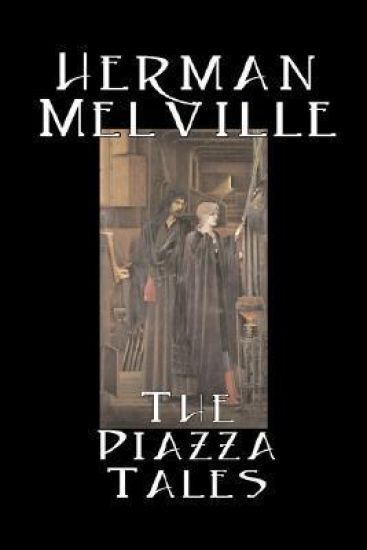
The Piazza Tales by Herman Melville, Fiction, Classics, Literary
Herman Melville
Aegypan
2007
pokkari
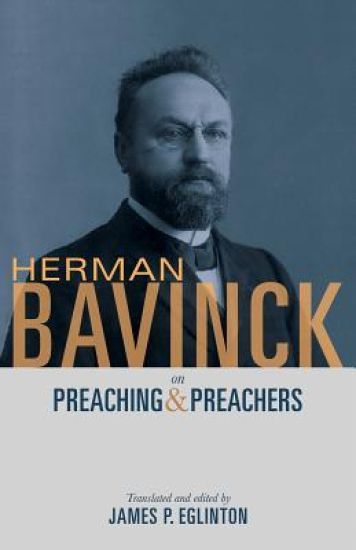
Herman Bavinck on Preaching and Preachers
Hendrickson Publishers Inc
2017
pokkari
Dutch theologian Herman Bavinck (1854-1921) is widely celebrated as one of the most eloquent divines in the Reformed tradition. And yet there is a curious gap between Bavinck the theologian and the preachers who read him in the present day. How Bavinck preached, or what and how he thought about the act of preaching, are largely unknown. The largest barrier is that his writings on preaching were previously untranslated-until now. Herman Bavinck on Preaching & Preachers is a welcome translation from Dutch of Bavinck's thoughts on preaching and preachers, and includes one of his only written sermons.For Bavinck, the sermon was the most important part of the worship service, and the preaching of the word is the decisive mark of the church. He believed that the preacher must be a student of the word, search it in all its riches and depth, in its unity and diversity. Translator and editor James Eglinton describes this book as a "useful and very interesting text on how to preach theology" and a "message that sorely needs to be heard if pulpits during our own time are to improve." This is the first time this book is in print. Herman Bavinck on Preaching & Preachers has never been published before in either Dutch or English.
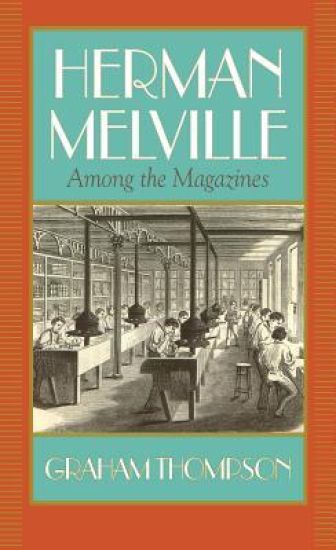
What I feel most moved to write, that is banned, - it will not pay. Yet, altogether, write the other way I cannot."" Herman Melville wrote these words as he struggled to survive as a failing novelist. Between 1853 and 1856, he did write ""the other way,"" working exclusively for magazines. He earned more money from his stories than from the combined sales of his most well known novels, Moby-Dick, Pierre, and The Confidence-Man.In Herman Melville Graham Thompson examines the author's magazine work in its original publication context, including stories that became classics, such as ""Bartelby, the Scrivener"" and ""Benito Cereno,"" alongside lesser-known work. Using a concept he calls ""embedded authorship,"" Thompson explores what it meant to be a magazine writer in the 1850s and discovers a new Melville enmeshed with forgotten materials, editors, writers, and literary traditions. He reveals how Melville responded to the practical demands of magazine writing with dazzling displays of innovation that reinvented magazine traditions and helped create the modern short story.

The Bullying Stops Here - Adventures of Little Herman
Herman J Woodfork
Total Publishing and Media
2023
sidottu
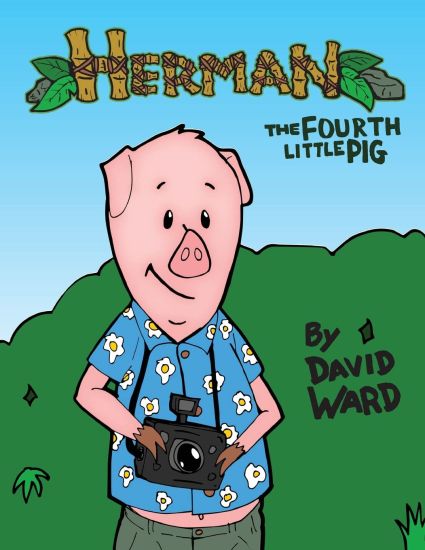
HERMAN, THE FOURTH LITTLE PIG tells the tale of the previously unknown 4th Little Pig. Herman escapes the Big Bad Wolf and runs to the coast, where he takes a sailboat to a tropical island. He first builds a small shelter out of palm tree leaves, but it gets destroyed by a storm. He then builds one from bamboo, but it also gets destroyed by a storm. Finally he discovers a cave on the island, and survives the biggest storm yet. A new spin on a classic tale of trial and error.
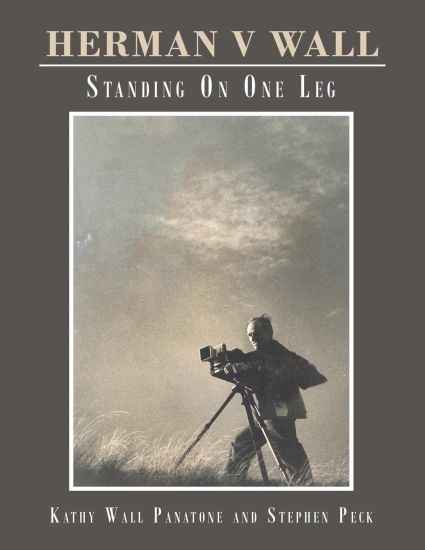
In a career spanning six decades, Herman V Wall was recognized for his photographic skills as one of the best of the 20th century. There is something essential and compelling in his photos, whether the renowned D-Day landing pictures (the first to be seen by the American public) or the delicacy of his signature flower photographs. He perfected a blending of artistic intuition with the technical skills required for award-winning images. Thanks to the persistence of his wife, Ruth Hawks Wall, and his daughter, Katherine Wall Panatone, a unique archive of photos, correspondence, awards, and genealogical details have been preserved. Over one hundred of these items are published in this book, many for the first time.
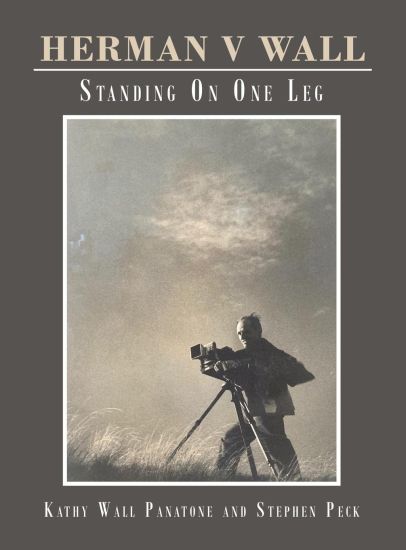
In a career spanning six decades, Herman V Wall was recognized for his photographic skills as one of the best of the 20th century. There is something essential and compelling in his photos, whether the renowned D-Day landing pictures (the first to be seen by the American public) or the delicacy of his signature flower photographs. He perfected a blending of artistic intuition with the technical skills required for award-winning images. Thanks to the persistence of his wife, Ruth Hawks Wall, and his daughter, Katherine Wall Panatone, a unique archive of photos, correspondence, awards, and genealogical details have been preserved. Over one hundred of these items are published in this book, many for the first time.

Herman Melville and the Romantic Living Form is an attempt to re-open the discussion on the identity of Herman Melville's experimental novels, i.e. Mardi, Moby-Dick, Pierre, and The Confidence-Man. Since the beginning of their existence, they have constituted a problem for critics and literary historians because they combine a range of intriguing ideas with a form that has ever defied efforts to classify it on the basis of the existing concepts of literary communication both contemporary to its author and later. An interesting proposition apparently offering a way out of the deadlock is the hypothesis put forth by Denise Gigante in her Life. Organic Form and Romanticism suggesting that a number of Romantic literary works, whose structures deviate significantly from the traditional concepts of a union between form and subject matter may have been an effect of efforts to realize the Romantic idea of organicity in literary practice. Gigante points out the fact that the complex of intuitions brought to the discourse by the concept of organicity should not be restricted to the popular image of a static shape characterized by a harmonious interdependence of component parts and their unification in the structure of the whole. The metaphor also endorses intuiting the origination of the work as a process of mysterious self-shaped growing. A literary practice founded upon such principles would naturally be liberated from the dictate of both the author's preconceptions and intentions permitting the work to apparently germinate like a plant giving its identity away only after a series of transmutations, at the very end. When approached from that angle, Melville's novels reveal a consistent practice of following the free-flowing intuition driven by the author's philosophical compulsions, turning writing into exploration, and the narratives into instruments of intellectual investigation. This novel viewpoint on the well-known structures opens a range of fresh avenues into Melville's artistic concerns and ambitions, and suggests previously-unexplored interpretations of his seeming flaws and irregularities. Last but not least, the Romantic epigenesist poetics reconstructed by Denise Gigante may prove a valuable instrument of critical analysis even beyond the times that brought it about - for example, it is quite likely that many Post-Modernism aficionados might find it rewarding if they take the trouble to juxtapose e.g. Melville's Mardi with Thomas Pynchon's Gravity's Rainbow or Joseph Heller's Catch-22.
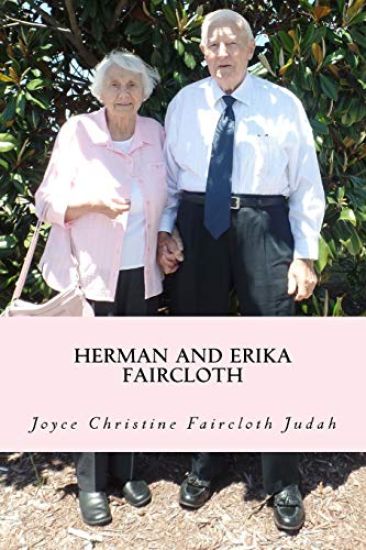
Herman and Erika Faircloth: The Early Years
J. Christy Judah M. Ed
Createspace Independent Publishing Platform
2018
nidottu
It was a union meant to be with Erika from the Polish village and Herman from Fayetteville, NC, USA. Their paths crossed and the lineage began. The World War II Years and the Korean War Years presented many challenges but Herman R. Faircloth and Erika Else Kreisler fought through the barriers which threatened to keep them apart. This is the way it was...
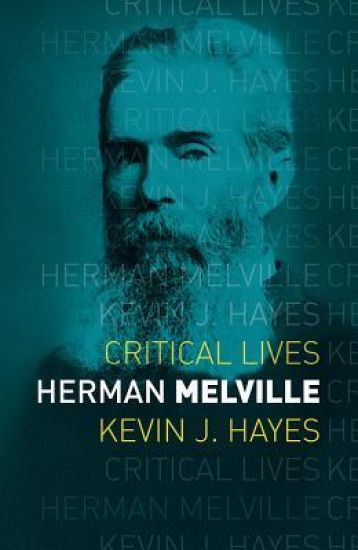
American novelist and poet Herman Melville is considered by many to be the finest author his nation has produced. Born in New York in 1819, he achieved recognition as a leader of world literature with his daring stylistic innovations, and his masterpiece Moby-Dick continues to capture the attention of readers around the globe. This fast-paced biography surveys Melville's major works and tells the compelling story of his unpredictable professional and personal life. Kevin J. Hayes explores the revival of interest in Melville's work thirty years after his death, coinciding with the aftermath of the First World War and the rise of modernism. He examines the composition and reception of Melville's works, including his first two books, Typee and Omoo, his more ambitious works, and the short fiction, novels and poetry he wrote during the last forty years of his life. Incorporating a wealth of new information about Melville's life and the time in which he lived, Hayes offers an engaging introduction to the life of this celebrated but often misunderstood writer.
Four Great Novels by Herman Melville, (complete and Unabridged). Including Moby Dick, Typee, A Romance Of The South Seas, Omoo
Herman Melville
BENEDICTION CLASSICS
2013
sidottu
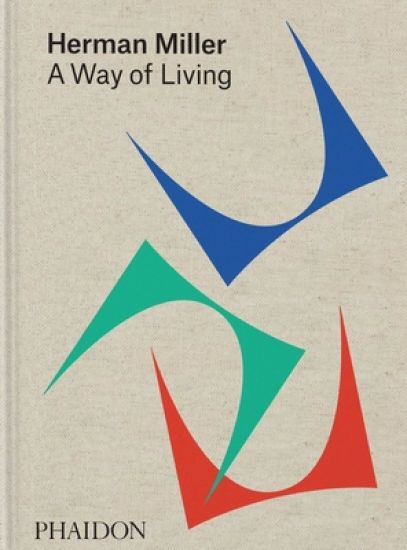
‘There have been many books about Herman Miller, its ethos, designers, and furniture, but none as comprehensive as this.’ – Interior Design The acclaimed chronicle of the rich history of this innovative furniture company, from its founding in the early twentieth century to today For more than 100 years, Michigan-based Herman Miller has played a central role in the evolution of modern and contemporary design, producing timeless classics while creating a culture that has had a remarkable impact on the development of the design world. Herman Miller is known as much for its pioneering designs and international influence as for its emphasis on environment and community service. In this far reaching survey, new and archival photography illustrates the evolution of Herman Miller's furniture designs over the course of the century. Featuring the stories and creations of legendary designers including Ray and Charles Eames, George Nelson, and Alexander Girard, and through its thousands of illustrations, this book tells the Herman Miller story as never before, documenting its defining moments and key leaders, and making Herman Miller: A Way of Living an indispensable volume for the bookshelves of design-lovers around the globe.
Ecological Economics and Sustainable Development, Selected Essays of Herman Daly
Herman E. Daly
Edward Elgar Publishing Ltd
2007
sidottu
Ecological Economics and Sustainable Development comprises a carefully chosen selection of some 25 articles, speeches, congressional testimonies, reviews, and critiques from the last ten years of Herman Daly's ever-illuminating work.This book seeks to identify the blind spots and errors in standard growth economics, alongside the corrections that ecological economics offers to better guide us toward a sustainable economy - one with deeper biophysical and ethical roots.Under the general heading of sustainability and ecological economics, many specific topics are here brought into relation with each other. These include: limits to growth; full-world versus empty-world economics; uneconomic growth; definitions of sustainability; peak oil; steady-state economics; allocation versus distribution versus scale issues; non-enclosure of rival goods and enclosure of non-rival goods; production functions and the laws of thermodynamics; OPEC and Kyoto; involuntary resettlement and development; resource versus value-added taxation; globalization versus internationalization; immigration; climate change; and the philosophical presuppositions of policy, including the policies suggested in connection with the topics above.This fascinating work will appeal to scholars and academics of ecological, environmental, development, and environmental resource economics and studies.
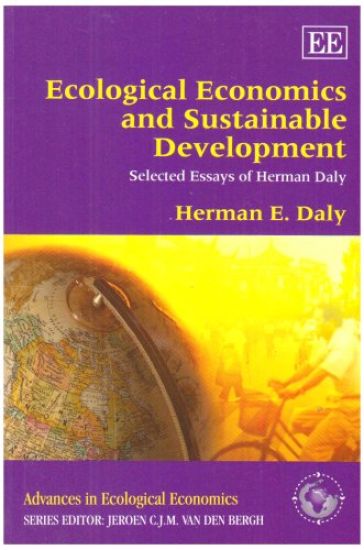
Ecological Economics and Sustainable Development, Selected Essays of Herman Daly
Herman E. Daly
Edward Elgar Publishing Ltd
2008
nidottu
Ecological Economics and Sustainable Development comprises a carefully chosen selection of some 25 articles, speeches, congressional testimonies, reviews, and critiques from the last ten years of Herman Daly's ever-illuminating work.This book seeks to identify the blind spots and errors in standard growth economics, alongside the corrections that ecological economics offers to better guide us toward a sustainable economy - one with deeper biophysical and ethical roots.Under the general heading of sustainability and ecological economics, many specific topics are here brought into relation with each other. These include: limits to growth; full-world versus empty-world economics; uneconomic growth; definitions of sustainability; peak oil; steady-state economics; allocation versus distribution versus scale issues; non-enclosure of rival goods and enclosure of non-rival goods; production functions and the laws of thermodynamics; OPEC and Kyoto; involuntary resettlement and development; resource versus value-added taxation; globalization versus internationalization; immigration; climate change; and the philosophical presuppositions of policy, including the policies suggested in connection with the topics above.This fascinating work will appeal to scholars and academics of ecological, environmental, development, and environmental resource economics and studies.
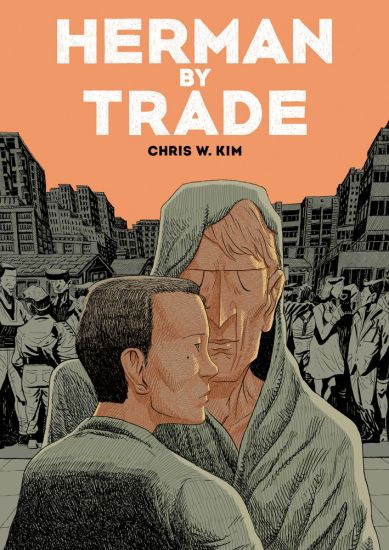
Herman is a reclusive, straight-laced street cleaner—or so it seems to those he works with on the city’s waterfront. But he has an extraordinary hidden talent: the ability to transform his appearance at will. When the unsmiling cinematic genius MIO calls an open audition for her new movie, a queue forms along the waterfront, snaking past the industrial park, the beach, the shipyard, and beyond. On the fourth day, Herman joins it. As he waits, swept up in the frenzy of creative ambition that has overcome the city, his past life becomes increasingly remote. By the time he enters the audition room, he might have lost his job, but his talent remains. Dazzled by Herman’s ability to adapt to any role, MIO deems the rest of the cast redundant, sparking a furious outcry. When the cult director’s new film premieres, with Herman performing every role, it doesn’t get the reaction she expects. Spectacularly drawn, Herman by Trade is a captivating graphic novel about art, identity, and making space for self-expression.