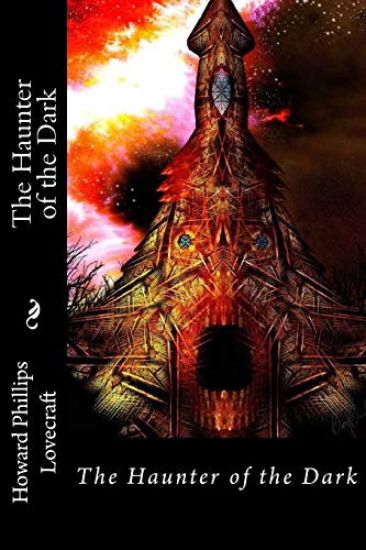
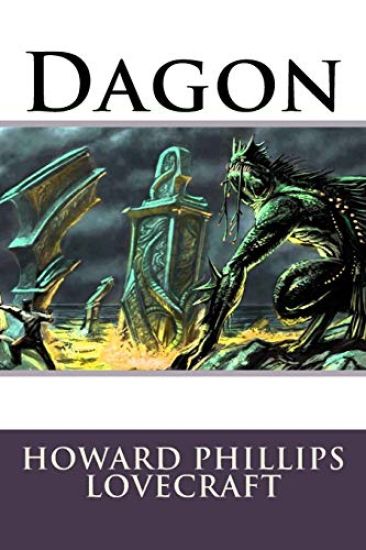
The story takes place in Providence, Rhode Island and revolves around the Church of Starry Wisdom. The cult uses an ancient artifact known as the Shining Trapezohedron to summon a terrible being from the depths of time and space. The Shining Trapezohedron was discovered in Egyptian ruins, in a box of alien construction, by Professor Enoch Bowen before he returned to Providence, Rhode Island in 1844. Members of the Church of Starry Wisdom in Providence would awaken the Haunter of the Dark, an avatar of Nyarlathotep, by gazing into the glowing crystal. Summoned from the black gulfs of chaos, this being could show other worlds, other galaxies, and the secrets of arcane and paradoxical knowledge; but he demanded monstrous sacrifices, hinted at by disfigured skeletons that were later found in the church. The Haunter of the Dark was banished by light and could not cross a lighted area.
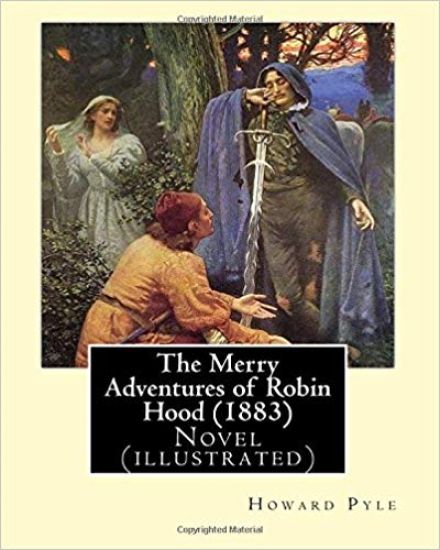
The Merry Adventures of Robin Hood of Great Renown in Nottinghamshire is an 1883 novel by the American illustrator and writer Howard Pyle. Consisting of a series of episodes in the story of the English outlaw Robin Hood and his band of Merry Men, the novel compiles traditional material into a coherent narrative in a colorful, invented "old English" idiom that preserves some flavor of the ballads, and adapts it for children. The novel is notable for taking the subject of Robin Hood, which had been increasingly popular through the 19th century, in a new direction that influenced later writers, artists, and filmmakers through the next century. PLOT: The plot follows Robin Hood as he becomes an outlaw after a conflict with foresters and through his many adventures and runs with the law. Each chapter tells a different tale of Robin as he recruits Merry Men, resists the authorities, and aids his fellow man. The popular stories of Little John defeating Robin in a fight with staffs, of Robin's besting at the hands of Friar Tuck, and of his collusion with Allan-a-Dale all appear. In the end, Robin and his men are pardoned by King Richard the Lionheart and his band are incorporated into the king's retinue, much to the dismay of the Sheriff of Nottingham. Howard Pyle (March 5, 1853 - November 9, 1911) was an American illustrator and author, primarily of books for young people. A native of Wilmington, Delaware, he spent the last year of his life in Florence, Italy. In 1894 he began teaching illustration at the Drexel Institute of Art, Science and Industry (now Drexel University). After 1900, he founded his own school of art and illustration, named the Howard Pyle School of Illustration Art. The scholar Henry C. Pitz later used the term Brandywine School for the illustration artists and Wyeth family artists of the Brandywine region, several of whom had studied with Pyle.Some of his more notable students were N. C. Wyeth, Frank Schoonover, Elenore Abbott, Ethel Franklin Betts, Anna Whelan Betts, Harvey Dunn, Clyde O. DeLand, Philip R. Goodwin, Thornton Oakley, Violet Oakley, Ellen Bernard Thompson Pyle, Olive Rush, Allen Tupper True, Elizabeth Shippen Green, Arthur E. Becher, William James Aylward, and Jessie Willcox Smith. Pyle's home and studio in Wilmington, where he taught his students, is still standing and is listed on the National Register of Historic Places....
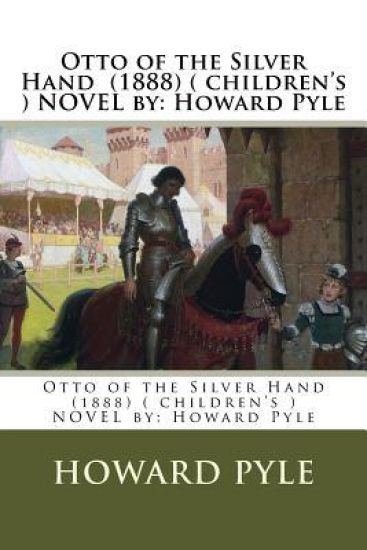
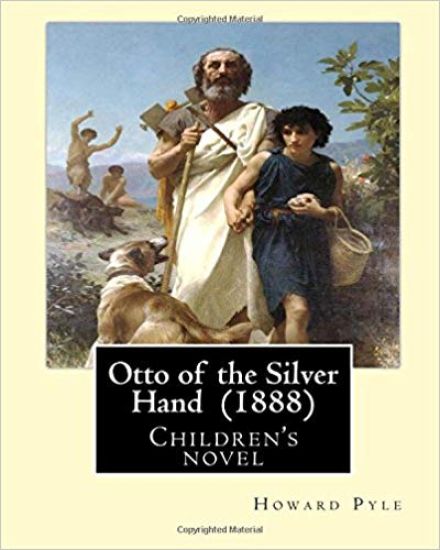
Otto of the Silver Hand is a children's novel about the Dark Ages written and illustrated by Howard Pyle. It was first published in 1888 by Charles Scribner's Sons. The novel was one of the first written for young readers that went beyond the chivalric ideals of the time period, and showed how cruel the time period could really be. PLOT: The book centers around the life of Otto, the son of German warlord Baron Conrad. Otto's mother, Baroness Matilda, has died in premature labour, brought on by the sight of the Baron's battle wounds, prompting Conrad to take his newborn son to be raised in a nearby monastery. When Otto reaches the age of eleven his father returns to claim him from the gentle monks, taking him back to live in Castle Drachenhausen, ("Dragons' House", in German) the ancestral mountaintop fortress from which the Baron launches his attacks. Here Otto learns of and is horrified by his father's life as a robber baron. Otto is particularly horrified by the revelation of how Conrad killed a defeated, surrendering enemy, Baron Frederick. A rival robber baron, Baron Frederick had been with his men defending a column of merchants in return for the tribute they were paying him. Shortly thereafter, Baron Conrad obeys a summons to the Imperial Court, taking the vast majority of his men-at-arms with him as an impressive escort but leaving Castle Drachenhausen practically undefended as a result. The late Baron Frederick's heir, his nephew Baron Henry, then attacks the castle and burns it to the ground. Baron Henry then takes Otto captive to his own fortress, Castle Trutzdrachen ("Dragon-scorner," in German). In the dungeon of his castle, Baron Henry explains to Otto that he has sworn a solemn oath that any member of Baron Conrad's House who fell into his hands would never be able to strike a blow like the one which killed his uncle, Baron Frederick. Because Otto is so young, the Baron keeps this oath by cutting off his right hand instead of killing him, and as an afterthought has a healer sent to tend to him. While Otto is feverish from the pain of his wound, he is comforted by Baron Henry's eight-year-old daughter Pauline, who visits his cell. Otto's father Baron Conrad then returns and rescues him with the help of a few remaining loyal followers. Baron Henry and his men give chase and Otto's father kills Baron Henry in single combat but dies in the process, choosing to sacrifice his life so that his son can escape. Otto flees to the monastery where he grew up and is given refuge there. After Otto regains his health the Abbot accompanies him to an audience with the Emperor, who promises restitution and takes responsibility for Otto's future upbringing. Otto becomes a respected statesman, marries his former captor's daughter Pauline, and is known for his wise counsel and peaceful nature. His amputated swordhand is replaced by an artificial and immobile one made of silver. The Emperor has Castle Drachenhausen rebuilt for the couple and over the gatehouse is carved the motto "Manus Argentea Quam Manus Ferrea Melior Est", which translated from Latin means "A hand of silver is better than a hand of iron".... Howard Pyle (March 5, 1853 - November 9, 1911) was an American illustrator and author, primarily of books for young people. A native of Wilmington, Delaware, he spent the last year of his life in Florence, Italy.
Men of Iron is an 1891 novel by the American author Howard Pyle, who also illustrated it. Set in the 15th century, it is a juvenile "coming of age" work in which a young squire, Myles Falworth, seeks not only to become a knight but to eventually redeem his father's honor.In Chapter 24 the knighthood ceremony is presented and described as it would be in a non-fiction work concerning knighthood and chivalry. Descriptions of training equipment are also given throughout. PLOT: The story begins in 1400, the year after the deposition of Richard II of England by Henry of Bolingbrooke, thereafter Henry IV. Lord Gilbert Reginald Falworth is attainted for being King Richard's councilor, who strongly advised him to resist his cousin Henry's movement to seize the throne, and for protecting The Earl of Alban, a fictional conspirator against the succeeding King Henry. Falworth is blinded in a trial by combat with William Bushy Brookhurst, later created Earl of Alban, whom young Myles, son of Lord Falworth, remembers brutally killing Sir John Dale in the hall of Falworth castle where he lived with his parents. Howard Pyle (March 5, 1853 - November 9, 1911) was an American illustrator and author, primarily of books for young people. A native of Wilmington, Delaware, he spent the last year of his life in Florence, Italy.
Men of Iron is an 1891 novel by the American author Howard Pyle, who also illustrated it. It is juvenile coming of age work in which the author has the reader experience the medieval entry into knighthood through the eyes of a young squire, Myles Falworth. In Chapter 24 the knighthood ceremony is presented and described as it would be in a non-fiction work on knighthood and chivalry. Descriptions of training equipment are also given throughout. It comprises 68,334 words and is divided into 33 unnamed chapters, an introduction, and a conclusion. It was made into a film in 1954, The Black Shield of Falworth.
I am writing this under an appreciable mental strain, since by tonight I shall be no more. Penniless, and at the end of my supply of the drug which alone makes life endurable, I can bear the torture no longer; and shall cast myself from this garret window into the squalid street below. Do not think from my slavery to morphine that I am a weakling or a degenerate. When you have read these hastily
William Dean Howells ( March 1, 1837 - May 11, 1920) was an American realist novelist, literary critic, and playwright, nicknamed "The Dean of American Letters". He was particularly known for his tenure as editor of The Atlantic Monthly, as well as for his own prolific writings, including the Christmas story "Christmas Every Day" and the novels The Rise of Silas Lapham and A Traveler from Altruria. Early life and family: William Dean Howells was born on March 1, 1837 in Martinsville, Ohio (now known as Martins Ferry, Ohio) to William Cooper Howells and Mary Dean Howells, the second of eight children. His father was a newspaper editor and printer who moved frequently around Ohio. In 1840, the family settled in Hamilton, Ohio, where his father oversaw a Whig newspaper and followed Swedenborgianism.Their nine years there were the longest period that they stayed in one place. The family had to live frugally, although the young Howells was encouraged by his parents in his literary interests. He began at an early age to help his father with typesetting and printing work, a job known at the time as a printer's devil. In 1852, his father arranged to have one of his poems published in the Ohio State Journal without telling him. Early career: In 1856, Howells was elected as a clerk in the State House of Representatives. In 1858, he began to work at the Ohio State Journal where he wrote poetry and short stories, and also translated pieces from French, Spanish, and German. He avidly studied German and other languages and was greatly interested in Heinrich Heine. In 1860, he visited Boston and met with writers James Thomas Fields, James Russell Lowell, Oliver Wendell Holmes, Sr., Nathaniel Hawthorne, Henry David Thoreau, and Ralph Waldo Emerson. He became a personal friend to many of them, including Henry Adams, William James, Henry James, and Oliver Wendell Holmes, Jr. In 1860 Howells wrote Abraham Lincoln's campaign biography Life Of Abraham Lincoln and subsequently gained a consulship in Venice. He married Elinor Mead on Christmas Eve 1862 at the American embassy in Paris. She was a sister of sculptor Larkin Goldsmith Mead and architect William Rutherford Mead of the firm McKim, Mead, and White. Among their children was architect John Mead Howells. Editorship and other literary pursuits: The Howells returned to America in 1865 and settled in Cambridge, Massachusetts. He wrote for various magazines, including the Atlantic Monthly and Harper's Magazine. In January 1866, James Fields offered him a position as assistant editor at the Atlantic Monthly; he accepted after successfully negotiating for a higher salary, though he was frustrated by Fields' close supervision. Howells was made editor in 1871, after five years as assistant editor, and he remained in this position until 1881. In 1869, he met Mark Twain with whom he formed a longtime friendship. But his relationship with journalist Jonathan Baxter Harrison was more important for the development of his literary style and his advocacy of Realism. Harrison wrote a series of articles for the Atlantic Monthly during the 1870s on the lives of ordinary Americans.Howells gave a series of twelve lectures on "Italian Poets of Our Century" for the Lowell Institute during its 1870-71 season. He published his first novel Their Wedding Journey in 1872, but his literary reputation soared with the realist novel A Modern Instance (1882), which described the decay of a marriage. His 1885 novel The Rise of Silas Lapham became his best known work, describing the rise and fall of an American entrepreneur of the paint business. His social views were also strongly represented in the novels Annie Kilburn (1888), A Hazard of New Fortunes (1890), and An Imperative Duty (1891)....
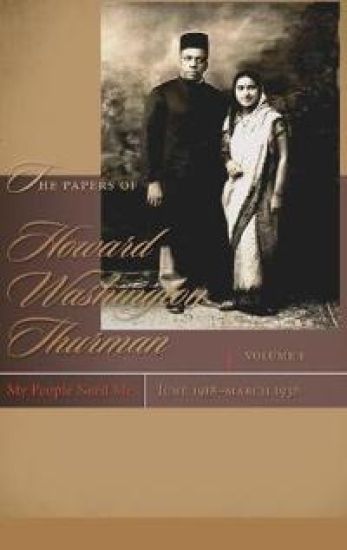
This is the landmark publication of the early writings of this pioneering voice for social justice. The ""Papers of Howard Washington Thurman"" is a four-volume, chronologically arranged documentary edition spanning the long and productive career of the Reverend Howard Thurman, one of the most significant leaders in the history of intellectual and religious life in the mid-twentieth-century United States. The first to lead a delegation of African Americans to meet personally with Mahatma Gandhi, in 1936, Thurman later became one of the principal architects of the modern, nonviolent civil rights movement and a key mentor to Martin Luther King, Jr. In 1953 ""Life"" magazine named Thurman as one of the twelve greatest preachers of the century. The four volumes of this collection, culled from more than 58,000 documents from public and private sources, will feature more than 850 selections of Thurman's sermons, letters, essays, and other writings - many published here for the first time. Each volume will open with an editorial statement, followed by an introductory essay to guide the reader through the dominant themes in Thurman's thought: his understanding of spirituality and social transformations, his creative ecclesiology, and his conception of civic character and the national democratic experiment. Precise annotations to each document illumine Thurman's personal, professional, and intellectual development and place the texts into their historical context. The volumes are further augmented with detailed chronologies and representative illustrations. Volume I (June 1918 - March 1936) documents Thurman's early years in his native Daytona, Florida, his formal education and his leadership in the student movement, and his years at Howard University as a professor of philosophy and religion and dean of Rankin Chapel as well as his historic trip to India and meeting with Mahatma Gandhi in 1936. The texts, images, and editorial commentary presented here reveal the early development of the vision that drove Thurman's career as an educator, theologian, minister, and advocate for social justice and informed the twenty-three books that he began publishing in the mid-1940s. This volume provides rich insights into Thurman's thinking and spiritual growth and offers a window onto the landscape of the defining issues, events, movements, institutions, and individuals that shaped his formative years. The texts presented here make for compelling reading, as Thurman's dialogue with the world of public theology is the story of a nation that was taking stock of its political and religious heritage. The historic publication of his collected papers will make an invaluable contribution not only to American intellectual history and to the history of religion, but to 'America in Search of a Soul', as Thurman titled one of his sermons. This documentary edition is made possible through the efforts of the Howard Thurman Papers Project, a division of the Leadership Center at Morehouse College in Atlanta. This project is funded through support from the Lilly Endowment, Inc.; the Henry Luce Foundation; the Pew Charitable Trusts, Inc.; and the National Historical Publications and Records Commission.
Howard Thurman (1900-1981) was a minister, philosopher and civil rights activist. His encounters with Gandhi in India helped instill in him a commitment to peace. This book reveals the wisdom of a mystic and poet whose work has inspired generations.
Howard Hawks (1896-1977) is one of America's great film directors. During a career that spanned fifty years and produced more than forty films, this writer, producer, and director made highly successful movies and managed to maintain remarkable artistic control during a time when studio moguls usually ruled. Hawks conquered virtually every genre, including action/adventure, comedy, western, film noir, gangster, science fiction, and musical films. The remarkable diversity of his work may have kept Hawks from being as easily recognized as his contemporaries Alfred Hitchcock and John Ford. Hawks brought a unique stamp to all of his films by mixing dramatic and comedic elements, manipulating gender conventions, emphasizing story and dialogue, and eschewing cinematic trickery and sentimentality. His classic oeuvre includes films such as Scarface, Only Angels Have Wings, His Girl Friday, Sergeant York, Bringing Up Baby, The Big Sleep, Red River, Gentlemen Prefer Blondes, and Rio Bravo. This collection of interviews takes the reader from talks with his admirers in the French press to revealing discussions late in his life. By his own admission, Hawks was above all a storyteller. These interviews are replete with entertaining anecdotes. Howard Hawks: Interviews is a diverse collection offering valuable access to the life and career of one of the most fiercely independent filmmakers in the history of Hollywood. Scott Breivold is an associate librarian at California State University, Los Angeles, and director of the university library's music and media center.
Howard Hawks (1896-1977) is one of America's great film directors. During a career that spanned fifty years and produced more than forty films, this writer, producer, and director made highly successful movies and managed to maintain remarkable artistic control during a time when studio moguls usually ruled. Hawks conquered virtually every genre, including action/adventure, comedy, western, film noir, gangster, science fiction, and musical films. The remarkable diversity of his work may have kept Hawks from being as easily recognized as his contemporaries Alfred Hitchcock and John Ford. Hawks brought a unique stamp to all of his films by mixing dramatic and comedic elements, manipulating gender conventions, emphasizing story and dialogue, and eschewing cinematic trickery and sentimentality. His classic oeuvre includes films such as Scarface, Only Angels Have Wings, His Girl Friday, Sergeant York, Bringing Up Baby, The Big Sleep, Red River, Gentlemen Prefer Blondes, and Rio Bravo. This collection of interviews takes the reader from talks with his admirers in the French press to revealing discussions late in his life. By his own admission, Hawks was above all a storyteller. These interviews are replete with entertaining anecdotes. Howard Hawks: Interviews is a diverse collection offering valuable access to the life and career of one of the most fiercely independent filmmakers in the history of Hollywood. Scott Breivold is an associate librarian at California State University, Los Angeles, and director of the university library's music and media center.
Perhaps no other historian has had a more profound and revolutionary impact on American education than Howard Zinn. This is the first book devoted to his views on education and its role in a democratic society. Howard Zinn on Democratic Education describes what is missing from school textbooks and in classrooms-and how we move beyond these deficiencies to improve student education. Critical skills of citizenship are insufficiently developed in schools, according to Zinn. Textbooks and curricula must be changed to transcend the recitation of received wisdom too common today in schools. In these respects, recent Bush Administration and educational policies of most previous US presidents have been on the wrong track in meeting educational needs. This book seeks to redefine national goals at a time when public debates over education have never been more polarised--nor higher in public visibility and contentious debate. Zinn's essays on education-many never before published--are framed in this book by a dialogue between Zinn and Donaldo Macedo, a distinguished critic of literacy and schooling, whose books with Paulo Freire, Noam Chomsky and other authors have received international acclaim.
Perhaps no other historian has had a more profound and revolutionary impact on American education than Howard Zinn. This is the first book devoted to his views on education and its role in a democratic society. Howard Zinn on Democratic Education describes what is missing from school textbooks and in classrooms-and how we move beyond these deficiencies to improve student education. Critical skills of citizenship are insufficiently developed in schools, according to Zinn. Textbooks and curricula must be changed to transcend the recitation of received wisdom too common today in schools. In these respects, recent Bush Administration and educational policies of most previous US presidents have been on the wrong track in meeting educational needs. This book seeks to redefine national goals at a time when public debates over education have never been more polarised--nor higher in public visibility and contentious debate. Zinn's essays on education-many never before published--are framed in this book by a dialogue between Zinn and Donaldo Macedo, a distinguished critic of literacy and schooling, whose books with Paulo Freire, Noam Chomsky and other authors have received international acclaim.
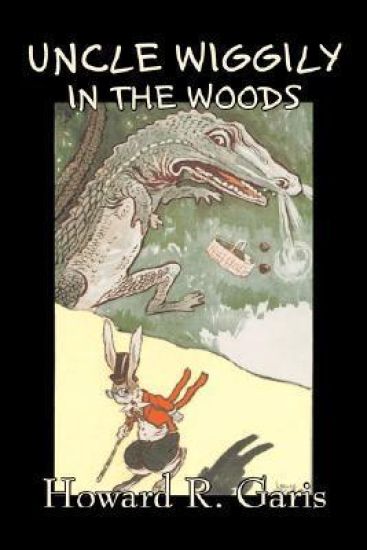
"Brother," says the hump-tailed 'gator, "wouldn't you like a nice rabbit?""Indeed I would," answers the double-jointed tail 'gator, who can wobble his flippers both ways. "And I know of no nicer rabbit than Uncle Wiggily Longears "As it so happens, Uncle Wiggily has just planned his vacation. He and Nurse Jane Fuzzy-Wuzzy will leave the countryside and take a nice little bungalow in the woods.And the woods is where these two skillery-scalery alligators live -- who are not exactly friends of the bunny uncle But the cheerful rabbit gentleman knows plenty of friendlier creatures, too -- whom readers young and old will delight in meeting, in Uncle Wiggily in the Woods.