
Kirjahaku
Etsi kirjoja tekijän nimen, kirjan nimen tai ISBN:n perusteella.
322 tulosta hakusanalla Inbar Raveh
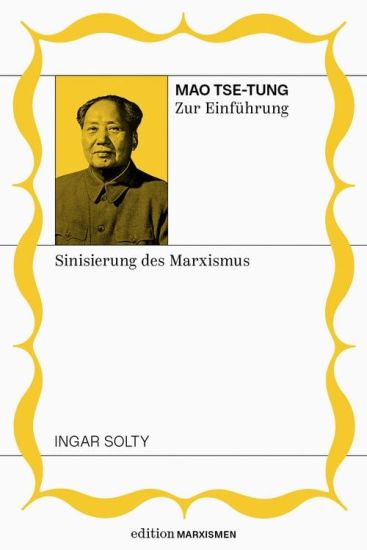
Mao Tse-Tung zur Einführung: Sinisierung des Marxismus
Ingar Solty
Brumaire Verlag GmbH
2026
pokkari
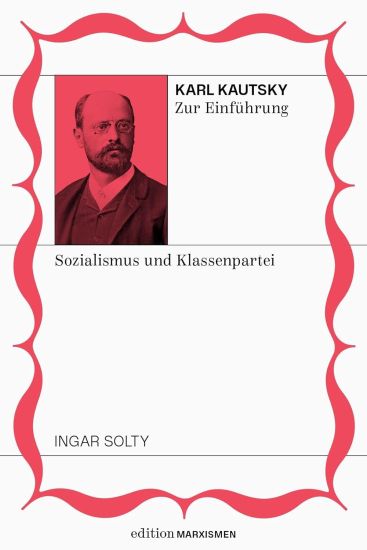
Karl Kautsky zur Einführung: Sozialismus und Klassenpartei
Ingar Solty
Brumaire Verlag GmbH
2025
pokkari
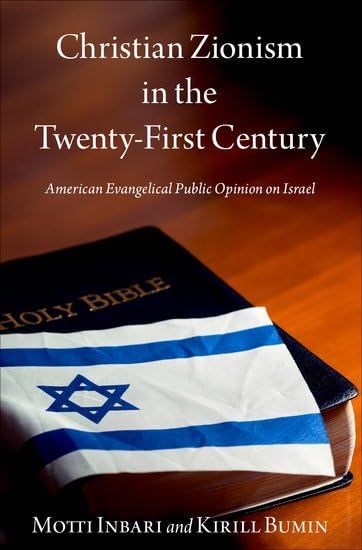
Christian Zionism in the Twenty-First Century
Motti Inbari; Kirill Bumin
OXFORD UNIVERSITY PRESS INC
2024
sidottu
In Christian Zionism in the Twenty-First Century authors Motti Inbari and Kirill Bumin draw on three original surveys conducted in 2018, 2020, and 2021 to explore the religious beliefs and foreign policy attitudes of evangelical and born-again Christians in the United States. They analyze the views of ordinary churchgoers and evangelical pastors to understand the religious, social, and political factors that lead the members of this religious community to support the State of Israel in the Israeli-Palestinian conflict. Through rigorous quantitative analyses and careful textual study of ordinary evangelicals' written comments, Inbari and Bumin aim to rectify misconceptions about who evangelical and born-again Christians are, about their sympathies toward Israel, Jewish people, and Palestinians, and about the sources of their foreign policy attitudes toward the conflict. Inbari and Bumin demonstrate that a generational divide is emerging within the evangelical community, one that substantially impacts evangelicals' attitudes toward Israel. They also show that frequent church attendance and certain theological beliefs have a profound impact on the evangelicals' preference of Israel over the Palestinians. Throughout, the authors aim to add nuance to the discussion, showing that contemporary evangelical and born-again Christians' attitudes are much more diverse than many portrayals suggest.
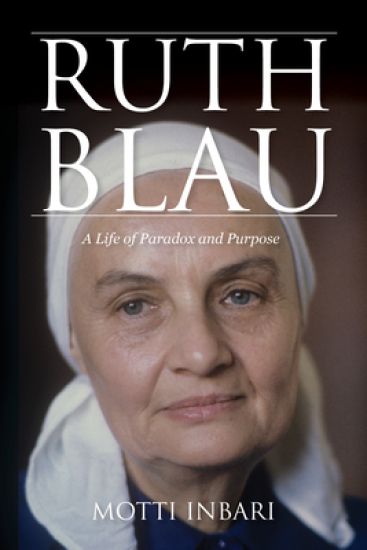
Ruth Blau: A Life of Paradox and Purpose explores the life of a curious, if not mysterious, character in modern Jewish history. Born a French Catholic, Ruth Blau (Ben-David) (1920–2000) lived a constantly twisting life. During World War II, Blau was active in the French Resistance, and under their command, she joined the Gestapo as a double agent. After the war, she studied philosophy as a PhD candidate at the Sorbonne during the 1950s. After converting to Judaism and moving to Israel in 1960, Blau was involved in concealing Yossele Schumacher, a seven-year-old child, as part of a militant conflict between ultra-Orthodox and secular Jews in Israel. In 1965, despite a huge scandal, she married Amram Blau, head of the anti-Zionist ultra-Orthodox Neturei Karta. After the death of her husband in 1973, Blau took upon herself to travel to Arab countries to help the Jewish communities in distress in Lebanon and Iran, where she met Yasser Arafat, head of the Palestinian Liberation Organization, and his deputy Abu Jihad. But the most significant connections she made were in Iran. In 1979, she met with the leader of the Iranian revolution, Ayatollah Khomeini. Ruth Blau: A Life of Paradox and Purpose represents the first full-length biography of this remarkable woman. Drawing on a trove of archival materials and interviews with those who knew Ruth, Motti Inbari offers a complex, multifaceted portrait of a woman undertaking a remarkable and influential journey through modern European and Middle Eastern history.
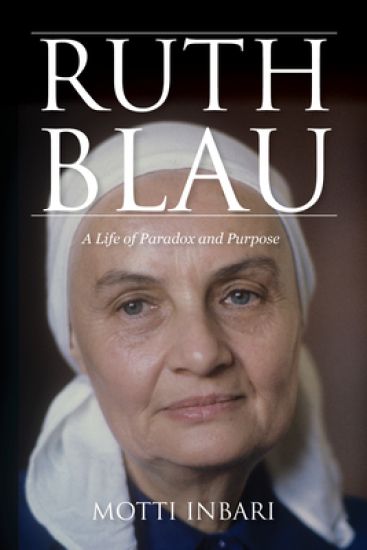
Ruth Blau: A Life of Paradox and Purpose explores the life of a curious, if not mysterious, character in modern Jewish history. Born a French Catholic, Ruth Blau (Ben-David) (1920–2000) lived a constantly twisting life. During World War II, Blau was active in the French Resistance, and under their command, she joined the Gestapo as a double agent. After the war, she studied philosophy as a PhD candidate at the Sorbonne during the 1950s. After converting to Judaism and moving to Israel in 1960, Blau was involved in concealing Yossele Schumacher, a seven-year-old child, as part of a militant conflict between ultra-Orthodox and secular Jews in Israel. In 1965, despite a huge scandal, she married Amram Blau, head of the anti-Zionist ultra-Orthodox Neturei Karta. After the death of her husband in 1973, Blau took upon herself to travel to Arab countries to help the Jewish communities in distress in Lebanon and Iran, where she met Yasser Arafat, head of the Palestinian Liberation Organization, and his deputy Abu Jihad. But the most significant connections she made were in Iran. In 1979, she met with the leader of the Iranian revolution, Ayatollah Khomeini. Ruth Blau: A Life of Paradox and Purpose represents the first full-length biography of this remarkable woman. Drawing on a trove of archival materials and interviews with those who knew Ruth, Motti Inbari offers a complex, multifaceted portrait of a woman undertaking a remarkable and influential journey through modern European and Middle Eastern history.
This volume explores the processes that led several modern Jewish leaders – rabbis, politicians, and intellectuals – to make radical changes to their ideology regarding Zionism, Socialism, and Orthodoxy. Comparing their ideological change to acts of conversion, the study examines the philosophical, sociological, and psychological path of the leaders’ transformation. The individuals examined are novelist Arthur Koestler, who transformed from a devout Communist to an anti-Communist crusader following the atrocities of the Stalin regime; Norman Podhoretz, editor of Commentary magazine, who moved from the New Left to neoconservative, disillusioned by US liberal politics; Yissachar Shlomo Teichtel, who transformed from an ultra-Orthodox anti-Zionist Hungarian rabbi to messianic Religious-Zionist due to the events of the Holocaust; Ruth Ben-David, who converted to Judaism after the Second World War in France because of her sympathy with Zionism, eventually becoming a radical anti-Israeli advocate; Haim Herman Cohn, Israeli Supreme Court justice, who grew up as a non-Zionist Orthodox Jew in Germany, later renouncing his belief in God due to the events of the Holocaust; and Avraham (Avrum) Burg, prominent centrist Israeli politician who served as the Speaker of the Knesset and head of the Jewish Agency, who later became a post-Zionist. Comparing aspects of modern politics to religion, the book will be of interest to researchers in a broad range of areas including modern Jewish studies, sociology of religion, and political science.

Competitiveness and Knowledge
Knut Ingar Westeren; Hanas Cader; Maria de Fátima Sales; Jan Ole Similä; Jefferson Staduto
Routledge
2020
nidottu
In the twenty-first century technology has become global, and firms compete using knowledge and capital. The ‘traditional firm’ has a need for innovation and depends on efficient knowledge management to improve productivity.This book examines five firms that produce the same commodity, white chicken meat, in different parts of the world and under very different conditions. It brings to bear the expertise and international perspectives of the author team, utilizing theoretical discussions and case studies to address the question: How do local firms use knowledge to compete in an increasingly globalized world?This book will be of interest to any postgraduate student, researcher or policymaker hoping to achieve a firmer grasp of innovation and knowledge management: a recurring and highly pertinent theme in contemporary economics.
This volume explores the processes that led several modern Jewish leaders – rabbis, politicians, and intellectuals – to make radical changes to their ideology regarding Zionism, Socialism, and Orthodoxy. Comparing their ideological change to acts of conversion, the study examines the philosophical, sociological, and psychological path of the leaders’ transformation. The individuals examined are novelist Arthur Koestler, who transformed from a devout Communist to an anti-Communist crusader following the atrocities of the Stalin regime; Norman Podhoretz, editor of Commentary magazine, who moved from the New Left to neoconservative, disillusioned by US liberal politics; Yissachar Shlomo Teichtel, who transformed from an ultra-Orthodox anti-Zionist Hungarian rabbi to messianic Religious-Zionist due to the events of the Holocaust; Ruth Ben-David, who converted to Judaism after the Second World War in France because of her sympathy with Zionism, eventually becoming a radical anti-Israeli advocate; Haim Herman Cohn, Israeli Supreme Court justice, who grew up as a non-Zionist Orthodox Jew in Germany, later renouncing his belief in God due to the events of the Holocaust; and Avraham (Avrum) Burg, prominent centrist Israeli politician who served as the Speaker of the Knesset and head of the Jewish Agency, who later became a post-Zionist. Comparing aspects of modern politics to religion, the book will be of interest to researchers in a broad range of areas including modern Jewish studies, sociology of religion, and political science.

Estudios Sobre Las Aguas De Skyring;a Parte Austral De Patagonia
Enrique Ibar Sierra
Hutson Street Press
2025
sidottu

Estudios Sobre Las Aguas De Skyring;a Parte Austral De Patagonia
Enrique Ibar Sierra
Hutson Street Press
2025
pokkari
Messianic Religious Zionism Confronts Israeli Territorial Compromises
Motti Inbari
Cambridge University Press
2012
sidottu
The Six Day War in 1967 profoundly influenced how an increasing number of religious Zionists saw Israeli victory as the manifestation of God's desire to redeem God's people. Thousands of religious Israelis joined the Gush Emunim movement in 1974 to create settlements in territories occupied in the war. However, over time, the Israeli government decided to return territory to Palestinian or Arab control. This was perceived among religious Zionist circles as a violation of God's order. The peak of this process came with the Disengagement Plan in 2005, in which Israel demolished all the settlements in the Gaza Strip and four settlements in the West Bank. This process raised difficult theological questions among religious Zionists. This book explores the internal mechanism applied by a group of religious Zionist rabbis in response to their profound disillusionment with the state, reflected in an increase in religious radicalization due to the need to cope with the feelings of religious and messianic failure.
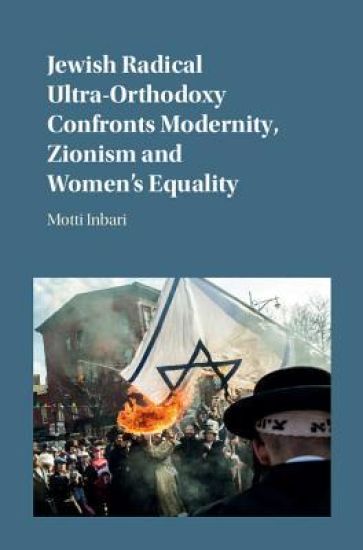
Jewish Radical Ultra-Orthodoxy Confronts Modernity, Zionism and Women's Equality
Motti Inbari
Cambridge University Press
2016
sidottu
In Jewish Radical Ultra-Orthodoxy Confronts Modernity, Zionism and Women's Equality, Motti Inbari undertakes a study of the culture and leadership of Jewish radical ultra-Orthodoxy in Hungary, Jerusalem and New York. He reviews the history, ideology and gender relations of prominent ultra-Orthodox leaders Amram Blau (1894–1974), founder of the anti-Zionist Jerusalemite Neturei Karta, and Yoel Teitelbaum (1887–1979), head of the Satmar Hasidic movement in New York. Focussing on the rabbis' biographies, the author analyzes their enclave building methods, their attitude to women and modesty, and their eschatological perspectives. The research is based on newly discovered archival materials, covering many unique and remarkable findings. The author concludes with a discussion of contemporary trends in Jewish religious radicalization. Inbari highlights the resilience of the current generations' sense of community cohesion and their capacity to adapt and overcome challenges such as rehabilitation into potentially hostile secular societies.
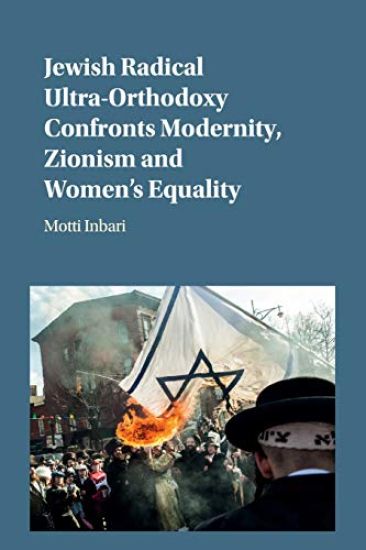
Jewish Radical Ultra-Orthodoxy Confronts Modernity, Zionism and Women's Equality
Motti Inbari
Cambridge University Press
2019
pokkari
In Jewish Radical Ultra-Orthodoxy Confronts Modernity, Zionism and Women's Equality, Motti Inbari undertakes a study of the culture and leadership of Jewish radical ultra-Orthodoxy in Hungary, Jerusalem and New York. He reviews the history, ideology and gender relations of prominent ultra-Orthodox leaders Amram Blau (1894–1974), founder of the anti-Zionist Jerusalemite Neturei Karta, and Yoel Teitelbaum (1887–1979), head of the Satmar Hasidic movement in New York. Focussing on the rabbis' biographies, the author analyzes their enclave building methods, their attitude to women and modesty, and their eschatological perspectives. The research is based on newly discovered archival materials, covering many unique and remarkable findings. The author concludes with a discussion of contemporary trends in Jewish religious radicalization. Inbari highlights the resilience of the current generations' sense of community cohesion and their capacity to adapt and overcome challenges such as rehabilitation into potentially hostile secular societies.
Messianic Religious Zionism Confronts Israeli Territorial Compromises
Motti Inbari
Cambridge University Press
2014
pokkari
The Six Day War in 1967 profoundly influenced how an increasing number of religious Zionists saw Israeli victory as the manifestation of God's desire to redeem God's people. Thousands of religious Israelis joined the Gush Emunim movement in 1974 to create settlements in territories occupied in the war. However, over time, the Israeli government decided to return territory to Palestinian or Arab control. This was perceived among religious Zionist circles as a violation of God's order. The peak of this process came with the Disengagement Plan in 2005, in which Israel demolished all the settlements in the Gaza Strip and four settlements in the West Bank. This process raised difficult theological questions among religious Zionists. This book explores the internal mechanism applied by a group of religious Zionist rabbis in response to their profound disillusionment with the state, reflected in an increase in religious radicalization due to the need to cope with the feelings of religious and messianic failure.
Competitiveness and Knowledge
Knut Ingar Westeren; Hanas Cader; Maria de Fátima Sales; Jan Ole Similä; Jefferson Staduto
Routledge
2018
sidottu
In the twenty-first century technology has become global, and firms compete using knowledge and capital. The ‘traditional firm’ has a need for innovation and depends on efficient knowledge management to improve productivity.This book examines five firms that produce the same commodity, white chicken meat, in different parts of the world and under very different conditions. It brings to bear the expertise and international perspectives of the author team, utilizing theoretical discussions and case studies to address the question: How do local firms use knowledge to compete in an increasingly globalized world?This book will be of interest to any postgraduate student, researcher or policymaker hoping to achieve a firmer grasp of innovation and knowledge management: a recurring and highly pertinent theme in contemporary economics.
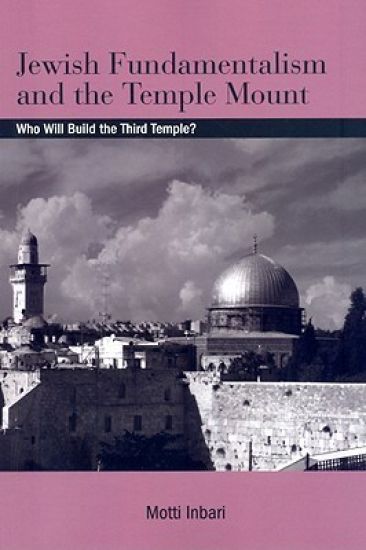
Jewish Fundamentalism and the Temple Mount
Motti Inbari
State University of New York Press
2009
pokkari
Examines radical and messianic movements in Israel seeking to rebuild the Third Temple in Jerusalem.The Temple Mount, located in Jerusalem, is the most sacred site in Judaism and the third-most sacred site in Islam, after Mecca and Medina in Saudi Arabia. The sacred nature of the site for both religions has made it one of the focal points of the Arab-Israeli conflict. Jewish Fundamentalism and the Temple Mount is an original and provocative study of the theological roots and historical circumstances that have given rise to the movement of the Temple Builders. Motti Inbari points to the Six Day War in 1967 as the watershed event: the Israeli victory in the war resurrected and intensified Temple-oriented messianic beliefs. Initially confined to relatively limited circles, more recent "land for peace" negotiations between Israel and its Arab neighbors have created theological shock waves, enabling some of the ideas of Temple Mount activists to gain wider public acceptance. Inbari also examines cooperation between Third Temple groups in Israel and fundamentalist Christian circles in the United States, and explains how such cooperation is possible and in what ways it is manifested.
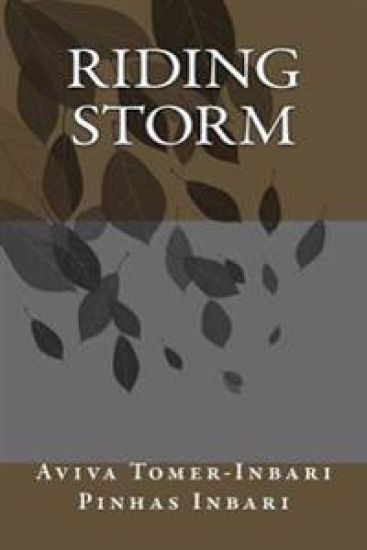
Holiday, a beautiful Palestinian Christian girl of American origin, knows that she and her husband Edward came from different worlds but she couldn't imagine how deep the abyss separating them was. She has to fight for her dignity as a free woman against the mores of the Arab patriarchal society. Her desire to ride her horse "Storm" collides with the values of her traditional Arab husband, the "tycoon" of Palestine during the British mandate. Edward adores her, but his dignity is ruptured, and they fall from the pinnacle of happiness down to the abyss of anguish until the surprising end. Holiday's struggles take place against the incitement of radical Islamist preachers, the ideological precursors of the today's ISIS hate-spreaders. After the 1948 Palestinian catastrophe, their daughter Violet falls in love with a Jewish colleague in the newborn Israel. Can the two bleeding societies, Jews and Arabs, permit this love to flourish, or will it crash against the walls of intolerance? "Riding Storm describes the dramatic conflicts that rage the souls of the characters. Its descriptions are alive and breathing and the plot is rapid and sweeping." Amnon Jacont, Laureate Israeli novelist Aviva and Pinhas are a happy couple, but they disagree from time to time... "writing in tandem was not an easy job, but we swept over all differences because we loved the tale and we are loving each other." Aviva Tomer-Inbari is a Hebrew laureled poet who has published in leading Israeli poetry magazines. She gives lectures on the arts and architecture across Israel. Pinhas Inbari is a writer, poet and a senior commentator on contemporary Middle East affairs. His previous books include: "A Triangle over Jordan" (Heb.), "With Broken Swords" (Heb.), "The Palestinian Option", (Heb.) "The Palestinians between Terrorism and Statehood" (Eng.) and a "cook-book" for children: "Grandpa, Granddaughters, Grand-Cuisine" (Eng. And Heb.) Israel's former President Shimon Peres wrote: "His writing reflects enormous knowledge, deep insight and originality".