
Kirjahaku
Etsi kirjoja tekijän nimen, kirjan nimen tai ISBN:n perusteella.
1000 tulosta hakusanalla J -R Nogué

Complete Guide to the Prayers of Jesus, The What J esus Prayed and How It Can Change Your Life Today
J Mchenry
Bethany House Publishers, a division of Baker Publishing Group
2018
nidottu
The Only Comprehensive Guide to the Prayer Life of JesusPrayer was essential to Jesus. Yet many Christians only know the Lord's Prayer, unaware of the rich, fertile prayer life he had while on earth.With warmth and keen insight, Janet Holm McHenry takes you on an engaging, vivid journey through the 14 recorded prayers Jesus prayed as well as his teachings on prayer and his prayer practices. No matter our backgrounds or ideas about how, when, and why we should talk to God, we can learn from Jesus's simple, vulnerable examples.This unique, comprehensive guide to the prayer life of Jesus provides background, context, and a detailed look at each one of the prayers of Jesus along with reflection questions and Scripture-based prayers. As we follow his example and take our problems to him, we will, like him, grow closer to the Father and find strength for our everyday challenges.

With handsome color photographs, archival photos, patent drawings, early advertising, and extensive research, this is the first comprehensive look at J. Chein toys, the process of their creation, and the colorful history of the company. Over 450 full color photos of the toys, including views of original lithographic sheets, factory production, prototype models, and rare catalog pages are featured. Information on trademarks and the current values of the toys make this an indispensable reference guide for antique toy lovers and a must for collectors of comic characters, banks, sand pails, carnival, or transportation toys.

J. Howard Wert was a recent college graduate when the armies of the North and South converged near his family's homestead just three miles outside Gettysburg in the summer of 1863. A militia member and anti-slavery supporter, Wert acted as a guide for Union General George Meade, helping position federal troops in the fields and hills around town. Perhaps more importantly, he collected and labeled artifacts from the battle, including a still-hot Confederate shell that almost hit him near Little Round Top. After the war, Wert resumed gathering relics of the three-day battle, many given to him by veterans of both sides, including weapons, clothing, letters, furniture, and even items related to Lincoln's Address. Now this amazing private collection can be appreciated through more than 120 color pictures and informative text about both the items and Wert's life.

J.B. Collip and the Development of Medical Research in Canada
Alison Li
McGill-Queen's University Press
2003
sidottu
In the early years of the twentieth century medical research in Canada was the job of a select few. By mid-century it had grown into a systematic, large-scale venture that involved teams of professional scientists and dozens of laboratories in universities, government, and industry. J.B. Collip - skilled both as a bench scientist and an entrepreneur - played a leading role in this transformation. In J.B. Collip and the Development of Medical Research in Canada Alison Li details how Collip leapt into prominence in 1921-22 as part of the team at the University of Toronto that isolated insulin. When the Nobel Prize was awarded to Frederick Banting and J.J.R. Macleod in 1923, Banting announced he was sharing his award with Charles Best; Macleod in turn announced he was sharing his award with Collip. Collip was known for his remarkable skills in making hormone extracts, many of which proved to have therapeutic, and therefore commercial, value. At McGill University in the 1930s he headed a thriving research group that carried out investigations of the pituitary and sex hormones, including development of one of the first orally active estrogen products. Collip's story sheds light on early negotiations between academic science and the pharmaceutical industry and on the complexities of sustaining a research laboratory before the rise of government funding. As the head of the National Research Council's medical research division during its formative years, Collip helped shape the foundations of organized support for medical research in Canada.

A revealing biography of one of the architects of medical education in Canada.

A study of raising, spending, and giving away money on the grandest scale

J. Patton Anderson was from Florida, the seceding state that was referred to as the "tadpole" of the Confederate states, but nevertheless he was one of the Confederacy's great military leaders. Anderson oversaw a large plantation, Casa Bianca, and his views meshed with secessionist views sufficiently for him to be elected as a delegate to the Secession Conference held in Montgomery, Alabama. After Florida seceded, President Davis appointed Anderson as a Brigadier General. Anderson engaged the enemy in the Western theater for four years under his mentor, General Braxton Bragg, who advanced him to Major General in command of the District of Florida. This is a complete biography of Anderson's life, including his service in the Mexican War, his appointment as United States Marshal to the distant Washington Territory, his adventure (with his wife, Etta Adair) of taking the 1853 Washington Territory census by canoe, his election as territorial delegate to Washington City, and his entire Civil War service. J. Patton and Etta Anderson's affectionate correspondence is an important aspect of this biography, revealing what it was like to be alive at this time and what it took to keep their family intact.

Although Johann Sebastian Bach did not write any music for the guitar, transcriptions of his unaccompanied string music and music for lute have long been a part of the guitar repertoire. Despite the respect that this music commands among musicians and audiences debate still exists as to what constitutes an appropriate means of transcribing, interpreting and performing this music on the guitar. It is this debate that prompted this long-awaited edition of Bach's unaccompanied cello suites by scholar and concert guitarists Stanley Yates. This definitive work includes performance scores, comparison scores an an invaluable 40-page guide

J. S. Bach's two-part keyboard pieces form a significant body of musical literature, but only occasionally have they been arranged for strings. This carefully transcribed collection of cello duets and its two companion volumes - Duets for Two Violins (MB # 21437) and Duets for Two Violas (MB # 21438) - bring many additions, taken from Bach's suites, preludes, and inventions, to the string player's repertoire. Intermediate and advanced instrumentalists will delight in the musical complexity, contrapuntal dialogue, and variety of moods in these pieces.Since bowing and fingering preferences vary greatly among string players, editorial marks have been kept to a minimum. These arrangements are an attractive, valuable addition to string ensemble work.
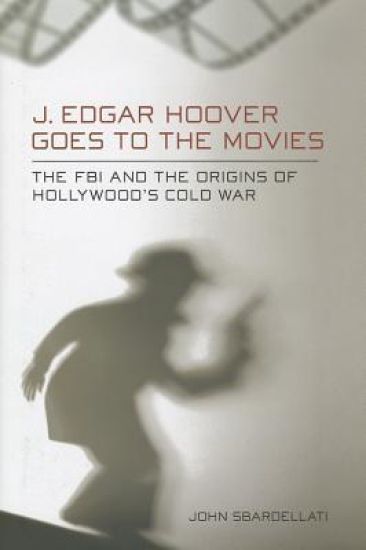
Between 1942 and 1958, J. Edgar Hoover's Federal Bureau of Investigation conducted a sweeping and sustained investigation of the motion picture industry to expose Hollywood's alleged subversion of "the American Way" through its depiction of social problems, class differences, and alternative political ideologies. FBI informants (their names still redacted today) reported to Hoover's G-men on screenplays and screenings of such films as Frank Capra's It's a Wonderful Life (1946), noting that "this picture deliberately maligned the upper class attempting to show that people who had money were mean and despicable characters." The FBI's anxiety over this film was not unique; it extended to a wide range of popular and critical successes, including The Grapes of Wrath (1940), The Best Years of Our Lives (1946), Crossfire (1947) and On the Waterfront (1954). In J. Edgar Hoover Goes to the Movies, John Sbardellati provides a new consideration of Hollywood's history and the post–World War II Red Scare. In addition to governmental intrusion into the creative process, he details the efforts of left-wing filmmakers to use the medium to bring social problems to light and the campaigns of their colleagues on the political right, through such organizations as the Motion Picture Alliance for the Preservation of American Ideals, to prevent dissemination of "un-American" ideas and beliefs. Sbardellati argues that the attack on Hollywood drew its motivation from a sincerely held fear that film content endangered national security by fostering a culture that would be at best apathetic to the Cold War struggle, or, at its worst, conducive to communism at home. Those who took part in Hollywood's Cold War struggle, whether on the left or right, shared one common trait: a belief that the movies could serve as engines for social change. This strongly held assumption explains why the stakes were so high and, ultimately, why Hollywood became one of the most important ideological battlegrounds of the Cold War.
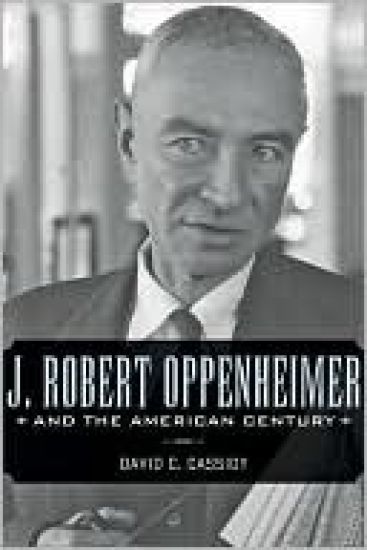
J. Robert Oppenheimer and the American Century
David C. Cassidy
Johns Hopkins University Press
2009
pokkari
David C. Cassidy's celebrated biography is more than the life story of J. Robert Oppenheimer, the brilliant physicist who served as scientific director for the Manhattan Project. It also tells the hidden story of the political and social forces that shaped the world in the 20th century, when the rise of American science contributed mightily to the country's emergence as a dominant power in world affairs. Cassidy explores that strong relationship in the captivating story of the rise and fall of one of America's greatest scientists. As head of the Manhattan Project, Oppenheimer led the country's successful effort to build the first atom bomb during World War II. In 1954 the government-with the United States embroiled in the Cold War-stripped him of his security clearance amid allegations that he consorted with communists. In rich detail Cassidy places this personal story of public disgrace within the larger narrative of the rise of science in America.

J.S. Mill's Encounter with India
University of Toronto Press
1999
sidottu
John Stuart Mill worked for the East India Company in London for thirty-five years (1823-58), drafting many hundreds of dispatches for the guidance of British administrators in India. Historians have long been aware of Mill's involvement in British Indian government. This comprehensive effort brings together different strands of scholarship on Mill to determine the character of his role based on analyses of his draft despatches and comparisons of their practical and theoretical concerns with the broad themes of Mill's major writings on political philosophy and economics. The essays in this collection explore specific aspects of Mill's approach to Indian issues, including religion, law, education, and security, and also place him within the broader currents of utilitarianism. The contributors present different perspectives on the ideology in Mill's pragmatic work for the Company and his personal philosophy.

J. Oswald Sanders: Three Spiritual Classics in One Volume
J. Oswald Sanders
Moody Publishers
2024
sidottu
Three classics for every Christian's library. Over 1 million copies sold The influence of J. Oswald Sanders is known far and wide across the globe. In this new edition, readers engage with Sanders most essential and influential work: Spiritual Leadership, Spiritual Maturity, andSpiritual Discipleship. Spiritual Leadership is a proven classic, presenting the key principles of leadership in both the temporal and spiritual realms. Sanders illustrates his points with examples from Scripture and biographies of eminent men of God, such as Moses, Nehemiah, the apostle Paul, David Livingstone, Charles Spurgeon, and others. Featured topics include: the cost of leadership, the responsibility of leadership, the qualities and criteria of leadership, the art of reproducing leaders, and the one indispensable requirement of leadership.Sanders holds that even natural leadership qualities are God-given, and their true effectiveness can only be reached when they are used to the glory of God. Let this classic be your guide for leadership and watch how God works through you to do great things for His glory.Spiritual Maturity: Spiritual maturity is not a level of growth Christians achieve, but the passion to press on in Christ. In these chapters, J. Oswald Sanders explores the primary source of continual growth. In three parts, structured around the persons of the Trinity, Sanders explores matters like: how we should view God, why our weakness is God's strength, what it means that Christ prays for us, how to live like an heir of the King, and the role of the Spirit in a Christian's life. Spiritual Maturity provides clear direction for those desiring to grow strong spiritually.Spiritual Discipleship: True disciples pursue their Master. They know that God is watching over their faith, but they also take Scripture's command seriously: "work out your own salvation with fear and trembling, for it is God who works in you." They take pains, by His power, to look more and more like Jesus.This book will help you to be such a disciple. It examines Jesus' teaching on what it means to follow Him, helping you become the kind of Christian Jesus wants you to be--not one devised by man or even other Christians. You'll learn conditions for discipleship, the tests that disciples endure, how disciples pray and grow, the posture and practices of a disciple, and more.These books include questions for reflection and are ideal for both individual and group study.

J. H. Bavinck Reader
James D. Bratt; John Bolt; Paul J. Visser
William B Eerdmans Publishing Co
2013
nidottu
Crucial themes and issues explored by a premier missiologist Johan Herman Bavinck (1895-1964) was a prominent twentieth-century Dutch Calvinist missiologist who wrestled with the tension between religious absolutism and relativism, as many Christians do in today's pluralistic context. The J. H. Bavinck Reader gathers together a choice selection of Bavinck's significant writings that are essential for understanding his theology of missions, his approach to world religions, and his religious psychology. His treatment of religious consciousness and Christian faith expands on the brief treatment of it in his own work The Church Between Temple and Mosque. The concluding chapters show how Bavinck's theoretical reflection on religious consciousness was rooted in his close observation during his years as a missionary in Indonesia. Offering a constructive way forward, Bavinck affirms both the particularity of salvation in Christ and the universality of the Christian hope. A substantial introduction enhances the book with the most thorough biographical sketch of Bavinck available.

J L Moreno, the founder of sociodrama and sociometry, is best known for the impact he had on group psychotherapy, out of which he created psychodrama. This is now one of the most important and popular of the `creative' therapies, practised throughout the world. The concept of `role' was central to Moreno's theory and throughout his life he played many himself. A Paul Hare and June Rabson Hare describe a man who was, among other things, a psychiatrist, dramatist, theologian, inventor and educator, who made significant contributions in all of these areas in addition to being a major influence on social science and group psychotherapy. Moreno's theoretical and practical contributions to therapy also cover a broad spectrum. This fascinating book draws together and clarifies the most important of the concepts and applications of Moreno's work, presenting and successfully rebutting the criticism some of his theories have attracted.
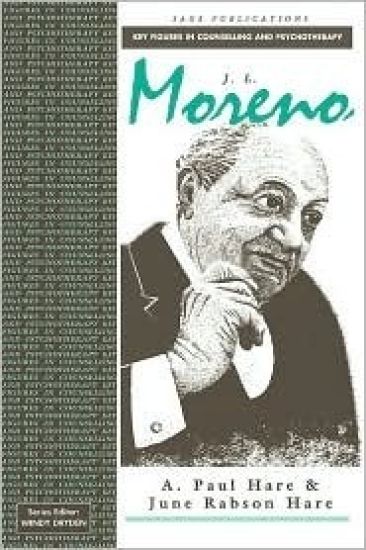
J L Moreno, the founder of sociodrama and sociometry, is best known for the impact he had on group psychotherapy, out of which he created psychodrama. This is now one of the most important and popular of the `creative' therapies, practised throughout the world. The concept of `role' was central to Moreno's theory and throughout his life he played many himself. A Paul Hare and June Rabson Hare describe a man who was, among other things, a psychiatrist, dramatist, theologian, inventor and educator, who made significant contributions in all of these areas in addition to being a major influence on social science and group psychotherapy. Moreno's theoretical and practical contributions to therapy also cover a broad spectrum. This fascinating book draws together and clarifies the most important of the concepts and applications of Moreno's work, presenting and successfully rebutting the criticism some of his theories have attracted.

Black Holes / J. Hillis Miller; or, Boustrophedonic Reading
J. Hillis Miller; Manuel Asensi
Stanford University Press
1999
sidottu
This innovative work sets two texts by two different authors on facing pages, designed so that they read in tandem—Miller's text on the right, Asensi's on the left. It makes a long trajectory, moving back and forth as an ox plows a field, boustrophedonically, to borrow the figure in Manuel Asensi's title. Black Holes, by J. Hillis Miller, analyzes changes in the contemporary research university in the West. The mission of the research university has been profoundly influenced by the end of the Cold War and by globalization, advances in communication technologies, and shifts in funding from the federal government to transnational corporations. Miller aims to discover what the function of the humanities might be in this new kind of university. Echoing Bill Readings, he calls for a university of dissensus that would be made up of adjacent or overlapping communities, each fundamentally other to the others, each inhabited by its own otherness. Each of those opacities is a kind of black hole in the luminosity or enlightenment to which the university has traditionally been dedicated. Miller concludes with sections on Trollope and Proust that attempt to show how otherness is exemplified in the work of two fundamentally dissimilar authors. Manuel Asensi's J. Hillis Miller: or, Boustrophedonic Reading is the first comprehensive interpretation of Miller's work, one that foregrounds its difference not only from the work of his associates—such as Paul de Man, Jacques Derrida, and Georges Poulet—but from European literary methodologies such as semiotics, Slavic formalism, Glosematics, narratology, structuralism, and reception theory. Bypassing or challenging conventional accounts of Miller's work, Asensi brings a fresh view to his readings of Miller's criticism. He finds there a complex and partially contradictory "matrix" that persists, throughout the apparent methodological changes, from Miller's earliest work to the most recent. According to Asensi, that matrix organizes itself around a fascination with the strangeness or otherness of literary works.

The next in the Kinsey Millhone Alphabet mystery series from bestselling author Sue Grafton. "J" is for Jaffe: Wendell Jaffe, dead these past five years. Or so it seemed until his former insurance agent spotted him in the bar of a dusty little resort halfway between Cabo San Lucas and La Paz. "In truth, the facts about Wendell Jaffe had nothing to do with my family history, but murder is seldom tidy and no one ever said revelations operate in a straight line. It was my investigation into the dead man's past that triggered the inquiry into my own, and in the end the two stories became difficult to separate." Five years ago, when Jaffe's thirty-five-foot Fuji ketch was found drifting off the Baja coast, it seemed a sure thing he'd gone overboard. The note he left behind admitted he was flat broke, his business bankrupt, his real estate gambit nothing but a huge Ponzi scheme about to collapse, with criminal indictment certain to follow. When the authorities soon after descended on his banks and his books, there was nothing left: Jaffe had stripped the lot. "Given my insatiable curiosity and my natural inclination to poke my nose in where it doesn't belong, it was odd to realize how little attention I'd paid to my own past. I'd simply accepted what I was told, constructing my personal mythology on the flimsiest of facts." But Jaffe wasn't quite without assets. There was the $500,000 life insurance policy made out to his wife and underwritten by California Fidelity. With no corpse to prove death, however, the insurance company was in no hurry to pay the claim. Dana Jaffe had to wait out the statutory five years until her missing husband could be declared legally dead. Just two months before Wendell Jaffe was sighted in that dusty resort bar, California Fidelity finally paid in full. Now they wanted the truth. And they were willing to hire Kinsey Millhone to dig it up. As Kinsey pushes deeper into the mystery surrounding Wendell Jaffe's pseudocide, she explores her own past, discovering that in family matters as in crime, sometimes it's better to reserve judgment. "J" is for judgment: the kind we're quick to make and often quicker to regret. "J" Is for Judgment: Kinsey Millhone's tenth excursion into the dark places of the heart where duplicity is the governing rule and murder the too-frequent result. "A" Is for Alibi"B" Is for Burglar"C" Is for Corpse"D" Is for Deadbeat"E" Is for Evidence"F" Is for Fugitive"G" Is for Gumshoe"H" Is for Homicide"I" Is for Innocent"J" Is for Judgment"K" Is for Killer"L" is for Lawless"M" Is for Malice"N" Is for Noose"O" Is for Outlaw"P" Is for Peril "Q" Is for Quarry"R" Is for Ricochet "S" Is for Silence "T" Is for Trespass"U" Is for Undertow "V" Is for Vengeance "W" Is for Wasted "X"