Kirjojen hintavertailu. Mukana 11 529 417 kirjaa ja 12 kauppaa.

Kirjahaku

Etsi kirjoja tekijän nimen, kirjan nimen tai ISBN:n perusteella.

1000 tulosta hakusanalla James M. Hutchisson

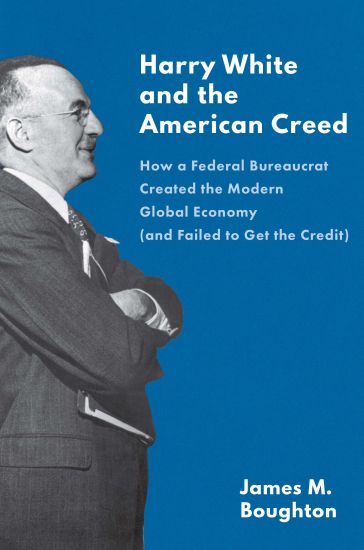
Harry White and the American Creed

Harry White and the American Creed

James M. Boughton

Yale University Press
2022
sidottu
The life of a major figure in twentieth-century economic history whose impact has long been clouded by dubious allegations “Harry Dexter White has always been the mystery man at the center of America’s international economic policy in the 1930s and 1940s. James Boughton helps demystify him in this rich, enlightening, and most interesting volume.”—Douglas Irwin, author of Clashing over Commerce: A History of U.S. Trade Policy Although Harry Dexter White (1892–1948) was arguably the most important U.S. government economist of the twentieth century, he is remembered more for having been accused of being a Soviet agent. During the Second World War, he became chief advisor on international financial policy to Secretary of the Treasury Henry Morgenthau, a role that would take him to Bretton Woods, where he would make a lasting impact on the architecture of postwar international finance. However, charges of espionage, followed by his dramatic testimony before the House Un-American Activities Committee and death from a heart attack a few days later, obscured his importance in setting the terms for the modern global economy. In this book, James Boughton rehabilitates White, delving into his life and work and returning him to a central role as the architect of the world’s financial system.
The Ever-Changing Past

The Ever-Changing Past

James M. Banner

YALE UNIVERSITY PRESS
2025
pokkari
An experienced, multi-faceted historian shows how revisionist history is at the heart of creating historical knowledge “A rallying cry in favor of historians who, revisiting past subjects, change their minds. . . . Rewarding reading.”—Kirkus Reviews “A wise, erudite, and, perhaps most important, a clearly written examination of the ways historians go about their craft of interpreting and reinterpreting the past.”—Gordon S. Wood, Brown University History is not, and has never been, inert, certain, merely factual, and beyond reinterpretation. Taking readers from Thucydides to the origin of the French Revolution to the Civil War and beyond, James M. Banner, Jr., explores what historians do and why they do it. Banner shows why historical knowledge is unlikely ever to be unchanging, why history as a branch of knowledge is always a search for meaning and a constant source of argument, and why history is so essential to individuals’ awareness of their location in the world and to every group and nation’s sense of identity and destiny. He explains why all historians are revisionists while they seek to more fully understand the past, and how they always bring their distinct minds, dispositions, perspectives, and purposes to bear on the subjects they study.
Matrix Theory: A Second Course

Matrix Theory: A Second Course

James M. Ortega

Kluwer Academic/Plenum Publishers
1987
nidottu
Linear algebra and matrix theory are essentially synonymous terms for an area of mathematics that has become one of the most useful and pervasive tools in a wide range of disciplines. It is also a subject of great mathematical beauty. In consequence of both of these facts, linear algebra has increasingly been brought into lower levels of the curriculum, either in conjunction with the calculus or separate from it but at the same level. A large and still growing number of textbooks has been written to satisfy this need, aimed at students at the junior, sophomore, or even freshman levels. Thus, most students now obtaining a bachelor's degree in the sciences or engineering have had some exposure to linear algebra. But rarely, even when solid courses are taken at the junior or senior levels, do these students have an adequate working knowledge of the subject to be useful in graduate work or in research and development activities in government and industry. In particular, most elementary courses stop at the point of canonical forms, so that while the student may have "seen" the Jordan and other canonical forms, there is usually little appreciation of their usefulness. And there is almost never time in the elementary courses to deal with more specialized topics like nonnegative matrices, inertia theorems, and so on. In consequence, many graduate courses in mathematics, applied mathe­ matics, or applications develop certain parts of matrix theory as needed.
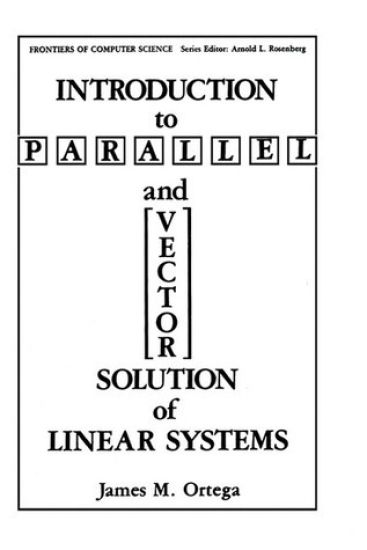
Introduction to Parallel and Vector Solution of Linear Systems

Introduction to Parallel and Vector Solution of Linear Systems

James M. Ortega

Kluwer Academic/Plenum Publishers
1988
sidottu
Although the origins of parallel computing go back to the last century, it was only in the 1970s that parallel and vector computers became available to the scientific community. The first of these machines-the 64 processor llliac IV and the vector computers built by Texas Instruments, Control Data Corporation, and then CRA Y Research Corporation-had a somewhat limited impact. They were few in number and available mostly to workers in a few government laboratories. By now, however, the trickle has become a flood. There are over 200 large-scale vector computers now installed, not only in government laboratories but also in universities and in an increasing diversity of industries. Moreover, the National Science Foundation's Super­ computing Centers have made large vector computers widely available to the academic community. In addition, smaller, very cost-effective vector computers are being manufactured by a number of companies. Parallelism in computers has also progressed rapidly. The largest super­ computers now consist of several vector processors working in parallel. Although the number of processors in such machines is still relatively small (up to 8), it is expected that an increasing number of processors will be added in the near future (to a total of 16 or 32). Moreover, there are a myriad of research projects to build machines with hundreds, thousands, or even more processors. Indeed, several companies are now selling parallel machines, some with as many as hundreds, or even tens of thousands, of processors.
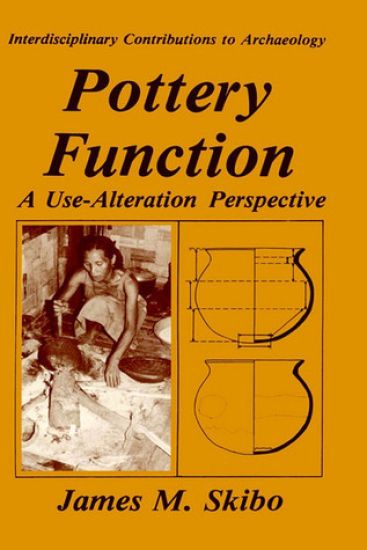
Pottery Function

Pottery Function

James M. Skibo

Kluwer Academic/Plenum Publishers
1992
sidottu
There are many ways to study pots or the sherds of pots. In this book James Skibo has focused on the surface wear and tear found on the resin-coated, low-fired cooking pots of the Kalinga people in north­ western Luzon. This detailed analysis is part of a much larger evalua­ tion of Kalinga pottery production and use by the staff members and students at the University of Arizona that has been underway since 1972. Here he has analyzed the variants among the possible residual clues on pots that have endured the stresses of having been used for cooking meat and vegetables or rice; standing on supports in the hearth fire; wall scrapings while distributing the food; being transported to the water source for thorough washing and scrubbing; followed by storage until needed again-a repetitive pattern of use. This well-controlled study made use of new pots provided for cooking purposes to one Kalinga household, as well as those pots carefully observed in other households-- 189 pots in all. Such an ethnoarchaeological approach is not unlike follOwing the course of the firing of a kiln-load of pots in other cultures, and then purchasing the entire product of this firing for analysis. Other important aspects of this Kalinga study are the chemical analysis of extracts from the ware to deduce the nature of the food cooked in them, and the experimental study of soot deposited on cooking vessels when they are in use.
Urban Social Structure

Urban Social Structure

James M. Beshers

Praeger Publishers Inc
1981
sidottu
Carefully limiting his analysis to the correlation of residential proximity and marriage, social cast/class structures, and occupational status, Dr. Beshers clearly demonstrates how census tract data, official registrations of residence on marriage licenses, and other information can be used to reinforce and corroborate sociological hypotheses. Ultimately, he develops a theoretical model, empirically oriented, of the relationship between spatial distribution and social distance in the average American city.
Daily Life on the Old Colonial Frontier

Daily Life on the Old Colonial Frontier

James M. Volo; Dorothy Volo

Greenwood Press
2002
sidottu
The frontier region was the interface between the American wilderness and European-style civilization. To the Europeans, the frontier teemed with undomesticated and unfamiliar beasts. Even its indigenous peoples seemed perplexing, uninhibited, and violent. The frontier wasn't just a place, but a process, too. It was a hazy line between colliding cultures, and a volatile region in which those cultures interacted.This volume explores the frontier, explorers, traders, missionaries, colonists, and native peoples that came into contact. Everyday life is presented with all of its difficulties-the trading, trapping, and farming, not to mention the chronic threat of violence. Examining the period from the perspective of both Europeans and Native Americans, this book features over 40 illustrations, photographs, and maps, making it the perfect source for anyone interested in how people lived on the old colonial frontier.
The History of Portugal

The History of Portugal

James M. Anderson

Greenwood Press
2000
sidottu
This informative, concise, and engagingly written work provides the most up-to-date history of Portugal, current through 1999, and gives a full picture of the political, social, cultural, and economic influences that shaped the history of Portugal. Covering the period from Portugal's early conception as a nation through its long history, with emphasis on the dramatic period of the last several decades, this volume culminates with the demise of the Salazar dictatorship and the independence of its colonies. Complete with a timeline for easy reference to events, brief biographies of important people, lists of monarchs and heads of state, and a bibliographic essay, it is the ideal companion for the student or interested reader.In nine chapters, Anderson discusses the geography of Portugal, its prehistoric antecedents, its formation as a nation, and the events that once made it a world leader in exploration, discovery, and imperial power. How and why the country was drawn into the orbit of its large neighbor, Spain, lost much of its empire, and yet managed to regain its independence are examined, along with the trials and tribulations encountered on its journey from monarchy to modern republic. The discussion presents the factors that kept Portugal one of the poorest nations in Europe for most of its existence and the reasons that it is now, leading into the 21st century, closing the economic gap with wealthier nations.
Using Internet Primary Sources to Teach Critical Thinking Skills in Government, Economics, and Contemporary World Issues
Teachers of political science, social studies, and economics, as well as school library media specialists, will find this resource invaluable for incorporating the Internet into their classroom lessons. Over 150 primary source Web sites are referenced and paired with questions and activities designed to encourage critical thinking skills. Completing the activities for the lessons in this book will allow students to evaluate the source of information, the content presented, and it usefulness in the context of their assignments.Along with each Web site, a summary of the site's contents identifies important primary source documents such as constitutions, treaties, speeches, court cases, statistics, and other official documents. The questions and activites invite the students to log on to the Web site, read the information presented, interact with the data, and analyze it critically to answer such questions as: Who created this document? Is the source reliable? How is the information useful and how does it relate to present-day circumstances? If I were in this situation, would I have responded the same way as the person in charge? Strengthening these critical thinking skills will help prepare students for both college and career in the 21st century.
Daily Life During the Spanish Inquisition

Daily Life During the Spanish Inquisition

James M. Anderson

Greenwood Press
2002
sidottu
The life of persecuted minorities, as well as that of the wealthy and the ordinary people of Spain during the Spanish Inquisition, comes alive in this illuminating account. For three and a half centuries, the Inquisition permeated every aspect of daily life in early modern Spain. This history depicts in graphic terms the dangers faced by Jews and Muslims and their suffering at the hands of the Inquisitors, as well as the struggle for survival of the lower classes and the ostentatious display of wealth of the high nobility. Set against the political, religious, social, economic, and cultural events of the time, it presents a balanced account, rich in detail, of the daily activities of the Spanish people during this period. Each chapter offers a succinct perspective of life during early modern Spain, covering the political and social setting, the Church, the Inquisition, Jews and Conversos, Muslims and Moriscos, the court, urban and rural life, family life, clothes and fashions, food, arts and entertainment, military life, education, and health and medicine. All these aspects of life are discussed in the context of a society experiencing profound internal conflicts arising from matters of religion, class, gender, and ethnic prejudice. Interwoven in the text is a discussion of relevant political and economic events that helped to shape the times, as well as comments from both contemporary Spanish writers and foreign visitors who witnessed firsthand the conditions and attitudes of the people. More than 40 illustrations, a timeline of important events, a list of Spanish rulers during the centuries of the Inquisition, a glossary, and a bibliography add value to the narrative.
The Antebellum Period

The Antebellum Period

James M. Volo; Dorothy Volo

Greenwood Press
2004
sidottu
The Antebellum Era was a complex time in American culture. Young ladies had suitors call upon them, while men often settled quarrels by dueling, and mill girls worked 16-hour days to help their families make ends meet. Yet at the same time, a new America was emerging. The rapid growth of cities inspired Frederick Law Olmstead to lead the movement for public parks. Stephen Foster helped forge a catalog of American popular music; writers such as Washington Irving and Ralph Waldo Emerson raised the level of American literature; artists such as Thomas Cole and Thomas Doughty defined a new style of painting called the Hudson River School. All the while, schisms between northern and southern culture threatened to divide the nation. This volume in Greenwood's American Popular Culture Through History recounts the ways in which things old and new intersected in the decades before the Civil War.James and Dorothy Volo are one of the more prolific author teams in reference publishing today, and with this volume they make important contributions to Greenwood's successful series on America's other history.
The Army in Transformation, 1790-1860

The Army in Transformation, 1790-1860

James M. McCaffrey

Greenwood Press
2006
sidottu
What was it like to be a heavily burdened U.S. soldier on the march in the first half of the 19th century? How did soldiers survive in leaky, flea-ridden huts in Kansas? How many men were convinced to enlist based on the promise of easy, pleasing work? From the early Indian wars in the Ohio Territory in the 1790s, to the Mexican wars in Texas in the 1850s, American Soldiers' Lives: The Army in Transformation, 1790-1860 by James M. McCaffrey describes the soldiers lives, often by letting them speak for themselves through their letters, diaries, and journals. This book describes recruitment, training, the day-to-day routine and living conditions; and some of the most significant battles and campaigns of the period. It also includes a timeline and an extensive, topically arranged bibliography of more than 500 sources.James M. McCaffrey provides a social history of soldiers that goes beyond the publications on warfare that deal with strategy and tactics and the big picture. Understanding what motivated soldiers to do the things they did-whether it was enlisting in the first place, or getting drunk, or deserting from the army, or any number of other activities-helps to complete the study of how the army was able to succeed as it did and, perhaps, why it failed to accomplish even more. High school and college students, researchers, and those interested in military history will find these features and information included: -A timeline of military-related events from 1790 to 1861. -The early 19th conflicts facing the young United States' security, such as Indian wars and forced resettlements, the War of 1812, the wars against Mexico in Texas, and the Mormon battalions that fought both for and ran afoul against the U.S. government. -Recruitment and training. -The day-to-day routine of most soldiers, in and out of combat. -The experience of being in battle. -Food and clothing. -Medical care. -Military justice, including court martial offenses and executions -An extensive bibliography with more than 500 sources, ranging from historical surveys and illustrated histories to articles, diaries, and primary documents from the U.S. government. -A comprehensive index.
Family Life in 17th- and 18th-Century America

Family Life in 17th- and 18th-Century America

James M. Volo; Dorothy Volo

Greenwood Press
2005
sidottu
Colonial America comes alive in this depiction of the daily lives of families—mothers, fathers, children, and grandparents. The Volo's examine the role of the family in society and typical family life in 17th- and 18th-century America. Through narrative chapters, aspects of family life are discussed in depth such as maintaining the household, work, entertainment, death and dying, ceremonies and holidays, customs and rites of passage, parenting, education, and widowhood. Readers will gain an in-depth understanding of the world in which these families lived and how that world affected their lives. Also included are sources for further information and a timeline of historic events. Volumes in the Family Life through History series focus on the day-to-day lives and roles of families throughout history. The roles of all family members are defined and information on daily family life, the role of the family in society, and the ever-changing definition of family are discussed. Discussion of the nuclear family, single parent homes, foster and adoptive families, stepfamilies, and gay and lesbian families are included where appropriate. Topics such as meal planning, homes, entertainment and celebrations are discussed along with larger social issues that originate in the home, such as domestic violence, child abuse and neglect, and divorce. Ideal for students and general readers alike, books in this series bring the history of everyday people to life.
Daily Life during the French Revolution

Daily Life during the French Revolution

James M. Anderson

Greenwood Press
2007
sidottu
The French Revolution sought to change daily life itself. This book looks at the thirteen years between 1789-1802 that experienced the Terror, banning of the aristocracy, and the rearrangement of the calendar. No part of French life was left untouched during this incredible period of turmoil and warfare, from women's role in the family to men's role in the state. Art and theater were invigorated and harnessed for political purposes. Subtleties in one's dress could mean the difference between life and death. The first modern mass army was created. Chapters include the physical make-up of France; the social and political background of the revolution; the First Republic; religion, church and state; urban life; rural life; family life; the fringe society; clothes and fashion; food and drink; the role of women; military life; education; health and medicine; and writers, artists, musicians and entertainment. Anderson breathes life into the day-to-day lives of those living during the French Revolution. Greenwood's Daily Life through History series looks at the everyday lives of common people. This book will illuminate the lives of those living during the French Revolution and provide a basis for further research. Black and white photographs, maps, and charts are interspersed throughout the text to assist readers. Reference features include a timeline of historic events, glossaries of terms and names, an annotated bibliography of print and electronic resources suitable for high school and college student research, and an index.
Daily Life in Immigrant America, 1820-1870

Daily Life in Immigrant America, 1820-1870

James M. Bergquist

Greenwood Press
2007
sidottu
Early nineteenth century America saw the first wave of post-Independence immigration. Germans, Irish, Englishmen, Scandinavians, and even Chinese on the west coast began to arrive in significant numbers, profoundly impacting national developments like westward expansion, urban growth, industrialization, city and national politics, and the Civil War. This volume explores the early immigrants' experience, detailing where they came from, what their journey to America was like, where they entered their new nation, and where they eventually settled. Life in immigrant communities is examined, particularly those areas of life unsettled by the clash of cultures and adjustment to a new society. Immigrant contributions to American society are also highlighted, as are the battles fought to gain wider acceptance by mainstream culture.Engaging narrative chapters explore the experience from the viewpoint of the individua, the catalysts for leaving one's homeland, new immigrant settlements and the differences among them, social, religious, and familial structures within the immigrant communities, and the effects of the Civil War and the beginning of the new immigrant wave of the 1870s.Images and a selected bibliography supplement this thorough reference source, making it ideal for students of American history and culture.
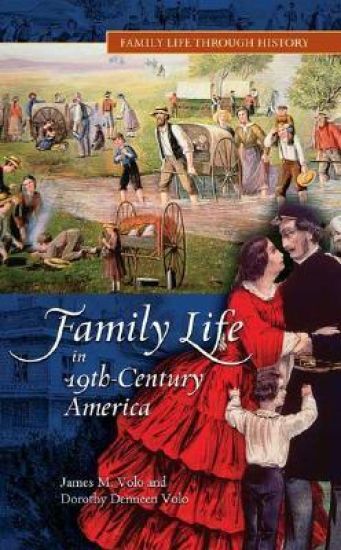
Family Life in 19th-Century America

Family Life in 19th-Century America

James M. Volo; Dorothy Volo

Greenwood Press
2007
sidottu
Nineteenth century families had to deal with enormous changes in almost all of life's categories. The first generation of nineteenth century Americans was generally anxious to remove the Anglo from their Anglo-Americanism. The generation that grew up in Jacksonian America matured during a period of nationalism, egalitarianism, and widespread reformism. Finally, the generation of the pre-war decades was innately diverse in terms of their ethnic backgrounds, employment, social class, education, language, customs, and religion. Americans were acutely aware of the need to create a stable and cohesive society firmly founded on the family and traditional family values. Yet the people of America were among the most mobile and diverse on earth. Geographically, socially, and economically, Americans (and those immigrants who wished to be Americans) were dedicated to change, movement, and progress. This dichotomy between tradition and change may have been the most durable and common of American traits, and it was a difficult quality to circumvent when trying to form a unified national persona. Volumes in the Family Life in America series focus on the day-to-day lives and roles of families throughout history. The roles of all family members are defined and information on daily family life, the role of the family in society, and the ever-changing definition of family are discussed. Discussion of the nuclear family, single parent homes, foster and adoptive families, stepfamilies, and gay and lesbian families are included where appropriate. Topics such as meal planning, homes, entertainment and celebrations, are discussed along with larger social issues that originate in the home like domestic violence, child abuse and neglect, and divorce. Ideal for students and general readers alike, books in this series bring the history of everyday people to life.
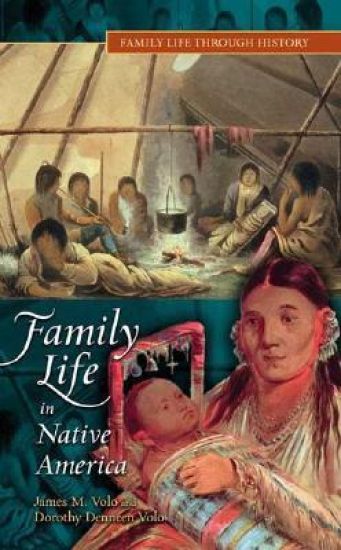
Family Life in Native America

Family Life in Native America

James M. Volo; Dorothy Volo

Greenwood Press
2007
sidottu
This volume provides insight into the family life of Native Americans of the northeast quadrant of the North American continent and those living in the adjacent coastal and piedmont regions. These Native Americans were among the most familiar to Euro-colonials for more than two centuries. From the tribes of the northeast woodlands came “great hunters, fishermen, farmers and fighters, as well as the most powerful and sophisticated Indian nation north of Mexico [the Iroquois Confederacy].
Daily Life during the Reformation

Daily Life during the Reformation

James M. Anderson

Greenwood Press
2010
sidottu
This broad exploration captures the lives of ordinary people during the turbulent period that transformed early Modern Europe. Organized thematically, Daily Life during the Reformation covers the hectic and tumultuous years between 1517 and 1648, allowing readers to discover what it was like for ordinary people during this critical period and to compare events and living conditions in early Modern Europe with those of today. With the help of eyewitness accounts, the book focuses on the lives of the people, the conditions in which they lived and died, their roles in the unfolding events of the Reformation, and the Reformation's effects on them. Leading protagonists are described, as are their beliefs and the impact of those beliefs on the population in general and in particular cases. The book also explores, for example, the medical practice of the time, which, while not considered black magic, was close to it.