Kirjojen hintavertailu. Mukana 11 717 486 kirjaa ja 12 kauppaa.

Kirjahaku

Etsi kirjoja tekijän nimen, kirjan nimen tai ISBN:n perusteella.

1000 tulosta hakusanalla Jan Ebert

Jan Vedder's Wife (1885). By: Amelia E. Barr: Novel (Original Version). Amelia Edith Huddleston Barr (March 29, 1831 - March 10, 1919) was a British
Amelia Edith Huddleston Barr (March 29, 1831 - March 10, 1919) was a British novelist and teacher. Her career is an illustration of the capacity of woman under stress of sorrow to conquer the world and be successful. Many of the plots of her stories are laid in Scotland and England. The scenes are from her girlhood recollection of surroundings. Her works include, Jan Vedder's Wife, The Border Shepherdess, Feet of Clay, Friend Olivia, The Bow of Orange Ribbon, Remember the Alamo, She Loved a Sailor, A Daughter of Fife, The Squire of Sanddal Side, Paul and Christina, Master of His Fate, The, Household of McNeil, The Last of the Macallisters, Between Two Loves, A Sister to Esau, A Rose of a Hundred Leaves, A Singer from the Sea, The Beads of Tasmer, The Hallam Succession, The Lone House, Christopher and Other Stories, The Lost Silver of Briffault. Early years and education: She was born on March 29, 1831 (1832 is also reported), in Ulverston, Lancashire, England as Amelia Edith Huddleston. Her father was Reverend William Huddleston, a Wesleyan minister.She was brought up in an atmosphere of culture and refinement, and early turned to books for recreation and instruction. When only nine years of age she became her father's companion and reader. Thus it was she read books far beyond her comprehension, but they tended to develop her mental qualities. A brief return to her father's financial stability allowed Barr to return to the Normal School in Glasgow where she learned the Stowe teaching method. Its principles are based on morality and lifelong learning, rather than learning by rote...............
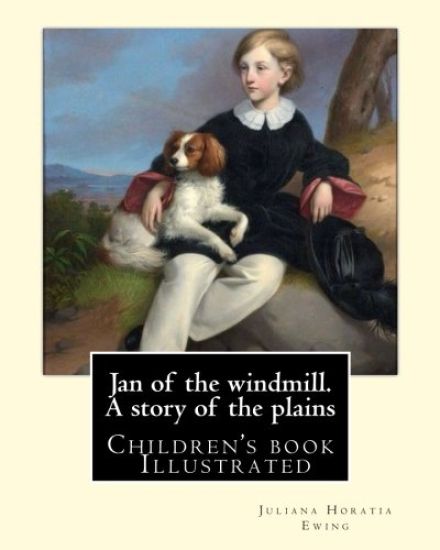
Jan of the windmill. A story of the plains. By: Juliana Horatia Ewing: (children's book ) Illustrated
Juliana Horatia Ewing (n e Gatty) (3 August 1841 - 13 May 1885) was an English writer of children's stories. She displayed sympathetic insight into children's lives, admiration for things military, and strong religious faith. Youth and marriage: Known as Julie, she was the second of ten children of the Reverend Alfred Gatty, vicar of Ecclesfield in Yorkshire, and Margaret Gatty, who was herself a children's author. The children were educated mainly by her mother, but Julie was often the driving force behind their various activities: drama, botany etc. Later she was responsible for setting up a village library in Ecclesfield and helped out in the parish with her three sisters. Early stories of hers appeared in Charlotte Yonge's magazine Monthly Packet. On 1 June 1867, she married Major Alexander Ewing (1830-1895) of the army pay department. He was also a keen churchgoer, who shared his wife's interest in literature. Within a week of their marriage, the Ewings left England for Fredericton, New Brunswick, Canada, where he had received a new posting. They remained there for two years, before returning to England in 1869 and spending eight years in the army town of Aldershot. Although her husband was sent overseas again, to Malta in 1879 and Sri Lanka in 1881, Ewing's poor health would not allow her to accompany him. The Ewings moved to Trull, Somerset, on his return in 1883, and in 1885, to Bath, in the hopes that the change of air would do her good. However, her health continued to deteriorate, and after two operations, she died there on 13 May 1885.She was given a military funeral at Trull three days later. Her sister Horatia Katharine Frances Gatty (1846-1945) published a memorial of Julie's life and works which includes a publication history of her stories. A later selection includes some of Julie's letters and drawings about Canada. A biography by Gillian Avery appeared in 1961. "Child-novels" Roger Lancelyn Green calls her works the "first outstanding child-novels" in English literature. Her works are notable for their sympathetic insight into child life, their admiration for things military, and their reflection of her strong Anglican faith. They include Mrs. Overtheway's Remembrances (1869), A Flat Iron for a Farthing (1872), Six to Sixteen (1875), Jackanapes (1884), Daddy Darwin's Dovecot (1884), and The Story of a Short Life (1885). The latter story inspired Grace Kimmins to start the Guild of the Poor Brave Things to help children with disabilities in London. Grace (and later Ada Vachell took their motto Laetus sorte mea (Happy in my lot) from Ewing's book. Rudyard Kipling claimed to know her novel Jan of the Windmill (1872-3, 1876) almost by heart. He wrote in his autobiography, Something of Myself, "One book] I have still, a bound copy of Aunt Judy's Magazine of the early 'seventies, in which appeared Mrs. Ewing's Six to Sixteen. I owe more in circuitous ways to that tale than I can tell. I knew it, as I know it still, almost by heart. Here was a history of real people and real things."Her story The Brownies (1865) gave the Baden-Powells the idea and the name for the junior level of the Girl Guides. Another admirer of her work was E. Nesbit. A talented artist herself, her works were frequently illustrated by such notables as George Cruikshank and Randolph Caldecott. She was also the editor of a number of magazines which published short stories for children, such as the Nursery Magazines from 1856 onwards, the Monthly Packet and the monthly Aunt Judy's Magazine from 1866..................
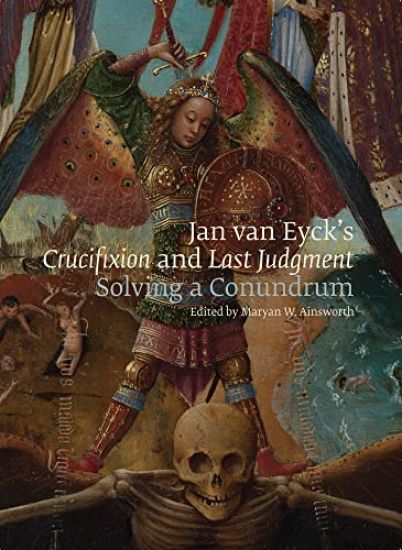
Jan Van Eyck's Crucifixion and Last Judgment
Among the most intriguing and confounding works of Jan van Eyck's oeuvre are the Crucifixion and Last Judgment in New York's Metropolitan Museum of Art. Although acquired in 1933 as a diptych, questions have remained about their initial configuration, and how these paintings functioned. The recent technical investigations of the paintings and their original frames added further complexities to these inquiries when a fragmentary text in Middle Dutch was discovered through X-radiography on the frames surrounding the two paintings. The many facets of the ensuing investigation necessitated an interdisciplinary collaboration of researchers involving an art historian, paintings conservator, and museum scientist - namely, Maryan Ainsworth, Sophie Scully, and Silvia Centeno. Moreover, the new discovery of the formerly hidden text called for the enrichment of the interdisciplinary team by a paleographer and a classical philologist, Marc Smith and Christina Meckelnborg. This book relates the unfolding story of the investigations from in-depth technical research, facilitating the conservation treatment of the frames, to the art historical study that connected these findings to the religious, political, and social contexts of the times. Through considerable interdisciplinary detective work, it was possible to reach a new understanding about the original form and function of the Crucifixion and Last Judgment and their pivotal role concerning devotions to a cherished relic, the Miraculous Bleeding Host, housed in the then collegiate church of Saint Michael and Saint Gudula in Brussels. The implications of these discoveries also shed new light on the relationship between The Met Crucifixion and Van Eyck's metalpoint drawing of the same theme in the Museum Boijmans Van Beuningen, Rotterdam. Finally, the study of the Crucifixion and the Last Judgment draws attention to commissions Van Eyck received that are somewhat outside of the canon of works usually associated with this esteemed artist.
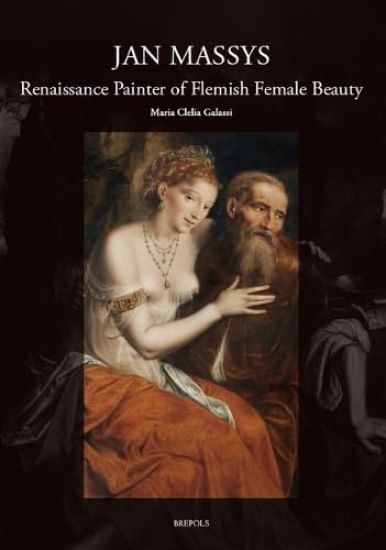
Jan Massys (C. 1510-1573)

Jan Massys (C. 1510-1573)

Maria Clelia Galassi

BREPOLS N.V.
2024
sidottu
The painter Jan Massys (c. 1510-1573) trained under his father Quinten, succeeding him after his death (1530) at the head of Antwerp's most famous workshop. However, his career, destined for certain success, was abruptly cut short in 1544. Condemned for joining the Loysts sect, he had to flee Antwerp, finding refuge perhaps initially in France and at one point in Italy. Only in 1555 was he able to return to his homeland, regaining his artistic leadership within a few years. His oeuvre consists exclusively of works for private use and is characterized, in particular, by the depiction of elegant and seductive nude or half-naked female figures, protagonists of biblical or mythological subjects. The identification of the patron of the 1561 Venus with the view of Genoa (Stockholm, Nationalmuseum) in the person of the noble Genoese banker Ambrogio di Negro, offered the possibility of reconstructing the social context of the artist's clientele and his relations with those intellectuals - both Genoese and Flemish-who gave life to the lively humanist academies of Antwerp. The figure emerges of a cultivated and particularly refined painter, who shared with his patrons the ideals of neo-Petrarchan poetry and executed paintings of great preciousness, characterized by a meticulous and skillful painting technique.
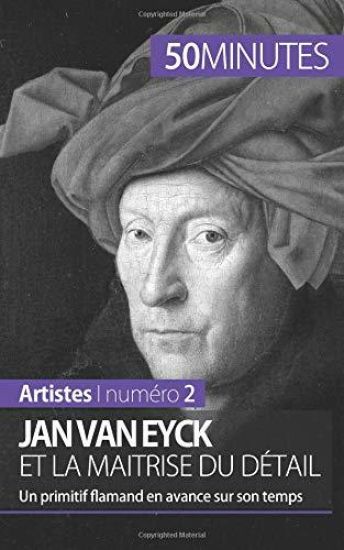
Jan Van Eyck et la maîtrise du détail
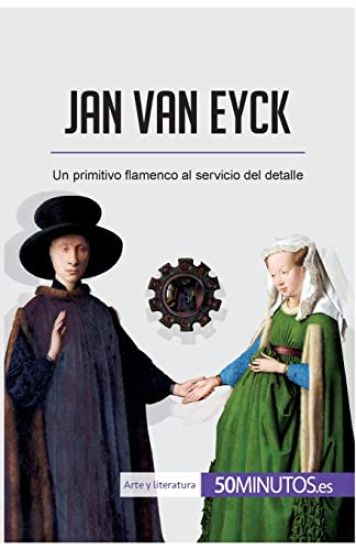
D cryptez l'art de Jan Van Eyck en moins d'une heure Gr ce la technique novatrice de la peinture l'huile et la minutie dont il fait preuve dans ses toiles, Jan Van Eyck a su s'imposer comme une figure embl matique de la peinture flamande du XVe si cle. Son oeuvre, flirtant la fois avec le gothique et le style renaissant, place l'homme au coeur de la composition. Il r volutionne ainsi l'univers pictural de son poque en signant des portraits au r alisme saisissant qui a fait toute sa renomm e. L'artiste Lucas d'Heere ne dit-il pas des oeuvres de Van Eyck qu'elles sont des miroirs, et non des sc nes peintes Ce livre vous permettra d'en savoir plus sur: - Le contexte conomique et culturel dans lequel Jan Van Eyck s'inscrit- La vie du peintre et son parcours- Les caract ristiques et sp cificit s de son art- Une s lection d'oeuvres-cl s de Jan Van Eyck- L'impact de l'artiste dans l'histoire de l'art Le mot de l' diteur: Dans ce num ro de la s rie "50MINUTES Artistes", C line Muller aborde le si cle, la vie et l'oeuvre de Jan Van Eyck, de ses d buts, malheureusement peu document s, la cr ation de son atelier brugeois, sans oublier son passage la cour de Bourgogne. Nous avons accord une attention toute particuli re aux r alisations artistiques de Jan Van Eyck, en particulier L'Agneau mystique, souvent consid r comme l'oeuvre europ enne la plus convoit e de ce dernier si cle. St phanie Felten PROPOS DE LA S RIE 50MINUTES ArtistesLa s rie Artistes de la collection 50MINUTES aborde plus de cinquante artistes qui ont profond ment marqu l'histoire de l'art, du Moyen ge nos jours. Chaque livre a t con u la fois pour les passionn s d'art et pour les amateurs curieux d'en savoir davantage en peu de temps. Nos auteurs analysent avec pr cision les oeuvres des plus grands artistes tout en laissant place toutes les interpr tations.
Jan Van Eyck

Jan Van Eyck

50Minutes.com (NL)
2023
pokkari
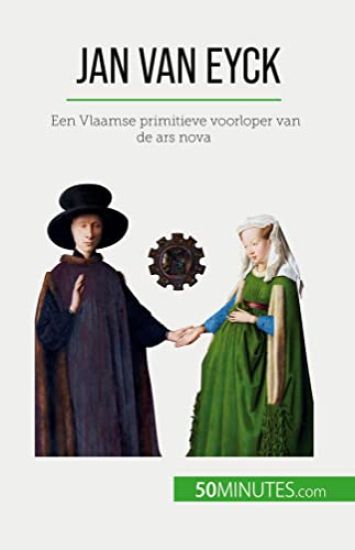
Jan Van Eyck heeft zich gevestigd als een emblematische figuur van de Vlaamse primitieve beweging. Als nauwgezet en perfectionist gebruikte hij de innovatieve techniek van het olieverfschilderen tot in de perfectie, waarbij hij flirtte met de gotiek en de renaissance en mensen centraal stelde in de compositie. Hij dankt zijn bekendheid aan het altaarstuk Het Lam Gods, maar ook aan het opvallende realisme van zijn portretten. De gezichten die hij schildert, gezien vanaf driekwart hoogte, met ogen die de toeschouwer aanstaren, halen de codes van die tijd onderuit. Duik in 50 minuten in het leven van deze voorloper van de ars nova, ontdek zijn biografie, maar ook zijn vernieuwende techniek en zijn hybride stijl die hem tot een meester van het portret maken.
Jan Van Eyck

Jan Van Eyck

50Minutes.com (IT)
2023
pokkari
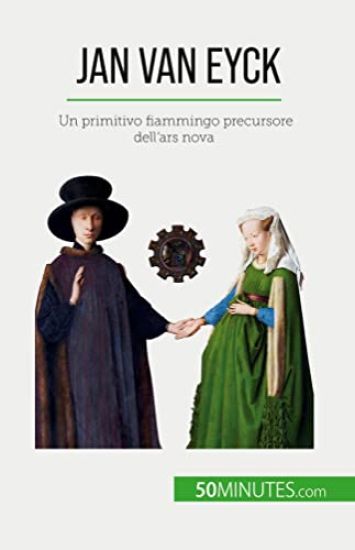
Jan Van Eyck si afferm come figura emblematica del movimento primitivo fiammingo. Meticoloso e perfezionista, utilizz alla perfezione l'innovativa tecnica della pittura a olio, flirtando con il gotico e il rinascimentale e mettendo le persone al centro della composizione. Deve la sua fama alla pala d'altare L'agnello di Dio, ma anche al sorprendente realismo dei suoi ritratti. I volti che dipinge, visti di tre quarti, con gli occhi che fissano lo spettatore, ribaltano i codici dell'epoca. In 50 minuti, immergetevi nella vita di questo precursore dell'ars nova, scoprite la sua biografia, la sua tecnica innovativa e il suo stile ibrido che lo rendono un maestro del ritratto.
Jan Van Eyck

Jan Van Eyck

Céline Muller

50Minutes.com (PT)
2023
pokkari
Jan Van Eyck estabeleceu-se como uma figura emblem tica do movimento primitivo flamengo. Meticuloso e perfeccionista, utilizou a t cnica inovadora da pintura a leo na perfei o, flertando com o g tico e o renascentista e colocando as pessoas no centro da composi o. Deve a sua fama ao ret bulo O Cordeiro de Deus, mas tamb m ao realismo marcante dos seus retratos. Os rostos que ele pinta, vistos de tr s quartos de altura, com os olhos a olhar para o espectador, invertem os c digos da poca. Em 50 minutos, mergulhe na vida deste precursor de ars nova, descubra a sua biografia, assim como a sua t cnica inovadora e o seu estilo h brido que o tornam um mestre do retrato.
Jan Kalwin

Jan Kalwin

50Minutes.com (PL)
2023
pokkari
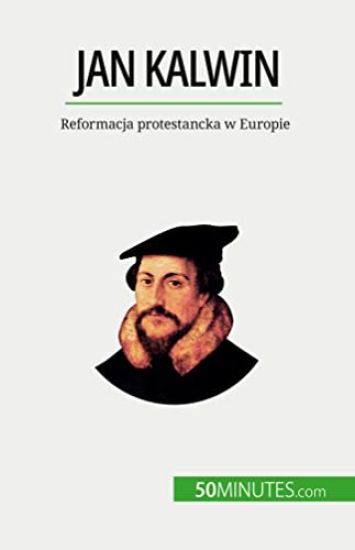
Jan Kalwin byl francuskim kaznodzieją, kt ry byl jedną z kluczowych postaci reformacji, kt ra ogarnęla XVI-wieczną Europę. Kalwin byl najbardziej znany z zalożenia Kościola Reformowanego i restrukturyzacji systemu edukacji w Genewie. Poświęcil swoje życie na ustanowienie sposobu życia zgodnego z Pismem Świętym. W ciągu zaledwie 50 minut odkryjesz, jak jego dzialania zasadniczo wplynęly na chrześcijańską ortodoksję i zrozumiesz jego glęboki wplyw na europejską teologię. Ta prosta i pouczająca książka oferuje dokladne om wienie najważniejszych osiągnięc Kalwina, w tym jego seminaryjnego dziela Instytuty religii chrześcijańskiej i zalożenia Akademii Genewskiej. Zawiera r wnież pelną biografię, cenne wprowadzenie do kontekstu politycznego, spolecznego i gospodarczego oraz ocenę wplywu jego nauczania i powstania kalwinizmu, dając ci wszystkie istotne informacje na temat tego wplywowego teologa.
Jan Van Eyck

Jan Van Eyck

50Minutes.com (PL)
2023
pokkari
Jan Van Eyck stal się emblematyczną postacią flamandzkiego ruchu prymitywnego. Skrupulatny i perfekcjonista, do perfekcji wykorzystal nowatorską technikę malarstwa olejnego, flirtując z gotykiem i renesansem, stawiając ludzi w centrum kompozycji. Swoją slawę zawdzięcza oltarzowi Baranek Boży, ale także uderzającemu realizmowi swoich portret w. Malowane przez niego twarze, widziane z trzech czwartych wysokości, z oczami wpatrzonymi w widza, obalają wczesne kody. W ciągu 50 minut zanurz się w życie tego prekursora ars nova, odkryj jego biografię, a także jego innowacyjną technikę i hybrydowy styl, kt re czynią go mistrzem portretu.
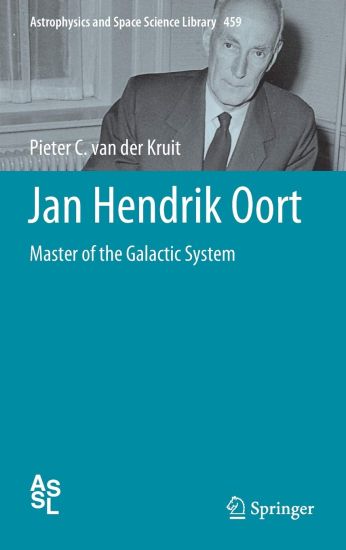
Jan Hendrik Oort

Jan Hendrik Oort

Pieter C. van der Kruit

Springer Nature Switzerland AG
2019
sidottu
This book is the first thorough and overdue biography of one of the giants of science in the twentieth century, Jan Hendrik Oort. His fundamental contributions had a lasting effect on the development of our insight and a profound influence on the international organization and cooperation in his area of science and on the efforts and contribution of his native country.This book aims at describing Oort's life and works in the context of the development of his branch of science and as a tribute to a great scientist in a broader sense. The astronomer Jan Hendrik Oort from the Netherlands was founder of studies of the structure and dynamics of the Milky Way Galaxy, initiator of radioastronomy and the European Southern Observatory, and an important contributor to many areas of astronomy, from the study of comets to the universe on the largest scales.
Jan Hendrik Oort

Jan Hendrik Oort

Pieter C. van der Kruit

Springer Nature Switzerland AG
2020
nidottu
This book is the first thorough and overdue biography of one of the giants of science in the twentieth century, Jan Hendrik Oort. His fundamental contributions had a lasting effect on the development of our insight and a profound influence on the international organization and cooperation in his area of science and on the efforts and contribution of his native country.This book aims at describing Oort's life and works in the context of the development of his branch of science and as a tribute to a great scientist in a broader sense. The astronomer Jan Hendrik Oort from the Netherlands was founder of studies of the structure and dynamics of the Milky Way Galaxy, initiator of radioastronomy and the European Southern Observatory, and an important contributor to many areas of astronomy, from the study of comets to the universe on the largest scales.
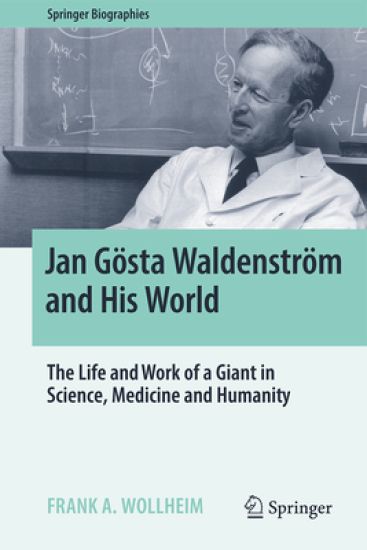
Jan Gösta Waldenström and His World

Jan Gösta Waldenström and His World

Frank Wollheim

Springer International Publishing AG
2023
sidottu
Jan Waldenström (1906-1996) was the leading Swedish internist of the twentieth century. The first chapter of the book presents his remarkable family including five generations of physicians. Born in Stockholm, we follow JW to medical school at Uppsala University during 1924–33. In 1934–5, he spent a year in the laboratory of Nobel Laureate Hans Fischer in Munich. In 1937, he defended a landmark thesis on acute intermittent porphyria. As “Docent” (assistant professor) in Uppsala, he discovered two new diseases in 1943, one of which was macroglobulinemia. In 1944–5, he spent 7 months in the US commissioned by the Swedish Health Board. This started friendships and interactions with leading colleagues and scientists. With time, JW fostered a worldwide network of contacts and became a most influential international authority. But this was just the beginning. The book follows Waldenström's remarkable career including his description of chronic active hepatitis as a new disease and the carcinoid syndrome. Among his many other significant achievements were the introduction of nuclear medicine in Sweden and his pioneering the concept of poly- and monoclonal gammopathies. His legacy is emphasized by Waldenström lectures, Waldenström Prizes, and by the International Waldenström’s Macroglobulinemia Foundation, IWMF, and the Bing Center for Waldenström’s macroglobulinemia at the Dana Farber Institute of Cancer Institute of the Harvard University in Boston. And now, not least, by this comprehensive biography.
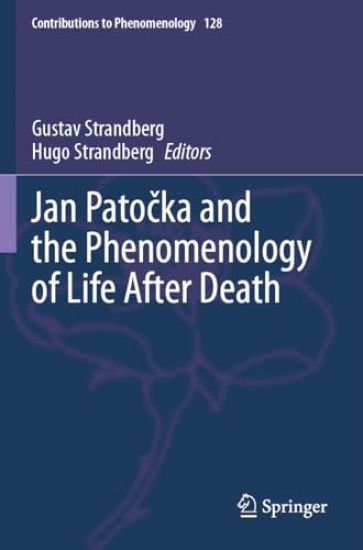
Jan Patocka and the Phenomenology of Life After Death

Jan Patocka and the Phenomenology of Life After Death

Springer International Publishing AG
2023
sidottu
This volume contains for the first time in English, Jan Patocka’s seminal essay “The Phenomenology of Afterlife”, as well as contributions surrounding and analyzing this text. In his essay, Patocka reflects on our relation to the dead and on how the departure of a loved one affects our continued existence. The premise of Patocka’s investigation is that our existence always takes place by and through an originary and reciprocal “being for others”.The contributors in the volume extend the field of inquiry into the wider phenomenological and post-phenomenological discussion of death by being cognizant of how works of literature can broaden our understanding of the care of death, grief, forgiveness and non-reciprocal love. Also included are reflections on issues of philosophical anthropology, community, collective memory, and the ecstatic nature of life – issues that can all be related back to Patocka’s initial reflections, but which nonetheless radiate intoa myriad of directions. This volume appeals to students and researchers in the field.
Jan Patocka and the Phenomenology of Life After Death

Jan Patocka and the Phenomenology of Life After Death

Springer International Publishing AG
2024
nidottu
This volume contains for the first time in English, Jan Patocka’s seminal essay “The Phenomenology of Afterlife”, as well as contributions surrounding and analyzing this text. In his essay, Patocka reflects on our relation to the dead and on how the departure of a loved one affects our continued existence. The premise of Patocka’s investigation is that our existence always takes place by and through an originary and reciprocal “being for others”.The contributors in the volume extend the field of inquiry into the wider phenomenological and post-phenomenological discussion of death by being cognizant of how works of literature can broaden our understanding of the care of death, grief, forgiveness and non-reciprocal love. Also included are reflections on issues of philosophical anthropology, community, collective memory, and the ecstatic nature of life – issues that can all be related back to Patocka’s initial reflections, but which nonetheless radiate intoa myriad of directions. This volume appeals to students and researchers in the field.