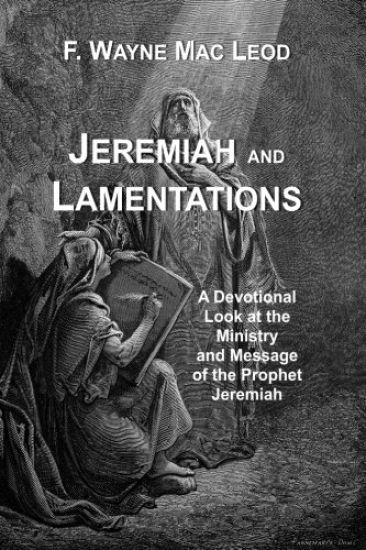
Do you read the Bible and feel like you have a difficult time understanding what it says? Do the Bible's lessons seem too far removed from your everyday life?Few things have proven more effective in expanding our hearts and minds and drawing us closer to God than quiet reflection and the study of God's Word. He gave us this revelation of Himself in sixty-six unique books but often we turn to the more familiar passages and avoid the more difficult or complex ones. The Light To My Path commentaries will open up the whole Bible for you in a way that is understandable, practical and down-to-earth. More than just an academic study aid, the Light to My Path commentaries are devotional guides of God's revelation of Himself in the Bible. Use Light to My Path commentaries in your personal worship, study and devotional time, Questions to consider and points for prayer at the end of each chapter make each book relevant for your life today and are useful discussion starters for group studies. As you ponder the message of each book, you will find your heart and mind drawn toward God in worship.
A chance encounter during the battle of Quatre Bras changes Captain Jeremiah Denby's life forever. A member of Wellington's staff, he fulfills his duties to king and country through the surrender of Boney at Waterloo but then must decide how to reconcile his new life with his old. Emmaline Rothesay has a battle of her own to fight. To her Lady mother's dismay, Emmaline has had her eye on Captain Denby as a potential suitor. Now that his changed circumstances after Waterloo could cause a scandal, Lady Rothesay is even more set against any relationship her daughter desires with the man. Emmaline finds herself at war with her mother and maybe even the captain himself.
This is a book of real biblical truths, expressed in an authentic way to aid you in your walk with Christ. If something rubs you the wrong way or the right way it is only the Holy Spirit reminding you that you are either on the wrong or right path As the old saying goes,"it gets greater later" now is the time to take a stand for Christ by living a life the way our Savoir expects us to live.
In this autobiography of Jeremiah Semien, as his new autobiography, gives in detail, about his life story, as Jeremiah went through the trails, and tribulation, heartaches, and pains, for the chance of him accomplishing his goals, or dreams, the jobs, he went through, to try his best, to be all he can be, as a child doing his own thing, as a teenager, almost going through the pits of hell, trying to survive, as a man, writing his poems, stories, music, and the films, the informational documentaries, as Jeremiah Semien share his love of cooking, as well as the contacts he came up with, just as the screenplays he can write, he is a theatrical performer, a good actor, if anyone wants to say, as he also have the abilities of second sight, or third eye, as he can speak different languages, as long as he hears them, as well as insight on the afterlife, with the outer-body experiences he had, as well as trying to make it, in this cruel, and unforgiving world, with so much Jeremiah Semien has seen, and done, he is the artist of the century, he is known as Jerry, or the artist formerly known as Jerry, read the journey of one man's life story.
Jeremiah Curtin (6 September 1835 - 14 December 1906) was an American translator and folklorist. Born in Detroit, Michigan, Curtin spent his early life in what is now, Greendale, Wisconsin and later graduated from Harvard College in 1863. In 1864 he went to Russia, where he worked for the U.S. legation and as a translator. He left Russia in 1877, stayed a year in London, and returned to the United States, where he worked for the Bureau of American Ethnology. His specialties were his work with American Indian languages and Slavic languages. In addition to publishing collections of fairy tales and folklore and writings about his travels, Curtin translated a number of volumes by Henryk Sienkiewicz, including his Trilogy set in the 17th-century Polish-Lithuanian Commonwealth, a couple of volumes on contemporary Poland, and, most famously and profitably, Quo Vadis (1897). He also published an English version of Boleslaw Prus' only historical novel, Pharaoh, under the title The Pharaoh and the Priest (1902).