Kirjojen hintavertailu. Mukana 11 699 587 kirjaa ja 12 kauppaa.

Kirjahaku

Etsi kirjoja tekijän nimen, kirjan nimen tai ISBN:n perusteella.

1000 tulosta hakusanalla Jim Carson

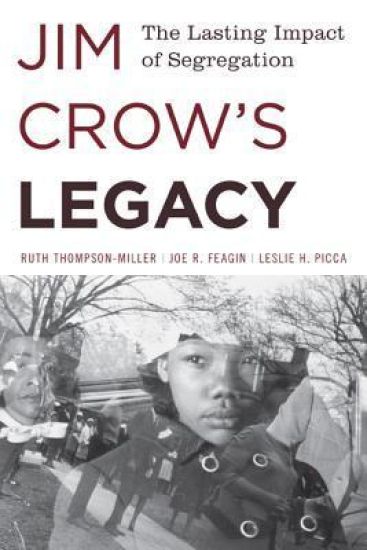
Jim Crow's Legacy

Jim Crow's Legacy

Ruth Thompson-Miller; Joe R. Feagin; Leslie H. Picca

Rowman Littlefield
2014
nidottu
Jim Crow’s Legacy shows the lasting impact of segregation on the lives of African Americans who lived through it, as well as its impact on future generations. The book draws on interviews with elderly African American southerners whose stories poignantly show the devastation of racism not only in the past, but also in the present. The book introduces readers to the realities of the Jim Crow era for African Americans—from life at home to work opportunities to the broader social context in America. However, the book moves beyond merely setting the scene into the powerful memories of elderly African Americans who lived through Jim Crow. Their voices tell the complex stories of their everyday lives—from caring for white children to the racially-motivated murder of a loved one. Their stories show the pernicious impact of racism on both the past and the present. The authors use the phrase segregation stress syndrome to describe the long-term impact on physical, mental, and emotional health, as well as the unshakable influence of racism across years and generations. Jim Crow’s Legacy takes readers on an unparalleled journey into the bitter realities of America’s racial past and shows racism’s unmistakable influence today.
Jim Henson and Philosophy

Jim Henson and Philosophy

Craig Yoe

Rowman Littlefield
2015
pokkari
Jim Henson’s creations have inspired generations with characters that are among the world’s most recognizable cultural icons. From Kermit the Frog, Miss Piggy and their Muppet friends to the legendary Sesame Street and Children’s Television Workshop, Henson revolutionized children’s educational entertainment. Combining live action and puppeteering into fantastical narratives like The Dark Crystal and Labyrinth, as well as the whimsical Fraggle Rock and The Storyteller, Henson transformed imagination into reality, weaving together powerful philosophical messages on identity, community, diversity, love, death, and friendship. Henson never shied away from exploring deep questions, nor did he underestimate the ability of children (or adults) to grapple with profound philosophical questions. Jim Henson and Philosophy explores the entertaining and educational world of the genius’s creations, revealing what it is about Henson’s world that has touched us so deeply and improved our lives in such meaningful ways. Contributions by: Lauren Ashwell, Kimberly Baltzer-Jaray, David R. Burns, Samantha Brennan, Amanda Cawston, Brooke Covington, Christopher M. Culp, Ryan Cox, Natalie M. Fletcher, Victoria Hubbell, Dena Hurst, Christopher Ketcham, S. Evan Kreider, Shaun Leonard, Jennifer Marra, Michael J. Muniz, Laurel Ralston, Rhona Trauvitch, and Sheryl Tuttle Ross
Jim Marshall: Show Me the Picture

Jim Marshall: Show Me the Picture

Amelia Davis

Chronicle Books
2019
sidottu
Jim Marshall created iconic images of rock 'n' roll stars, jazz greats, and civil rights leaders. He had the power to look into the soul of an individual and to capture the mood of an entire generation. This deluxe, career-spanning volume showcases hundreds of photographs: intimate portraits, heady crowd scenes, and haunting street shots evoking the sights and sounds of the 1960s and 1970s. Marked-up proof sheets offer insight into Marshall's process, while in-depth essays from his contemporaries tell a compelling story about this larger-than-life man. Nearly a decade after his death, Marshall's legacy is the subject of a documentary feature film. This gorgeous collection is a must-have for devoted fans and newcomers alike; a fitting tribute to a true legend.
Jim's Life

Jim's Life

Jason Matthews

Createspace Independent Publishing Platform
2010
nidottu
A teenage boy on trial can see and heal the human light fields, becoming a miracle healer while the world argues over his case. Sequel to The Little Universe. A soul transfer has Jim awaken in the hospital in another person's body. He has no memory of his past life or awareness of the crime committed before the near-fatal accident, a felony done by the body's previous occupant. Already a person of global interest due to the case and his miraculous recovery from brain-death, Jim still has a more stunning surprise. The crash has damaged his pineal gland, the very center of his brain, resulting in overproduction of the neurochemical dimethyltryptamine (DMT). Also called "the spirit molecule" for the profound hallucinations DMT causes, Jim's elevated levels enable him to see the lights within living things, including the auras and chakras of people. In time, Jim learns to manipulate these lights and correct imperfect flow to the way of natural design. The effect is spontaneous healing. His nurse, Vicki, discovers the gift. Her experiments confirm Jim can heal other patients, even those who haven't been cured by the world's best doctors. As people become aware of his healings, a rumor surfaces in the hospital and around the globe: that Jim is a messiah. All the while he's on trial for a crime he didn't commit. Does he deserve a life sentence, or is he a miracle healer the world desperately needs? One thing's for sure: everyone has an opinion. Nurses want to sleep with him, endorsements come from every angle, skeptics come to debunk him, patients need his healing touch, and still others want to train him to become the leader he was destined to be. Jim's Life is a story of spirituality, the courts of justice and the power of love. Subjects include: spiritual gifts, spiritual books, visionary fiction, chakra healing, energy healing, new thought, psychic, psychics, inspirational, reincarnation, past lives, healing by touch, meditation, spiritual journey, new age, soul transfer, soul development.
Jim Hanvey, Detective

Jim Hanvey, Detective

Octavus Roy Cohen

Poisoned Pen Press
2021
nidottu
First published in 1923, Jim Hanvey, Detective is a collection of seven stories that originally appeared in The Saturday Evening Post and features private eye Jim Hanvey in classic whodunit style mysteries. Described as the "backwoods Nero Wolfe," the genial Hanvey befriends "good guys" and criminals alike to get the job done.Bank robberies, jewel heists, and all-purposes cons—none are a match for Octavus Roy Cohen's waddling sleuth.
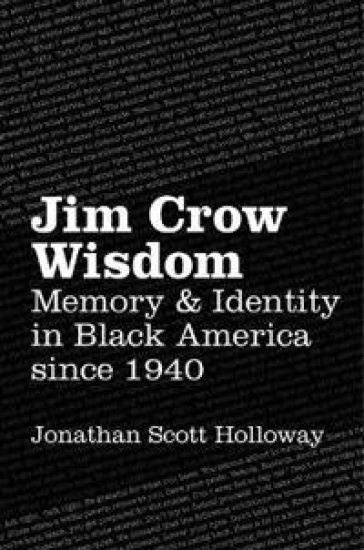
Jim Crow Wisdom

Jim Crow Wisdom

Jonathan Scott Holloway

The University of North Carolina Press
2015
nidottu
How do we balance the desire for tales of exceptional accomplishment with the need for painful doses of reality? How hard do we work to remember our past or to forget it? These are some of the questions that Jonathan Scott Holloway addresses in this exploration of race memory from the dawn of the modern civil rights era to the present. Relying on social science, documentary film, dance, popular literature, museums, memoir, and the tourism trade, Holloway explores the stories black Americans have told about their past and why these stories are vital to understanding a modern black identity. In the process, Holloway asks much larger questions about the value of history and facts when memories do violence to both.Making discoveries about his own past while researching this book, Holloway weaves first-person and family memories into the traditional third-person historian's perspective. The result is a highly readable, rich, and deeply personal narrative that will be familiar to some, shocking to others, and thought-provoking to everyone.
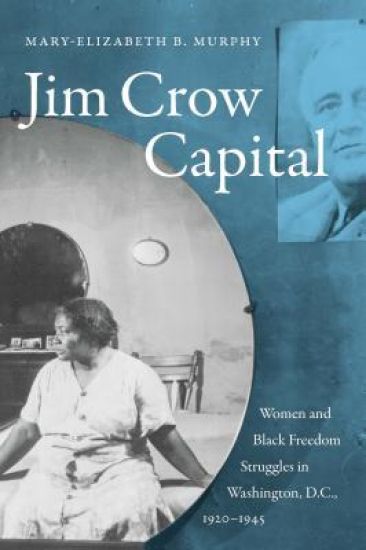
Jim Crow Capital

Jim Crow Capital

The University of North Carolina Press
2018
sidottu
Local policy in the nation's capital has always influenced national politics. During Reconstruction, black Washingtonians were first to exercise their new franchise. But when congressmen abolished local governance in the 1870s, they set the precedent for southern disfranchisement. In the aftermath of this process, memories of voting and citizenship rights inspired a new generation of Washingtonians to restore local government in their city and lay the foundation for black equality across the nation. And women were at the forefront of this effort.Here Mary-Elizabeth B. Murphy tells the story of how African American women in D.C. transformed civil rights politics in their freedom struggles between 1920 and 1945. Even though no resident of the nation's capital could vote, black women seized on their conspicuous location to testify in Congress, lobby politicians, and stage protests to secure racial justice, both in Washington and across the nation. Women crafted a broad vision of citizenship rights that put economic justice, physical safety, and legal equality at the forefront of their political campaigns. Black women's civil rights tactics and victories in Washington, D.C., shaped the national postwar black freedom struggle in ways that still resonate today.
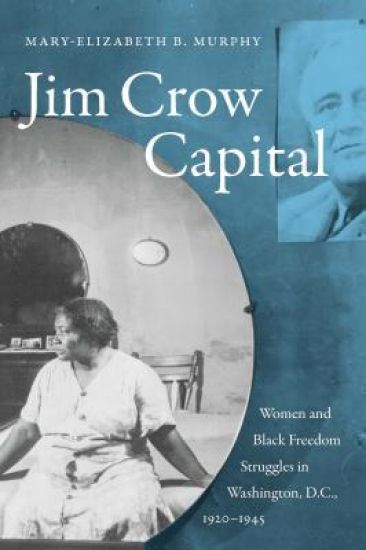
Jim Crow Capital

Jim Crow Capital

The University of North Carolina Press
2018
nidottu
Local policy in the nation's capital has always influenced national politics. During Reconstruction, black Washingtonians were first to exercise their new franchise. But when congressmen abolished local governance in the 1870s, they set the precedent for southern disfranchisement. In the aftermath of this process, memories of voting and citizenship rights inspired a new generation of Washingtonians to restore local government in their city and lay the foundation for black equality across the nation. And women were at the forefront of this effort.Here Mary-Elizabeth B. Murphy tells the story of how African American women in D.C. transformed civil rights politics in their freedom struggles between 1920 and 1945. Even though no resident of the nation's capital could vote, black women seized on their conspicuous location to testify in Congress, lobby politicians, and stage protests to secure racial justice, both in Washington and across the nation. Women crafted a broad vision of citizenship rights that put economic justice, physical safety, and legal equality at the forefront of their political campaigns. Black women's civil rights tactics and victories in Washington, D.C., shaped the national postwar black freedom struggle in ways that still resonate today.
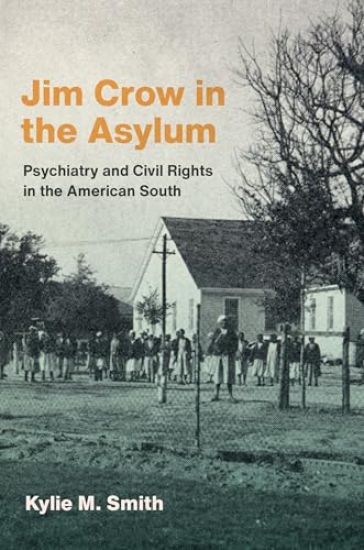
Jim Crow in the Asylum

Jim Crow in the Asylum

Kylie M. Smith

THE UNIVERSITY OF NORTH CAROLINA PRESS
2026
sidottu
There is a complicated history of racism and psychiatric healthcare in the Deep South states of Georgia, Alabama, and Mississippi. The asylums of the Jim Crow era employed African American men and women served as places of treatment and care for African Americans with psychiatric illnesses and, inevitably, were places of social control. Black people who lived and worked in these facilities needed to negotiate complex relationships of racism with their own notions of community, mental health, and healing.Kylie M. Smith mixes exhaustive archival research, interviews, and policy analysis to offer a comprehensive look at how racism affected Black Southerners with mental illness during the Jim Crow era. Complicated legal, political, and medical changes in the late twentieth century turned mental health services into a battlefield between political ideology and psychiatric treatment approaches, with the fallout having long-term consequences for patient outcomes. Smith argues that patterns of racially motivated abuse and neglect of mentally ill African Americans took shape during this era and continue to the present day. As the mentally ill become increasingly incarcerated, reminds readers that, for many Black Southerners, having a mental illness was—and still is—tantamount to committing a crime.