Jim Marshall created iconic images of rock 'n' roll stars, jazz greats, and civil rights leaders. He had the power to look into the soul of an individual and to capture the mood of an entire generation. This deluxe, career-spanning volume showcases hundreds of photographs: intimate portraits, heady crowd scenes, and haunting street shots evoking the sights and sounds of the 1960s and 1970s. Marked-up proof sheets offer insight into Marshall's process, while in-depth essays from his contemporaries tell a compelling story about this larger-than-life man. Nearly a decade after his death, Marshall's legacy is the subject of a documentary feature film. This gorgeous collection is a must-have for devoted fans and newcomers alike; a fitting tribute to a true legend.
A teenage boy on trial can see and heal the human light fields, becoming a miracle healer while the world argues over his case. Sequel to The Little Universe. A soul transfer has Jim awaken in the hospital in another person's body. He has no memory of his past life or awareness of the crime committed before the near-fatal accident, a felony done by the body's previous occupant. Already a person of global interest due to the case and his miraculous recovery from brain-death, Jim still has a more stunning surprise. The crash has damaged his pineal gland, the very center of his brain, resulting in overproduction of the neurochemical dimethyltryptamine (DMT). Also called "the spirit molecule" for the profound hallucinations DMT causes, Jim's elevated levels enable him to see the lights within living things, including the auras and chakras of people. In time, Jim learns to manipulate these lights and correct imperfect flow to the way of natural design. The effect is spontaneous healing. His nurse, Vicki, discovers the gift. Her experiments confirm Jim can heal other patients, even those who haven't been cured by the world's best doctors. As people become aware of his healings, a rumor surfaces in the hospital and around the globe: that Jim is a messiah. All the while he's on trial for a crime he didn't commit. Does he deserve a life sentence, or is he a miracle healer the world desperately needs? One thing's for sure: everyone has an opinion. Nurses want to sleep with him, endorsements come from every angle, skeptics come to debunk him, patients need his healing touch, and still others want to train him to become the leader he was destined to be. Jim's Life is a story of spirituality, the courts of justice and the power of love. Subjects include: spiritual gifts, spiritual books, visionary fiction, chakra healing, energy healing, new thought, psychic, psychics, inspirational, reincarnation, past lives, healing by touch, meditation, spiritual journey, new age, soul transfer, soul development.
First published in 1923, Jim Hanvey, Detective is a collection of seven stories that originally appeared in The Saturday Evening Post and features private eye Jim Hanvey in classic whodunit style mysteries. Described as the "backwoods Nero Wolfe," the genial Hanvey befriends "good guys" and criminals alike to get the job done.Bank robberies, jewel heists, and all-purposes cons—none are a match for Octavus Roy Cohen's waddling sleuth.
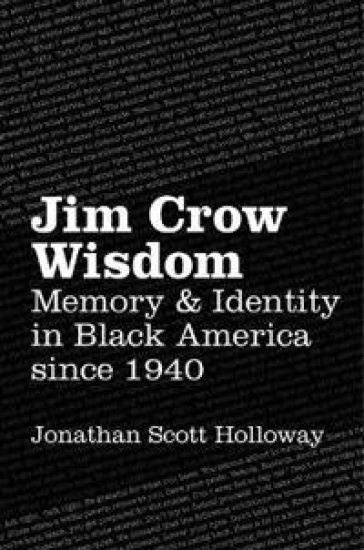
How do we balance the desire for tales of exceptional accomplishment with the need for painful doses of reality? How hard do we work to remember our past or to forget it? These are some of the questions that Jonathan Scott Holloway addresses in this exploration of race memory from the dawn of the modern civil rights era to the present. Relying on social science, documentary film, dance, popular literature, museums, memoir, and the tourism trade, Holloway explores the stories black Americans have told about their past and why these stories are vital to understanding a modern black identity. In the process, Holloway asks much larger questions about the value of history and facts when memories do violence to both.Making discoveries about his own past while researching this book, Holloway weaves first-person and family memories into the traditional third-person historian's perspective. The result is a highly readable, rich, and deeply personal narrative that will be familiar to some, shocking to others, and thought-provoking to everyone.
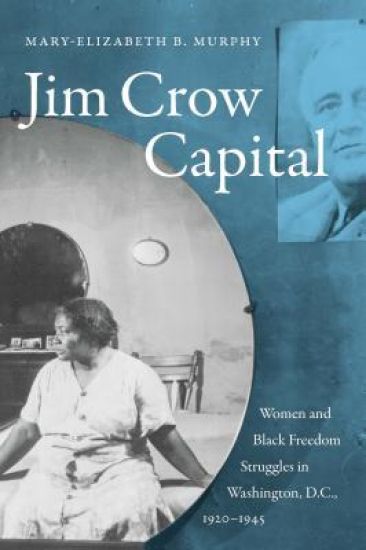
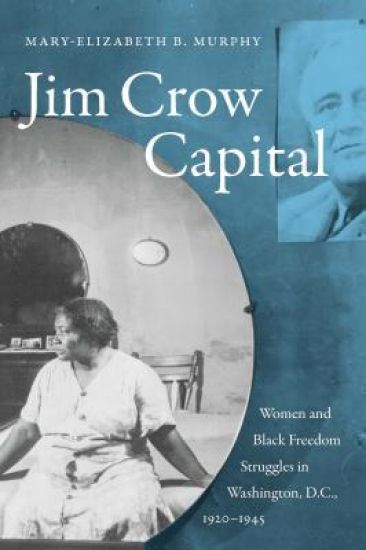
Local policy in the nation's capital has always influenced national politics. During Reconstruction, black Washingtonians were first to exercise their new franchise. But when congressmen abolished local governance in the 1870s, they set the precedent for southern disfranchisement. In the aftermath of this process, memories of voting and citizenship rights inspired a new generation of Washingtonians to restore local government in their city and lay the foundation for black equality across the nation. And women were at the forefront of this effort.Here Mary-Elizabeth B. Murphy tells the story of how African American women in D.C. transformed civil rights politics in their freedom struggles between 1920 and 1945. Even though no resident of the nation's capital could vote, black women seized on their conspicuous location to testify in Congress, lobby politicians, and stage protests to secure racial justice, both in Washington and across the nation. Women crafted a broad vision of citizenship rights that put economic justice, physical safety, and legal equality at the forefront of their political campaigns. Black women's civil rights tactics and victories in Washington, D.C., shaped the national postwar black freedom struggle in ways that still resonate today.
Local policy in the nation's capital has always influenced national politics. During Reconstruction, black Washingtonians were first to exercise their new franchise. But when congressmen abolished local governance in the 1870s, they set the precedent for southern disfranchisement. In the aftermath of this process, memories of voting and citizenship rights inspired a new generation of Washingtonians to restore local government in their city and lay the foundation for black equality across the nation. And women were at the forefront of this effort.Here Mary-Elizabeth B. Murphy tells the story of how African American women in D.C. transformed civil rights politics in their freedom struggles between 1920 and 1945. Even though no resident of the nation's capital could vote, black women seized on their conspicuous location to testify in Congress, lobby politicians, and stage protests to secure racial justice, both in Washington and across the nation. Women crafted a broad vision of citizenship rights that put economic justice, physical safety, and legal equality at the forefront of their political campaigns. Black women's civil rights tactics and victories in Washington, D.C., shaped the national postwar black freedom struggle in ways that still resonate today.
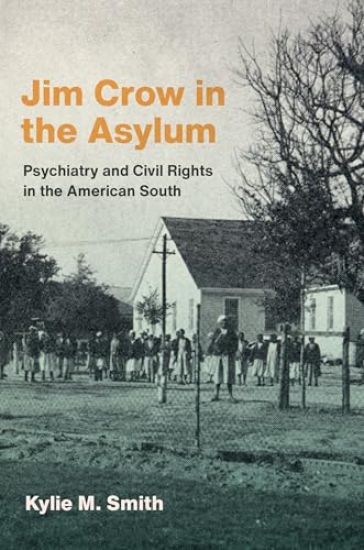
There is a complicated history of racism and psychiatric healthcare in the Deep South states of Georgia, Alabama, and Mississippi. The asylums of the Jim Crow era employed African American men and women served as places of treatment and care for African Americans with psychiatric illnesses and, inevitably, were places of social control. Black people who lived and worked in these facilities needed to negotiate complex relationships of racism with their own notions of community, mental health, and healing.Kylie M. Smith mixes exhaustive archival research, interviews, and policy analysis to offer a comprehensive look at how racism affected Black Southerners with mental illness during the Jim Crow era. Complicated legal, political, and medical changes in the late twentieth century turned mental health services into a battlefield between political ideology and psychiatric treatment approaches, with the fallout having long-term consequences for patient outcomes. Smith argues that patterns of racially motivated abuse and neglect of mentally ill African Americans took shape during this era and continue to the present day. As the mentally ill become increasingly incarcerated, reminds readers that, for many Black Southerners, having a mental illness was—and still is—tantamount to committing a crime.
There is a complicated history of racism and psychiatric healthcare in the Deep South states of Georgia, Alabama, and Mississippi. The asylums of the Jim Crow era employed African American men and women served as places of treatment and care for African Americans with psychiatric illnesses and, inevitably, were places of social control. Black people who lived and worked in these facilities needed to negotiate complex relationships of racism with their own notions of community, mental health, and healing.Kylie M. Smith mixes exhaustive archival research, interviews, and policy analysis to offer a comprehensive look at how racism affected Black Southerners with mental illness during the Jim Crow era. Complicated legal, political, and medical changes in the late twentieth century turned mental health services into a battlefield between political ideology and psychiatric treatment approaches, with the fallout having long-term consequences for patient outcomes. Smith argues that patterns of racially motivated abuse and neglect of mentally ill African Americans took shape during this era and continue to the present day. As the mentally ill become increasingly incarcerated, reminds readers that, for many Black Southerners, having a mental illness was—and still is—tantamount to committing a crime.
This early work by John Buchan was originally published in 1886 and we are now republishing it as part of our Cryptofiction Classics series. 'Jim Newman's Yarn: Or, A Sight of the Sea Serpent' is a short story about a mysterious creature of the deep. The Cryptofiction Classics series contains a collection of wonderful stories from some of the greatest authors in the genre, including Ambrose Bierce, Arthur Conan Doyle, Robert Louis Stevenson, and Jack London. From its roots in cryptozoology, this genre features bizarre, fantastical, and often terrifying tales of mythical and legendary creatures. Whether it be giant spiders, werewolves, lake monsters, or dinosaurs, the Cryptofiction Classics series offers a fantastic introduction to the world of weird creatures in fiction.
North Carolina fiddler and banjo player Jim Scancarelli's extensive career as a string band musician began in the early 1960s. A founding member of the Kilocycle Kowboys, one of Charlotte's longest-lived bluegrass bands, he played banjo with the Mole Hill Highlanders, and in the 1980s formed Sanitary Cafe with fiddler Tommy Malboeuf. Through the 1970s, his annual recordings at the Union Grove Fiddlers Convention captured superlative music and performer interviews. Scancarelli also had a successful career as a freelance magazine artist and collaborated on the syndicated comic strips "Mutt and Jeff" and "Gasoline Alley," eventually taking over authorship of the latter in 1986. This biography traces his creative trajectory in music, art, radio and television, and the cartooning industry.
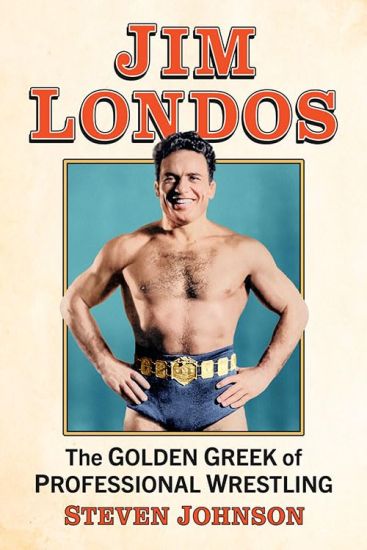
The most famous active athlete in the world during the Great Depression was not Babe Ruth, Sonja Henie or Babe Didrikson. It was a determined Greek immigrant who sailed across the Atlantic Ocean as a 15-year-old to escape a demanding father and start a life abroad. Jim Londos slept in railcars and firehouses to make ends meet and quickly found refuge on the mat. Combining an Old World work ethic with a flair for the dramatic, Londos overcame skeptics and antagonists to become pro wrestling's greatest star, an international celebrity who walked with presidents, prime ministers and the common man. He was responsible for keeping wrestling alive during the Depression and representing achievement to ethnic minorities, underdogs and women, all of whom he attracted in record numbers. This complete biography of Jim Londos tells the story of the first great immigrant athlete, a man who rescued the soiled sport of wrestling when it was down for the count, and brought hope and inspiration to his countrymen and millions worldwide.