Kirjojen hintavertailu. Mukana 11 515 701 kirjaa ja 12 kauppaa.

Kirjahaku

Etsi kirjoja tekijän nimen, kirjan nimen tai ISBN:n perusteella.

1000 tulosta hakusanalla John Class

Hollywood Classics Title Index to All Movies Reviewed in Books 1-24
A complete index to all the films reviewed in all 24 of the "Hollywood Classics" movie books, this massive final volume not only devotes 120 pages to the title index but also contains 212 pages of exhaustive details and comments on an additional 80 must-see films. This additional 80 includes such classics as "A Streetcar Named Desire," the 1937 "Prisoner of Zenda," the multi-award winning "All the King's Men," Alfred Hitchcock's "Vertigo," Henry King's "Tol'able David," Cecil B. DeMille's "The Ten Commandments," Byron Haskin's "The War of the Worlds," the Vivien Leigh and Robert Taylor "Waterloo Bridge," the Clark Gable and Jean Harlow "Red Dust," Ronald Colman's "If I Were King," the classic noir "Out of the Past," three versions of "Romeo and Juliet," and the delightful Claudette Colbert and James Stewart comedy, "It's a Wonderful World."

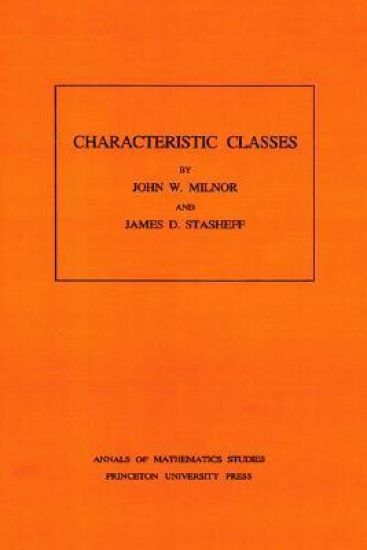
Characteristic Classes

Characteristic Classes

John Milnor; James D. Stasheff

Princeton University Press
1974
pokkari
The theory of characteristic classes provides a meeting ground for the various disciplines of differential topology, differential and algebraic geometry, cohomology, and fiber bundle theory. As such, it is a fundamental and an essential tool in the study of differentiable manifolds. In this volume, the authors provide a thorough introduction to characteristic classes, with detailed studies of Stiefel-Whitney classes, Chern classes, Pontrjagin classes, and the Euler class. Three appendices cover the basics of cohomology theory and the differential forms approach to characteristic classes, and provide an account of Bernoulli numbers. Based on lecture notes of John Milnor, which first appeared at Princeton University in 1957 and have been widely studied by graduate students of topology ever since, this published version has been completely revised and corrected.
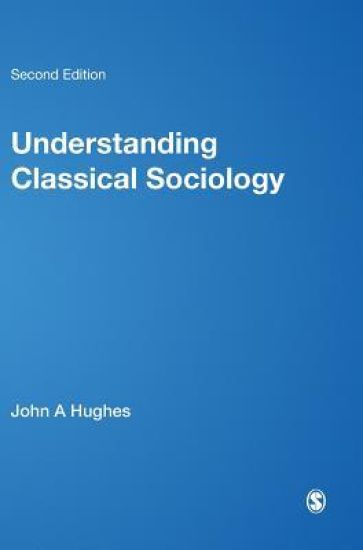
Understanding Classical Sociology

Understanding Classical Sociology

John Hughes; Wes Sharrock; Peter J Martin

SAGE Publications Inc
2003
sidottu
Praise for the First Edition: `Totally reliable… the authors have produced a book urgently needed by all those charged with introducing students to the classics… quite indispensable' - Times Higher Education Supplement This is a fully updated and expanded new edition of the successful undergraduate text. Providing a lucid examination of the pivotal theories of Marx, Durkheim and Weber, the authors submit that these figures have decisively shaped the discipline. They show how the classical apparatus is in use, even though it is being directed in new ways in response to the changing character of society. Written with the needs of undergraduates in mind, the text is essential reading for students in sociology and social theory.
Understanding Classical Sociology

Understanding Classical Sociology

John Hughes; Wes Sharrock; Peter J Martin

SAGE Publications Inc
2003
nidottu
Praise for the First Edition: `Totally reliable… the authors have produced a book urgently needed by all those charged with introducing students to the classics… quite indispensable' - Times Higher Education Supplement This is a fully updated and expanded new edition of the successful undergraduate text. Providing a lucid examination of the pivotal theories of Marx, Durkheim and Weber, the authors submit that these figures have decisively shaped the discipline. They show how the classical apparatus is in use, even though it is being directed in new ways in response to the changing character of society. Written with the needs of undergraduates in mind, the text is essential reading for students in sociology and social theory.
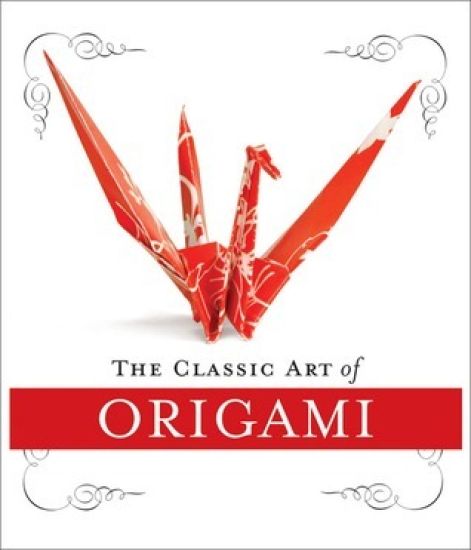
The Classic Art of Origami Kit

The Classic Art of Origami Kit

John Morin

Running Press Miniature Editions
2009
muu
Folding paper,what a fascinating art! But forget about clunky origami books with complicated instructions. This little kit is packed full of travel-size origami basics, including fourteen colourful sheets of paper and simple instructions on how to create five beautiful origami designs,the Japanese helmet, swan, penguin, sailboat, and the classic crane. From kids who are fans of folding paper airplanes to adults who wish they can turn their piles of paperwork into entertainment, The Classic Art of Origami Kit awaits!
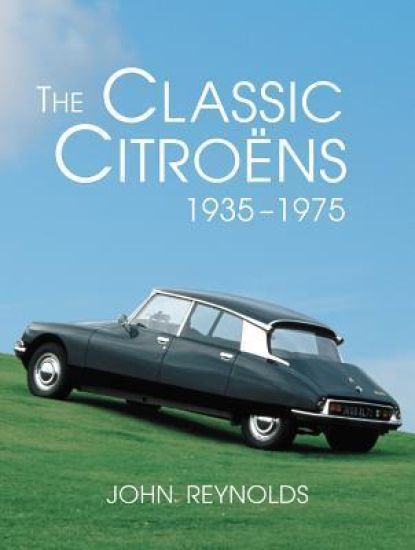
The Classic Citroens, 1935-1975

The Classic Citroens, 1935-1975

John Reynolds

McFarland Co Inc
2012
pokkari
When the final list for the Car of the Century competition was announced in November 1999, only one company had three finalists: Automobiles Citroen. All three models--the Traction Avant, the 2CV and the DS 19--were developed during the era when the company was owned by the Societe Michelin (Michelin Tire Company). All three were created by the engineer Andre Lefebvre and the stylist Flaminio Bertoni. This industry recognition highlighted the unique Citroen-Michelin affiliation, demonstrating anew how this relationship made the automaker the benchmark for progressive design and creative engineering within both the international automotive community and the general motoring public. This work provides the first in-depth examination of the Citroen-Michelin era, focusing on the interrelationship between these firms in the development of the revolutionary Michelin X radial tire and its impact on Citroen's avant-garde automobiles. From its origins in 1919 under the watchful eye of Andre Citroen, a history of the automaker's early years is provided. Next, the author takes a detailed look at the cars of the golden age of Citroen: the Traction Avant, the 2CV, the DS/ID, the Ami-6 and Ami-8, the GS/GSA, the CX, and the Citroen-Maserati SM. The innovations, the unique designs, and the new standards of technical excellence that these cars offered are all fully covered, heavily illustrated with rare photographs of the classic automobiles.
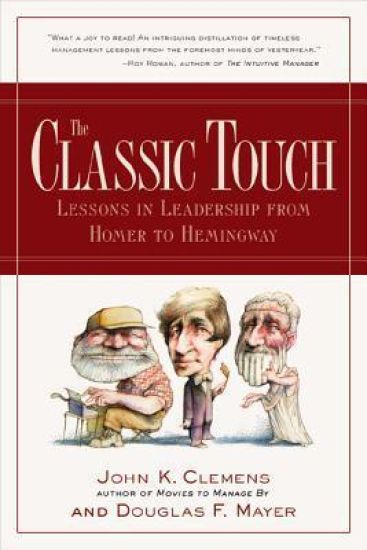
The Classic Touch

The Classic Touch

John Clemens; Douglas Mayer

Contemporary Books Inc
1999
nidottu
"We all think that management is a twentieth-century, newly invented skill, but its roots go back thousands of years. This book is essential reading to learn that we cannont deal with today's problems without understanding yesterday's." -- Leonard A. Lauder, President, Estee Lauder Companies "A classic way to solve business problems." -- U.S. News & World Report In Homer's day, a hostile takeover meant blood and arrows, not mergers and layoffs. However, The Iliad is still a valuable guide for steering the right course in today's tricky business world. Shakespeare's King Lear has more to say about succession, delegation, and decentralization than do most management texts. And Thoreau's "Walden" offers astute observations on what can happen when an organization gets too big. Captivating and instructive, this book is the first to tap the collective wisdom found in the classic works of Western literature and apply it to the problems of modern managers and leaders. Drawing on sources that range from Homer's time to Arthur Miller's, this treasure trove of passages and stories offers invaluable advice for solving today's most difficult business dilemmas. It addresses such issues as building a team and keeping it together, managing an acquisition once it's in place, eliminating daily distractions, and trusting your intuition. Whether you are reading these works for the first time or are revisiting old favorites, The Classic Touch offers you a rich understanding of the art of leading. John K. Clemens, professor of management at Hartwick College, is the founder and executive director of the Hartwick Humanities in Management Institute, an organization that conducts leadership seminars for emerging leaders in Fortune 500 companies. He is also the coauthor of Movies to Manage By: Lessons in Leadership from Great Films. Douglas F. Mayer is the former chairman of the economics and management department at Hartwick College. He is the coauthor of Shakespeare and Management--Othello, Macbeth, and Lear: Lessons About Behavior in Organizations.
The Classical Revolution

The Classical Revolution

John Borstlap

Scarecrow Press
2012
sidottu
The Classical Revolution studies the recent emergence of a new brand of classical music, one rooted in “pre-modern” tonal traditions. Through polemical essays on the conflict between re-emergent tradition and the usual, bland “modern music” in which academic atonalism, process music and attempts to borrow some life from pop and world music form a rather isolated territory, Borstlap examines both the philosophical and aesthetic positions of these new classical composers, positions too often misunderstood because they create a new and unexpected category, not in the margins of music life but directly related to the central performance culture. As Borstlap points out, part of the ongoing problem of contemporary music, a problem first created by modernism, is a profound misunderstanding of musical modernism itself. At the heart of his argument is the distinction between music and “sonic art” a distinction that renders superfluous the loaded labels of “progressive” and “conservative” in disputes over music. Addressing questions of cultural identity, musical meaning, and the aesthetics of beauty, The Classical Revolution closely examines the institutional biases of the modern-music establishment and its all-too-solid grip on the production and reception of new music. By drawing attention to new classical composers in a traditionalist mold, Borstlap illustrates how their increasing success in the realm of performance—as opposed to academic study—bespeaks a broader set of trends in serious contemporary composition. The Classical Revolution is an accessible and informative polemic for music lovers with an interest in the meaning of classical music in general, and the classical tradition in particular which seems to be re-emerging in the 21st century. It should equally interest academics, music directors, promoters, programmers, musicians, and music students alike since here, a wide field of new musical experience opens itself up, with a hopeful perspective on the future of music.
Teaching Classical Ballet

Teaching Classical Ballet

John White

University Press of Florida
1996
sidottu
From his experience of 40 years in ballet as a student, performer, ballet master and dedicated teacher, John White offers this work of inspiration and step-by-step instruction on the art and craft of teaching classical dance. Stressing excellence in both the creative and the practical aspects of teaching, White discusses what it means to be a ""master teacher"" - someone with both a deep love for dance and an appreciation for the grandeur of the human spirit. Good art is usually uncomplicated, he says. Illustrating with 97 photographs, he presents a method of study that includes such aspects of teaching as constructive warm-up exercises, when to begin pointe shoes, the beneficial aspects of pain, and appropriate music for the classroom, as well as elements of the basic lesson. He discusses how to recognise talent and to refine and develop it. He offers guidelines for establishing and organising a well-run studio and he presents his personal insights into the art of classical ballet pedagogy - shaped in particular by his study with ballet masters from the Kirov and Bolshoi ballet companies and by concepts from the famous Vagnova Choreographic School in St Petersburg. The book also confronts the controversial issue of the widespread mediocrity that is notorious in dance schools. Poor training often brings about the loss of talented students and the premature forced retirement of professional artists from unnecessary injuries. By contrast, White says, good teaching can be an exhilarating challenge and a profound joy.
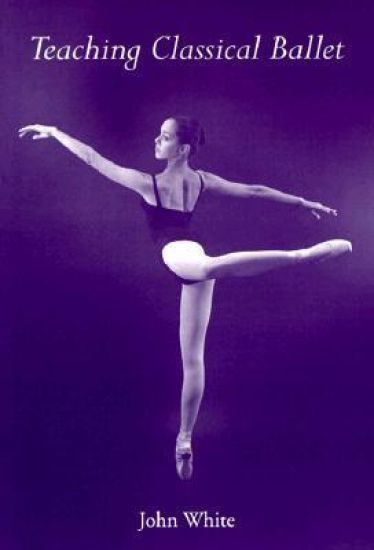
Teaching Classical Ballet

Teaching Classical Ballet

John White

University Press of Florida
1996
nidottu
From his experience of 40 years in ballet as a student, performer, ballet master and dedicated teacher, John White offers this work of inspiration and step-by-step instruction on the art and craft of teaching classical dance. Stressing excellence in both the creative and the practical aspects of teaching, White discusses what it means to be a ""master teacher"" - someone with both a deep love for dance and an appreciation for the grandeur of the human spirit. Good art is usually uncomplicated, he says. Illustrating with 97 photographs, he presents a method of study that includes such aspects of teaching as constructive warm-up exercises, when to begin pointe shoes, the beneficial aspects of pain, and appropriate music for the classroom, as well as elements of the basic lesson. He discusses how to recognise talent and to refine and develop it. He offers guidelines for establishing and organising a well-run studio and he presents his personal insights into the art of classical ballet pedagogy - shaped in particular by his study with ballet masters from the Kirov and Bolshoi ballet companies and by concepts from the famous Vagnova Choreographic School in St Petersburg. The book also confronts the controversial issue of the widespread mediocrity that is notorious in dance schools. Poor training often brings about the loss of talented students and the premature forced retirement of professional artists from unnecessary injuries. By contrast, White says, good teaching can be an exhilarating challenge and a profound joy.
Late Classical, Hellenistic, and Roman Pottery

Late Classical, Hellenistic, and Roman Pottery

John W. Hayes; Kathleen Warner Slane

American School of Classical Studies at Athens
2022
sidottu
This volume presents the Late Classical through Roman pottery from the University of Chicago excavations at Isthmia (1952-1989). In a series of three chapters-on the Late Classical and Hellenistic pottery, the Roman pottery, and the pottery from the Palaimonion-a general discussion is followed by a catalog presenting datable contexts and then by a catalogue of other noteworthy pottery. Appendixes discuss the stratigraphy of the Palaimonion and observations on new and previously published lamps. Amphora stamps are the focus of a further appendix, followed by a catalogue of the Slavic and Byzantine pottery found in the sanctuary area. Although the pottery is sometimes fragmentary, the range of materials over this thousand-year period is typical of Corinthian sites. The finds presented here provide critical information about the history of the Panhellenic sanctuary of Poseidon and the ritual activities that took place there.