Kirjojen hintavertailu. Mukana 12 390 323 kirjaa ja 12 kauppaa.

Kirjahaku

Etsi kirjoja tekijän nimen, kirjan nimen tai ISBN:n perusteella.

1000 tulosta hakusanalla John Emory

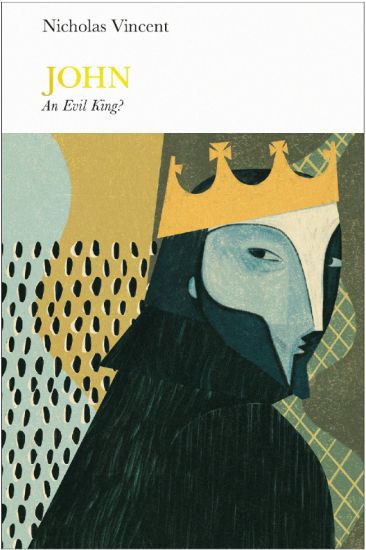
John (Penguin Monarchs)

John (Penguin Monarchs)

Nicholas Vincent

Allen Lane
2020
sidottu
King John ruled England for seventeen and a half years, yet his entire reign is usually reduced to one image: of the villainous monarch outmanoeuvred by rebellious barons into agreeing to Magna Carta at Runnymede in 1215. Ever since, John has come to be seen as an archetypal tyrant. But how evil was he?In this perceptive short account, Nicholas Vincent unpicks John's life through his deeds and his personality. The youngest of four brothers, overlooked and given a distinctly unroyal name, John seemed doomed to failure. As king, he was reputedly cruel and treacherous, pursuing his own interests at the expense of his country, losing the continental empire bequeathed to him by his father Henry and his brother Richard and eventually plunging England into civil war. Only his lordship of Ireland showed some success. Yet, as this fascinating biography asks, were his crimes necessarily greater than those of his ancestors - or was he judged more harshly because, ultimately, he failed as a warlord?
John (Penguin Monarchs)

John (Penguin Monarchs)

Nicholas Vincent

Penguin Books Ltd
2022
nidottu
King John ruled England for seventeen and a half years, yet his entire reign is usually reduced to one image: of the villainous monarch outmanoeuvred by rebellious barons into agreeing to Magna Carta at Runnymede in 1215. Ever since, John has come to be seen as an archetypal tyrant. But how evil was he? In this perceptive short account, Nicholas Vincent unpicks John's life through his deeds and his personality. The youngest of four brothers, overlooked and given a distinctly unroyal name, John seemed doomed to failure. As king, he was reputedly cruel and treacherous, pursuing his own interests at the expense of his country, losing the continental empire bequeathed to him by his father Henry and his brother Richard and eventually plunging England into civil war. Only his lordship of Ireland showed some success. Yet, as this fascinating biography asks, were his crimes necessarily greater than those of his ancestors - or was he judged more harshly because, ultimately, he failed as a warlord?
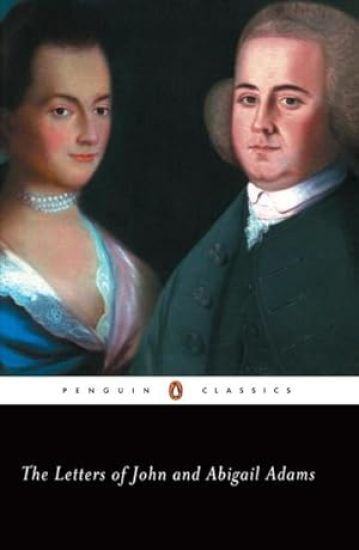
The Letters of John and Abigail Adams

The Letters of John and Abigail Adams

John Adams

PENGUIN BOOKS AUSTRALIA
2003
pokkari
Reflecting more than fifty years in the lives of John and Abigail Adams, a collection of remarkable letters provide an intimate portrait of an important early American family and an incisive, personal look at life in America before, during, and after the Revolution. Original.
The Portable John Adams

The Portable John Adams

John Adams

PENGUIN BOOKS AUSTRALIA
2004
pokkari
In addition to being an uncompromising defender of liberty, esteemed diplomat, and successor to George Washington, John Adams was a passionate and prolific writer. Adams biographer John Patrick Diggins gathers an impressive variety of his works in this compact, original volume, including parts of his diary and autobiography, and selections from his rich correspondence with this wife, Abigail, Thomas Jefferson, and others. The Portable John Adams also features his most important political works: "A Dissertation on Canon and Feudal Law," "Thoughts on Government," "A Defense of Constitutions," "Novanglus," and "Discources in Davila." There is no finer introduction to the protean genius of this seminal American philosopher. For more than seventy years, Penguin has been the leading publisher of classic literature in the English-speaking world. With more than 1,700 titles, Penguin Classics represents a global bookshelf of the best works throughout history and across genres and disciplines. Readers trust the series to provide authoritative texts enhanced by introductions and notes by distinguished scholars and contemporary authors, as well as up-to-date translations by award-winning translators.
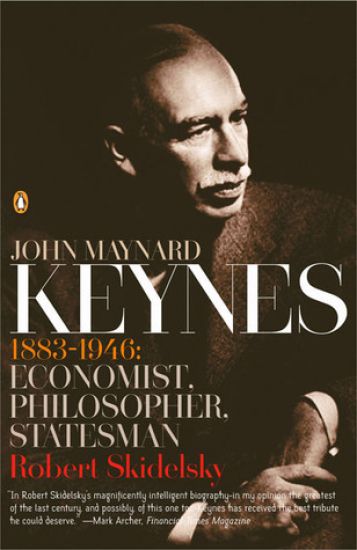
John Maynard Keynes

John Maynard Keynes

Skidelsky Robert

Penguin Books Ltd
2013
nidottu
THE DEFINITIVE SINGLE-VOLUME BIOGRAPHYRobert Skidelsky's three-volume biography of John Maynard Keynes has been acclaimed as the authoritative account of the great economist-statesman's life. Here, Skidelsky has revised and abridged his magnum opus into one definitive book, which examines in its entirety the intellectual and ideological journey that led an extraordinarily gifted young man to concern himself with the practical problems of an age overshadowed by war. John Maynard Keynes offers a sympathetic account of the life of a passionate visionary and an invaluable insight into the economic philosophy that still remains at the centre of political and economic thought.ROBERT SKIDELSKY is Emeritus Professor of Political Economy at the University of Warwick. His three volume biography of John Maynard Keynes (1983, 1992, 2000) received numerous prizes, including the Lionel Gelber Prize for International Relations and the Council on Foreign Relations Prize for International Relations. ('This three-volume life of the British economist should be given a Nobel Prize for History if there was such a thing' - Norman Stone.) He was made a life peer in 1991, and a Fellow of the British Academy in 1994.'A masterpiece of biographical and historical analysis' - New York Times
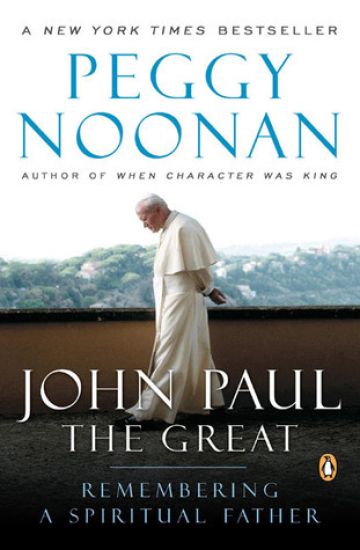
John Paul the Great

John Paul the Great

Peggy Noonan

Penguin USA
2006
pokkari
From New York Times bestselling author Peggy Noonan comes "a beautifully written testimony about . . . the most historically recognized pope" (Library Journal) With such accla imed books as When Character Was King, Peggy Noonan has become one of our most eloquent and respected commentators. Now she offers a stirring portrait of a spiritual and intellectual giant who personally confronted all of the worst tragedies of his age. Drawing on scholarship, interviews with prominent Catholics, and her own experience, Noonan traces the extraordinary life and struggles of Pope John Paul II with characteristic insight and probity-and explores how much we can learn from his leadership, diplomacy, humility, and holiness. Passionate and often deeply personal, John Paul the Great is as exceptional as the man it celebrates.
The Short Novels of John Steinbeck (Penguin Classics Deluxe Edition)
Collected here for the first time in a deluxe paperback volume are six of John Steinbeck's most widely read and beloved novels. From the tale of commitment, loneliness and hope in Of Mice and Men, to the tough yet charming portrait of people on the margins of society in Cannery Row, to The Pearl's examination of the fallacy of the American dream, Steinbeck stories of realism, that were imbued with energy and resilience.
Bright Star: Love Letters and Poems of John Keats to Fanny Brawne
The epic romance of one of the most celebrated poets in the English language Coming to theatres in September 2009 is the tragic love story of nineteenth- century poet John Keats and the love of his life, Fanny Brawne. Keats died at the young age of twenty-five, leaving behind some of the most exquisite and moving verse and letters ever written, inspired by his deep love for Fanny. Bright Star is a collection of Keats' romantic poems and correspondence in the heat of his passion, and is a dazzling display of a talent cut cruelly short.
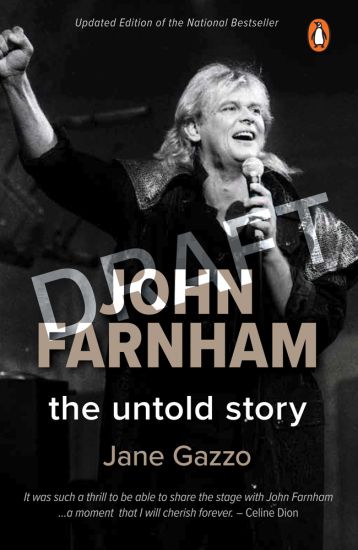
John Farnham

John Farnham

Jane Gazzo

Penguin Random House Australia
2022
nidottu
John Farnham is nothing less than an Aussie icon. In a career spanning almost five decades, the likeable, charismatic star has entertained countless Australians of every generation, selling millions of records along the way. But his extraordinary story is as much about tackling adversity as it is about topping the charts. In the mid-1980s, without a recording contract, more or less penniless, and seemingly destined to be remembered mainly as the chirpy teenager whose debut single ' Sadie (The Cleaning Lady)' swept to number one back in 1967, Farnham had hit rock bottom. But courageously - and assisted by his great friend and manager Glenn Wheatley who mortgaged his house to finance an album - John stormed into the public consciousness again in 1986 with the epic ' You're The Voice' single and stunning LP Whispering Jack. His spectacular comeback complete, the fair-haired superstar has simply gone from strength to strength in the decades since.
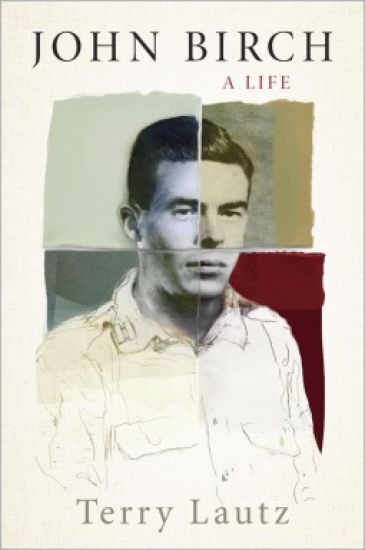
John Birch

John Birch

Terry Lautz

Oxford University Press Inc
2016
sidottu
John Birch is a totemic figure in American life. The society named after him is one of the famous far-right organizations in American history. It was also a paradigmatic example of anti-communist hysteria during the Cold War, and its influence on the American far right to this day remains significant. Yet despite his posthumous fame, Birch himself remains an obscure figure. Terry Lautz, a longtime scholar of US-China relations, has spoken with all of Birch's remaining relatives, found shoeboxes filled with letters from one of his former lovers, and visited the various sites in China where he worked. The result is the first authoritative biography of this fascinating figure, who continues to haunt the political fringes of American life. Birch grew up in the rapidly growing Bible culture of the post-World War I period, and then became a missionary in China in the tumultuous period of its war against the Japanese and the escalating conflict between nationalists and communists. He fought with Claire Chennault's famed Flying Tigers and had a number of romantic relationships with women along the way. After the war ended, he committed himself to resuming his missionary activities in China, but was killed by communist guerrillas in an altercation a couple of weeks after the war ended in September 1945. A few years after his death, when China fell to the communists, anti-communists in Congress latched onto his life and promoted him as a martyr. Within a few years, Robert Welch, a candy manufacturer in New England, formed the John Birch Society, an extreme right-wing organization whose influence is still visible in the Tea Party movement. Lautz covers Birch's life and his afterlife, and also places him not merely in the context of the American far right, but in the revolutionary war that consumed China in the 1930s and 1940s. In this critical study of a figure who has reached near-legendary status, Lautz cuts through the mythology to expose John Birch-both the man and the political phenomenon.
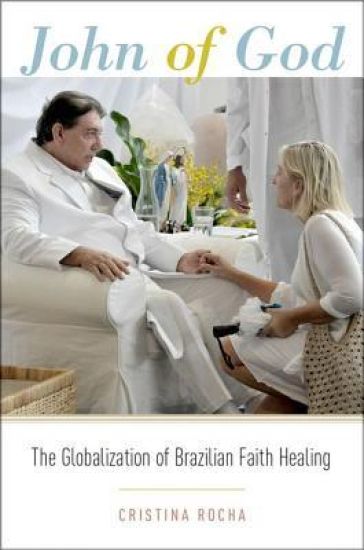
John of God

John of God

Cristina Rocha

Oxford University Press Inc
2017
sidottu
This book is the first ethnographic account of the global spiritual movement headed by John of God, a Brazilian faith healer. Renowned for performing surgeries using rudimentary tools such as kitchen knives and scissors, without anesthetics or asepsis, John of God is allegedly inhabited by "entities," or spirits, and goes into a trance-like state in order to heal his visitors and afterwards, when he regains consciousness, does not remember the operations. Visited by thousands of the desperately ill; the wealthy; celebrities such as Oprah Winfrey, Ram Daas, Wayne Dyer, and Shirley MacLaine; and an increasing array of media, John of God has become an international faith healing superstar in just over a decade. Books about him have been translated into several languages, from Russian to Ukrainian to Japanese; ABC, the Discovery Channel, and the BBC have made documentaries on his healing center; tour guides advertise package trips; and John of God himself travels to conduct healing events in the US, New Zealand, Germany, Greece, Switzerland, Austria, and many other countries. More recently, a transnational spiritual community has developed around John of God, comprised of the ill, those who seek spiritual growth, healers, and tour guides, and according to followers, even spirits whose powers transcend national boundaries. Drawing on a decade of fieldwork in Brazil, the US, the UK, Germany, Australia, and New Zealand, Cristina Rocha examines the social and cultural forces that have made it possible for a healer from Brazil to become a global "guru" in the 21st century. Rocha explores what attracts foreigners to John of God's cosmology and healing practices, how they understand their own experiences, and how these radical experiences have transformed their lives.
John of God

John of God

Cristina Rocha

Oxford University Press Inc
2017
nidottu
This book is the first ethnographic account of the global spiritual movement headed by John of God, a Brazilian faith healer. Renowned for performing surgeries using rudimentary tools such as kitchen knives and scissors, without anesthetics or asepsis, John of God is allegedly inhabited by "entities," or spirits, and goes into a trance-like state in order to heal his visitors and afterwards, when he regains consciousness, does not remember the operations. Visited by thousands of the desperately ill; the wealthy; celebrities such as Oprah Winfrey, Ram Daas, Wayne Dyer, and Shirley MacLaine; and an increasing array of media, John of God has become an international faith healing superstar in just over a decade. Books about him have been translated into several languages, from Russian to Ukrainian to Japanese; ABC, the Discovery Channel, and the BBC have made documentaries on his healing center; tour guides advertise package trips; and John of God himself travels to conduct healing events in the US, New Zealand, Germany, Greece, Switzerland, Austria, and many other countries. More recently, a transnational spiritual community has developed around John of God, comprised of the ill, those who seek spiritual growth, healers, and tour guides, and according to followers, even spirits whose powers transcend national boundaries. Drawing on a decade of fieldwork in Brazil, the US, the UK, Germany, Australia, and New Zealand, Cristina Rocha examines the social and cultural forces that have made it possible for a healer from Brazil to become a global "guru" in the 21st century. Rocha explores what attracts foreigners to John of God's cosmology and healing practices, how they understand their own experiences, and how these radical experiences have transformed their lives.
John Rawls

John Rawls

Oxford University Press Inc
2020
nidottu
John Rawls is widely considered one of the most important political philosophers of the 20th century, and his highly original and influential works play a central role in contemporary philosophical debates. This collection of original essays explores the outpouring of scholarship and debate inspired by Rawls's political philosophy. Given the vastness of this scholarship, this volume aims to provide inroads to its central themes and preoccupations. The volume is divided into ten parts, exploring ten distinct questions, for example: Can Rawls's conception of public reason offer determinate answers to major questions of justice? Is ideal theory useful or relevant to resolving issues of justice in the nonideal world? Are libertarians correct to criticize Rawls's work for failing to prioritize economic liberty? When institutions aim at equality, what is it that they should seek to equalize--primary goods, capabilities, or welfare? For each question, there is an introductory essay, providing an overview of the relevant arguments from Rawls's work and the historical contours of the debate that ensued. Each introductory essay is followed by two essays written by scholars who take opposing positions, which move the discussion forward in a fruitful way. This volume provides readers with clear and in-depth explication of Rawls's arguments, the most important critical dialogue generated in response to those arguments, and the dialogue's significance to contemporary politics.
John Rawls

John Rawls

Oxford University Press Inc
2020
sidottu
John Rawls is widely considered one of the most important political philosophers of the 20th century, and his highly original and influential works play a central role in contemporary philosophical debates. This collection of original essays explores the outpouring of scholarship and debate inspired by Rawls's political philosophy. Given the vastness of this scholarship, this volume aims to provide inroads to its central themes and preoccupations. The volume is divided into ten parts, exploring ten distinct questions, for example: Can Rawls's conception of public reason offer determinate answers to major questions of justice? Is ideal theory useful or relevant to resolving issues of justice in the nonideal world? Are libertarians correct to criticize Rawls's work for failing to prioritize economic liberty? When institutions aim at equality, what is it that they should seek to equalize--primary goods, capabilities, or welfare? For each question, there is an introductory essay, providing an overview of the relevant arguments from Rawls's work and the historical contours of the debate that ensued. Each introductory essay is followed by two essays written by scholars who take opposing positions, which move the discussion forward in a fruitful way. This volume provides readers with clear and in-depth explication of Rawls's arguments, the most important critical dialogue generated in response to those arguments, and the dialogue's significance to contemporary politics.
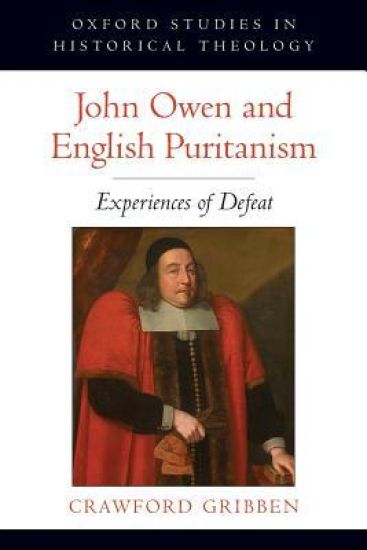
John Owen and English Puritanism

John Owen and English Puritanism

Crawford Gribben

Oxford University Press Inc
2017
nidottu
John Owen was a leading theologian in seventeenth-century England. Closely associated with the regicide and revolution, he befriended Oliver Cromwell, was appointed vice-chancellor of the University of Oxford, and became the premier religious statesman of the Interregnum. The restoration of the monarchy pushed Owen into dissent, criminalizing his religious practice and inspiring his writings in defense of high Calvinism and religious toleration. Owen transcended his many experiences of defeat, and his claims to quietism were frequently undermined by rumors of his involvement in anti-government conspiracies. Crawford Gribben's biography documents Owen's importance as a controversial and adaptable theologian deeply involved with his social, political, and religious environments. Fiercely intellectual and extraordinarily learned, Owen wrote millions of words in works of theology and exegesis. Far from personifying the Reformed tradition, however, Owen helped to undermine it, offering an individualist account of Christian faith that downplayed the significance of the church and means of grace. In doing so, Owen's work contributed to the formation of the new religious movement known as evangelicalism, where his influence can still be seen today.
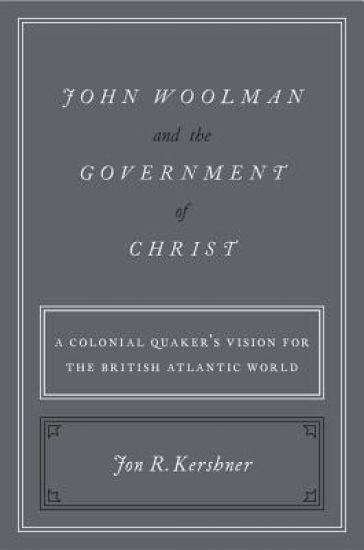
John Woolman and the Government of Christ

John Woolman and the Government of Christ

Jon R. Kershner

Oxford University Press Inc
2018
sidottu
In 1758, a Quaker tailor and sometime shopkeeper and school teacher stood up in a Quaker meeting and declared that the time had come for Friends to reject the practice of slavery. That man was John Woolman, and that moment was a significant step, among many, toward the abolition of slavery in the United States. Woolman's antislavery position was only one essential piece of his comprehensive theological vision for colonial American society. Drawing on Woolman's entire body of writing, Jon R. Kershner reveals that the theological and spiritual underpinnings of Woolman's alternative vision for the British Atlantic world were nothing less than a direct, spiritual christocracy on earth, what Woolman referred to as "the Government of Christ." Kershner argues that Woolman's theology is best understood as apocalypticcentered on a supernatural revelation of Christ's immediate presence governing all aspects of human affairs, and envisaging the impending victory of God's reign over apostasy. John Woolman and the Government of Christ explores the theological reasoning behind Woolman's critique of the burgeoning trans-Atlantic economy, slavery, and British imperial conflicts, and fundamentally reinterprets 18th-century Quakerism by demonstrating the continuing influence of early Quaker apocalypticism.
John Stuart Mill and the Meaning of Life

John Stuart Mill and the Meaning of Life

Elijah Millgram

Oxford University Press Inc
2019
sidottu
John Stuart Mill was one of the most important and influential philosophers of the nineteenth century. He was also someone who exemplified a view about the meaning of life that is widespread among both philosophers and nonacademics: that projects are what make your life meaningful, and if a single project is large enough to occupy center stage in it, that is the meaning of your life. His brilliant career notwithstanding, Mill's life was a train wreck; the intellectual energy and philosophical ingenuity which he devoted to figuring out what had gone wrong make him a fascinating object lesson in the view that projects give life meaning. Elijah Millgram argues that what went wrong was the very fact that Mill's life was a project-the tragedy of his life was an almost inevitable consequence of living out this account of the meaning of life. At once a scholarly contribution to the history of an important philosophical figure and an intervention in an ongoing debate within moral philosophy, this book takes on a topic that people outside the academy expect philosophy to address, but which it too rarely does: namely, the meaning of life. It is simultaneously an exercise in biography and a novel reconstruction and reframing of some of the central theories and texts of the philosophical canon. Millgram's work attempts to look at the theory of rationality from an unusual angle by asking: what difference does it make to the shape and progress of someone's life whether he has one or another understanding of practical reasoning-that is, of how one ought to reason about what to do?
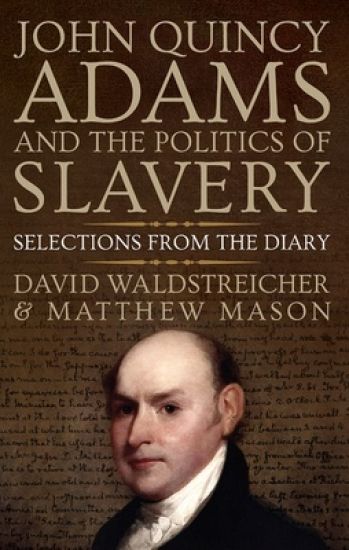
John Quincy Adams and the Politics of Slavery

John Quincy Adams and the Politics of Slavery

David Waldstreicher; Matthew Mason

Oxford University Press Inc
2019
nidottu
In the final years of his political career, President John Quincy Adams was well known for his objections to slavery, with rival Henry Wise going so far as to label him "the acutest, the astutest, the archest enemy of southern slavery that ever existed." As a young statesman, however, he supported slavery. How did the man who in 1795 told a British cabinet officer not to speak to him of "the Virginians, the Southern people, the democrats," whom he considered "in no other light than as Americans," come to foretell "a grand struggle between slavery and freedom"? How could a committed expansionist, who would rather abandon his party and lose his U.S. Senate seat than attack Jeffersonian slave power, later come to declare the Mexican War the "apoplexy of the Constitution," a hijacking of the republic by slaveholders? What changed? Entries from Adams's personal diary, more extensive than that of any American statesman, reveal a highly dynamic and accomplished politician in engagement with one of his generation's most challenging national dilemmas. Expertly edited by David Waldstreicher and Matthew Mason, John Quincy Adams and the Politics of Slavery offers an unusual perspective on the dramatic and shifting politics of slavery in the early republic, as it moved from the margins to the center of public life and from the shadows to the substance of Adams's politics. The editors provide a lucid introduction to the collection as a whole and frame the individual documents with brief and engaging insights, rendering both Adams's life and the controversies over slavery into a mutually illuminating narrative. By juxtaposing Adams's personal reflections on slavery with what he said-and did not say-publicly on the issue, the editors offer a nuanced portrait of how he interacted with prevailing ideologies during his consequential career and life. John Quincy Adams and the Politics of Slavery is an invaluable contribution to our understanding of the complicated politics of slavery that set the groundwork for the Civil War.
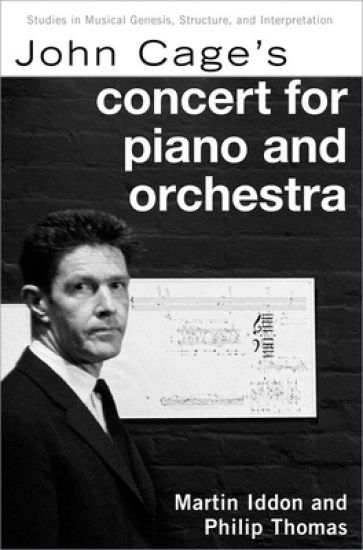
John Cage's Concert for Piano and Orchestra

John Cage's Concert for Piano and Orchestra

Martin Iddon; Philip Thomas

Oxford University Press Inc
2020
sidottu
John Cage's Concert for Piano and Orchestra is one of the seminal works of the second half of the twentieth century, and the centerpiece of the middle period of Cage's output. It is a culmination of Cage's work up to that point, incorporating notation techniques he had spent the past decade developing - techniques which remain radical to this day. But despite Cage's vitality to the musical development of the twentieth century, and the Concert's centrality to his career, the work is still rarely performed and even more rarely examined in detail. In this volume, Martin Iddon and Philip Thomas provide a rich and critical examination of this enormously significant piece, tracing its many contexts and influences - particularly Schoenberg, jazz, and Cage's own compositional practice - through a wide and previously untapped range of archival sources. Iddon and Thomas explain the Concert through a reading of its many histories, especially in performance - from the legendary performer disobedience and audience disorder of its 1958 New York premiere to a no less disastrous European premiere later the same year. They also highlight the importance of the piano soloist who premiered the piece, David Tudor, and its use alongside choreographer Merce Cunningham's Antic Meet. A careful examination of an apparently bewildering piece, the book explores the critical response to the Concert's performances, re-interrogates the mythology surrounding it, and finally turns to the music itself, in all its component parts, to see what it truly asks of performers and listeners.
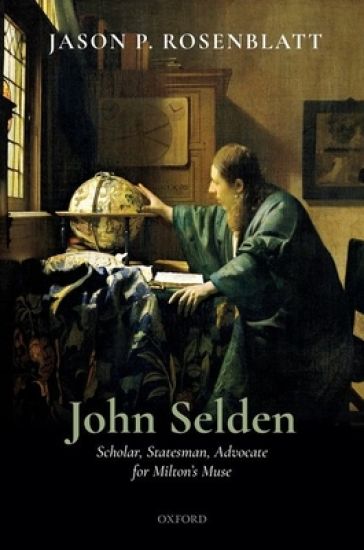
John Selden

John Selden

Jason P. Rosenblatt

Oxford University Press
2021
sidottu
The life of John Selden (1584-1654) was both contemplative and active. Seventeenth-century England's most learned person, he was also one of the few survivors who continued in the Long Parliament of the 1640s his vigorous opposition, begun in the 1620s, to abuses of power, whether by Charles I or, later, by the Presbyterian-controlled Westminster Assembly. His gift for finding analogies among different cultures--Greco-Roman, Christian, Jewish, and Islamic--helped to transform both the poetry and prose of the century's greatest poet, John Milton. Regarding family law, the two might have influenced one another. Milton cites Selden, and Selden owned two of Milton's treatises on divorce, published in 1645, both of them presumably acquired while he was writing Uxor Ebraica (1646). Selden accepted the non-biblically rabbinic, externally imposed, coercive Adamic/Noachide precepts as universal laws of perpetual obligation, rejecting his predecessor Hugo Grotius' view of natural law as the innate result of right reason. He employed rhetorical strategies in De Jure Naturali et Gentium (The Law of Nature and of Nations) to prepare his readers for what might otherwise have shocked them. Although Selden was very active in the Long Parliament, his only surviving debates from that decade were as a lay member of the Westminster Assembly of Divines. The Assembly's scribe left so many gaps that the transcript is sometimes indecipherable. This book fills in the gaps and makes the speeches coherent by finding their contexts in Selden's printed works, both the scholarly, as in the massive De Synedriis, but also in the witty and informal Table Talk.