Kirjojen hintavertailu. Mukana 11 342 296 kirjaa ja 12 kauppaa.

Kirjahaku

Etsi kirjoja tekijän nimen, kirjan nimen tai ISBN:n perusteella.

1000 tulosta hakusanalla John Hardingham

Selected Poems and Prose of John Davidson

Selected Poems and Prose of John Davidson

John Davidson

Oxford University Press
1995
sidottu
The first Selected Poems of John Davidson for 30 years, this new selection brings together the best of his work both from the 1890s and his later materialist phase. Davidson has lately been reassessed, and he is now generally recognized to be a poet of major status, a precursor of the modernist movement, and the best Scottish poet between Robert Burns and Hugh MacDiarmid. This edition demonstrates the quality and breadth of Davidson's work, and also contains selections from his letters and prose writings, which shed new light on his life and aims as a poet. Widely admired as an early modern, Davidson's fascination with urban experience and the new technologies supplied a precedent for the Modernist movement. John Sloan's edition brings together the popular poems of the 1890s such as 'In Romney Marsh', 'London' and 'Thirty Bob a Week', and the ambitious and highly celebrated poems of his later years such as 'The Crystal Palace' and 'London Bridge', with their ironic observations of the London crowds. Also included are `The Thames Embankmente' with its materialistic blending of urban and natural landscape, and the moving and scientific `Snow'.
The Works of John Wilmot, Earl of Rochester

The Works of John Wilmot, Earl of Rochester

John Wilmot Rochester

Oxford University Press
1999
sidottu
John Wilmot, second Earl of Rochester (1647-80), was a leading member of the group of 'court wits' surrounding Charles II. One of the wittiest and most sexually explicit poets in English, his poems circulated principally in manuscript, which makes the tracing of their transmissional history a peculiarly difficult task. In this long-awaited edition, Harold Love, one of the leading scholars of seventeenth-century manuscript circulation, presents a scholarly text based on detailed examination of the manuscripts, with full textual and explanatory notes. It will be an important contribution to the study of manuscript publication as well as a vital resource for all students of Rochester.
John Keats and the Culture of Dissent

John Keats and the Culture of Dissent

Nicholas Roe

Clarendon Press
1997
sidottu
This book overturns received ideas about Keats as a poet of `beauty' and `sensuousness', offering a compelling account of the political interests of Keats's poetry and showing why his poems generated such a bitterly hostile response from their first critics. It sets out to recover the vivacious, pugnacious voices of Keats's poetry, and seeks to trace the complex ways in which his poems responded to and addressed their contemporary world. Roe offers new research about Keats's early life which opens valuable and often provocative new perspectives on his poetry. This book offers a completely new account of Keats's schooldays, opening a fresh perspective on both his life and his poetry.Two chapters explore the dissenting culture of Enfield School, showing how the school exercised a strong influence on Keats's imaginative life and his political radicalism. Imagination and politics intertwine through succeeding chapters on Keats's friendship with Charles Cowden Clarke; his medical career; the `Cockney' milieu in which Keats's poems were written; and on the immediate controversial impact of his three collections of poetry. The author deftly reconstructs contexts and contemporary resonances for Keats's poems, retrieving the vigorous challenges of Keats's verbal art which outraged his early readers but which have been lost to us as Keats entered the canon of visionary romantic poets.
John Betjeman: A Bibliography

John Betjeman: A Bibliography

William S. Peterson

Clarendon Press
2006
sidottu
Sir John Betjeman (1906-1984), Poet Laureate, was probably the most widely-read English poet of the twentieth century. Because of his frequent appearances on radio and television and his fervent devotion to the preservation of England's architectural heritage, his face and voice became familiar to millions. Few other poets of any century have had such a powerful influence on their contemporaries. This bibliography lists and describes all of his known writings, including his own books, ephemera, contributions to periodicals and to books by others, lectures, and radio and television programmes. Other categories such as editorships, music settings, and dramatic adaptations of his poems, recordings, and interviews are also included, as well as a section devoted to writings about him. Manuscripts and drafts of all his works are described in detail. This enormous body of material is thoroughly indexed, cross-referenced, and in most cases annotated. Now at last the activities of this remarkable man - both a poet and a cultural phenomenon - can be seen in their full breadth and complexity.
John Donne's Articulations of the Feminine
This book is a historical and theoretical study of some of John Donne's less frequently discussed poetry and prose; it interrogates various trends that have dominated Donne criticism, such as the widely divergent views about his attitudes towards women, the focus on the Songs and Sonets to the exclusion of his other works, and the tendency to separate discussions of his poetry and prose. On a broader scale, it joins a small but growing number of feminist re-readings of Donne's works. Using the cultural criticism of French feminist philosopher Luce Irigaray, Meakin explores works throughout Donne's career, from his earliest verse letters to sermons preached while Divinity Reader at Lincoln's Inn and Dean of St. Paul's in London. Donne's articulations of four feminine figures in particular are examined: the Muse, Sappho, Eve as `the mother of mankind', and a young girl who lived and died in Donne's own time, Elizabeth Drury. Meakin's reading of Donne's self-described `masculine perswasive force' asserting itself upon the `incomprehensibleness' of the feminine suggests that the Donne canon needs to be reassessed as even richer and more complex than previously asserted, and that his reputation as a supreme Renaissance poet - revived at the beginning of this century - needs to be carried into the next.
On the Properties of Things. John Trevisa's Translation of Bartholomaeus Anglicus' De Proprietatibus Rerum
Trevisa's encyclopaedia, the first to appear in English, enshrines many basic medieval ideas which are reflected in English literature well into the seventeenth century. The two-volume text of Trevisa's translation On the Properties of Things, published in 1975, quickly established itself as a reference work for scholars working in many disciplines on the late Middle Ages. This third volume, comprising Introduction, Commentary, and Glossary, offers an indispensable tool for understanding the printed text and the manuscripts on which it is based. Contributors: M.C. Seymour, E.J. Brockhurst, G.M. Liegey, Ralph Hanna, Malcolm Andrew, J.D. Pheifer, Traugott Lawler, B.D. Harder, J.I. Miller.
John Keats and the Culture of Dissent

John Keats and the Culture of Dissent

Nicholas Roe

Clarendon Press
1998
nidottu
Keats and the Culture of Dissent sets out to recover the lively and unsettling voices of Keats's poetry, and seeks to trace the complex ways in which his poems responded to and addressed their contemporary world. It offers new research about Keats's early life opening valuable new perspectives on his poetry. Two chapters explore the dissenting culture of Enfield School, showing how the school exercised a strong influence on Keats's imaginative life and his political radicalism. Imagination and politics intertwine through succeeding chapters on Keats's friendship with Charles Cowden Clarke; his medical career; the `Cockney' milieu in which Keats's poems were written; and on the immediate controversial impact of his three collections of poetry. The author deftly reconstructs contexts and contemporary resonances for Keats's poems, retrieving the vigorous challenges of Keats's verbal art which outraged his early readers but which was lost to us as Keats entered the canon of English romantic poets.
John Dryden: Tercentenary Essays
This volume is designed to celebrate and re-assess the work of John Dryden (1631-1700) in the tercentenary year of his death. It assembles specially-commissioned essays by an international team of scholars who address Dryden's political writing, drama, and translations, his literary collaborations, contemporary reputation, and posthumous reception. Much of Dryden's work was written in response to contemporary events and issues, and several of the essays in this volume discuss the personal and public circumstances in which his works were composed and received, exploring his responses to popular politics, and his relations with Congreve, Milton, Purcell, and Shadwell. But Dryden's intellectual and imaginative world was also shaped by the work of his literary predecessors, and so the collection charts his creative engagement with classical poetry, especially Homer and Virgil. Other essays attend to his poetic self-representation, his philosophical vision, and the problem of editing Dryden's poetry for a modern readership. The collection as a whole presents him as a writer not only for an age, but for all time.
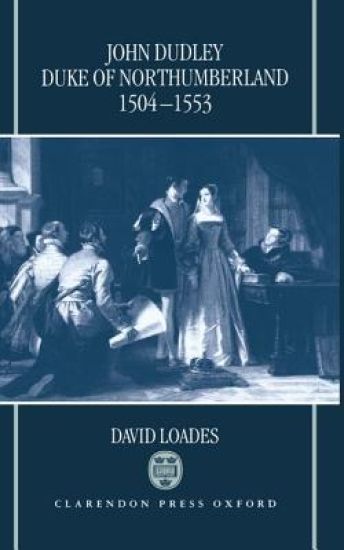
John Dudley, Duke of Northumberland 1504-1553
This book reconstructs the personal and political life of John Dudley (1504-1553), Viscount Lisle, Earl of Warwick, and Duke of Northumberland. For three and a half years (1549-1553) as Lord President of the Council, he was leader of Edward VI's minority government. His involvement in the notorious attempt to frustrate Mary's claim to the throne in favour of his daughter-in-law, Jane Grey, contributed substantially to the evil reputation which clung to him both at the time and since. He is conventionally portrayed as an ambitious, unscrupulous man, who embraced and renounced the Reformation to suit his own purposes. The fact that his father was Henry VII's detested financial agent Edmund Dudley, and one of his sons the colourful Earl of Leicester, has helped to confirm his unprincipled image. Now his reputation is being reassessed, but historians have concentrated almost entirely on his years in power - the last four years of his life. Drawing upon new research, Professor Loades looks at John Dudley's whole career and by considering the lives of his father, Edmund, and his sons, places him in longer historical perspective. A new and important interpretation of the Tudor service nobility emerges in which John Dudley is seen not merely as an overmighty subject and kingmaker, but first and foremost as a servant of the English Crown.
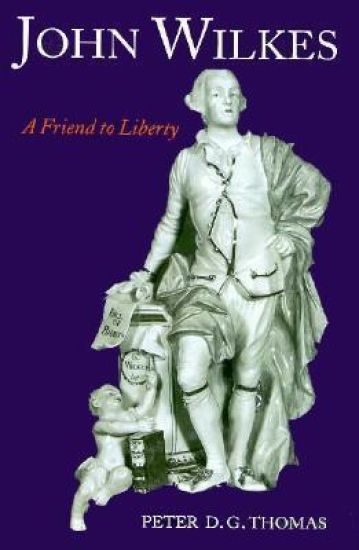
John Wilkes: A Friend to Liberty

John Wilkes: A Friend to Liberty

Peter D. G. Thomas

Oxford University Press
1996
sidottu
Often deemed the founder of British radicalism, John Wilkes (1725-1797) had a shattering impact on the politics of his time. His audacity in challenging government authority was matched by his skill and determination in attaining his objectives: the freedom of the press to criticize ministers and report Parliament; enhanced security for individuals and their property from arbitrary arrest and seizure; and the rights of electors. That he was a political maverick, of witty and wicked reputation, has led historians to underestimate him - this is the first researched biography since 1917. Contemporaries appreciated his achievements more than posterity, one obituarist writing that `his name will be connected with our history'. In this fascinating and original biography, Peter Thomas provides an intriguing portrait of the man George III referred to as `that Devil, Wilkes'.
The Chronicle of John of Worcester: Volume III: The Annals from 1067 to 1140 with the Gloucester Interpolations and the Continuation to 1141
The chronicle of John of Worcester is one of the most important sources for earlier English history. Completed at Worcester by 1140, it is of considerable interest to historians of both the Anglo-Saxon period and the late eleventh and twelfth centuries. Its annals complement and add significantly to those in the surviving versions of the Anglo-Saxon Chronicle. It has never been adequately translated and a modern edition has long been needed. In this volume, Dr McGurk uses all the available manuscript evidence, as well as the additions for 1122-41 made in a Gloucester continuation of a manuscript started in Johns own handwriting. Taken with these interpolations, the chronicle offers crucial evidence for the first five years of King Stephens reign. The Chronicle will be published in three volumes. Volume II covers the annals from 450 to 1066, and Volume III from 1067 to 1140. Volume I will be published last, and will contain a general introduction and supplementary material.
The Chronicle of John of Worcester: Volume II: The Annals from 450 to 1066
The chronicle of John of Worcester is one of the most important sources of earlier English history. The chronicle, which was written at Worcester by 1140, is of considerable interest to historians of both the Anglo-Saxon period and of the late eleventh and twelfth centuries. Its backbone is a translation of an Anglo-Saxon chronicle with varied connections, and this edition makes possible the detailed examination of these allegiances. Its annals for the second half of the ninth century provide one of the earliest surviving witnesses to the text of Asser's Life of Alfred. The author had access to otherwise unrecorded sources of events in the eleventh century, and the chronicle's value as a contemporary source for the reign of Stephen has long been acknowledged. Dr McGurk has completed the edition of the work left unfinished by R. R. Darlington on his death in 1977. The chronicle will be published in three volumes. Volume II covers the annals for 450 to 1066, and volume III the annals from 1067 to 1140. Volume I will be published last, and will contain a general introduction and supplementary material.
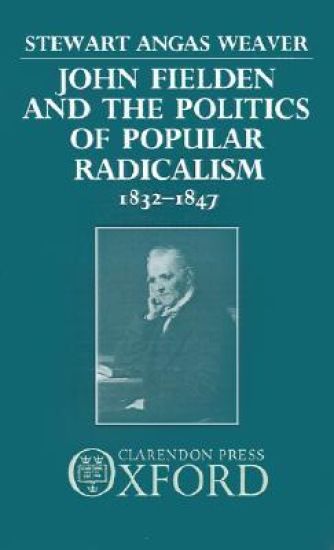
John Fielden and the Politics of Popular Radicalism 1832-1847
This is the first biographical study of John Fielden, industrial magnate and radical MP for Oldham in Lancashire from 1832 to 1847. Best known as a leading advocate of factory reform - he was the parliamentary sponsor of the momentous Ten Hours Act of 1847 - Fielden also took a conspicuous part in the Owenite, Chartist, and anti-Poor Law movements. Drawing on a little-used collection of Fielden family papers, the book offers an assessment of each of the movements in which Fielden's relationship with them, and discusses the influences which went into the making of a radical industrialist who occupied a unique place in Parliament as the people's representative. This long overdue account of his personal, business, and political life offers new insights into the turbulent politics of mid-nineteenth century England.
John Palsgrave as Renaissance Linguist

John Palsgrave as Renaissance Linguist

Gabriele Stein

Clarendon Press
1997
sidottu
The year 1530 saw the publication in London of one of the most remarkable books of the Renaissance: Lesclarcissement de la langue francoyse. The author of this vast work of over 1,000 pages was John Palsgrave, graduate of Cambridge, Paris, and Oxford, priest and chaplain to Henry VIII, and tutor to the King's sister. His book is the first dictionary of two neighbouring vernaculars, English and French, and simultaneously the first contrastive grammar of the two languages. It reveals him as a pioneering and exceptional linguist with a sharply observant and analytical mind, who goes far beyond the traditional application of Latin grammar-writing to two living languages. The book is also remarkable for the liveliness with which Palsgrave discusses and illustrates the social aspects of language use, dialectal variation, and the vigour of colloquial idiom. In this uniquely detailed study Stein sets the author and his book in their wider sociohistorical context and discusses Palsgrave's syntactic, semantic, and pragmatic analyses, some of which anticipate the findings of modern linguistics by over 400 years.
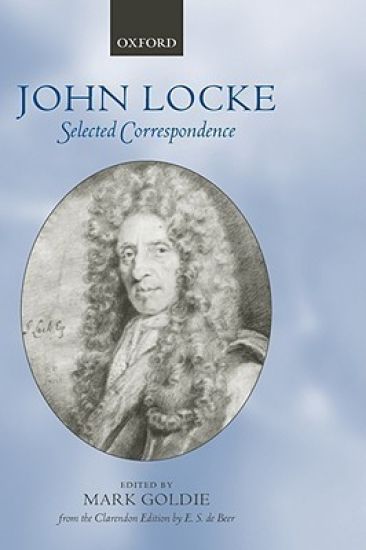
John Locke: Selected Correspondence
John Locke (1632-1704) was a prolific correspondent and left behind him over 3,600 letters, a collection almost unmatched in pre-modern times. A man of insatiable curiosity and wide social connections, his letters open up the cultural, social, intellectual, and political worlds of the later Stuart age. Spanning half a century, they mark the transition from the era of revolutionary Puritanism to the dawn of the Enlightenment. Locke is chiefly known as a philosopher, a theorist of empiricism in his Essay Concerning Philosophyrstanding, a theorist of liberalism in his Two Treatises of Government, and a theorist of religious toleration in his Letter concerning Toleration. But his interests extended further still, to education, medicine, finance, theology, empire, and the natural world. He was a Fellow of the early Royal Society. He received letters from scholars in Paris and Amsterdam, from colonial administrators in Virginia, from aristocrats and shopkeepers, from children, from tenants, from politicians, from philosophic women, from astronomers, chemists, and physicists. He is one of the first people whose correspondence is as far flung as North America, India, and China. A friend of Anglican archbishops and of freethinking anticlericals, of Isaac Newton and Robert Boyle, of William Molyneux the 'virtuoso' of Dublin, of Jean LeClerc of Amsterdam, and of Damaris Masham, Locke stood in the midst of the 'Republic of Letters'. This book brings together 245 of the most important and revealing letters. Half of them are letters written by Locke (twelve per cent of the total number surviving), the other half are letters written to him. If Locke's place is already secure among those who explore philosophy and political ideas, these letters will give Locke a new presence among those who are interested in the social and cultural worlds of seventeenth-century Britain.
John Locke: An Essay concerning Toleration
J. R. and Philip Milton present the first critical edition of John Locke's Essay concerning Toleration and a number of other writings on law and politics composed between 1667 and 1683. Although Locke never published any of these works himself they are of very great interest for students of his intellectual development because they are markedly different from the early works he wrote while at Oxford and show him working out ideas that were to appear in his mature political writings, the Two Treatises of Government and the Epistola de Tolerantia. The Essay concerning Toleration was written in 1667, shortly after Locke had taken up residence in the household of his patron Lord Ashley, subsequently Earl of Shaftesbury. It has been in print since the nineteenth century, but this volume contains the first critical edition based on all the extant manuscripts; it also contains a detailed account of Locke's arguments and of the contemporary debates on comprehension and toleration. Also included are a number of shorter writings on church and state, including a short set of queries on Scottish church government (1668), Locke's notes on Samuel Parker (1669), and 'Excommunication' (1674). The other two main works contained in this volume are rather different in character . One is a short tract on jury selection which was written at the time of Shaftesbury's imprisonment in 1681. The other is 'A Letter from a Person of Quality', a political pamphlet written by or for Shaftesbury in 1675 as part of his campaign against the Earl of Danby. This was published anonymously and is of disputed authorship; it was first attributed to Locke in 1720 and since then has occupied an uncertain position in the Locke canon. This volume contains the first critical edition based on contemporary printed editions and manuscripts and it includes a detailed account of the Letter's composition, authorship, and subsequent history. This volume will be an invaluable resource for all historians of early modern philosophy, of legal, political, and religious thought, and of 17th century Britain.